


Listen: the breakdown
Developing story update (August 11, 2026, 08:08 UTC):
ZEROBASE: U.S. spot Bitcoin exchange-traded funds recorded their strongest weekly inflows since mid-April, attracting approximately $853.5 million over the five trading sessions ending August 7, according to multiple trackers.
BlackRock’s IBIT alone accounted for roughly $693 million, or more than 80 percent of the total, while Fidelity’s FBTC contributed about $116 million.
Ethereum ETFs added nearly $245 million over the same period, bringing the combined crypto ETF haul to around $1.1 billion. The streak of consecutive daily inflows reversed months of net selling that had left Bitcoin ETFs roughly $4.5 billion in the red year-to-date and marked a clear shift after eight weeks of heavy outflows totaling more than $8 billion earlier in the summer.
The timing coincided with a high-profile security incident involving Coldcard hardware wallets. A five-year-old firmware vulnerability that weakened seed-generation entropy allowed attackers to drain an estimated 1,800 Bitcoin, valued between $116 million and $130 million, from more than 5,000 addresses in multiple waves beginning July 30.
The flaw required no physical access or phishing; it simply made certain seeds brute-forceable. Analysts noted that several large Bitcoin funds recorded inflows on every trading day after the exploit became public, suggesting some investors responded to the renewed spotlight on self-custody risks by preferring regulated, third-party custody available through ETFs.
Total assets under management across the U.S. Bitcoin ETF complex now sit near $80 billion, with cumulative net inflows since the January 2024 launch exceeding $52 billion and collective holdings surpassing 1.2 million Bitcoin.
Bitcoin itself traded in a narrow range near $64,000-$65,000 through the period, posting modest weekly gains of around 3 percent despite the solid institutional demand.
On-chain data showed mixed signals: exchange reserves registered modest daily outflows amid continued weekly inflows, while a large concentration of supply-roughly 155,000 Bitcoin-clustered in the $62,000-$65,000 cost-basis band, creating potential overhead resistance.
Spot volumes remained relatively thin, indicating that the ETF buying was more measured than the leveraged speculation seen in prior cycles.
The broader macroeconomic backdrop offered limited immediate support. July nonfarm payrolls unexpectedly fell by 23,000 against forecasts for gains, prompting a sharp drop in market-implied odds of a September Federal Reserve rate hike.
Core inflation remains sticky above the central bank’s 2 percent target, and the Fed has held rates steady for several meetings while facing internal hawkish dissent. U.S. equity markets continue to hover near record levels, driven largely by artificial-intelligence-related earnings and capital expenditure, yet concentration risk and higher-for-longer rate expectations have kept risk appetite selective. Softening employment data and a weaker dollar provided some relief for risk assets, but the combination of elevated real yields and geopolitical uncertainty continues to constrain aggressive positioning.
Taken together, the week’s flows highlight a practical preference among certain institutional and retail allocators for the operational simplicity and regulatory oversight of ETFs over pure self-custody, especially after a high-profile hardware-wallet failure.
Whether the rebound in demand proves durable will depend on sustained macroeconomic clarity, further evidence of accumulation beyond the largest funds, and Bitcoin’s ability to break through the dense cost-basis supply now sitting just above current prices.
One strong week does not reverse months of net selling, yet the coordinated return of capital into the largest regulated vehicles underscores how custody concerns and macro shifts can quickly reallocate flows within the digital-asset ecosystem.
Developing story: This story is still unfolding. We are tracking it and will update this article as more details are confirmed.
Market briefing: US spot Bitcoin and Ether ETFs just logged their strongest weekly inflows since April, yet BTC sits flat near $65,154 and ETH near $1,920. Strong demand, quiet tape, crowded longs.
- US spot BTC and ETH ETFs posted their biggest weekly inflows since April 2026.
- Price barely moved: BTC near $65,154, ETH near $1,920, both flat on the day.
- Positive funding and crowded retail longs raise squeeze risk before any interim pump.
Bitcoin ETF inflows just hit their strongest week since April, but BTC sits flat near $65,154. When demand roars and price whispers, who is really buying from whom?
US spot Bitcoin and Ether exchange-traded funds just recorded their strongest weekly inflows since April 2026. On paper, that is a wave of fresh institutional demand landing on both majors at once. Big money wanted in, and the wrappers made it easy.
And yet the tape barely noticed. BTC trades near $65,154, up 0.1% on the day. ETH sits near $1,920, down a fraction. The press release is loud; the price is a whisper.
That gap is the whole story. Strong inflows usually push price. When they do not, someone is quietly selling into the demand, absorbing every buy without letting the market run.
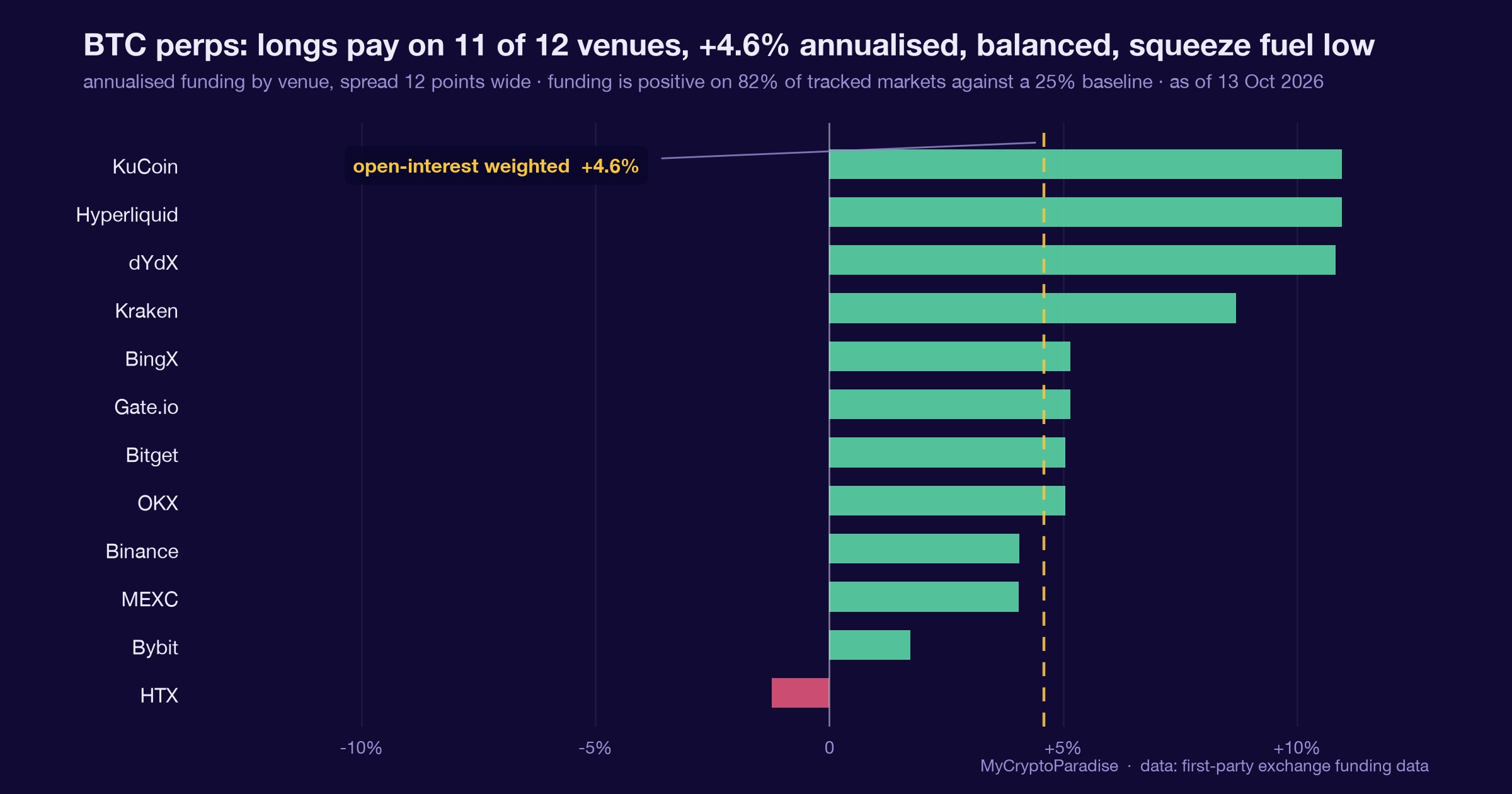
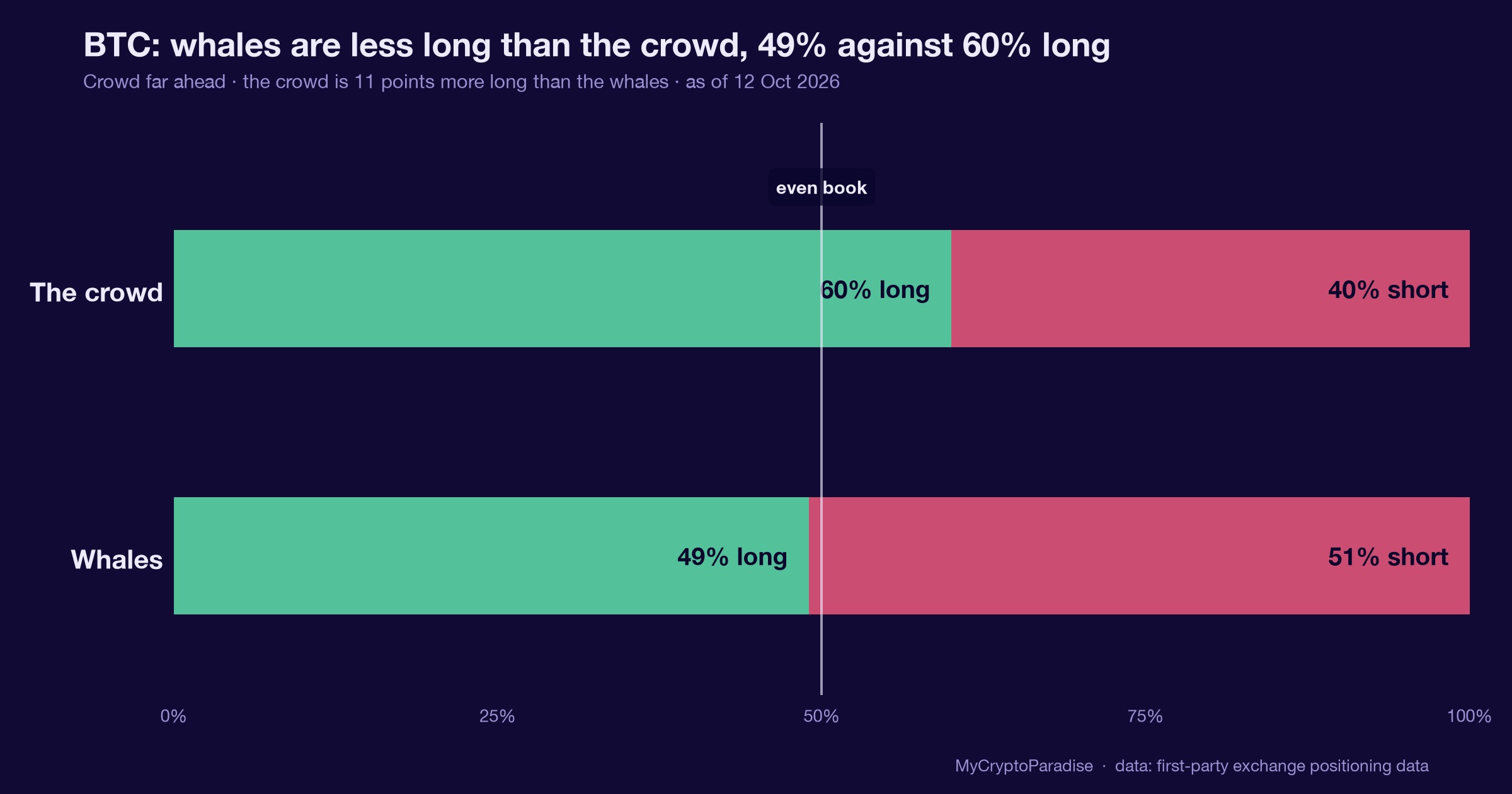
We read this as flat distribution near resistance, not the start of a breakout. Retail is stacking long positions, funding rates are turning positive, and the Fear and Greed reading sits near 60. That is a crowd leaning one way while the tape refuses to reward them.
Smart money looks patient here. A recent $86 million whale purchase and our own team's reaccumulation near $61,000 say the professionals are already positioned, not chasing. They do not need to buy an inflow headline; they bought lower and now wait.
So the inflows are real fuel, but fuel needs a spark and a clear runway. With longs crowded and price stalling under resistance, the more likely near-term move is a shakeout of the impatient before any interim pump. The demand is genuine. The timing is the trap.
Why strong inflows stalled at price
ETF inflows matter because they are the cleanest pipe between traditional capital and crypto. When those funds absorb coins, supply leaves the open market, which normally tightens price and lifts BTC first. This week that pipe ran hot, so the setup should favor bulls.
But the transmission broke at the last step. Inflows hit, price did not. That tells us the selling pressure meeting those buys is large, patient, and well positioned. Someone is handing coins to new ETF holders at a flat price.
Macro is the reason to stay careful. Our weekly read still points to an ending diagonal, a tiring pattern that can drag Bitcoin toward a $44,000 reaccumulation zone before the next durable leg. Strong inflows do not cancel that structure; they can feed the final push that completes it.
Here is the mechanism that ties it together. Retail sees the inflow headline and adds leveraged longs. Funding turns positive, meaning longs now pay shorts to hold. That funding drip is a slow tax that punishes crowded, impatient positioning.
Smart money uses exactly that crowd. Heavy long positioning stacks liquidation levels below price, and those clustered stops become a target. A quick flush clears them, refills cheap inventory, then the real move can begin. So the inflows are bullish fuel, but they arrive into a crowded, taxed, macro-tired market. That is why the strongest week since April produced a shrug instead of a surge.
How the flat tape hits BTC then alts
Start with BTC, because it leads every liquidity cascade. Bitcoin is holding near $65,154 despite the strongest inflows since April. A market that will not rise on good news is telling you demand is being absorbed, not compounded.
That absorption caps the upside for now. As long as BTC stalls under resistance, the path of least resistance is a sweep of the long liquidations sitting below, not a clean breakout. Buyers keep arriving; sellers keep meeting them.
ETH is the tell for risk appetite. Ether drew fresh ETF cash too, yet trades near $1,920 and slightly red. If the strongest inflow week cannot lift ETH, the rotation into higher-beta assets is not confirmed. The engine is idling.
Alts sit at the end of the whip. They rise last and fall first, so they need BTC to break out with force before they follow. Flat majors mean alts stay fragile, and a BTC flush would hit them hardest, wiping the most leveraged longs.
Open interest, meaning the total value of live derivative contracts, is the pressure gauge to watch. Rising open interest with positive funding and flat price is a coiled setup. It resolves violently, and crowded longs are the fuel for the move that clears them.
The honest read: inflows are genuine, but with no single confirmed catalyst driving today's action, this is fuel waiting for direction. Until BTC proves demand over resistance, the tape favors a shakeout before any interim pump toward higher targets.
What confirms the pump versus a flush
The first thing to watch is whether BTC reclaims and holds $65,500. That level is the 0.618 Fibonacci retracement, a common line where trends prove themselves. A daily close above it, with inflows still arriving, would confirm the inflow fuel is finally lifting price.
A reclaim opens the door to $68,000, then a test of $69,000. That upper zone is where the interim pump could stall, because it lines up with the completion of the current wave structure. Strength into resistance, not just a poke, is the confirmation bulls need.
The invalidation is just as clear. Losing the $64,700 to $64,300 support on a closing basis breaks the near-term bull case. Below that, the $62,500 four-hour defense is the last line before momentum tips toward the downside.
Funding rates and long squeeze probability are the crowd meters. If funding keeps climbing while price stalls, the long side is getting dangerously full. That is the setup where a fast liquidation cascade clears crowded positions before any real advance.
On the macro chart, respect the weekly ending diagonal pointing toward $44,000. Interim strength does not erase it. A relief pump can run and still resolve lower, which is why professionals are building for black swan risk, not betting the farm on a headline.
So the map is simple: reclaim $65,500 and hold for the bullish path, lose $64,300 and the flush scenario gains weight. Let price choose. The inflows tell you demand exists; the level tells you when it matters.
What crowded longs signal into these inflows
The ParadiseTeam reads this inflow week as strong demand meeting patient supply, not a launchpad. With BTC near $65,154 and refusing to run on the strongest inflows since April, the message is absorption. Someone is comfortable selling here.
We apply our lens directly. The line that matters is $65,500, the 0.618 Fibonacci reclaim. Hold above it and the inflow fuel can push toward $68,000 and a $69,000 test, where we watch for exhaustion rather than chasing. That upper zone is where a relief move most likely tires.
Below price, the $64,700 to $64,300 zone is the low timeframe support that must hold. Lose it and the $62,500 four-hour defense comes into play. A break there shifts the odds toward a liquidation sweep of the crowded longs stacking up now.
Here is the smart-money-versus-retail core. Retail is adding leverage on the inflow headline while funding turns positive, meaning longs pay to hold. That crowding builds the exact liquidity that professionals target. The $86 million whale buy and our reaccumulation near $61,000 show the patient side already positioned lower.
Our macro stance stays honest. The weekly ending diagonal still points toward a $44,000 reaccumulation zone, where we expect the next serious buying, not here. An interim pump is possible; a macro flush is the reset we respect.
Manage risk-to-reward, meaning R:R, keep the stop-loss, SL, defined, and never build a whole thesis on one inflow print.
Track it live: our live crypto funding rates and the crypto liquidation heatmap both update in real time, so you can watch this shift for yourself.
Related coverage
For exact entries, targets, and stop losses with full risk management, that is what ParadiseFamilyVIP is for. New to reading these moves? Start with our crypto trading strategies guide.
ParadiseTeam is monitoring the market situation closely, and we are taking these developments into consideration while building our trading tactics inside ParadiseFamilyVIP.
Crypto trading involves substantial risk. Prices are volatile and you can lose money. This article is educational and is not financial advice. Past performance does not guarantee future results.
After these ETF inflows, what does BTC do first from here?
This is how the Paradisers are calling it. Tap your call.
No calls on this one yet. Tap yours to be the first.
Free account, no password. Members just sign in.
Follow this topic: Ethereum ETF news









Join the discussion
No comments yet. Members, share how you are reading this.