


Listen: the breakdown
Market briefing: The Bank of Russia has banned crypto transfers to its own cold wallet, a fresh state move against self custody. BTC was near $81,427 and down 2.8 percent, with ETH off 5.5 percent as the market priced the headwind.
- The Bank of Russia banned the transfer of cryptocurrency to its own cold wallet.
- BTC traded near $81,427, down 2.8 percent on the day, with ETH down 5.5 percent.
- A major central bank restricting crypto flow adds regulatory pressure and trims perceived utility.
The Bank of Russia just banned crypto transfers to its own cold wallet, another state move against self custody. Does this Russia crypto ban change the bigger picture for traders?
The Bank of Russia has banned the transfer of cryptocurrency to its own cold wallet. The move is confirmed, and it fits a pattern we have watched tighten for years: when states cannot stop a market, they reach for the plumbing instead.
Cold wallets matter because they represent self custody, the ability to hold assets outside any intermediary. When a central bank fences off that path for itself, it signals how it wants crypto to move across its financial system. Control over the rails, not the asset.
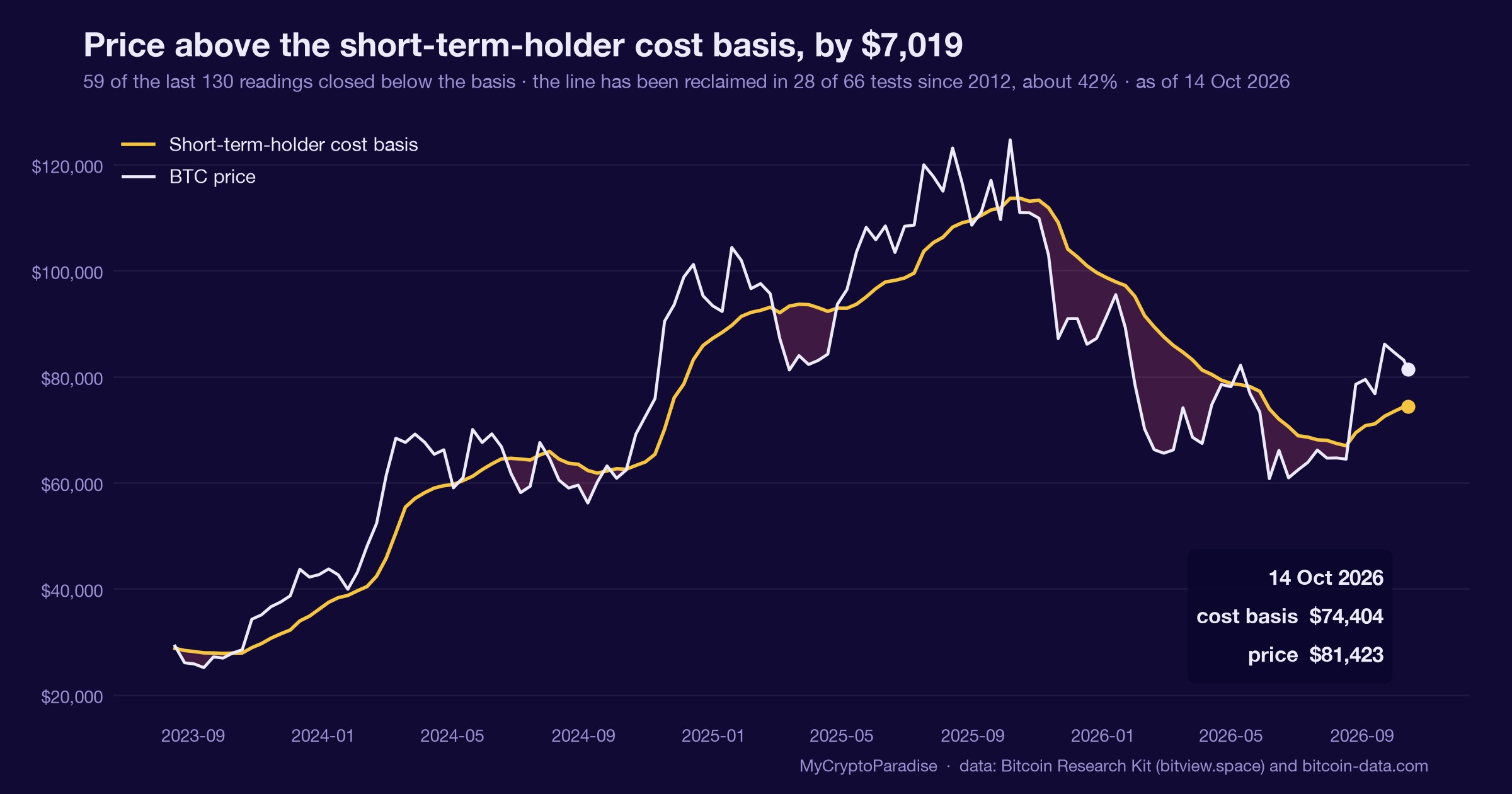
The timing landed in a market already on edge. BTC was trading near $81,427 as of the latest reading, down about 2.8 percent on the day. ETH was weaker still, off roughly 5.5 percent near $2,379.
No single platform showed a clean sentiment swing on this specific news. Social chatter stayed muted, and forum discussion drifted around the edges rather than the core event. That absence tells us retail is reacting to price, not reading the regulatory fine print.
That is the real texture here. The headline is a central bank decision, but the price action is part of a broader risk-off day across crypto. We separate the two deliberately. The ban is a structural signal about state control of crypto flow; the 2.8 percent drop is the market absorbing a heavy session, with this news as one input among several.
For traders, the question is not the single decree. It is whether this marks the start of a wider push toward state control of transfers.
A central bank fences off self custody
The transmission runs through utility, not price alone. Crypto earns its premium from being transferable and self held. When a central bank restricts how that transfer happens, it chips at the core promise, and the market prices a thinner premium.
This is why a single administrative decision can ripple wider than its literal scope. The Bank of Russia is one actor, but it is a large one, and large actors set precedent. Other authorities watch what their peers tolerate, then borrow the posture that drew the least resistance.
The mechanism is regulatory contagion. One ban rarely stays one ban. It becomes a template, a thing officials can point to and say it has been done before. That lowers the political cost of the next restriction somewhere else.
There is a quieter macro layer too. Each new transfer limit nudges capital toward compliant, visible rails and away from the permissionless corners that gave crypto its early edge. Over time that reshapes where liquidity lives.
We hold the honest line on scope. This decree concerns the central bank's own cold wallet, not a blanket citizen ban. The structural worry is directional, about where this leads, and should not be inflated into something the facts do not yet support.
Still, direction matters to markets more than the current step. Traders discount the trend, and the trend here is tighter state oversight of crypto movement. That is a headwind to the adoption story, and headwinds compress valuations even when nothing breaks today.
The selloff path from BTC into alts
Regulatory fear hits the liquidity ladder from the top. BTC absorbs the first blow because it is the deepest, most liquid asset and the default hedge inside crypto. Near $81,427 and down 2.8 percent, it took the news in a controlled way rather than a cliff.
ETH sat one rung lower and bled harder, off about 5.5 percent. That gap is the tell. When risk appetite thins, capital does not exit evenly; it drains from the riskier rung faster, and ETH carries more beta than BTC.
Alts live on the bottom rung. They usually amplify whatever ETH does, so a day like this tends to punish the long tail hardest of all. Thin books turn a modest BTC move into an outsized alt move.
Here is the smart money read. On a heavy, headline-driven session, forced sellers and leveraged longs get flushed first, and their stops cluster just below obvious support. Liquidity pools there, which is exactly where larger players prefer to buy. So the bearish print does real damage to sentiment while potentially handing patient capital cheaper entries. Retail sells the fear; the deeper pockets quietly take the other side if structure holds.
That is the paradox of a fear headline into a technically watched zone. The news is genuinely bearish for the adoption narrative, yet the price reaction can set up accumulation rather than collapse, depending on whether support survives the first wave of selling.
Signals of a broader state crackdown
One decree is noise; a pattern is signal. The first thing we track is whether other authorities echo this posture in the coming weeks. A second or third similar restriction would confirm a trend and justify a heavier discount on the adoption story.
On the chart, confirmation of weakness means a decisive loss of the $81,000 lower support boundary, followed by acceptance below it on rising volume. That would show sellers in control and invite a deeper test.
Invalidation of the bearish read looks different. If BTC holds the $82,000 area it has been defending and reclaims it with conviction, the regulatory scare fades into background noise and the recovery structure stays intact.
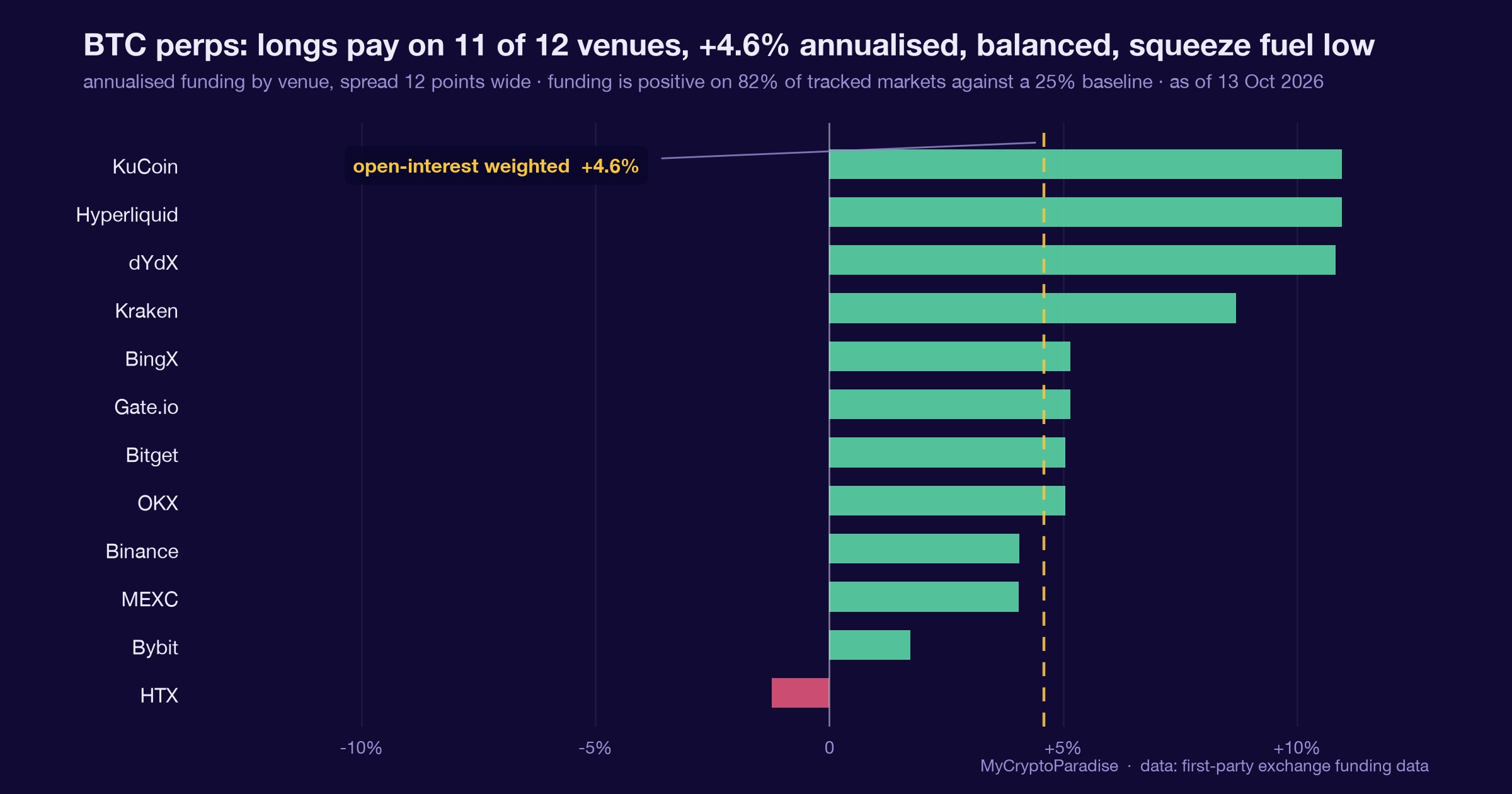
Watch open interest and funding alongside price. If the drop flushes leverage, open interest falling while price stabilizes, that is healthy deleveraging rather than fresh panic. Clean resets near support often precede the next leg up, not down.
We also watch the quality of any bounce. A sharp recovery that stalls into $84,000 on fading momentum would read as distribution into strength, a warning that smart money is selling relief rather than buying it.
The cleanest tell remains the reaction, not the headline. Markets that shrug off bad news near support are usually stronger than they look. Markets that keep sliding on it are telling you the sellers are not done. Let the level, not the fear, decide your read.
Where smart money sits against the headwind
The ParadiseTeam frames this through structure, not the decree itself. BTC near $81,427 sits right on the shelf that matters: $82,000 is the critical support being defended, with $81,000 as the lower boundary beneath it. The ban is a sentiment headwind arriving at a technically important zone.
That context is what we weigh. Our standing read has whales supporting a V-shaped recovery, with meaningful buy-in and a large long opened around $82,300. Open interest sits near a low and funding sits at its baseline, so there is little crowded leverage to unwind. A fear headline into a de-leveraged, well-supported zone is the classic condition where larger players accumulate from nervous sellers.
We stay honest about the two-sided picture. The news is bearish for crypto on its own facts: state control of transfers trims utility and adoption. That verdict stands regardless of our chart bias.
But the trader's job is positioning, not emotion. If $82,000 holds and buyers reclaim it, the regulatory scare likely becomes another dip that smart money bought. If $81,000 breaks and holds below, the bears earn the benefit of the doubt and lower targets open up.
The resistance map still caps enthusiasm. Even a strong bounce faces $84,000, the prior high, and the heavier $90,000 zone, where we assign a meaningful chance of rejection. Strength can meet selling there. So we respect the headwind, watch the level, and let the reaction, not the headline, set the bias.
The read behind this: we framed this story through our own market analysis, Bitcoin at $82K: Can Bulls Defend It?
Track it live: our live crypto funding rates and the Crypto Fear and Greed Index both update in real time, so you can watch this shift for yourself.
Related coverage
For exact entries, targets, and stop losses with full risk management, that is what ParadiseFamilyVIP is for. New to reading these moves? Start with our crypto trading strategies guide.
ParadiseTeam is monitoring the market situation closely, and we are taking these developments into consideration while building our trading tactics inside ParadiseFamilyVIP.
Crypto trading involves substantial risk. Prices are volatile and you can lose money. This article is educational and is not financial advice. Past performance does not guarantee future results.
Does Russia's cold wallet ban mark the start of a wider state crackdown on crypto?
This is how 1 Paradiser is calling it. Tap your call.
No calls on this one yet. Tap yours to be the first.
Free account, no password. Members just sign in.










Join the discussion
No comments yet. Members, share how you are reading this.