


Listen: the breakdown
Market briefing: Uniswap put its VolatilePair Hook live on Ethereum mainnet, starting with ETH/USDC, giving liquidity providers fees that move with the market. It is a structural upgrade, not a trade trigger. BTC was near $81,057 and ETH near $2,363 as the news landed.
- Uniswap v4 VolatilePair Hook went live on Ethereum mainnet on October 14, 2026, starting with the ETH/USDC pool.
- Fees now shift with price movement and trade direction, aiming to cut liquidity-provider losses and keep more arbitrage value inside the pool.
- UNI traded near $7.11 and ETH near $2,363 as the market treated the upgrade as long-term plumbing, not a same-day catalyst.
Uniswap just shipped its VolatilePair Hook to Ethereum mainnet, rewriting how liquidity providers earn fees. But if it is such an upgrade, why did nothing move?
Uniswap flipped the switch on its VolatilePair Hook. On October 14, 2026, the new v4 dynamic-fee hook went live on Ethereum mainnet, starting with the ETH/USDC pool. It is built for liquidity providers, and it changes one thing that quietly decides whether they make money: the fee.
Until now, most pool fees sat still. They did not care if the market was calm or tearing itself apart. The VolatilePair Hook makes the fee move with the market instead, adjusting to price movement and to the direction of each trade.
The goal is plain. Reduce the losses liquidity providers eat when prices run, and keep more of the arbitrage value inside the pool rather than handing it to faster traders. In other words, let the people supplying the capital keep a larger slice of what their capital earns.
The scale behind this is not small. Volatile pairs have moved more than $500 billion in volume on Uniswap, so even a modest efficiency gain compounds into real numbers over time.
Yet the market shrugged. UNI traded near $7.11 with roughly $480 million in daily volume. ETH sat near $2,363, down about 6% on the day, a move with no connection to this launch. A genuine upgrade arrived, and the chart did not blink. That gap between the announcement and the candle is the whole story.
Fees that finally respond to volatility
The real shift here is who keeps the money inside a pool. For years, liquidity providers have absorbed impermanent loss, the quiet bleed that happens when prices move and your balance drifts against you. A static fee never compensated for that properly, because it charged the same in a dead market and a violent one.
The VolatilePair Hook attacks that mismatch directly. When volatility rises, the cost of providing liquidity rises too, so the fee rises to match. When a trade pushes the pool further out of balance, direction-aware pricing charges more for the side doing the damage. That matters structurally because liquidity is the lifeblood of a decentralized exchange. Deeper, better-paid liquidity means tighter spreads, less slippage, and more volume staying on-chain rather than leaking to centralized exchanges.
There is a competitive angle too. Every automated market maker is fighting the same enemy: providers who deposit, watch impermanent loss grind them down, and leave. A protocol that keeps liquidity providers profitable keeps its depth. Depth attracts traders. Traders attract more liquidity. The flywheel is simple to describe and brutally hard to actually spin.
So this is not a headline about price. It is a headline about retention. If the hook does what it promises, Uniswap becomes a stickier home for serious capital, and stickiness is the moat that outlasts any single market cycle.
Why the charts stayed quiet on launch day
Start with what did not happen: nothing. UNI barely registered the launch, and ETH's 6% slide came from the broader tape, not from this hook. That silence is itself the signal.
Infrastructure upgrades rarely move price on the day. They change the mechanics of how value accrues, and those mechanics take weeks or months to show up in fees, in total value locked, and eventually in a token's cash flows. Smart money knows this. It treats a launch like this as a slow-burn value add, not a reason to chase a green candle.
Retail works differently. A quiet chart reads as nothing happened, so attention drifts to louder stories. That is the gap we watch. The people who understand the plumbing accumulate conviction while the people watching the price lose interest.
For BTC, the read-through is near zero. Bitcoin sat near $81,057, down about 3.2% on the day, driven by its own macro weather rather than anything in Uniswap's contracts. ETH's decline sits in the same bucket, a market-wide risk-off tone with no single confirmed trigger.
Alts tied to the DeFi theme, UNI first among them, carry the only real exposure here. And even there the effect is gradual. If the hook lifts liquidity-provider returns, UNI's long-term fundamental case strengthens quietly. The token did not need to rally today to make that true.
The metrics that prove the hook works
Forget the UNI candle for a moment. The honest scorecard for this launch is on-chain, not on the price chart.
Watch liquidity-provider returns in the ETH/USDC pool first. If dynamic fees do their job, providers should keep more of their deposited value through volatile stretches, and impermanent loss should bite less than it did under a flat fee. That is the single cleanest proof the design works.
Watch total value locked next. Capital is honest. If liquidity providers believe they are being paid fairly for volatility, deposits grow and stay. If the hook underdelivers, that capital quietly walks to wherever the yield is better. Money does not file complaints, it just leaves.
Then watch the rollout beyond ETH/USDC. The launch started with one pool. Expansion to more volatile pairs would signal the team is confident in the live results, not just the whitepaper.
Invalidation is just as clear. If total value locked in the pool stagnates or bleeds over the coming weeks, or if providers report the dynamic fees are not covering their losses in real conditions, the thesis weakens.
The broader crypto tape will keep doing its own thing in the meantime. BTC near $81K and ETH near $2,363 are responding to macro risk appetite, not to Uniswap's fee logic. Keep those two stories separate, because conflating them is how traders mistake noise for a catalyst.
What the hook changes for DeFi positioning
The ParadiseTeam reads this as a fundamentals story wearing no urgency, and that is exactly why it rewards patience over reaction.
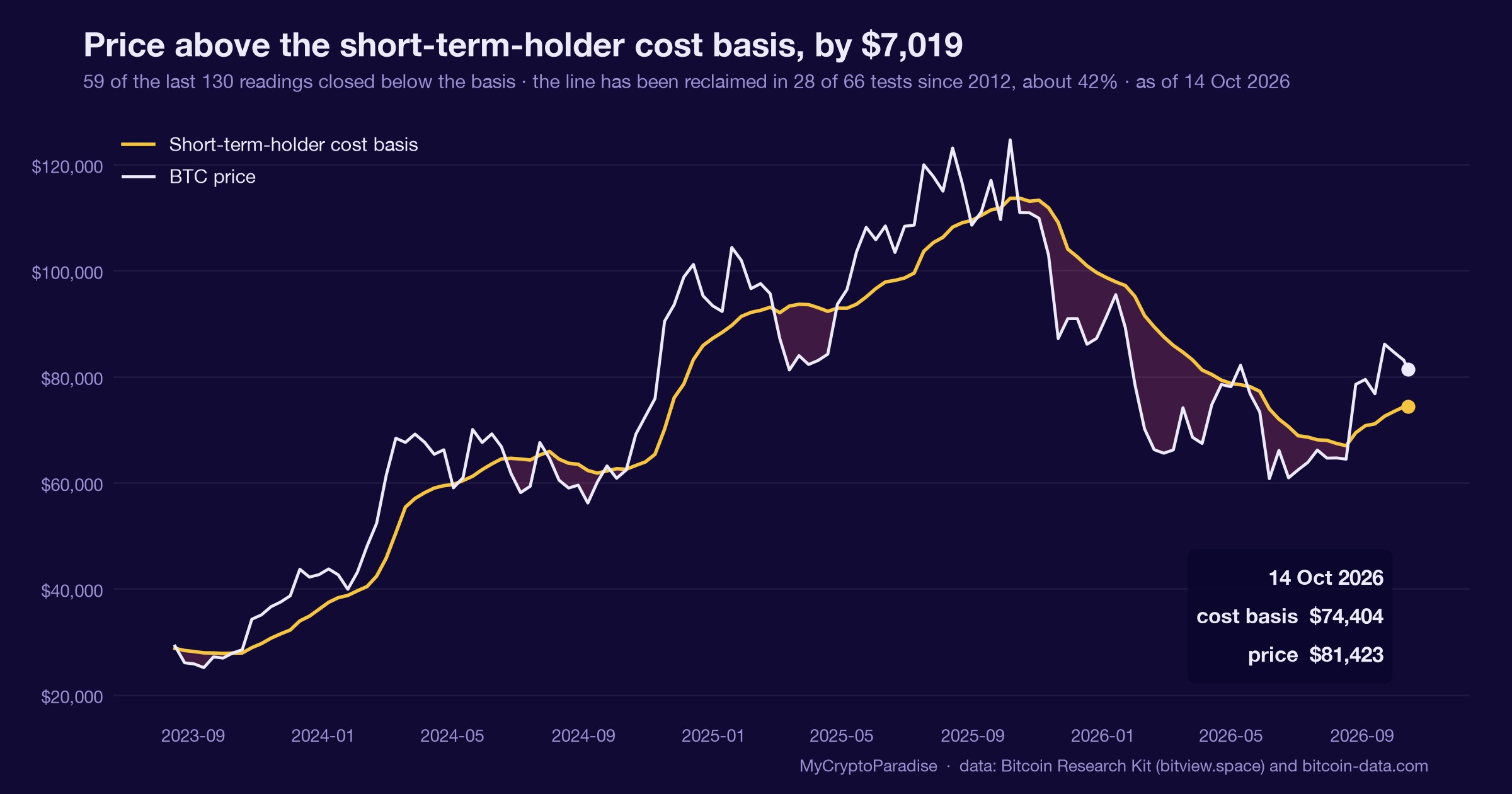
Start with the index we actually trade. Bitcoin was near $81,057 as of 03:28 UTC, pressing on the $82,000 level our lens marks as critical support, with $81,000 as the lower boundary. That is the real battle for the broad market right now, and it has nothing to do with Uniswap's contracts. Do not let a DeFi headline pull your attention off where the liquidity fight actually is.
For UNI specifically, we see no evidence of a price-move structure in this story, so the neutral verdict stands. There is no bearish print into support and no euphoric push into resistance to reframe. It is plumbing, and plumbing is valued slowly.
Our standing caution still applies to the wider book. If BTC holds $82,000 and whales keep absorbing supply, strength can carry toward $84,000 and the $84,500 target, but $90,000 remains a resistance we give a high chance of rejecting. That backdrop shapes risk appetite for every alt, UNI included.
So the positioning read is simple. Treat the hook as a reason to respect UNI's long-term case, not as a same-day trigger. Let the on-chain metrics, not the launch tweet, tell you when the fundamental improvement starts converting into real demand.
The read behind this: we framed this story through our own market analysis, Bitcoin at $82K: Can Bulls Defend It?
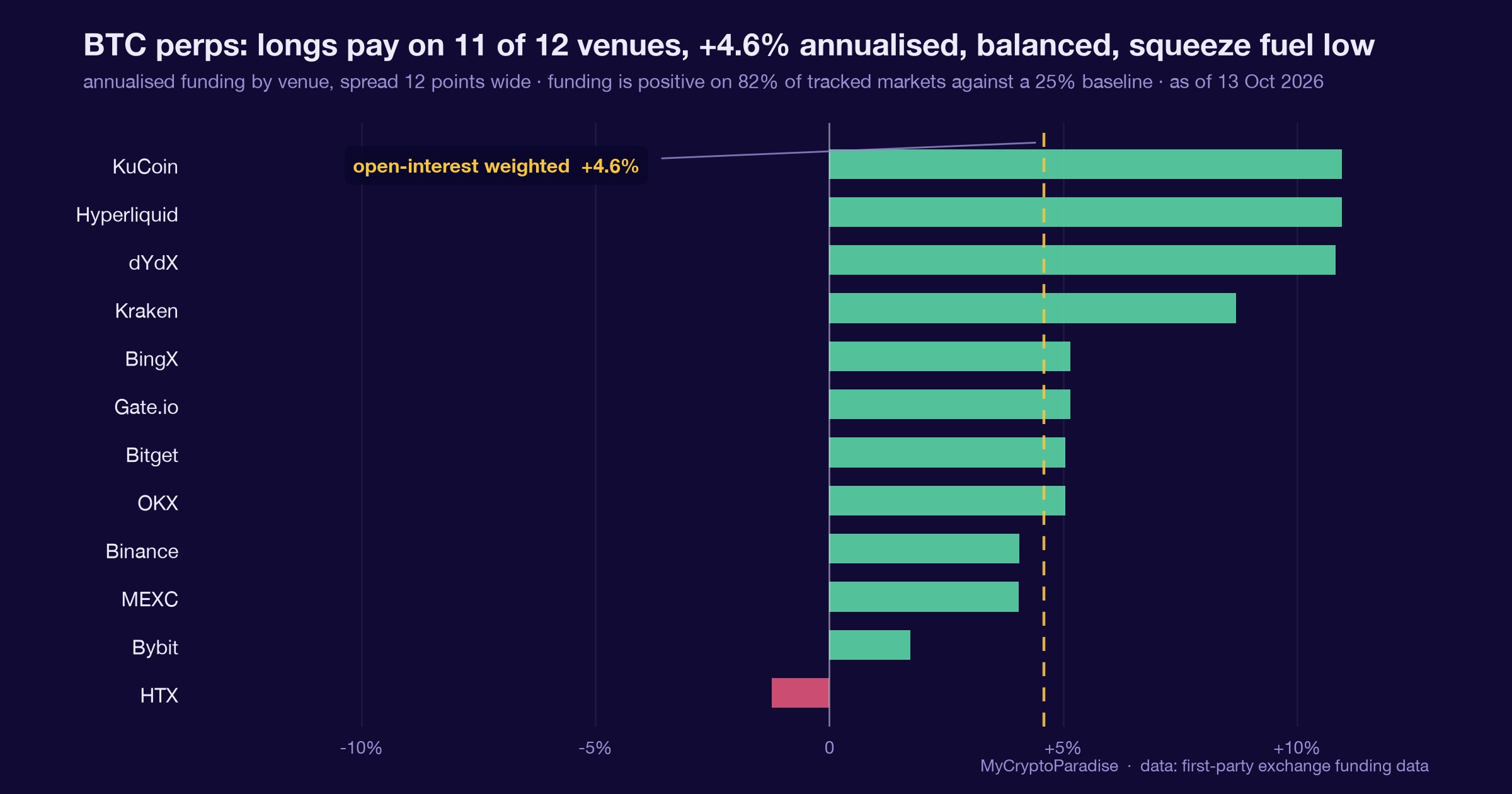
Track it live: our live crypto funding rates and the Crypto Fear and Greed Index both update in real time, so you can watch this shift for yourself.
Related coverage
For exact entries, targets, and stop losses with full risk management, that is what ParadiseFamilyVIP is for. New to reading these moves? Start with our crypto trading strategies guide.
ParadiseTeam is monitoring the market situation closely, and we are taking these developments into consideration while building our trading tactics inside ParadiseFamilyVIP.
Crypto trading involves substantial risk. Prices are volatile and you can lose money. This article is educational and is not financial advice. Past performance does not guarantee future results.
Does the VolatilePair Hook lift UNI's total value locked over the next month?
This is how 1 Paradiser is calling it. Tap your call.
No calls on this one yet. Tap yours to be the first.
Free account, no password. Members just sign in.




Join the discussion
No comments yet. Members, share how you are reading this.