

Listen: the breakdown
Developing story: This story is still unfolding. We are tracking it and will update this article as more details are confirmed.
Market briefing: Ankr's Ethereum cross-chain bridge was drained for roughly $292K to $303K through forged withdrawal receipts, and the pause flag stayed unset for hours. The dollar size is tiny, but the slow response matters. BTC traded near $74,220 as of 09:45 UTC.
- Attacker reused one small Optimism deposit to forge five withdrawal receipts and drain the bridge
- Losses pegged between roughly $292,000 and $303,600 across the affected tokens
- The bridge's pause flag stayed unset for hours, with the exploit still live at reporting
The Ankr bridge exploit cost under $300K, a rounding error for ETH. So why should traders holding bridge-wrapped assets care about the response, not the loss?
An attacker drained Ankr's Ethereum cross-chain bridge this morning, walking off with locked funds by abusing how the bridge trusted its own deposit receipts. Security analysis put the loss near $292,000. On-chain tracing of the same theft valued the stolen assets a little higher, around $303,600 across the affected tokens. By the brutal standards of bridge hacks, that is a small number.
The method is what makes this worth your attention. The attacker made one small deposit on the Optimism network. They then reused that single transaction to construct five forged withdrawal receipts. Those five calls pulled the bridge's locked assets out in sequence.
One real deposit, five fake exits.
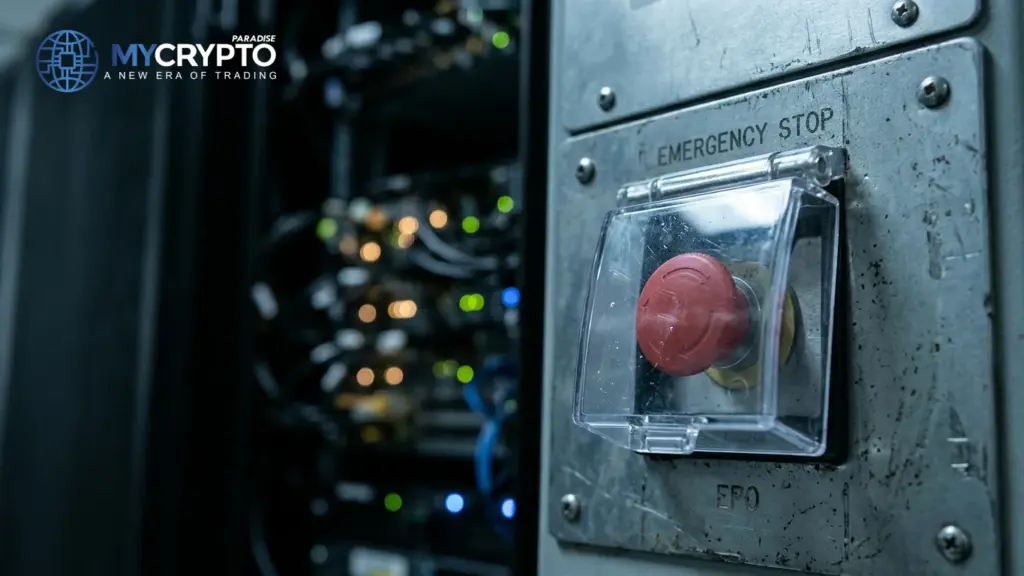
Here is the detail that should hold a trader longer than the headline. The exploit was still live at the time of reporting. The bridge's pause flag sat unset hours after the first withdrawal, per an early-morning check near 3:49 a.m. ET. A kill switch exists for exactly this moment. It had not been thrown.
That gap between knowing and acting is the real story in the Ankr bridge exploit. The stolen sum is almost a footnote. Every serious bridge ships with a pause mechanism precisely so a drain like this can be halted in minutes, not hours. The engineering question is uncomfortable but simple: a flaw was being exploited in plain sight on-chain, and the response arrived slower than the attacker's fifth withdrawal.
A forged receipt beat a pause flag
The transmission here is narrow, and honesty demands we say so first. Roughly $292K to $303K is immaterial to ETH's liquidity or market cap. This does not move the price of Ethereum, and anyone telling you otherwise is reaching.
What it does damage is something slower to price: trust in cross-chain infrastructure. Bridges hold other people's assets in locked contracts. That design only works if the redemption logic cannot be forged and the operators can freeze a drain fast. This incident failed on both counts.
The forged-receipt flaw is a known class of bug. Deposit-redemption logic that accepts a reused transaction as fresh proof is a door left ajar. The attacker simply walked through it five times.
But the deeper signal is the response window. A protocol that can watch funds leave for hours without hitting pause is telling the market something about its operational readiness. In DeFi, the contract is only half the safety system. The humans and the monitoring behind it are the other half.
For the wider market, the mechanism is reputational, not financial. Each avoidable bridge failure nudges cautious capital toward bridges with faster incident response and tighter redemption checks. That is a slow, cumulative drag on the weakest links, not a sudden shock. The Ankr bridge exploit is a case study in that drag, isolated to Ankr and its bridge-exposed users rather than a verdict on ETH.
Too small for ETH, costly for trust
Start with the number, because the number ends the spillover argument. A drain of roughly $292K to $303K registers as nothing against ETH's daily flows. ETH was trading near $2,105 and down close to 5.8% on the day, but that drawdown is far larger than this exploit and better explained by broader market pressure.
So the direct liquidity cascade from this story is essentially flat. BTC, near $74,220 and off 2.2% on the day, has no causal link to a single bridge losing six figures. ETH has no measurable reaction tied to this headline either. Alts tied to Ankr's bridge are the only honest line of exposure.
The real impact is concentrated and reputational. Holders of bridge-wrapped assets routed through Ankr carry the direct risk here, not the broad market. If those wrapped tokens lose full backing, that is a localised solvency question for that pool, not a systemic one.
The second-order effect is confidence. Bridges compete on safety as much as on fees. A slow freeze on a live drain is the kind of thing risk managers remember when they route the next large transfer. That capital does not panic-sell. It quietly reroutes.
So we read this as a genuine negative, but a contained one. It is bad news for Ankr and bridge-exposed users specifically. It is not a signal about ETH, and we will not dress it up as one.
When the kill switch finally flips
The first thing to track is the pause itself. The moment the bridge contract is frozen, the drain stops and the loss is capped at whatever left before the switch flipped. A fast freeze from here would partly repair the operational picture. Continued silence would deepen the concern.
Next, watch the backing of any Ankr bridge-wrapped assets. If locked collateral was drained, the wrapped tokens on the other side may trade below their peg until reserves are topped up or the shortfall is covered. That depeg, if it happens, is the clearest on-chain consequence to monitor for exposed holders.
Then watch the disclosure. A credible post-incident account, the size of the hole, the fix, and the plan to make users whole, is what separates a recoverable reputation from a lasting one. Vague reassurance is a yellow flag.
Invalidation of the bearish read is straightforward. A rapid pause, a clear statement that user funds are backstopped, and a clean patch would shrink this to a minor footnote within days. The market would move on fast, because the dollar size never justified more.
Confirmation of the concern is the opposite path: the exploit running longer, the backing uncertain, and the communication thin. In that case the damage is less about the stolen sum and more about what the delay reveals. For anyone holding bridge-wrapped assets tied to Ankr, the response time is the real thing to watch, not the headline figure.
What an unpaused bridge tells positioning
On this specific event, the ParadiseTeam sees no edge to trade and no accumulation signal hiding in the headline. There is no evidence of smart money buying this dip or retail panicking over it. Sentiment trackers show no measurable reaction. A six-figure bridge loss is simply not a market catalyst, and we will not manufacture one.
So we treat this as risk hygiene, not a position. If you hold bridge-wrapped assets routed through Ankr, your exposure is operational, not macro. Size that risk directly.
Against the broader tape, our standing lens stays unchanged by this story. BTC traded near $74,220 as of 09:45 UTC, below the $76,000 support we watch as the line between relief and continuation. The daily and weekly structure still leans bearish toward lower targets, while whales quietly absorb selling into fear on the short-term chart.
That tug-of-war is the context, not this exploit. A squeeze toward the $81,700 to $82,500 liquidation cluster remains the path of least resistance in the near term, with the $70,000 to $71,000 downside cluster as the magnet if $76,000 is lost cleanly.
The honest takeaway: this bridge story does not alter a single one of those levels. It is a reminder that in DeFi, the smart-money move is boring. Route through infrastructure that can freeze a drain in minutes, and let the headline hunters chase the $300K.
The read behind this: we framed this story through our own market analysis, Bitcoin Squeeze to $82K or Crash to $44K?
Track it live: our Crypto Fear and Greed Index and the live crypto funding rates both update in real time, so you can watch this shift for yourself.
Related coverage
For exact entries, targets, and stop losses with full risk management, that is what ParadiseFamilyVIP is for. New to reading these moves? Start with our crypto trading strategies guide.
ParadiseTeam is monitoring the market situation closely, and we are taking these developments into consideration while building our trading tactics inside ParadiseFamilyVIP.
Crypto trading involves substantial risk. Prices are volatile and you can lose money. This article is educational and is not financial advice. Past performance does not guarantee future results.
What matters more in the Ankr bridge exploit, the loss or the slow freeze?
How 1 Paradiser is calling it
The first call is still open
Free account, no password. Members just sign in.








Join the discussion
No comments yet. Members, share how you are reading this.