


Listen: the breakdown
Developing story: This story is still unfolding. We are tracking it and will update this article as more details are confirmed.
Market briefing: On-chain trackers flag wallets borrowing stablecoins to buy ETH near $2,155 and pulling ETH off an exchange, all while the broader market bleeds and BTC trades near $75,190 as of 02:57 UTC. The read: leverage-funded accumulation against retail fear.
- A wallet borrowed 22M USDT from Aave and spent 21.55M of it buying 10,000 ETH at $2,155.
- A second wallet pulled 3,500 ETH, worth $7.53M, off a centralized exchange minutes earlier.
- ETH traded near $2,145 after a roughly 3.8% daily drop, inside a market-wide risk-off slide.
Whales are reportedly buying the ETH dip with borrowed stablecoins while retail sells in fear. So is this smart money accumulating, or leverage walking into a trap?
The market is bleeding, and someone with capital is leaning into it. On-chain trackers flagged a wallet that borrowed 22 million USDT from Aave, then spent 21.55 million of it buying 10,000 ETH at roughly $2,155. That is not a passive hold. That is leverage, deployed into a falling price.
Minutes earlier, a separate wallet pulled 3,500 ETH, around $7.53 million, off a centralized exchange. Coins leaving an exchange usually mean one thing: the owner is not planning to sell them soon.
All of this landed as ETH sat near $2,145, down close to 3.8% on the day, inside a broader market-wide drop. BTC itself traded near $75,190 as of 02:57 UTC.
Here is the structural tension. In a genuine trend change, large holders tend to send coins toward exchanges and reduce exposure. What the trackers describe is the opposite: borrowing stablecoins to buy spot, and withdrawing coins from the order book. Both actions shrink the ETH available to be sold.
We treat the specific wallet figures as directional color, not gospel. The on-chain claims come from a single tracking source with no independent corroboration in front of us.
There is also no single confirmed same-day catalyst behind the slide. So the accumulation read is our interpretation of the behaviour, not a reported cause. The behaviour, if accurate, cuts hard against the panic narrative the price action is screaming.
Borrowed leverage buying spot tells a story
Borrowing to buy spot is a specific signal, and it rarely shows up in a true breakdown. When a wallet takes on 22 million USDT of debt from Aave to buy ETH, it is paying interest to be long. That only makes sense if the buyer believes the drop is a liquidity flush, not the start of a structural leg lower.
The macro backdrop matters here. This ETH dip buying is happening inside market-wide risk-off selling, not an ETH-specific scare. There is no clean same-day catalyst we can point to. In that kind of indiscriminate drop, forced sellers and fearful retail dump good assets alongside bad ones, which is exactly the environment patient capital waits for.
The exchange withdrawal compounds the effect. ETH leaving an exchange is ETH that cannot immediately be sold into the book. Thinner available supply, at a moment when retail wants out, means later buyers compete for fewer coins. That is the transmission chain. Fear drives retail to the exit, leveraged and withdrawing wallets quietly take the other side, and the floating supply on exchanges tightens.
None of this guarantees a bottom. One wallet borrowing from Aave does not move a global market, and leverage deployed early can still be liquidated if the slide deepens. But the direction of the flow, borrowed money into spot and coins off the exchange, is an accumulation footprint, not a distribution one.
Tightening ETH supply against a fearful tape
If the flows are real, the first-order effect on ETH is supportive. Spot buying absorbs sell pressure directly, and withdrawals pull sellable coins off the book. Together they build a tactical floor beneath a frightened market.
The cascade usually runs through BTC first. Bitcoin sets the risk tone for the whole complex, and it was trading near $75,190 as of 02:57 UTC, only modestly red on the day. If BTC steadies, ETH gets room to let this accumulation footprint show up in price rather than get buried under broad selling.
ETH is the direct subject here. A leveraged buyer paying to be long near $2,155, plus coins leaving an exchange, is the kind of behaviour that caps downside before it reverses it. First the bleeding slows. Only then does price turn.
Alts sit last in the chain and feel it most violently in both directions. In a market-wide drop, they bleed hardest, so any ETH stabilisation tends to reach them late and unevenly. A relief bounce in ETH is not an all-clear for the long tail.
The honest caveat: this rests on a single tracking source. Treat the wallet figures as a read on positioning, not a confirmed order flow. Two wallets, however large, do not outweigh a genuine trend if the macro selling keeps coming. What they do is tell you where the confident money is leaning while everyone else reaches for the exit.
Will exchange supply keep draining or reverse
The confirmation to watch is whether this behaviour spreads beyond two wallets. Isolated accumulation is a data point. A sustained net drain of ETH off exchanges, day after day, is a trend, and it would turn this story from color into conviction.
Stabilising price is the second tell. If ETH stops making lower lows while the broader tape is still fearful, that divergence often marks absorption, selling pressure getting soaked up rather than followed. Price refusing to fall on bad sentiment is itself a signal.
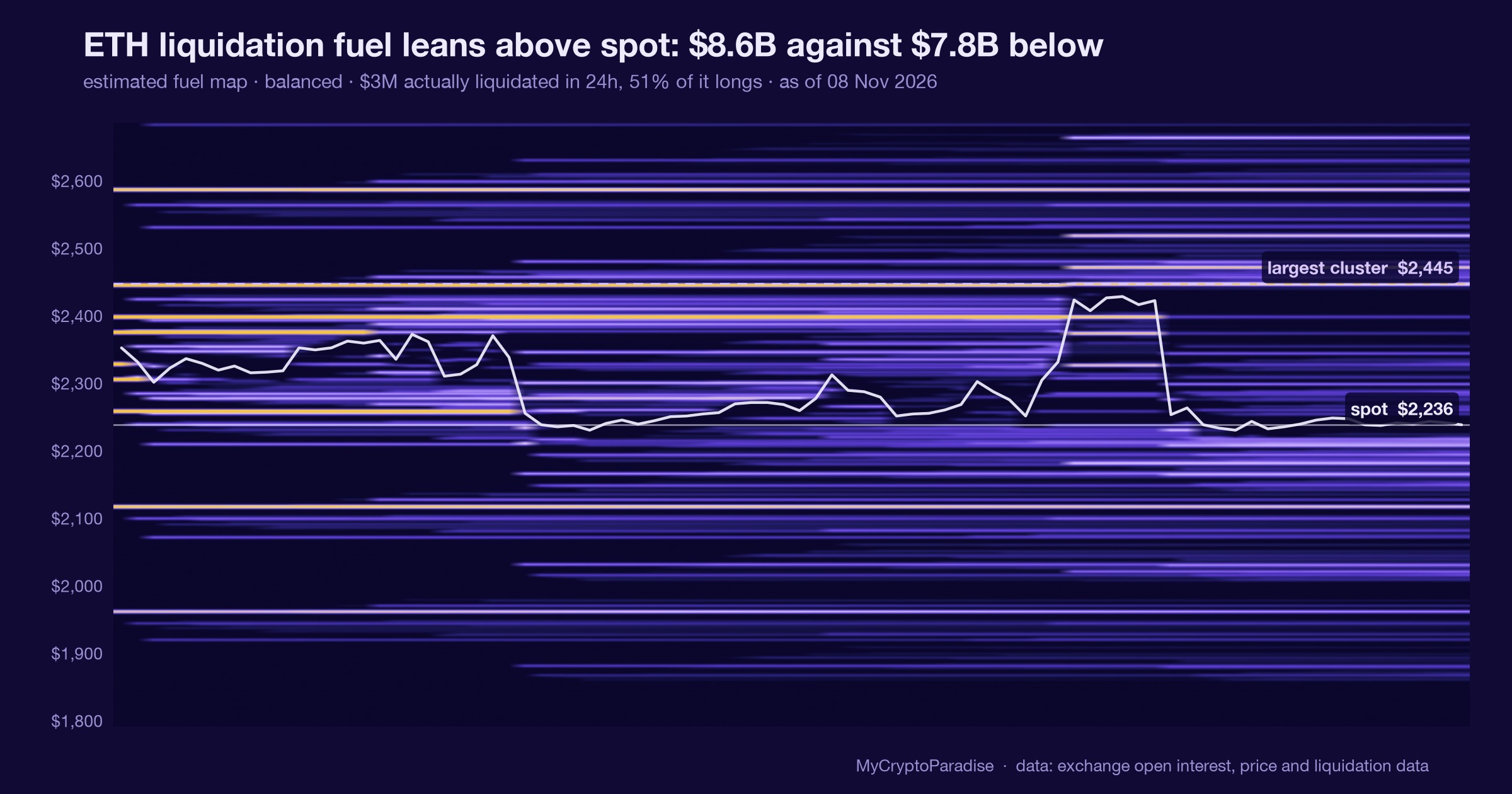
The leverage angle is the risk, and it cuts both ways. The Aave borrow that funds this buy is also a liability. If the market-wide slide deepens, borrowed longs are the first to get hunted, and a liquidation of exactly these positions would flip the supportive read into fresh selling.
So the invalidation is clean. Watch for ETH flooding back onto exchanges, or a forced unwind of leveraged longs near the lows. Either would tell you the dip buyers were early, not right.
Sentiment is the backdrop to all of it. Retail reads a 3.8% drop as a reason to leave. Patient capital reads the same print as a discount. Only one of them is usually right at the turn, and history is not kind to the crowd that sells the flush. The tape over the next sessions settles which camp this was.
Reading this dip buying through smart money
The ParadiseTeam frames this as textbook tactical accumulation into fear, which fits the standing read: whales net buying over the past 24 hours, using the dip as liquidity rather than chasing. Borrowed stablecoins into spot ETH, and coins pulled off an exchange, are the on-chain shape of that behaviour.
Still, we hold the bigger picture. With BTC near $75,190 as of 02:57 UTC, the dominant daily and weekly structure stays cautious, and $76,000 is the line that matters. Lose it and hold below, and the downside cluster around $70,000 to $71,000 comes into view, which would pressure ETH regardless of two confident wallets.
Reclaim $76,000 with conviction and the path of least resistance flips upward, toward the $81,700 to $82,500 band where a heavy short liquidation pocket sits. That squeeze would carry ETH with it, and this dip buying would look well-timed.
Our edge framing: retail is fearful near the lows, and that fear is precisely the liquidity larger players use to accumulate. The wallets borrowing to buy are taking the other side of the panic.
The discipline is to treat strength as relief and short-covering fuel, not a confirmed trend change, until the higher-timeframe bearish structure actually breaks. Confident leverage can still be liquidated. The ParadiseTeam reads accumulation here, but respects that the people paying interest to be long are also the easiest stops to run if the flush has further to go.
The read behind this: we framed this story through our own market analysis, Bitcoin Squeeze to $82K or Crash to $44K?
Track it live: our Crypto Whale Alert and Tracker and the live crypto funding rates both update in real time, so you can watch this shift for yourself.
Related coverage
For exact entries, targets, and stop losses with full risk management, that is what ParadiseFamilyVIP is for. New to reading these moves? Start with our crypto trading strategies guide.
ParadiseTeam is monitoring the market situation closely, and we are taking these developments into consideration while building our trading tactics inside ParadiseFamilyVIP.
Crypto trading involves substantial risk. Prices are volatile and you can lose money. This article is educational and is not financial advice. Past performance does not guarantee future results.
Is this leverage-funded ETH buying real accumulation or an early trap?
How 1 Paradiser is calling it
The first call is still open
Free account, no password. Members just sign in.
Follow this topic: Stablecoin news










Join the discussion
No comments yet. Members, share how you are reading this.