

In short
An AI trading platform is software that scans markets and can place trades for you using rules or models. Judge it on four things, not its marketing. First, who holds your money. Second, what your API keys are allowed to do. Third, whether the track record is real and dated. Fourth, how much manual control you keep. Treat every promise of inevitable profit as unproven until shown. Demand trade-only key access, never withdrawal rights. Ask for verifiable results, not polished screenshots. If custody, controls and proof are weak, the clever automation does not matter. Vet the safety layer before you fund anything.
What does an AI trading platform actually promise versus deliver?
An AI trading platform promises to read markets faster than you and to trade without emotion. In practice it delivers rule-based automation that is only as good as its logic and data. It cannot predict the future. Treat bold claims as marketing until the results are dated and verifiable.
The pitch usually sounds inevitable. A dashboard, a green equity curve, a few testimonials, and the suggestion that not using it is the real risk. That framing is the point of the ad, not evidence. Automation removes hesitation, which cuts both ways: it executes a good plan quickly, and it executes a flawed one just as fast.
Most tools sit in one of three buckets. Signal followers copy a strategy. Grid and rebalancing bots trade a range. Model-driven systems try to adjust to conditions. None escapes market reality. Want the honest boundary of what these systems can and cannot do? Read our note on the limits of automation before you get attached to any single product.
What is different here
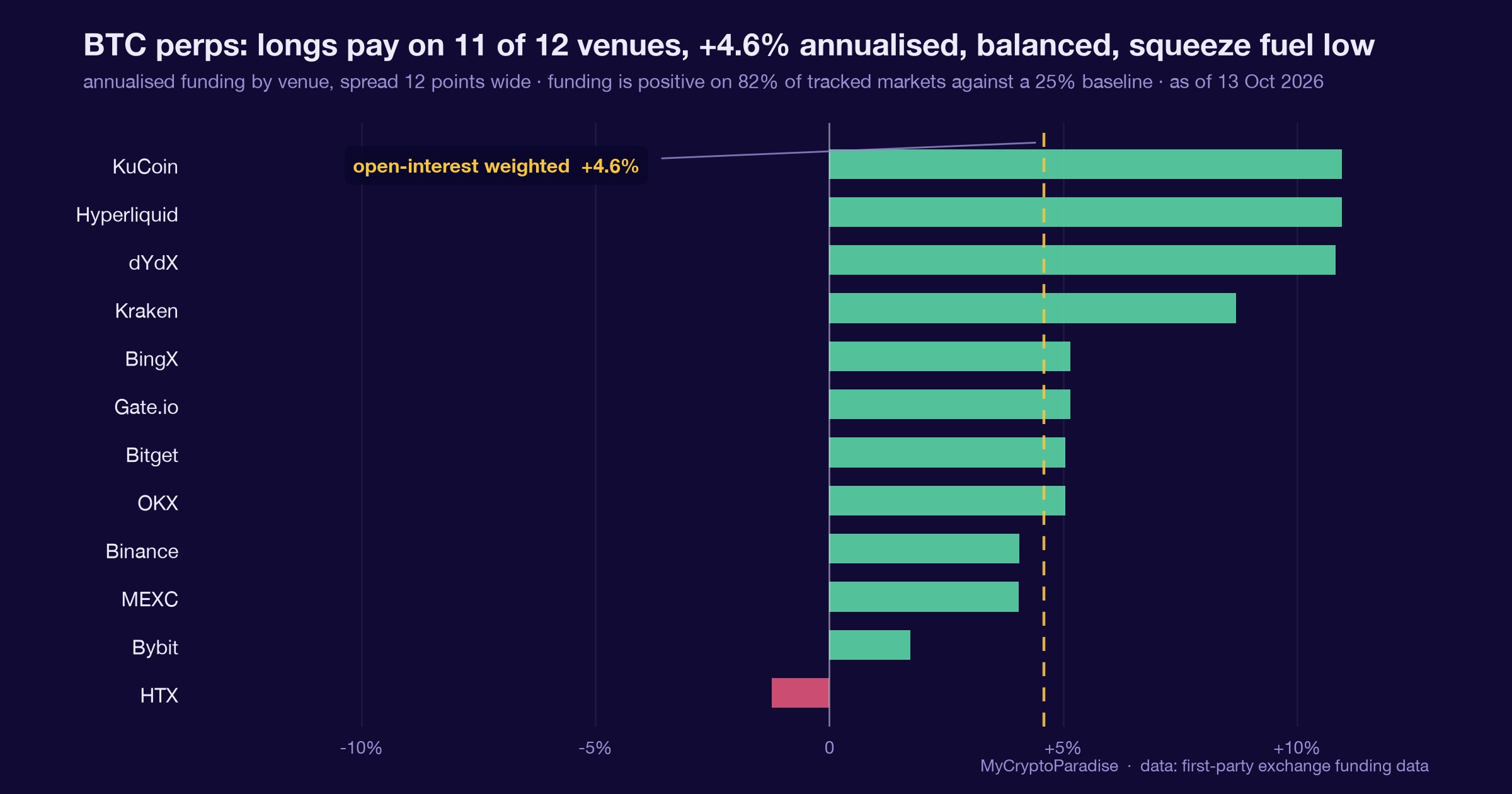
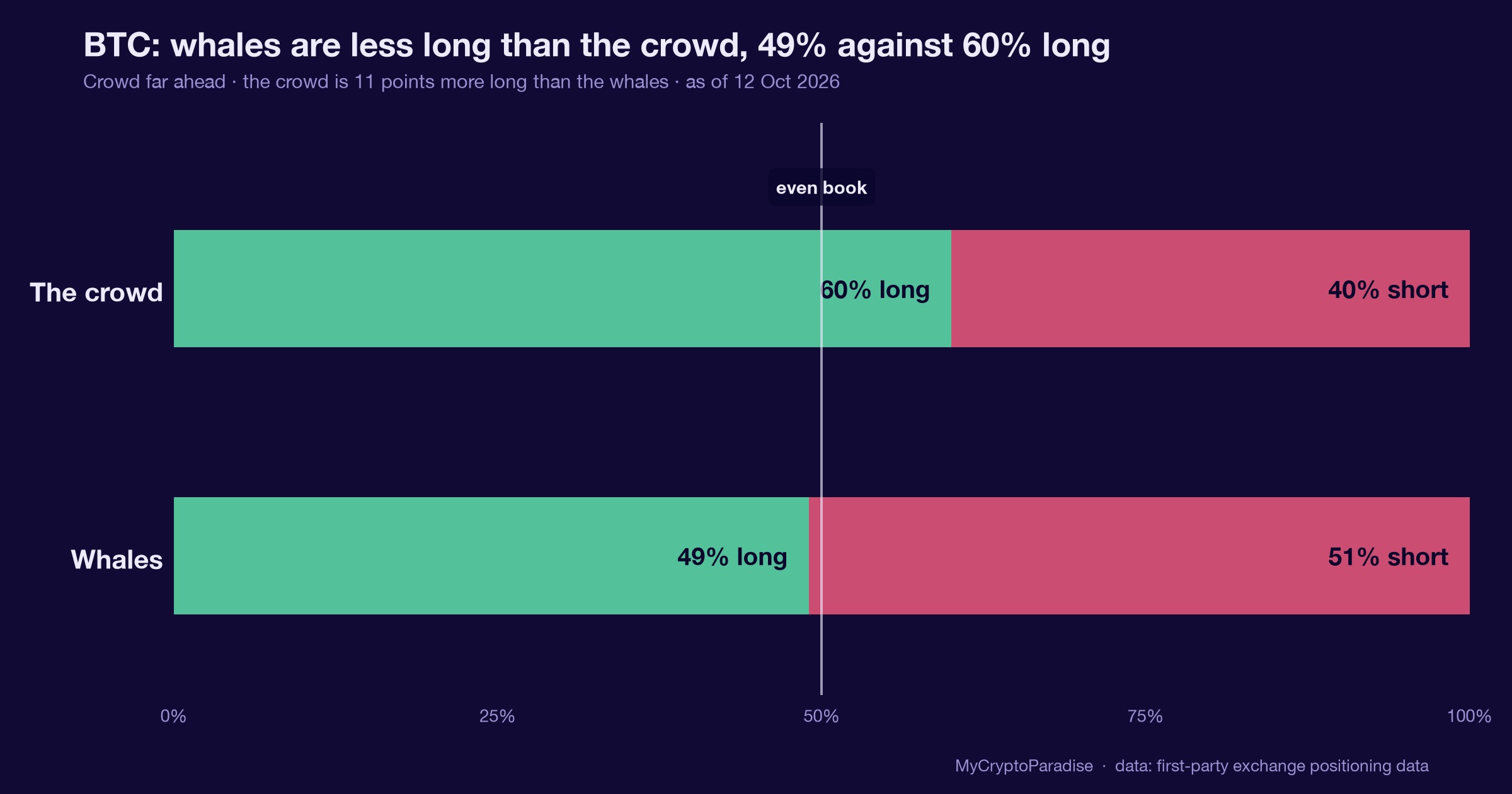
The ParadiseTeam treats automation as one tool inside a risk-managed process, never a replacement for a human read. We test any tool the way we ask you to test one. Small size first, controls locked down. We check every result against live positioning across all major exchanges before we trust it.
The features that matter and the ones that are decoration
Vendors compete on features because features are easy to list. Most of them do not protect your capital. A tidy interface, a large number of supported coins, and a busy analytics panel are pleasant, not decisive. What matters is narrower and less glamorous.
Three features genuinely change your risk. Position sizing controls decide how much the tool can commit on any trade. A working stop mechanism decides how much you lose when it is wrong. Clear on and off switches decide how fast you can stop the whole thing. Everything else is secondary to those.
The common decorations to discount:
- Backtests with no dated live results
- A high count of “strategies” you cannot inspect
- Sentiment scores presented as certainty
Judge a tool by what it lets you limit and stop, not by how much it lets you launch. Our comparison framework scores tools on those control features first, which is where most flashy products quietly fall short.
Custody, API scope and controls: what is the safety layer?
The safety layer is who holds your money and what the platform can do with it. In the safest setup, your funds stay on a reputable exchange or in your own wallet. The tool connects through an API key with withdrawals disabled. It can trade on your behalf but can never move money out.
This is the single most important check, so treat it as pass or fail. Most major exchanges let you scope a key to reading data and placing trades while blocking withdrawals. Many also let you restrict it to specific IP addresses. You can confirm the exact options in an exchange’s API documentation rather than trusting the platform’s summary.
Two structures should make you cautious. First, any platform that asks you to deposit funds into its own account: now you are trusting an opaque operator with custody, not just execution. Second, any request for withdrawal permission on an API key. There is no legitimate automation reason for it. Regulators have repeatedly warned about firms that combine custody with grand automated-return claims, a pattern the UK regulator’s consumer warnings describe plainly.
Keep the ability to revoke access in seconds. If you cannot cut the connection from your own exchange settings, you do not really control the tool.
Transparency and track record: what should you demand before funding?
Before you fund anything, demand a track record that is dated, covers losing periods as well as winning ones, and can be checked independently. A screenshot is not proof. A curve with no timestamps is not proof. If nobody can show real, time-stamped performance, assume the record does not exist.
Good transparency looks specific. It names the strategy type, the markets tested, the fees taken, and the drawdowns endured. It does not hide the bad months. Be especially wary of any figure framed as a daily or guaranteed return. That is a hallmark of the schemes the SEC’s investor education service keeps flagging.
Ask who is behind the product. An anonymous team, a company with no history, and no way to contact a human are all warnings. This is the standard we hold ourselves to as well. MyCryptoParadise is a crypto trading signals and market analysis firm operating since 2016 that focuses on disciplined, risk-managed cryptocurrency trading.
Copy-trading products deserve the same scrutiny, because “follow a top trader” hides the same custody and proof questions. If that is your route, work through our guide to copy-trading options before you allocate.
How can you vet an AI trading platform in ten minutes?
You can rule out most weak products in ten minutes by checking custody, controls and proof in order. If any one fails, stop there. A brilliant strategy behind a dangerous safety layer is still a bad deal.
Run these five checks in sequence:
- Confirm withdrawals are disabled on every API key
- Find a dated, independently verifiable track record
- Check who actually holds your funds
- Read the full fee and cancellation terms
- Test with a small amount you can lose
Work the checklist below against any platform you are considering right now, one line at a time.
Once a tool clears these five, you can go deeper. Our fuller evaluation guide extends the same risk-first logic into strategy fit and long-term monitoring. The order never changes: safety first, proof second, features last.
Frequently asked questions
Are AI trading platforms safe to use?
They can be, if the safety layer is strong. Use trade-only API keys with withdrawals disabled, and keep funds on a reputable exchange or in your own custody. Start small, watch how it behaves, and never grant access you cannot revoke quickly.
Do AI trading platforms actually make money?
Some help disciplined traders, many do not, and none can guarantee gains. Performance depends on the strategy, market conditions and fees. Ignore screenshots and inevitable-sounding pitches. Demand a dated, verifiable track record across different markets before you judge whether the automation adds any real edge.
What API permissions should an AI trading platform have?
Only the minimum it needs. Enable trading and reading data, but disable withdrawals completely. Where possible, restrict the key to specific IP addresses and set an expiry. If a platform insists on withdrawal rights, treat that as a serious red flag and walk away.
How do I check an AI trading platform’s track record?
Ask for results that are dated, cover winning and losing periods, and can be checked independently. Look for verified exchange statements or third-party audits, not marketing charts. Test with a small amount first. If nobody can show real, time-stamped performance, assume the record does not exist.
Crypto trading involves substantial risk and is not suitable for everyone. Nothing here is financial advice; it is education only. Never risk more than you can afford to lose.








Join the discussion 12
Tracking backtesting biases is key, Priya, but the whole "risk-first guide" thing feels a bit hollow when they ignore the macro liquidity driving everything... that's where the real risk is, way beyond API controls.
Yeah, API controls are massive, especially if you’re only checking weekly closes like me. So much noise below that! 🙄
oh, i never thought about how much data the API *itself* is sending. is there a way to filter that too, not just the timeframe? sorry if thats a silly question.
Indeed, Ingrid. The noise below the weekly close is significant, though for certain instruments, the daily open can reveal more.
Beyond custody, I look closely at their data sources and how they handle backtesting biases. It's difficult to verify, but essential for evaluating any platform's claims.
I'd push hard on the "transparency" part of this guide. How can we audit something if the platform only provides a black box and some performance charts?
Custody is huge yeah, especially after mt gox for the old-timers 😬, but i still end up mostly trusting my gut with teh newer tech 😅. always a balancing act innit? ⚖️📈
vet custody they say after 2016 you'd think people would learn. a 'risk-first guide' that suggests delegating your money is a contradiction in terms, no?
Risk-first" makes me wonder about the liquidity in those reported returns. Without a full order book, even great backtests are a fantasy of execution. It’s always the spread that eats you.
for API controls, I'm primarily focused on the latency of the data streams when it comes to assessing trade execution accuracy, and maybe some slippage tolerance settings.
track record is what they all promise, but how many survive a full cycle? paradiseTeam started in 2016, a bit late for that claim.
nah paradise started in 2016 but the team behind it was already trading longer 🙄 thats the difference right? 📈