

Listen: the breakdown
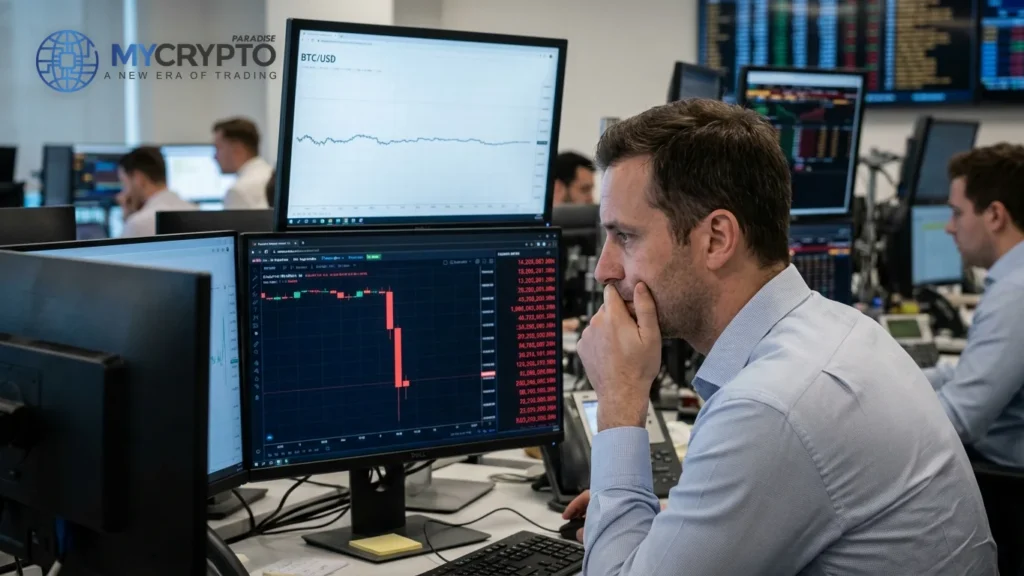
Market briefing: An abnormal order briefly slammed SKHX under $930 and wiped out more than $80M in leveraged longs. BTC held near $63,455, down 2.8 percent on the day, barely flinching at the altcoin drama.
- An abnormal order pushed SKHX below $930 and triggered over $80M in liquidations.
- Trader 0xc985 lost $260K when a 2,026 SKHX long worth $2.08M was fully liquidated.
- BTC held near $63,455 and ETH near $1,880, showing the shock stayed contained to the altcoin.
A single abnormal order sent SKHX under $930 and detonated an $80M liquidation cascade. So who really pays when one wick clears the book?
One order did the damage. An abnormal print briefly pushed SKHX below $930, and the leverage stacked above it had nowhere to hide. More than $80M in positions liquidated in the space of a wick.
The clearest victim has a name, or at least an address. Trader 0xc985 held a 2,026 SKHX long worth roughly $2.08M. When price gapped through their liquidation level, the whole position closed at once. The loss came to about $260K.
That is the mechanical reality of thin altcoin order books. A market that looks deep in calm conditions can be hollow underneath, and one aggressive order finds the vacuum fast. Price does not fall because sellers won the argument. It falls because there were no bids left to catch it.
What stands out is what did not happen. BTC sat near $63,455, down 2.8 percent on the day but flat over the last hour. ETH traded around $1,880. Neither moved on the SKHX event in any meaningful way.
That divergence is the story. An $80M cascade in one token barely registered on the majors. This was a local structural failure, not a market-wide catalyst, and treating it as a signal for the whole tape would be a mistake. It says more about SKHX liquidity than about crypto's direction.
Why one thin book breaks so fast
This SKHX liquidation matters as a lesson in structure, not as a macro event. The transmission mechanism here is leverage meeting a thin order book, and it repeats across the long tail of altcoins every cycle.
When liquidity is shallow, price is only as strong as the nearest resting bids. An abnormal order removes those bids, price gaps down, and the drop trips liquidation engines. Those forced sells then push price lower still, tripping the next tier. The cascade feeds itself.
Trader 0xc985's $2.08M long did not fail because the thesis was wrong. It failed because the position was too large for the liquidity beneath it. That distinction matters for anyone sizing leverage on a mid-cap token.
The wider signal is about sentiment, not price. Events like this circulate fast and deepen the fear already sitting in retail. Each visible blow-up makes the crowd a little more defensive, a little quicker to hold shorts, a little more convinced the floor is about to give.
That fear is the real product of a shakeout. It rarely moves BTC directly, but it shifts positioning. And positioning, not headlines, is what smart money reads.
How the shock stayed inside SKHX
The liquidity cascade began and ended inside SKHX. That containment is the most useful data point in the whole event.
BTC held near $63,455, essentially flat on the hour despite the daily red. ETH sat near $1,880, down 3.6 percent on the day but showing no fresh reaction to the altcoin wick. The majors treated an $80M cascade as background noise.
That tells you where the fragility actually lives. In a genuine risk-off flush, an $80M liquidation in any token drags BTC and ETH with it as correlated leverage unwinds together. Here the contagion simply did not spread. So the practical read is narrow. This was idiosyncratic SKHX damage, driven by one order into thin depth, not a symptom of broad deleveraging across the market.
For alts more broadly, the caution is obvious. Thin books can gap on a single print, and stops sitting just below round numbers like $930 are exactly where forced selling concentrates. If you trade the long tail, the liquidation map matters more than the chart pattern. The majors, for now, are telling a calmer story than the SKHX tape.
What separates a shakeout from a top
The thing to watch is whether this stays contained or starts to rhyme. One thin-book blow-up is noise. A cluster of them across several altcoins in a short window would be a different message.
Confirmation of the contained read looks simple. BTC continues to hold its footing near current levels, ETH stabilises, and no other major token prints a similar forced cascade. In that case SKHX was a local accident and nothing more.
Invalidation looks like spread. If altcoin liquidations start stacking across names and BTC finally cracks its nearby support, the story changes from isolated failure to broad deleveraging. Then the fear stops being useful and becomes real risk.
Watch open interest and funding on the majors, not just on SKHX. OI (open interest) is the total value of outstanding leveraged contracts. Rising OI into falling price warns that fresh shorts are pressing, which often sets up the squeeze rather than the collapse.
Also watch how retail reacts to this specific story. Every visible liquidation deepens crowd fear, and fear at support is the exact condition our read cares about. If sentiment sours while BTC refuses to break, the divergence is the tell. The crowd selling a level that will not give is a familiar sight, and it rarely ends where the crowd expects.
What this shakeout signals about liquidity
The ParadiseTeam reads this SKHX cascade as texture, not trend. It changes nothing structural on BTC, but it fits a pattern we are already tracking.
Our working lens stays cautiously bullish. We see room for a final push toward the $69,000 to $79,000 resistance zone before a retrace back to the $61,000 to $60,000 area, with a larger $44,000 to $55,000 zone in view later. BTC near $63,455 as of this print sits inside that upward leg, not below it.
Here is where this event connects. Shakeouts like SKHX manufacture fear, and fear pushes retail into shorts. We observe smart money doing the opposite, holding longs and absorbing the selling that panicked traders hand over.
The mechanism is straightforward. Forced liquidations create motivated sellers at bad prices. Someone takes the other side. When that happens while price holds a level the crowd expects to break, it usually points to accumulation, not distribution.
So we treat this as confirmation of positioning, not a trade trigger. The read flips bearish only if BTC loses its nearby support and altcoin cascades start spreading beyond one token. Until then, an isolated $80M wipeout in a thin book looks like the market shaking out weak hands, exactly as our bias expects. Probabilities, not promises, and stops stay respected either way.
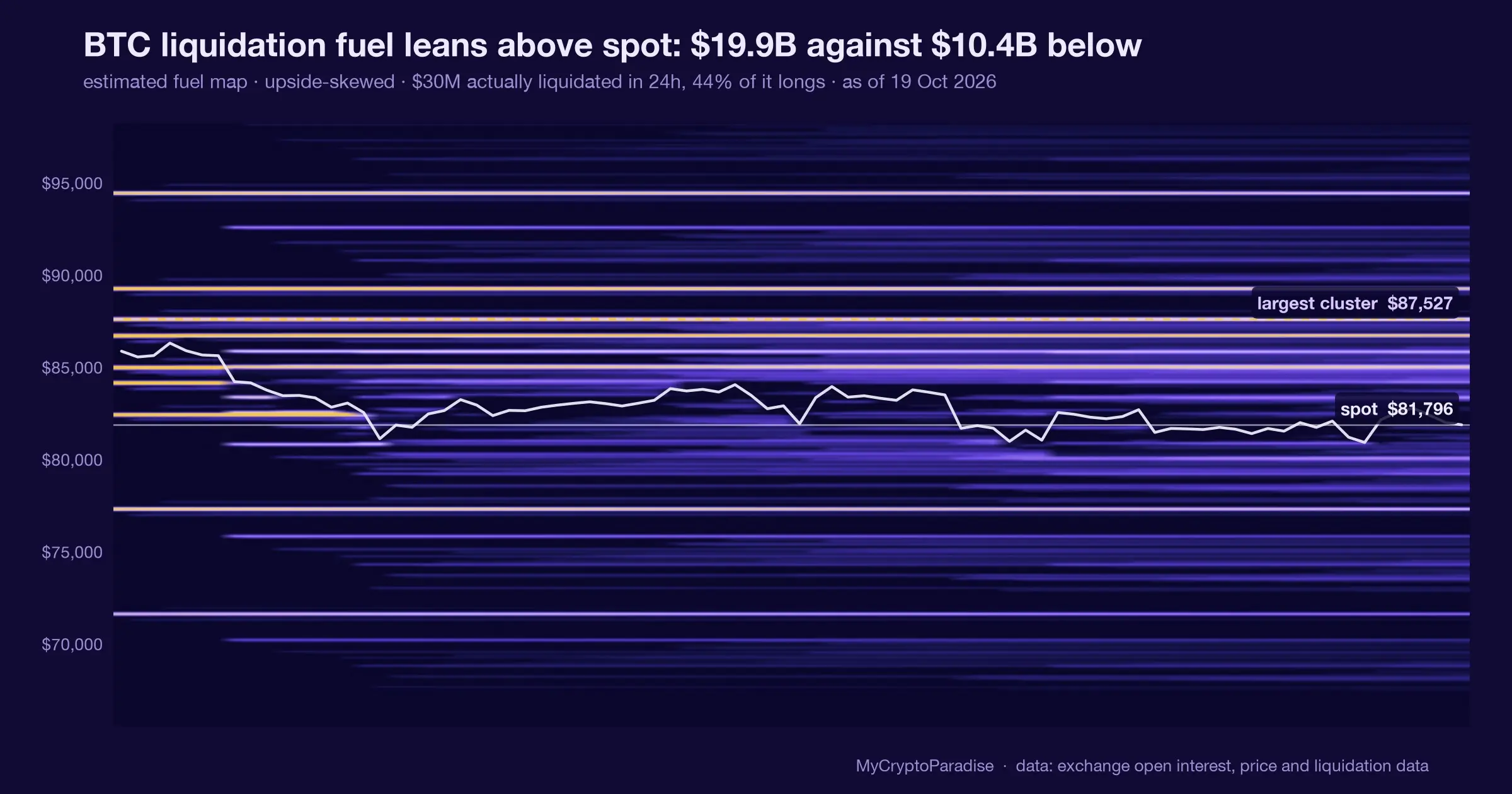
Track it live: our crypto liquidation heatmap and the live crypto funding rates both update in real time, so you can watch this shift for yourself.
Related coverage
For exact entries, targets, and stop losses with full risk management, that is what ParadiseFamilyVIP is for. New to reading these moves? Start with our crypto trading strategies guide.
ParadiseTeam is monitoring the market situation closely, and we are taking these developments into consideration while building our trading tactics inside ParadiseFamilyVIP.
Crypto trading involves substantial risk. Prices are volatile and you can lose money. This article is educational and is not financial advice. Past performance does not guarantee future results.
Is this SKHX shakeout a sign smart money is quietly accumulating?
This is how the Paradisers are calling it. Tap your call.
No calls on this one yet. Tap yours to be the first.
Free account, no password. Members just sign in.
Follow this topic: Crypto liquidation news







Join the discussion
No comments yet. Members, share how you are reading this.