

Listen: the breakdown
Market briefing: Zcash blew past $1,000 for the first time in eight years as roughly $36.6 million in liquidations force-closed short bets. Bitcoin drifted lower, trading near $79,656, down about 1.8 percent on the day.
- ZEC surged about 20 percent in 24 hours, topping $1,000 and printing an intraday high near $1,029
- Around $34.5 million in short bets were force-closed, with total ZEC liquidations near $36.6 million
- Bitcoin slipped near $79,656, down about 1.8 percent, showing no matching bid
Zcash short squeeze sent ZEC above $1,000 for the first time in eight years. But is this real demand, or borrowed money about to reverse?
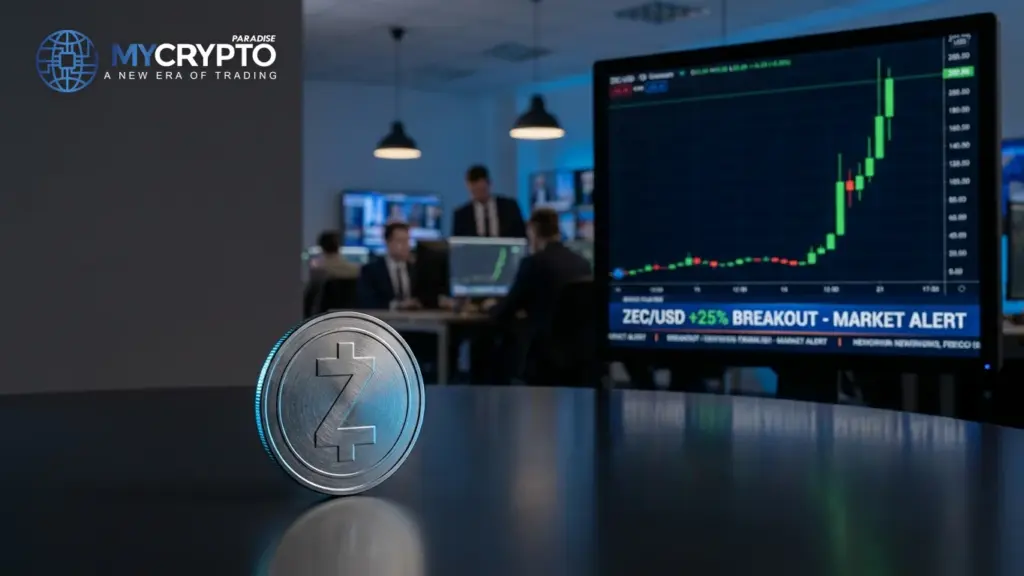
Zcash did something it had not done in eight years. It traded above $1,000.
ZEC surged roughly 20 percent over 24 hours, briefly touching an intraday high near $1,029 before settling around the $1,000 line. Its market capitalization climbed to about $17 billion. Over the past month the price has nearly doubled, which is the kind of move that pulls in attention fast.
The engine behind it was not subtle. Short sellers got run over. Roughly $34.5 million in bearish bets were force-closed, and total ZEC liquidations reached about $36.6 million. When leveraged shorts are wrong, their forced buying becomes the very fuel that drives price higher, and that reflexive loop can feed on itself for hours.
That is the important distinction. A short squeeze is not the same as a wave of new buyers deciding a coin is worth more. It is a mechanical unwind of positions that were on the wrong side.
Meanwhile, the rest of the market told a quieter story. Bitcoin traded near $79,656 as of the current session, down about 1.8 percent on the day. There was no broad liquidity surge lifting everything at once. So we have one privacy coin ripping toward a level it last saw eight years ago, while the market's anchor asset drifts lower. That gap between a single name and the broader tape is exactly what makes this move worth reading carefully rather than chasing.
Why a squeeze differs from real demand
This matters because the mechanism decides how durable the move is. A rally built on spot buyers accumulating for the long run behaves very differently from one built on forced short covering.
When shorts are liquidated, their positions close by buying. That buying is not conviction. It is capitulation. Once the trapped shorts are flushed, the primary source of demand disappears, and price often has nothing left holding it up.
The transmission chain here is narrow, not macro. Normally we look for a driver that flows through the whole system: a policy shift changes liquidity, liquidity moves Bitcoin, Bitcoin drags alts. This event skipped all of that. There was no macro catalyst, no fresh liquidity tide, no shift in rate expectations feeding risk appetite.
Instead the money came from within the ZEC market itself. Leverage created the fuel, and leverage burned it. That is a localized liquidity event, contained to one order book.
The tell is the divergence. Bitcoin, the asset that usually leads risk-on moves, is down on the day. If genuine new capital were rotating into crypto, you would expect BTC to firm up first, then alts to follow. That is not what happened.
So the honest read is that this was an internal squeeze, not a sign that the broader market has turned. The eight-year high makes a great headline. It does not, by itself, prove that demand has structurally changed.
How the surge sits against a weaker tape
Start with Bitcoin, because it sets the tone for everything else. BTC traded near $79,656, down about 1.8 percent, which means the market's benchmark offered no confirmation for the ZEC move. That single fact reframes the whole episode.
In a healthy risk-on phase, strength in a major alt tends to arrive after Bitcoin steadies and open interest builds on real spot support. Here, the leadership was inverted. One coin squeezed higher while the anchor leaked lower.
Ethereum and the broader alt complex showed no synchronized ignition either. There was no rotation cascade, no rising tide lifting the majors alongside ZEC. That absence is the point. A localized squeeze does not spread liquidity the way a genuine trend change does.
For ZEC itself, the $17 billion market cap now sits on a foundation that includes a large chunk of freshly liquidated shorts. Those sellers are gone. The question is who steps in to buy at these levels once the forced covering stops.
The uncomfortable answer for late entrants is that squeezes tend to leave the last buyers holding the highest prices. Retail piling in at $1,000 after an 8-year high is not accumulating cheap. It is providing exit liquidity to whoever sold into the strength.
The broader implication is caution. When one name detaches from a soft market on leverage, that detachment usually resolves toward the market, not away from it. The tape is telling you where the real weight sits.
What confirms follow-through and what breaks it
The first thing to watch is whether ZEC can hold above $1,000 on falling open interest. If price stays firm while leverage cools, that hints real spot buyers stepped in behind the squeeze. That would be the bullish surprise.
The opposite, and more common, path is a fade. If open interest stays elevated but price stalls, that signals the move is still leverage-dependent and vulnerable to a sharp unwind in the other direction. Squeezes that run on borrowed money rarely retire quietly.
Watch spot volume specifically. A real trend needs genuine buying, not just derivatives churn. Thin spot participation under a big price mark is the classic fingerprint of a move that outran its fundamentals.
On the macro side, keep your eyes on Bitcoin, because it remains the confirmation engine. If BTC turns up and reclaims strength, an alt like ZEC has a backdrop to build on. If BTC keeps drifting lower toward its support shelves, the ZEC pop looks increasingly isolated and exposed.
Invalidation of the caution case would be Bitcoin firming, spot volume expanding across the board, and ZEC consolidating its gains rather than spiking and reversing. That combination would argue something broader is turning.
Confirmation of the caution case is simpler. Bitcoin stays heavy, spot stays absent, and ZEC gives back a meaningful slice of the squeeze once the trapped shorts are cleared. That is the higher-probability script given the current tape, and it is the one to plan around first.
Reading the squeeze through smart money positioning
The ParadiseTeam reads this ZEC move against a Bitcoin tape that stayed heavy near $79,656. The two do not agree, and when a single alt disagrees with the benchmark, we trust the benchmark.
Our broader structure remains defensive. BTC has been rejecting around the $79,000 to $84,000 band, with $81,000 the level bulls need to reclaim to challenge the bearish case. Below, we mark support at $76,000, then $74,000, then the $70,000 to $72,000 shelf.
Inside that structure, the ZEC squeeze fits the pattern we have been flagging, not one that breaks it. Open interest making higher highs while spot volume stays thin is the signature of a borrowed-money squeeze, not fresh conviction. It applies to the alt just as it applies to the majors.
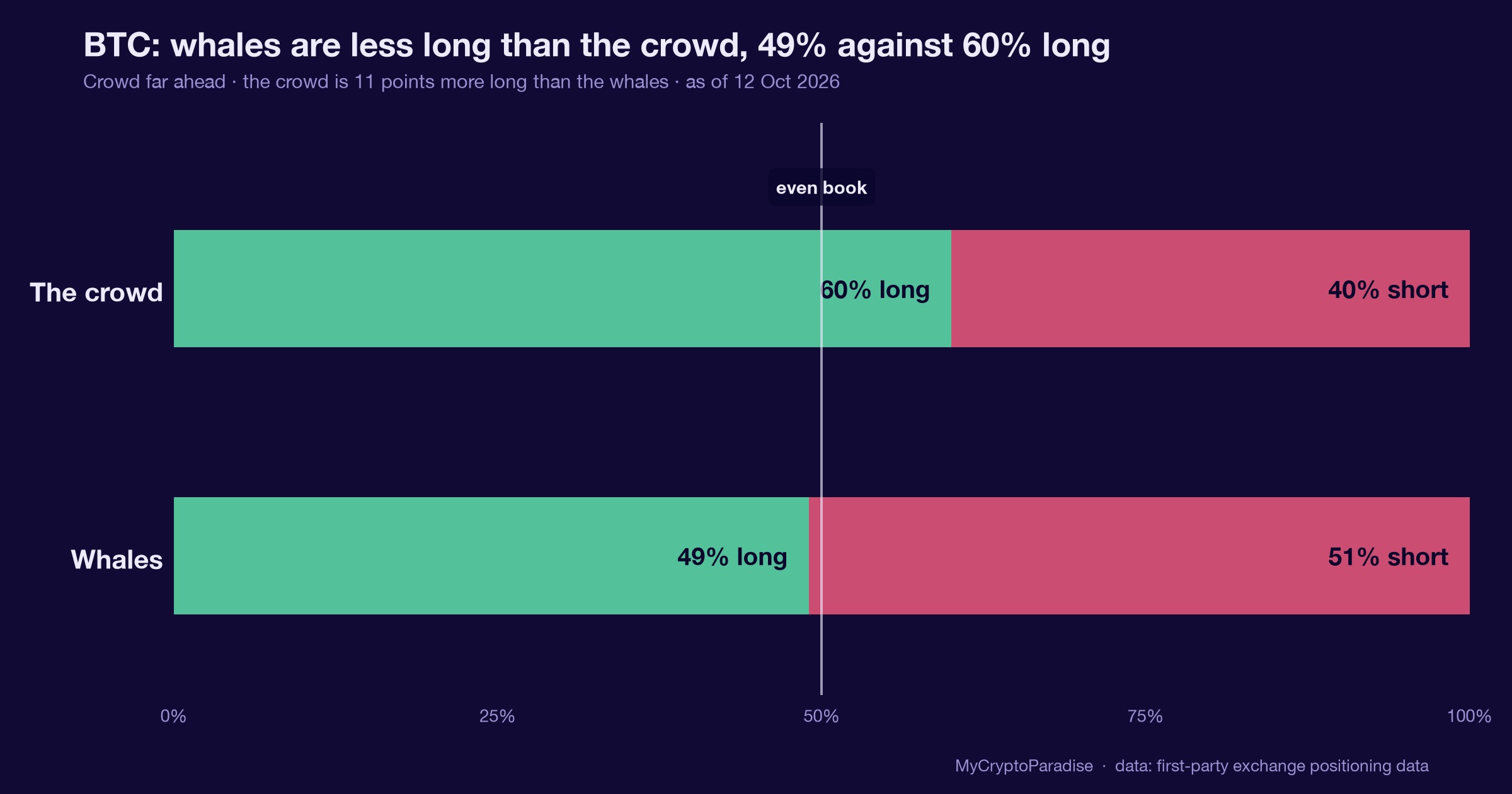
The positioning read is straightforward. Retail is crowded and leaning into greed after an 8-year high, which is precisely when the crowd is most exposed. Smart money is not chasing a vertical move into resistance; it typically waits for lower, cleaner levels.
So who benefits and who is trapped? The trapped shorts already paid. The next candidates are the late longs buying strength on borrowed money with no spot floor beneath them.
What would change our stance is Bitcoin reclaiming $81,000 with real spot volume behind it. Until then, we treat this squeeze as a localized event, not the start of a broad turn, and we keep risk defined. Probabilities, not promises.
The read behind this: we framed this story through our own market analysis, Bitcoin Wipes $247M Longs: More Pain Coming?
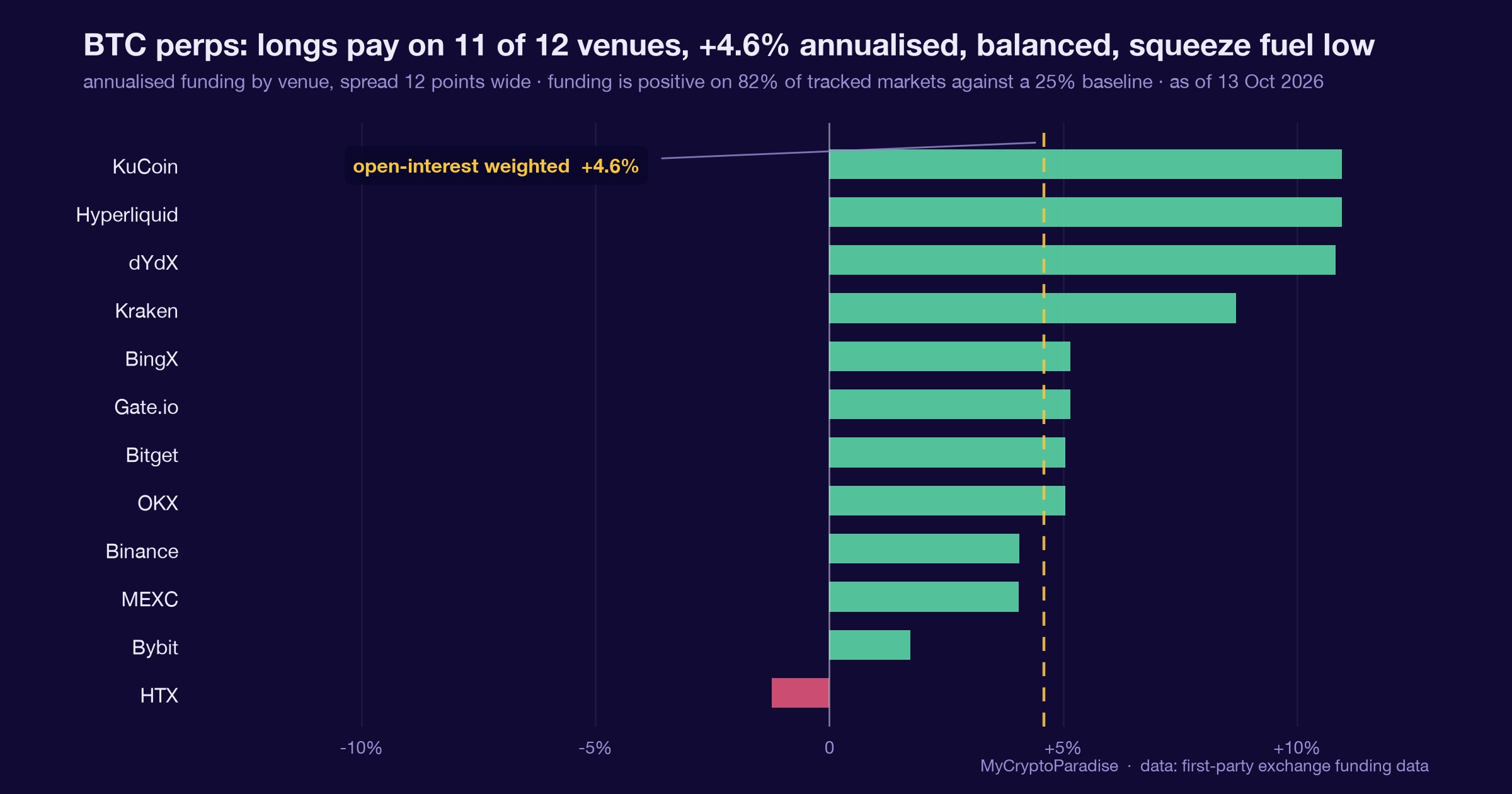
Track it live: our live crypto funding rates and the crypto liquidation heatmap both update in real time, so you can watch this shift for yourself.
Related coverage
For exact entries, targets, and stop losses with full risk management, that is what ParadiseFamilyVIP is for. New to reading these moves? Start with our crypto trading strategies guide.
ParadiseTeam is monitoring the market situation closely, and we are taking these developments into consideration while building our trading tactics inside ParadiseFamilyVIP.
Crypto trading involves substantial risk. Prices are volatile and you can lose money. This article is educational and is not financial advice. Past performance does not guarantee future results.
Where does ZEC go from here after topping $1,000?
This is how 17 Paradisers are calling it. Tap your call.
No calls on this one yet. Tap yours to be the first.
Free account, no password. Members just sign in.
Follow this topic: Crypto liquidation news






Join the discussion 7
ah, the ol' short squeeze, always someone else's liquidity. 🙄 the worst kind of 'learning experience' for some, and it's always teh small ones getting burned, isn't it? 🔥😡 📉
yep, and the retail shorts are often borrowing from the same books that are actively building those long positions. a neat trick, that.
short squeezes are for selling leverage to people who cant afford to lose it. a shortcut to ruin, not riches.
i recall when moving money for vendors became an impossible debit, and a colleague said, "just use usdt." almost got caught up in a short squeeze then, no risk-reward line, no joy. 😅
Short squeezes are just a fast way to lose money. Better to buy what you can afford slowly.
Indeed, Pavel. And often, these short squeezes are precisely what provides the liquidity for those looking to exit their positions at scale.
Funny how some folks only learn about gamma exposure when their stops are long gone. The market truly has its own way of educating! 😅