

In short
Volatility measures how much a price moves around its average, nothing more. It is a measure of dispersion, not direction. A high volatility number tells you the swings are wide. It does not tell you which way price will go, or whether your position survives. Volatility also stays blind to gaps, thin liquidity and rare tail events. These are the moves that skip a stop or empty an order book. Treat volatility as the size of the swing, not a map of risk. Read it alongside structure and liquidity, never alone.
What is different here
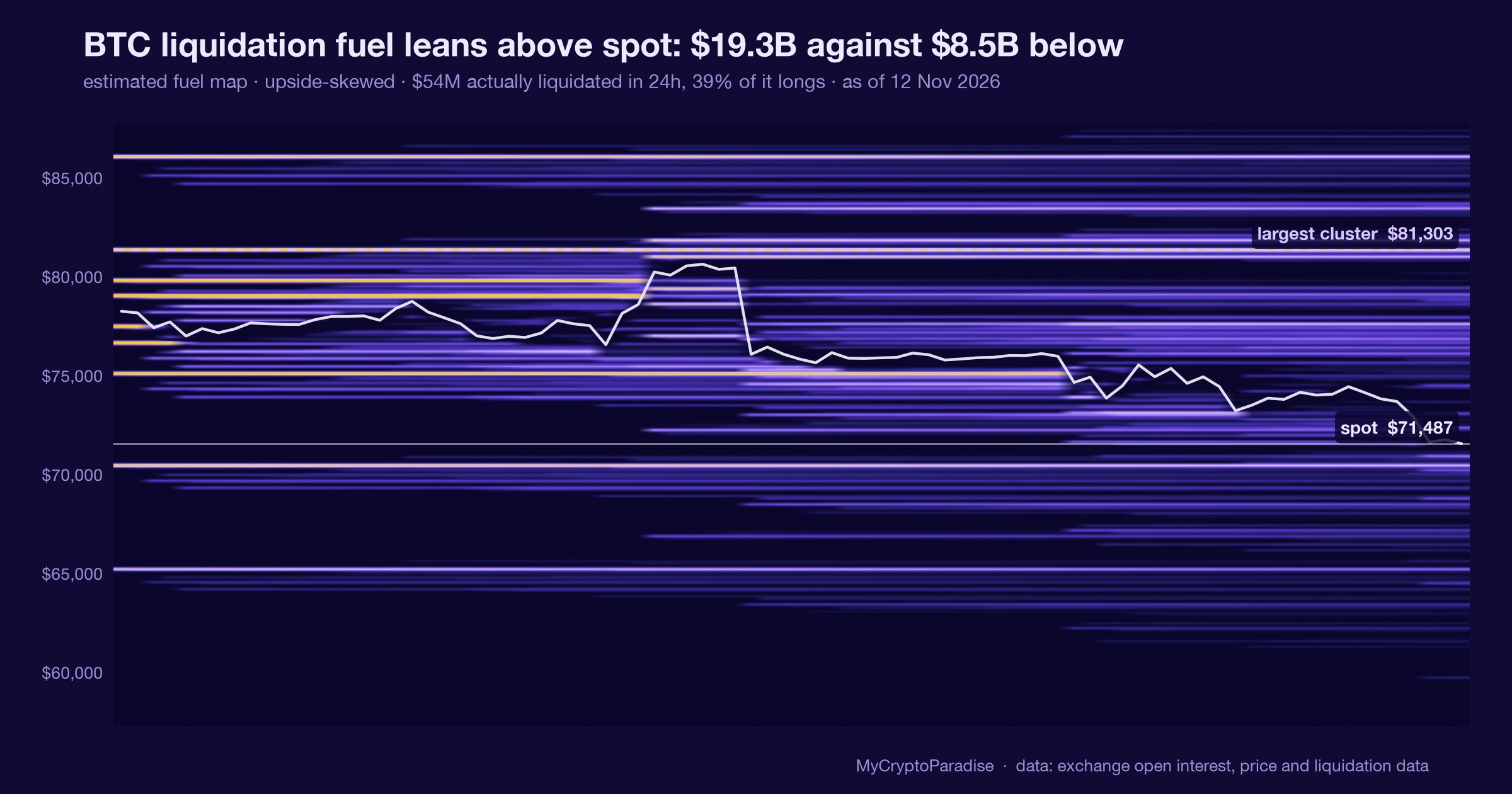
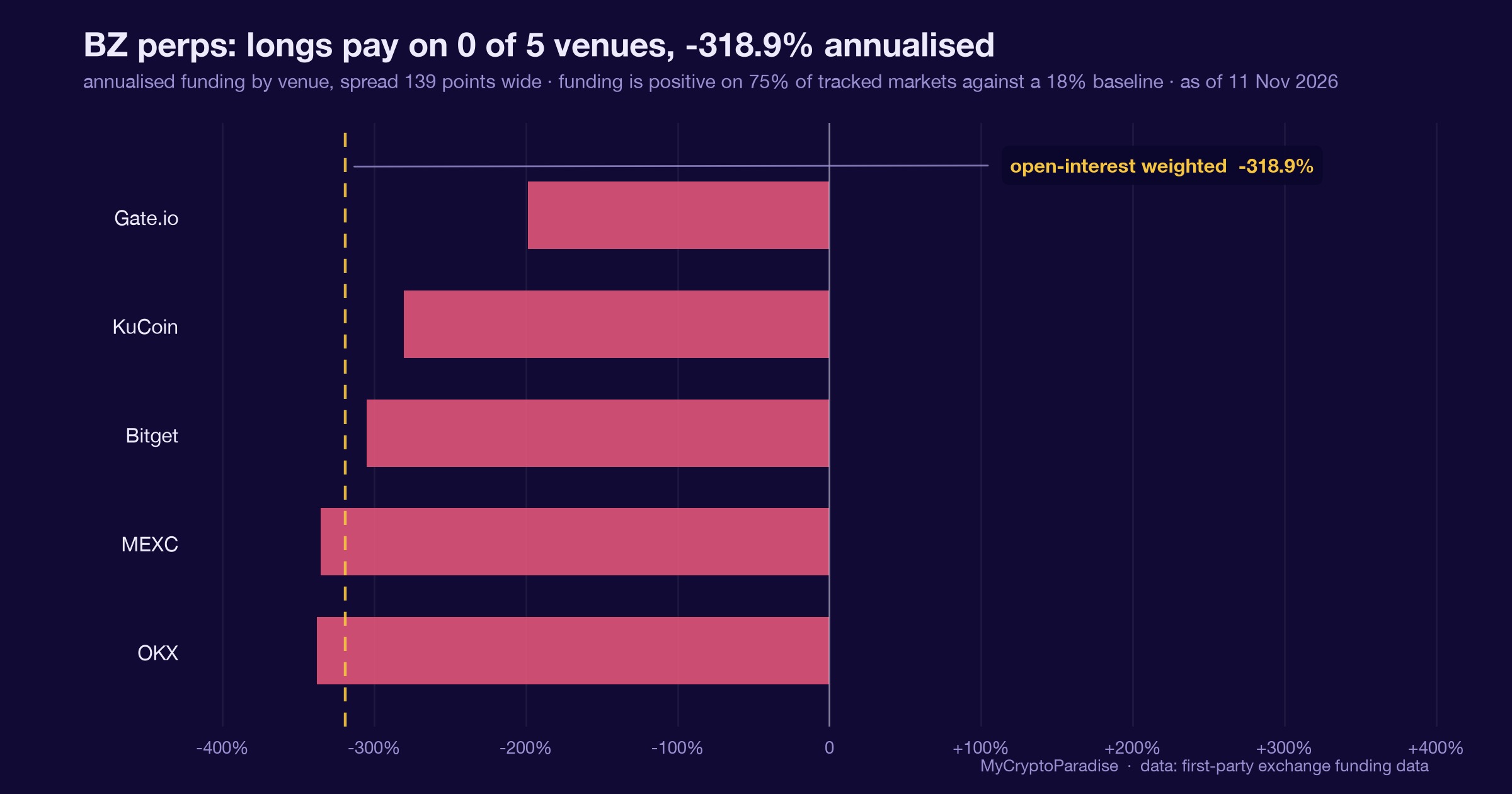
Before we build a setup, the ParadiseTeam reads volatility alongside live positioning across all major exchanges, never as a lone number.
What volatility is, and what it is not
Volatility is the degree to which a price swings around its own average over a period. Think of it as the width of the ride, not the destination. It measures dispersion. It does not measure direction, and it does not measure the risk of ruin. Those are separate questions.
The confusion is old. People hear that a market is volatile and assume it is falling. A volatility reading rises just as fast in a sharp rally. The number is symmetric. Only direction decides whether wide swings help you or hurt you.
How is volatility usually calculated?
Most volatility figures come from the standard deviation of recent returns, often annualised. You take a run of daily price changes, measure how far they scatter from the mean, then scale that spread. Implied volatility works differently: it is read backwards from option prices, showing what the market expects ahead.
Standard deviation, the core of the formula, simply measures how far numbers sit from their average, as the finance reference on volatility sets out. Two labels matter in practice. Realised volatility looks back at what price actually did. Implied volatility looks forward, priced into options by traders betting on the next move. The VIX index is the best known implied gauge, built from S&P 500 option prices.
Why does high volatility not mean high opportunity?
High volatility means wider swings in both directions, not a bigger edge. A violent market can shake you out before your idea plays out. Wide ranges also widen the cost of being wrong. Without a tested setup, more movement simply means more ways to lose, faster.
This is why we lean on confluence across signals rather than one loud reading. A single volatility number is noise about noise. Knowing whether a drop is a pullback or a reversal matters far more than the raw swing size.
What volatility cannot see: gaps, liquidity and tails
A volatility number averages the past, so it misses the sharp edges. It will not warn you about a weekend gap that skips your stop. It stays blind to a thin order book that fills your exit far from the screen price. Rare tail events sit outside the sample entirely.
- Price gaps that jump over your stop level
- Thin liquidity that fills orders far from screen price
- Tail events too rare to appear in the sample
This gap between the average and the edge is where accounts break. A stop is only as good as the liquidity behind it. In a fast flush, the price you wanted and the price you got drift apart. A volatility figure describes yesterday with great confidence, then says nothing about the one morning that matters.
How does volatility behave across market regimes?
Volatility is not one fixed trait: it clusters and shifts with the regime. Calm trends often show low, steady readings. Corrections and panics spike it hard, then it slowly cools. A quiet range can hide building pressure that releases all at once. Context decides what a reading means.
Volatility and regime move together. In a calm trending or ranging market, readings stay contained. A sharp correction across altcoins and Bitcoin sends them spiking, then bleeding back down for weeks.
Using volatility to set expectations, not predictions
Use volatility to size positions and set realistic stops, not to forecast direction. A higher reading argues for smaller size and wider breathing room. A lower reading lets you tighten, within reason. It frames how much noise to expect. It never tells you where price is headed next.
Set your stop where your idea is wrong, then let volatility tell you how wide that must be to survive noise. That is a read, not a forecast. Expectations you can plan around beat predictions you cannot.
Frequently asked questions
Is high volatility good or bad for traders?
Neither on its own. High volatility means wider swings in both directions, which can help a prepared trader and punish an unprepared one. It raises both the reward and the cost of being wrong. What decides the outcome is your plan, your size and your stop, not the reading itself.
Does volatility predict which way price will move?
No. Volatility is a measure of dispersion, how far price scatters from its average, not of direction. A rising reading looks the same in a crash and a melt-up. It tells you to expect bigger moves, nothing about their sign. For direction you need structure, trend and context instead.
What is the difference between realised and implied volatility?
Realised volatility looks backward, measuring how much price actually moved over a past window. Implied volatility looks forward, read from option prices to show what traders expect next. The two often disagree. When implied sits far above realised, the market is paying up for protection against moves that may never arrive.
Why can a low volatility reading still be dangerous?
Because volatility clusters and compresses before it expands. Long quiet stretches lull traders into oversized positions, then release all at once. A low reading also hides gap and liquidity risk, which sit outside the sample. Calm on the chart is not the same as safety in the book.
Crypto trading involves substantial risk and is not suitable for everyone. Nothing here is financial advice; it is education only. Never risk more than you can afford to lose.








Join the discussion
No comments yet. Members, share how you are reading this.