


Listen: the breakdown
Market briefing: VanEck has pulled its Lido staked Ethereum ETF filing from the SEC before a single share traded. ETH slipped near $2,415 while Bitcoin held around $81,522, and the retreat signals more regulatory fog for staked crypto products.
- VanEck withdrew its Lido staked Ethereum ETF registration with the U.S. SEC, before any shares traded.
- The pullback signals continued regulatory fog around staked crypto products in the United States.
- ETH slipped near $2,415 while Bitcoin held near $81,522, pressuring ETH's relative strength.
Source: U.S. SEC
VanEck just pulled its Lido staked Ethereum ETF filing from US regulators, before a single share ever traded. So what does this retreat tell traders about ETH's institutional path?
VanEck has filed to withdraw its registration statement for the VanEck Lido Staked Ethereum ETF. The paperwork went to the U.S. Securities and Exchange Commission, the SEC. In plain terms, the asset manager told regulators it no longer intends to proceed. It will not issue shares of the fund.
No shares were ever issued or sold. The product never traded. A fund that first registered in October 2025 is now withdrawn before launch, which spares everyone the awkward question of whether the demand was ever really there.
This matters because of what the fund promised. A staked Ethereum ETF would wrap ETH and its staking yield into a regulated exchange-traded product. That structure lets pensions, advisors, and cautious institutions touch staking without running a validator or holding keys. It was meant to be a bridge from traditional money to on-chain yield.
That bridge just got pulled back. The withdrawal does not ban staked products. But it signals that the path for complex crypto vehicles in the United States remains slow and uncertain.
Spot Bitcoin funds cleared the gate long ago. Staking is a harder sell to regulators, who still wrestle with how to classify the yield. VanEck reading the room and stepping back tells us the hurdles are real.
ETH felt it. The token traded near $2,415 after a drop of roughly 3.6% on the day. The move was not a crash. It was the market quietly marking down one more route for institutional ETH demand.
Why a withdrawn ETF stalls staked ETH access
The withdrawal matters because it closes a specific funding pipe, not because it changes Ethereum's code. Think of an ETF as a road. Build the road and institutional capital drives in. Remove the plan and that capital stays parked in traditional assets.
A staked ETH ETF was meant to deliver native yield inside a familiar wrapper. That yield is the whole draw. It separates ETH from BTC in the institutional story, because Bitcoin offers no equivalent. Pull the product and ETH loses a piece of its unique pitch.
The mechanism runs through confidence, not just flows. When a serious issuer withdraws, other issuers read it as a warning. They slow their own filings. Legal teams turn more cautious. The regulatory fog around staking thickens rather than clears.
That fog has a cost. Capital hates uncertainty. Money that might have rotated into an ETH staking vehicle now waits, or settles for spot Bitcoin exposure instead. The relative case for ETH weakens at the margin.
None of this touches Ethereum's fundamentals. Validators keep validating. The chain keeps producing yield. But markets price access and narrative as much as they price technology. A narrower institutional on-ramp means a thinner future bid.
So the real story is sentiment and structure. One withdrawn filing will not sink ETH. It does, however, confirm that the United States still treats staked crypto products as a problem to be studied, not a market to be served.
How the pulled filing pressures ETH liquidity
Follow the liquidity and the read turns defensive. The direct hit lands on ETH, since this was an ETH-specific product. The token slipped near $2,415 on the day, a soft markdown rather than a violent one.
Bitcoin sets the tone for everything else. BTC traded around $81,522, down about 2.2% on the day, already heavy before this crossed the wire. A soft Bitcoin tape gives alts no cushion. When the leader bleeds, the followers bleed faster.
ETH sits in the uncomfortable middle. It is not the reserve asset that BTC has become for institutions. It is also no longer getting the clean staking-yield wrapper it needed to stand apart. That squeezes its relative strength from both sides.
Watch the ETH/BTC ratio here. This news pressures that ratio, because it removes an ETH-only catalyst while BTC keeps its first-mover ETF advantage. Capital that wants regulated crypto still has an easy Bitcoin answer.
Alts feel it last and worst. Many large-cap alts trade as high-beta ETH proxies. If ETH loses its institutional premium, the speculative names that ride its coattails lose their story too. Thin books amplify every push.
The immediate price damage is modest. The structural message is louder. For now, smart money has one more reason to favor spot Bitcoin exposure over complex Ethereum products inside US wrappers. That preference, repeated across institutions, is how a modest headline becomes sustained relative pressure on ETH.
What confirms continued pressure on ETH
The near-term question is whether this stays a one-off or starts a pattern. Confirmation of continued pressure would be other issuers quietly pausing or pulling their own staked crypto filings. One withdrawal is an event. Several would be a trend, and the market would price staking access as frozen.
Watch ETH's behavior against the drop. If ETH keeps leaking versus Bitcoin over the coming sessions, that confirms the market reading this as a genuine setback for institutional ETH demand. A widening ETH/BTC gap is the tell.
Watch the regulatory tone, too. Any official signal that staking products remain under active review, with no timeline, extends the fog. That keeps cautious capital on the sidelines and caps ETH's upside relative to BTC.
Invalidation looks different. If a rival issuer steps forward with a fresh staked ETH filing, or regulators hint at clearer rules, the withdrawal reads as company-specific rather than structural. ETH could then recover its relative footing quickly.
Also watch whether VanEck refiles later under different terms. A withdrawal is not always a funeral. Sometimes it is a pause while the paperwork gets reshaped to fit shifting rules.
The cleanest invalidation is price. If ETH reclaims its recent range and the ETH/BTC ratio stabilizes within a few sessions, the market has shrugged the news off. Until then, treat this as a reason for ETH to underperform, not as a reason for panic. The event is a headwind, not a hurricane.
What the withdrawal signals for ETH positioning
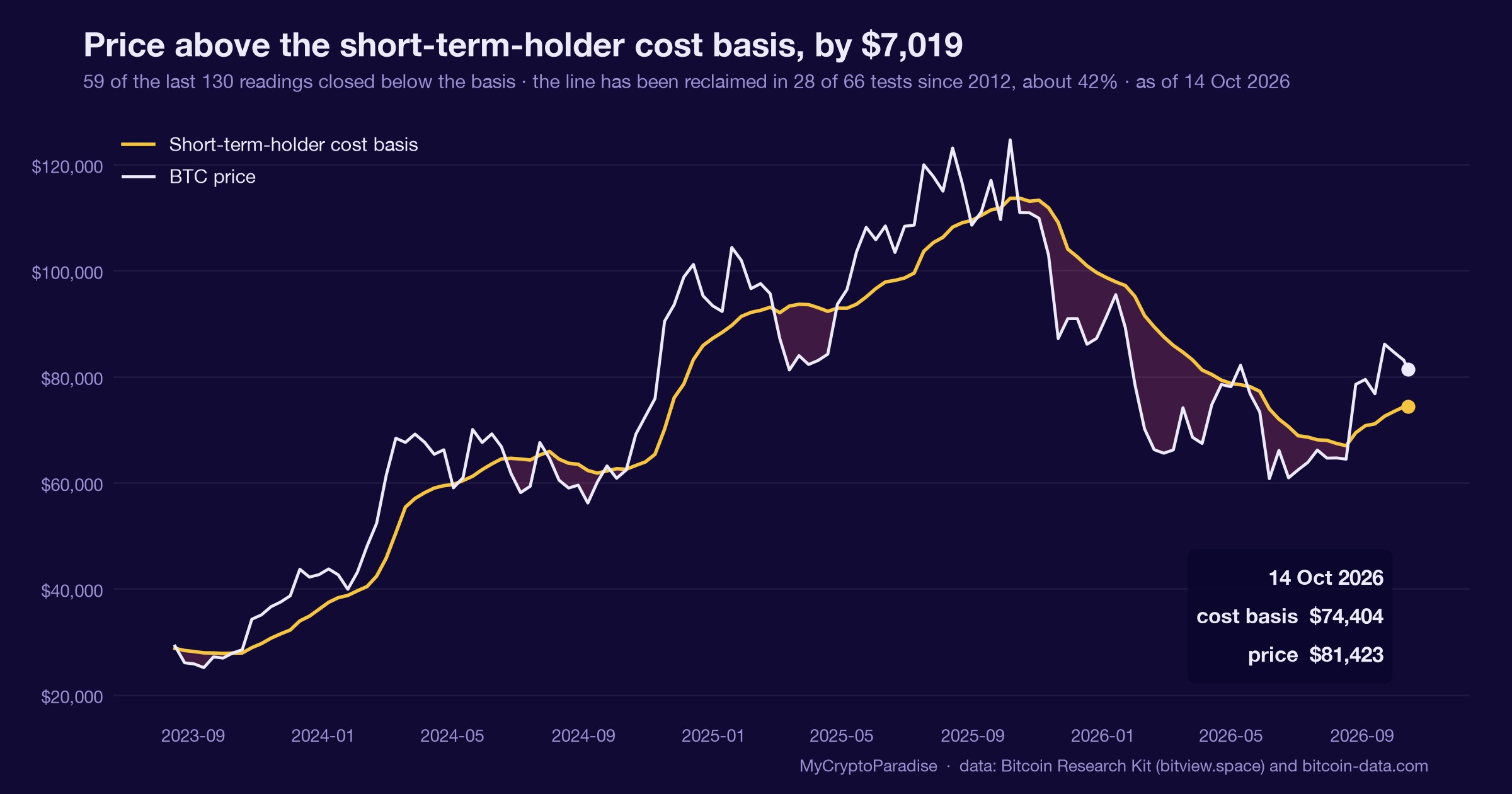
The ParadiseTeam reads this as an ETH-specific headwind landing on an already-heavy tape. Bitcoin was trading near $81,522 as of 01:00 UTC, just under the $82,000 level we flagged as critical support. That makes the backdrop fragile. ETH does not get to shrug off bad news while the leader sits on a line it must defend.
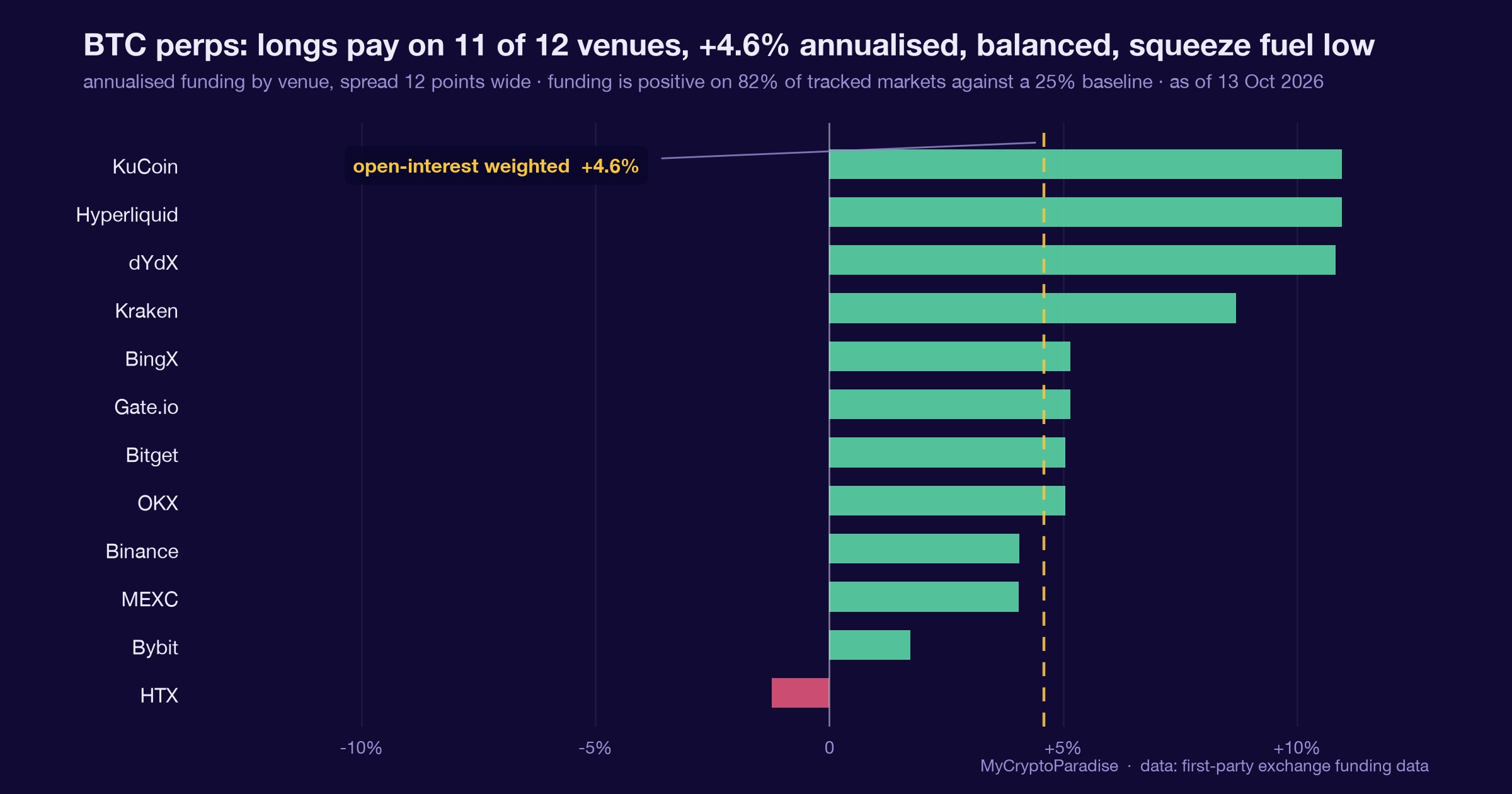
Our standing view on Bitcoin stays constructive while $82,000 holds, with $81,000 as the lower boundary below it. Whales opened size near $82,300 and have absorbed supply on this recovery. Open interest, the total of unsettled positions, sits near lows, and funding is at baseline. That usually marks a calmer, less crowded market, not a greedy one.
That BTC picture is background, not a reason to fade this ETH story. The withdrawal removes an ETH-only catalyst at the exact moment ETH needed differentiation. For us, that favors Bitcoin relative strength over Ethereum in the near term.
The smart-money tell is simple. Regulated money still has a clean spot Bitcoin route. It just lost a tidy staked-ETH route. Capital follows the path of least resistance, and that path points at BTC.
So the ParadiseTeam leans cautious on ETH versus BTC until the ETH/BTC ratio steadies. If Bitcoin defends $82,000 and pushes toward the $84,000 prior high, ETH may follow rather than lead. Watch BTC's reaction at the $90,000 resistance for the bigger regime question. Risk first, always.
The read behind this: we framed this story through our own market analysis, Bitcoin at $82K: Can Bulls Defend It?
Track it live: our live crypto funding rates and the Crypto Fear and Greed Index both update in real time, so you can watch this shift for yourself.
Related coverage
For exact entries, targets, and stop losses with full risk management, that is what ParadiseFamilyVIP is for. New to reading these moves? Start with our crypto trading strategies guide.
ParadiseTeam is monitoring the market situation closely, and we are taking these developments into consideration while building our trading tactics inside ParadiseFamilyVIP.
Crypto trading involves substantial risk. Prices are volatile and you can lose money. This article is educational and is not financial advice. Past performance does not guarantee future results.
Does a US staked ETH ETF path reopen this cycle after VanEck's pullout?
This is how 1 Paradiser is calling it. Tap your call.
No calls on this one yet. Tap yours to be the first.
Free account, no password. Members just sign in.
Follow this topic: Ethereum ETF news











Join the discussion
No comments yet. Members, share how you are reading this.