

Listen: the breakdown
Update on this developing report (September 05, 2026, 14:16 UTC):
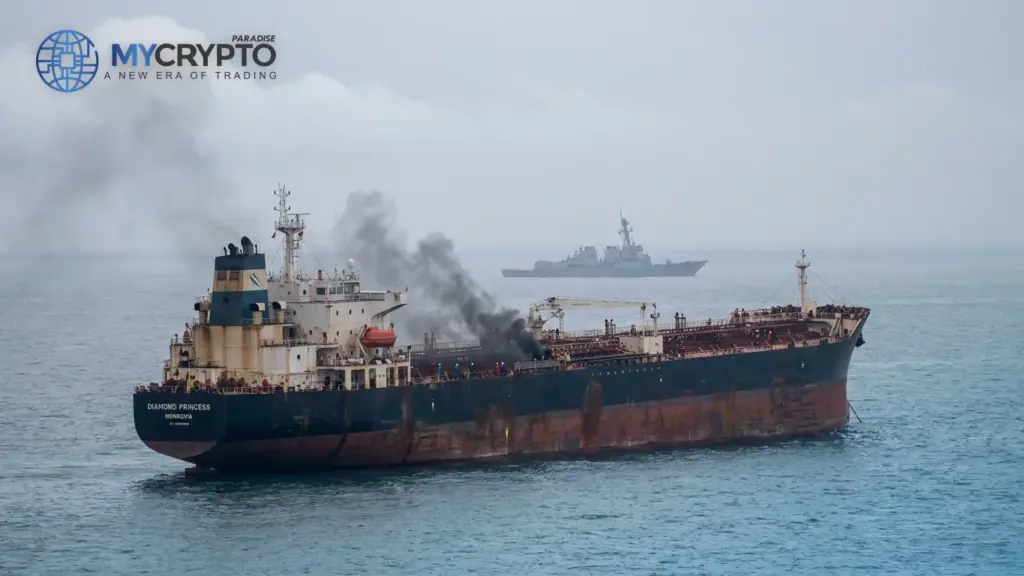
The US military just destroyed THREE Iranian oil tankers after Iran fired ballistic missiles at two US Navy warships. A US aircraft carrier and a guided-missile destroyer evaded the attacks,. The US military just destroyed THREE Iranian oil tankers after Iran fired ballistic missiles at two US Navy warships. A US aircraft carrier and a guided-missile destroyer evaded the attacks, with no American personnel harmed, per CENTCOM. US forces disabled two IRGC crude carriers off Iran's coast and destroyed a third in the Gulf of Oman after ordering its crew to abandon ship. CENTCOM
Developing story: This story is still unfolding. We are tracking it and will update this article as more details are confirmed.
Market briefing: The US has struck three Iranian oil tankers in the Strait of Hormuz after claiming Iran fired missiles at two Navy warships. Yet Bitcoin barely moved, trading near $79,604, and that calm at resistance is the part worth watching.
- US forces struck three Iranian crude oil carriers in the Strait of Hormuz after claiming Iran fired ballistic missiles at two Navy warships.
- The escalation follows August 30 strikes on Larak Island and a wider campaign against nearly sixty military sites, with Hormuz threatened with closure.
- Bitcoin held near $79,604 and Ethereum near $2,451, a muted reaction to a textbook risk-off shock sitting right at resistance.
US strikes on three Iranian oil tankers in the Strait of Hormuz just raised the geopolitical stakes, yet Bitcoin barely moved. Is that calm real, or a trap building at resistance?
The United States struck three Iranian crude oil carriers in the Strait of Hormuz. The action followed a US statement that Iran had launched ballistic missiles toward two US Navy warships. CENTCOM was blunt. It said it will not hesitate to defend American forces and, if necessary, destroy Iran's limited and exposed oil fleet. That is a serious escalation in the world's single most important oil corridor.
This did not arrive from nowhere. On August 30 the US targeted military sites on Larak Island, and Iran's Islamic Revolutionary Guard Corps struck back. What began as strikes on Iranian missile launchers grew into a broader campaign against nearly sixty military sites, framed as protection for commercial shipping. Now the fight has moved to the tankers themselves.
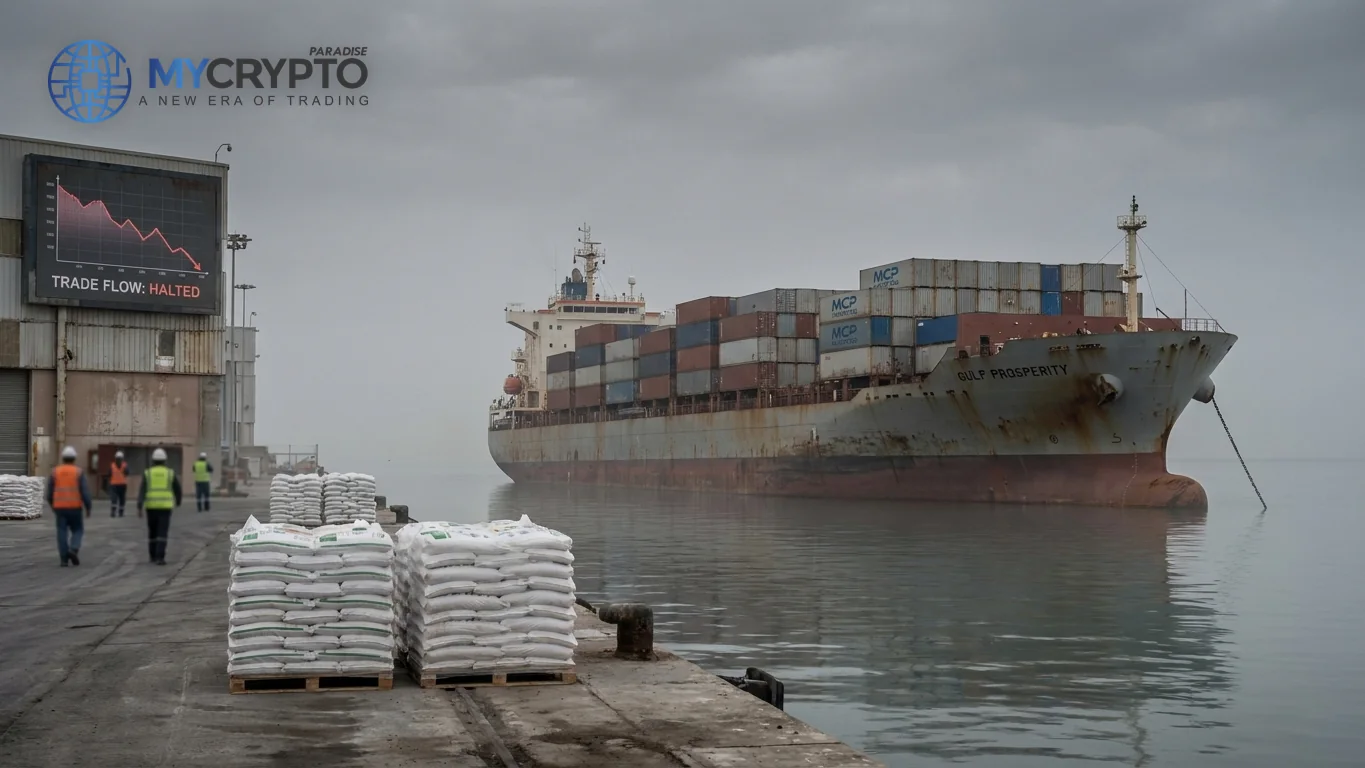
Mojtaba Khamenei vowed to keep the Strait of Hormuz closed. Roughly a fifth of the world's seaborne oil moves through that narrow channel. Close it, and energy prices, and with them inflation expectations, do not wait for anyone's permission.
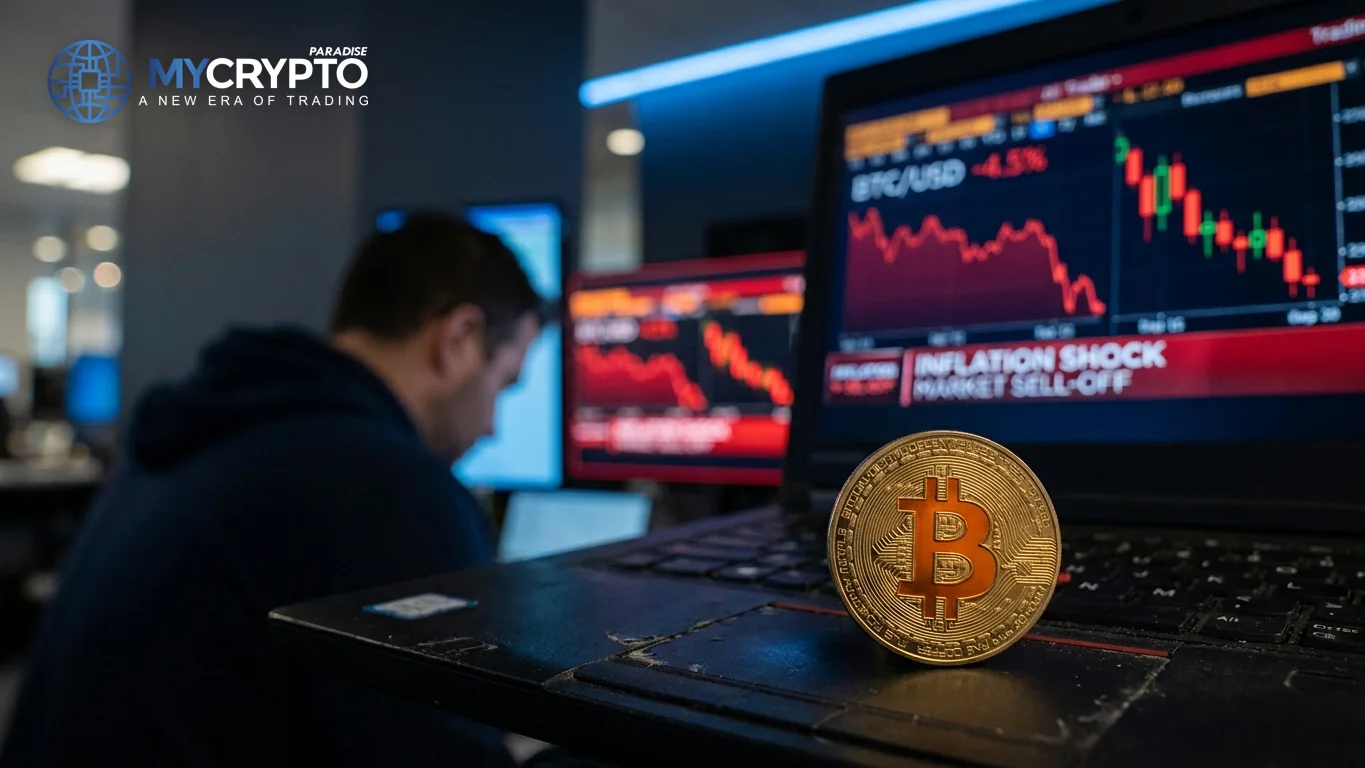
Here is the strange part. A textbook risk-off shock hit the tape, and Bitcoin barely blinked. BTC traded near $79,604 as of the print, higher by a rounding error on the day. ETH sat near $2,451, equally unbothered.
Markets that should flinch sometimes yawn. That yawn is the story. When a genuine oil-corridor conflict fails to move price, the question is not why crypto is calm, but who is being kept calm, and for how long.
Hormuz is where oil and inflation collide
One chokepoint carries an outsized share of the world's oil, and the Strait of Hormuz is that chokepoint. Threaten to close it and you threaten the price of energy directly. Higher oil feeds straight into headline inflation, and inflation is the variable that decides how freely central banks can cut. That is the transmission line running from a tanker strike to your Bitcoin chart.
The chain is simple to state and hard to escape. Conflict raises the risk of supply disruption. Supply fear lifts oil. Higher oil lifts inflation expectations. Stickier inflation keeps policy tighter for longer, which drains the cheap liquidity risk assets lean on.
Crypto has no cash flows to defend it in that environment. It trades as the far end of the global risk curve, so it usually feels macro stress last but hardest. When money leaves risk, it leaves Bitcoin and alts before it leaves oil or gold.
So the muted reaction is not comfort. A press release can promise stability. A balance sheet, and an oil tanker on fire, tell a different story.
The honest read is that markets have not yet priced this. Traders are treating a Hormuz escalation as background noise while positioning stays crowded and hopeful. That gap between a serious catalyst and a sleepy tape rarely lasts. Either the strait reopens quietly, or the risk premium arrives late and all at once.
A muted crypto bid meets fresh risk
Bitcoin sets the tone, and right now the tone is denial. BTC near $79,604 barely acknowledged a strike on three oil tankers in the world's key crude corridor. A market that shrugs off genuine geopolitical risk is not strong, it is complacent, and complacency at resistance is fragile.
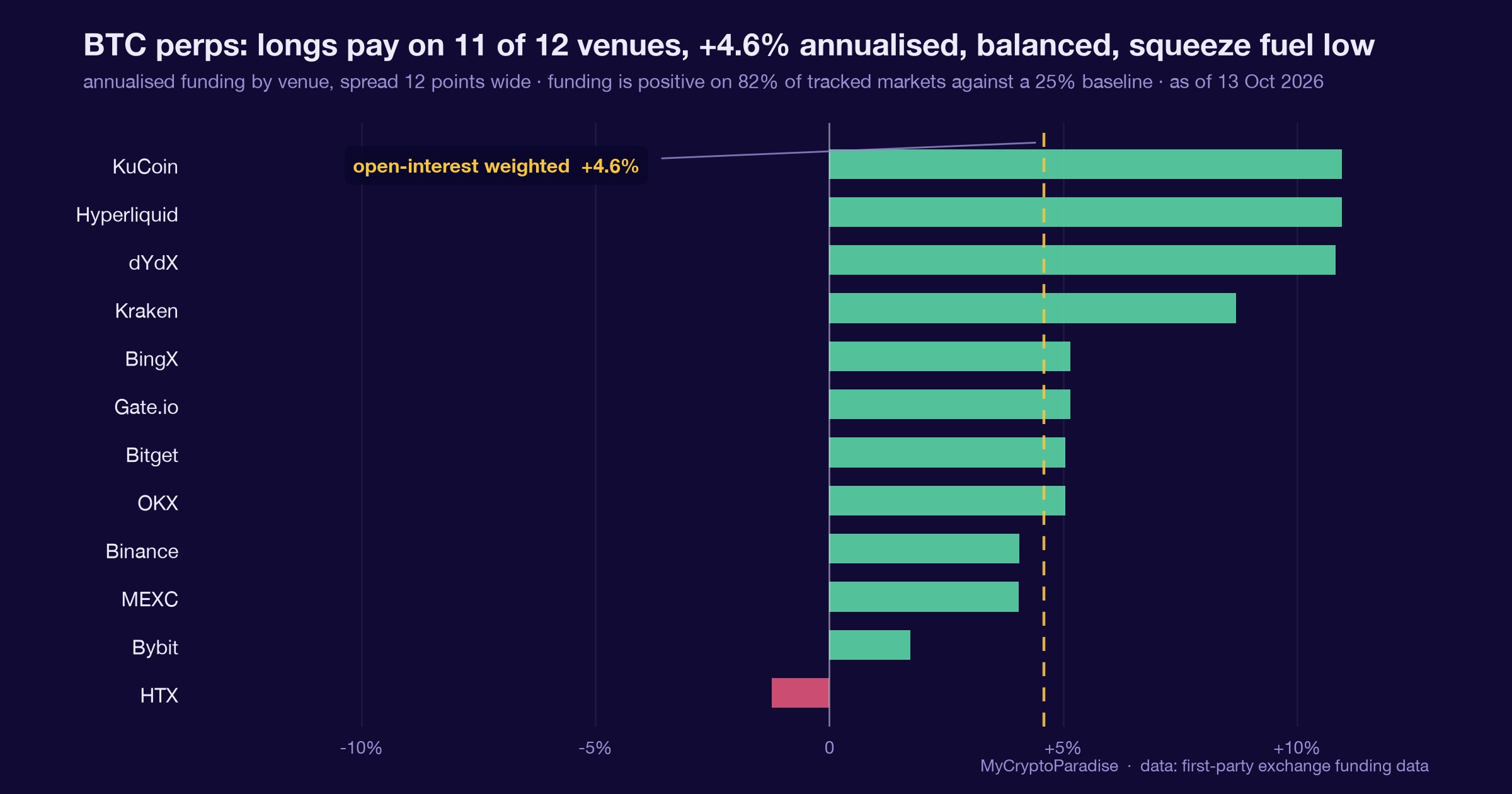
Open interest tells the real story underneath the flat price. Positioning has been climbing while spot demand stays thin, which points to leverage doing the lifting rather than fresh buyers. That is a borrowed-money bid, and borrowed money is the first thing forced out when a shock finally lands.
If oil gaps higher and traditional markets flip risk-off, the cascade is predictable. BTC leads the move down as leverage unwinds. Ethereum near $2,451 follows, because it carries the same crowded longs with less spot support beneath it.
Alts come last and fall hardest. Thin books mean small sell flows travel a long way, and the coins retail chased in greed mode become the fastest to give it back.
The uncomfortable truth is that muted can flip to violent without warning. Liquidations do not queue politely. A single break of support triggers stops, stops trigger forced selling, and forced selling triggers more stops. That is how a quiet tape becomes a fast one. The calm is not the absence of risk. It is risk waiting for a trigger, and Hormuz just handed the market a fresh one.
Oil, the dollar, and $76,000 come next
The first tell is not on the crypto chart at all. Watch oil and the dollar. If crude spikes and the dollar bids as safety flows arrive, that is your risk-off confirmation, and crypto tends to follow within hours, not days. A calm oil tape instead would suggest the market judges Hormuz will stay open.
On Bitcoin, the level that matters is $79,000. Price is hovering right on it. A clean reclaim, meaning a retest that turns former resistance into support, would argue the muted reaction is genuine strength rather than a pause.
Fail there, and the downside map opens quickly. First support sits near $76,000, then $74,000, then the $70,000 to $72,000 shelf. Each break invites the next as leverage flushes.
Invalidation for the bearish case is specific. A decisive push above the prior high near $81,000, ideally on rising spot volume rather than open interest, would break the structure and force a rethink.
Spot demand is the honest referee here. If cumulative volume delta, the running tally of aggressive buying versus selling, finally turns up alongside price, real money is arriving. If price rises while spot stays absent and open interest climbs, that is the borrowed-money squeeze again, and it resolves down. Watch confirmation, not headlines. The strike is the catalyst. The reaction is the trade.
Reading the calm as distribution into strength
The ParadiseTeam sees a serious catalyst meeting a suspiciously quiet market, and quiet at resistance is rarely a gift. BTC near $79,604 sits directly on the $79,000 line, the exact level that has to flip from resistance into support before any bullish case earns respect. A muted bid there, on a genuine Hormuz shock, reads more like distribution into strength than accumulation.
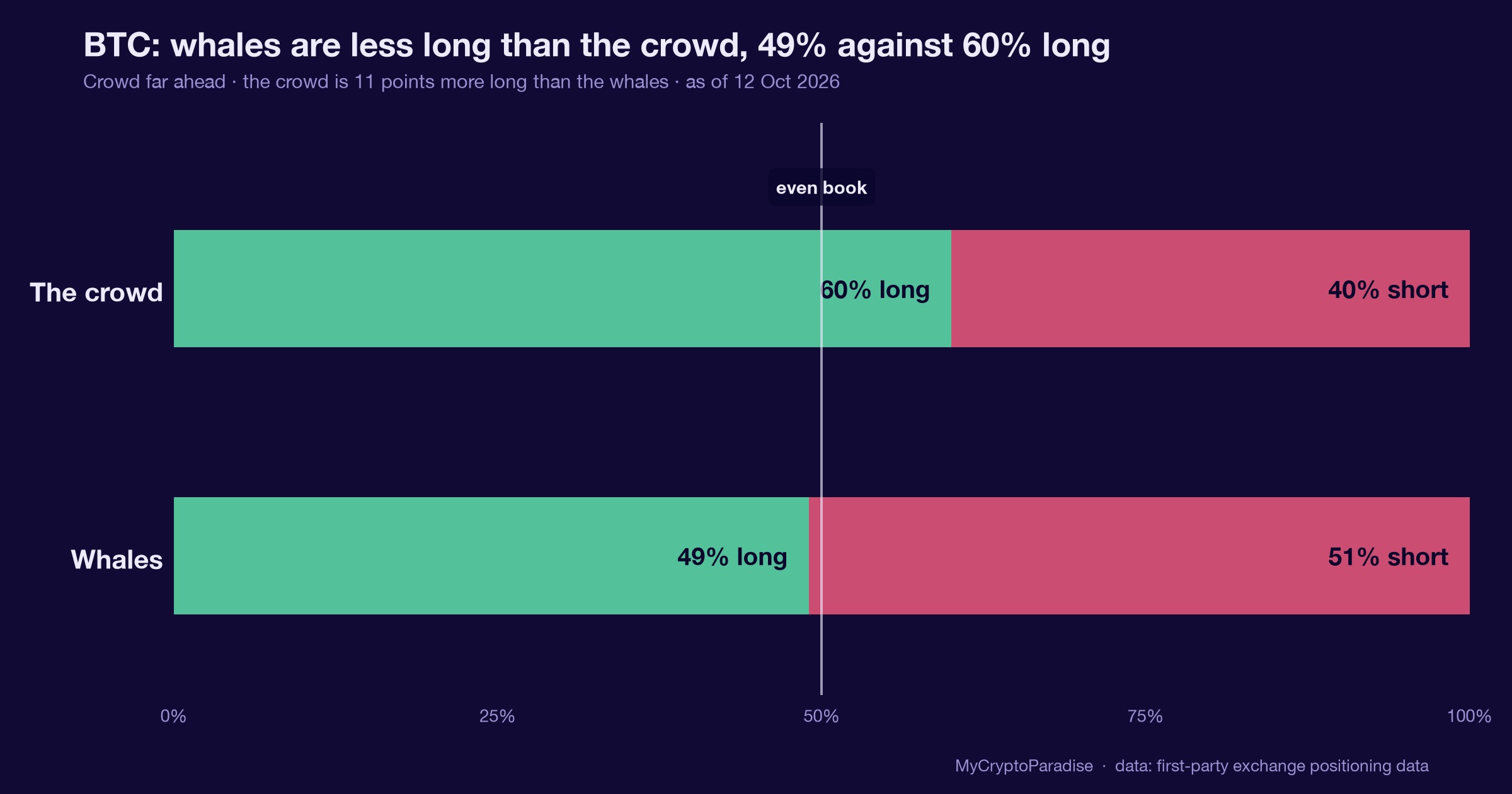
The positioning backs that read. Open interest keeps printing higher while spot volume stays close to absent. That is a borrowed-money bid, not smart money returning. Smart money accumulated far lower, near $61,000, and has shown no urge to chase up here.
Retail is the other side of this trade. Longs are crowded, sentiment has drifted into greed, and a wall of leverage sits waiting to be squeezed. A geopolitical trigger into that setup is exactly how fakeouts and long liquidations begin.
Stops now cluster below $76,000 and $74,000, which is precisely where a flush would hunt.
The structural picture stays heavy: bearish momentum crosses, weekly reversal candles, and thin spot participation. The ParadiseTeam's bias remains that lower prices toward $58,000, and potentially $44,000, are the higher-probability path unless BTC reclaims $79,000 cleanly and breaks $81,000 on real spot demand. This is analysis, not certainty. But a calm market above a war in the oil lane is worth respecting, not trusting.
The read behind this: we framed this story through our own market analysis, Bitcoin Wipes $247M Longs: More Pain Coming?
Track it live: our live crypto funding rates and the Crypto Fear and Greed Index both update in real time, so you can watch this shift for yourself.
Related coverage
For exact entries, targets, and stop losses with full risk management, that is what ParadiseFamilyVIP is for. New to reading these moves? Start with our crypto trading strategies guide.
ParadiseTeam is monitoring the market situation closely, and we are taking these developments into consideration while building our trading tactics inside ParadiseFamilyVIP.
Crypto trading involves substantial risk. Prices are volatile and you can lose money. This article is educational and is not financial advice. Past performance does not guarantee future results.
Where does BTC head first after the Hormuz oil tanker strikes?
This is how 25 Paradisers are calling it. Tap your call.
No calls on this one yet. Tap yours to be the first.
Free account, no password. Members just sign in.





Join the discussion 2
Heh, brings me back... hearing those rigs hum in the garage. Always calm before the storm, or before the price rips... this feels like a trap.
this feels more like a structural stability test for the market, not a trap. the lack of significant drawdown suggests underlying support.