

Listen: the breakdown
Developing story update (September 02, 2026, 05:51 UTC):
The picture has widened beyond oil. A global bond rout has deepened alongside the crude spike, a combination that tightens financial conditions and typically pressures risk assets like crypto rather than supporting them.
Commodity stress is spreading too, with wheat reaching its highest level since early 2023 and supply disruption fears building. For traders, this raises the odds that inflation expectations stay sticky and that any near term relief rally in BTC and ETH stays capped. Based on our sources, smart money is treating this as a reason to stay patient, not to chase the dip.
What to watch now: Whether the bond rout and commodity stress force a fresh leg lower in BTC and ETH or stabilize within days.
Developing story update (September 02, 2026, 04:00 UTC):
The confrontation has widened since we first reported. Our sources indicate the US military carried out fresh strikes on Iranian targets, with the strikes hitting IRGC positions, and Iran has launched retaliation in response. This confirms an active exchange rather than a one-off flare-up.
The reach of the escalation also grew: Jordan intercepted Iranian missiles crossing its airspace, pulling a third state into the incident. For traders this raises the probability of a sustained risk-off backdrop rather than a quick fade, though oil and crypto prices have barely moved on the latest detail so far.
What to watch now: Whether further strikes or regional spillover keep the oil bid and pressure risk assets, or the exchange de-escalates and prices fade.
Developing story update (September 02, 2026, 02:26 UTC):
The confrontation has widened since we published. Iran has launched a retaliatory response after US strikes hit IRGC targets, and Jordan has intercepted Iranian missiles crossing its airspace. That drags a third country directly into the flashpoint and raises the odds of a broader regional spillover.
For traders the read is unchanged in direction but firmer in risk: any escalation that threatens shipping or supply routes keeps a premium under oil, and the inflation channel remains the main link back to crypto. Brent is holding in the low 90s after its push above 94, so the market is pricing tension without yet pricing a supply cutoff. Bitcoin near 77k and Ethereum near 2,400 continue to trade softer, consistent with macro caution rather than a crypto-specific catalyst.
What to watch now: Whether the fighting draws in more regional states or threatens key oil shipping routes, which would extend the oil premium.
Developing story update (September 02, 2026, 02:04 UTC):
The situation has escalated further. New US strikes on Iranian targets have now been confirmed, and oil futures pushed above $94 a barrel in the immediate reaction, extending the earlier move past $92. US crude was around $88 early in the session.
For crypto the picture is little changed since we published. Bitcoin is holding near $77k and Ethereum near $2,400, both still modestly lower on the day. The added supply-shock risk keeps the macro backdrop heavy, and our read is unchanged: this is more likely another pressure point that probably favours patience over chasing dips.
What to watch now: Whether further strikes lift oil decisively above $94 and force a fresh leg lower in risk assets.
Developing story update (September 02, 2026, 01:00 UTC):
The exchange behind this oil move now has specifics attached. Based on our sources, the rally followed a US strike on Iranian forces at Larak Island, with Iran then launching attacks on US bases in Jordan. This is direct base-on-base action rather than a single isolated incident, which raises the odds of a further tit-for-tat leg.
For traders the oil levels are broadly unchanged, with Brent still holding above $92 and near a 2.5 percent-plus gain from the prior session. The read stays risk-off: a named, two-sided escalation keeps a bid under energy prices and the inflation premium, and crypto continues to trade heavy with BTC and ETH both down on the day.
What to watch now: Watch for any confirmed further Iranian or US strikes and whether Brent holds above $92 as the escalation-risk floor.
Developing story update (September 02, 2026, 00:12 UTC):
The confrontation now has concrete detail behind it. Based on our sources, the exchange involved a US strike on Iranian forces on Larak Island, followed by Iranian attacks on US bases in Jordan. This is the first direct fire between the two militaries in about a month, and naming specific targets raises the odds of further escalation rather than a quick de-escalation.
Oil held its bid on the news, with Brent topping $91 a barrel on Tuesday and extending a gain of more than 2.5 percent from the prior session. Bitcoin and Ethereum remain slightly lower on the day, so the energy spike is still reading as a macro risk headwind for crypto rather than a bullish inflation-hedge catalyst.
What to watch now: Whether either side confirms follow-on strikes, which would likely extend the oil bid and keep pressure on risk assets.
Developing story update (September 01, 2026, 23:29 UTC):
Oil prices have sustained their upward momentum, with Brent crude extending gains into Tuesday, topping $91 a barrel and building on the previous day’s surge. This confirms the market’s continued reaction to the US-Iran exchange of fire, reinforcing concerns about potential supply disruptions.
Despite the persistent rise in energy costs, Bitcoin and Ethereum show only minor price fluctuations, with BTC trading around $77277 and ETH at $2413. This suggests the crypto market is still navigating broader macro headwinds, including the inflationary pressures exacerbated by higher oil prices.
What to watch now: Traders should monitor sustained oil price movements and their potential to fuel inflation, impacting central bank policy and broader risk asset sentiment.
Developing story update (September 01, 2026, 23:07 UTC):
New details have emerged regarding the recent US-Iran exchange of fire. Our sources confirm the US strike targeted Iranian forces on Larak Island, while Iranian attacks were directed at US bases in Jordan.
These specific strike locations underscore the heightened geopolitical tensions. Concerns are now explicitly being raised about potential oil supply disruptions from the Middle East, particularly involving the critical Strait of Hormuz. This adds a layer of risk premium to crude oil prices.
Despite these more concrete geopolitical developments, the crypto market’s reaction remains relatively contained, with Bitcoin and Ethereum showing modest negative 24-hour performance. This reinforces our view that smart money is still awaiting broader institutional capitulation rather than reacting to this specific event as a market turning point.
What to watch now: Monitor any further escalation in the Strait of Hormuz region and its impact on global oil supply and inflation expectations.
Developing story update (September 01, 2026, 22:24 UTC):
Our sources confirm new details regarding the recent military exchanges between the United States and Iran. The oil rally was specifically triggered by a US strike on Iranian forces located on Larak Island, followed by Iranian counter-attacks targeting US bases in Jordan.
This clarification provides more precise context for the heightened geopolitical risk that has driven oil prices higher. For crypto traders, this reinforces the current risk-off environment, suggesting continued caution as macro pressures from inflation fears and potential Fed hawkishness persist.
What to watch now: Traders should continue to monitor geopolitical developments for further escalation or de-escalation signals impacting oil and broader risk assets.
Developing story update (September 01, 2026, 21:19 UTC):
New details have emerged regarding the recent exchange of fire between US and Iranian forces. Our sources confirm the exchange involved a US strike on Iranian forces on Larak Island, followed by Iranian attacks targeting US bases in Jordan.
The surge in oil prices, with Brent crude holding above $92 a barrel, is now more specifically attributed to renewed escalation of tensions and heightened concerns over potential supply disruptions from the Middle East, particularly involving the Strait of Hormuz.
Despite these more specific geopolitical developments and continued oil price volatility, the crypto market’s reaction remains largely muted, with Bitcoin and Ethereum showing slight negative 24-hour performance, reinforcing our cautious outlook.
What to watch now: Watch for BTC price action around key resistance levels, as failure to break higher could confirm a 'bull trap' scenario.
Developing story update (September 01, 2026, 20:36 UTC):
Our sources confirm overall oil prices surged 3 percent following the recent exchange of fire between US and Iranian forces. This new aggregate figure underscores the immediate market reaction to escalating geopolitical tensions.
From a smart money perspective, this development reinforces the existing cautious outlook for risk assets. The inflationary implications of higher energy costs could influence central bank policy, creating further headwinds for the crypto market.
We continue to monitor for any further escalation and its potential to trigger the institutional capitulation that smart money is patiently anticipating for a true reaccumulation opportunity.
What to watch now: Monitor for further geopolitical developments and their impact on global energy markets and central bank policy.
Developing story update (September 01, 2026, 19:53 UTC):
Our sources confirm the specific locations of the recent US-Iran military exchanges. The US initiated a strike on Iranian forces stationed on Larak Island, which was subsequently met with Iranian attacks targeting US bases in Jordan.
This clarification provides a more precise understanding of the geopolitical escalation that contributed to the recent surge in oil prices. While the broader market implications align with our cautious outlook, traders should note these confirmed details when assessing ongoing regional tensions.
What to watch now: Monitor for further confirmed military actions or official statements regarding the specific locations of US-Iran engagements.
Developing story update (September 01, 2026, 19:32 UTC):
Our sources indicate the recent geopolitical escalation between the US and Iran has specifically raised concerns regarding potential disruptions to Strait of Hormuz supply routes. This development adds a more defined risk factor to the broader supply outlook from the Middle East.
This heightened focus on critical shipping lanes reinforces the upward pressure on oil prices, contributing to inflation fears that can influence broader market sentiment and liquidity.
What to watch now: Monitor any further developments regarding shipping routes in the Strait of Hormuz and their impact on global oil supply.
Developing story update (September 01, 2026, 18:49 UTC):
Our sources confirm new details regarding the US and Iranian military exchange. The confrontation involved a US strike on Iranian forces on Larak Island, followed by Iranian attacks targeting US bases in Jordan.
Following the initial surge, Brent crude futures have continued their upward trajectory, now trading above $92 a barrel. This extends the previous day’s gains, indicating sustained market concern over Middle East supply routes.
This ongoing geopolitical tension and its impact on energy prices reinforce the macro headwinds for risk assets, aligning with our cautious outlook for crypto markets.
What to watch now: Monitor further developments in US-Iran tensions and their sustained impact on global oil prices, which continue to pressure risk assets like crypto.
Developing story update (September 01, 2026, 18:27 UTC):
Our sources indicate that the recent geopolitical escalation has heightened concerns regarding the critical Strait of Hormuz supply routes, alongside broader potential for energy supply disruptions across the Middle East. This adds a layer of uncertainty to global energy markets.
Furthermore, investors are now actively pricing in the potential for renewed escalation, anticipating that energy disruptions could lead to increased volatility in stock markets. This reinforces a cautious stance on risk assets.
What to watch now: Monitor for further geopolitical developments in the Middle East and their impact on global energy supply routes and broader market volatility.
Developing story update (September 01, 2026, 17:17 UTC):
Our sources indicate new concerns regarding potential oil supply disruptions in the Strait of Hormuz. This development provides a more specific rationale for the recent oil price surge, highlighting the direct impact of geopolitical tensions on global energy markets.
For crypto traders, this reinforces the risk-off sentiment. Increased oil volatility and potential inflation due to supply concerns could lead to tighter monetary policy, further pressuring risk assets including Bitcoin and Ethereum. Smart money continues to watch for institutional capitulation.
What to watch now: Monitor developments around the Strait of Hormuz and any further escalation impacting global oil supply.
Developing story update (September 01, 2026, 16:53 UTC):
The exchange we reported now has confirmed specifics. Based on our sources, the flare-up followed a US strike on Iranian forces at Larak Island, met by Iranian attacks targeting US bases in Jordan. That is a more direct escalation than a generic border incident, and it keeps a supply-risk premium in oil while the Strait of Hormuz stays in focus.
For traders the setup is unchanged in direction but firmer in cause. Brent held near $90.57 and US crude near $85.64, while Bitcoin and Ethereum stayed slightly lower on the day, both trading as risk assets rather than hedges. As long as the strike-and-retaliation pattern holds, macro pressure on crypto likely persists and any relief probably needs signs of de-escalation.
What to watch now: Watch for further strikes or a de-escalation signal, and whether oil holds its Hormuz risk premium.
Developing story update (September 01, 2026, 15:47 UTC):
The clash has firmed up into concrete detail based on our sources. The exchange is now identified as a US strike on Iranian forces on Larak Island, followed by Iranian attacks targeting US bases in Jordan. This confirms a direct base-on-base escalation rather than isolated tanker incidents, which keeps the Strait of Hormuz supply premium in play.
On price, the oil spike has cooled slightly. Brent has eased back toward roughly $90 to $91 a barrel and WTI is near $85.5, off the earlier highs above $92. Traders should read this as the market pausing to price the new information, not as an all-clear. Any further strike near Hormuz can probably reignite the move quickly.
Crypto remains a soft tell here. BTC and ETH are still drifting modestly lower, which suggests risk appetite has not recovered and macro anxiety is intact.
What to watch now: Watch for any follow-on strikes near Hormuz and whether Brent reclaims $92 or settles back below $90.
Market briefing: Oil broke past $92 a barrel after the US and Iran traded fire near the Strait of Hormuz, reviving inflation fears. Bitcoin held near $77,758, down 0.6%, a calm that looks more like lag than strength.
- US and Iran exchanged fire on Monday, the first clash in over a month, as two tankers were struck in the Strait of Hormuz.
- Brent crude jumped 10 to 13% early, settling up 1.9% at $92.21 a barrel, while US diesel crack spreads breached $100 a barrel.
- BTC held near $77,758 and ETH near $2,435, a muted reaction we read as lag, not strength.
Oil just broke past $92 a barrel as the US and Iran trade fire near the Strait of Hormuz, and Bitcoin barely moved. Is crypto ignoring a macro shock it cannot escape?
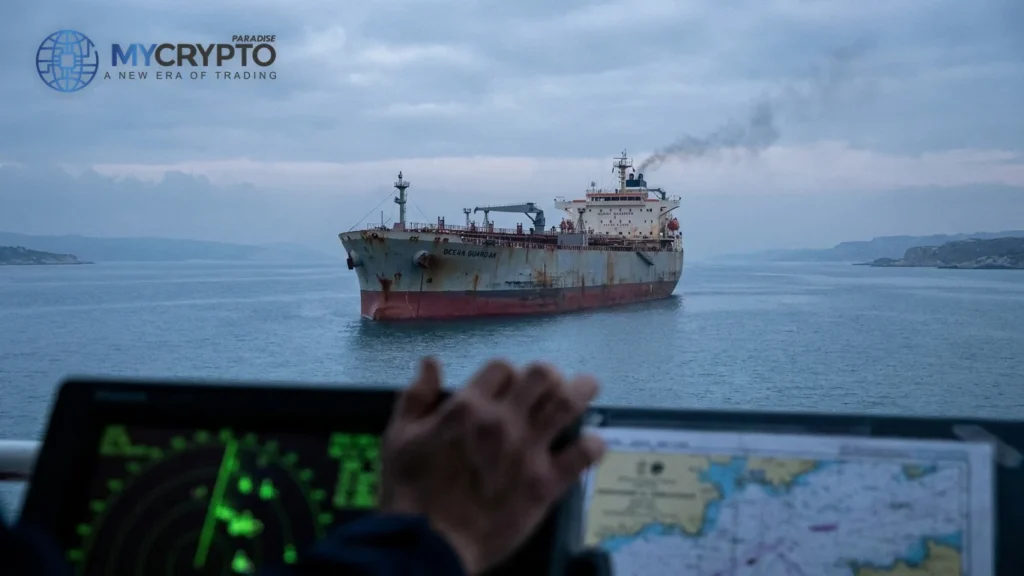
Two oil tankers were struck in the Strait of Hormuz. Brent crude futures jumped above $92 a barrel. And on Monday, the US and Iran exchanged fire for the first time in over a month.
That last detail is the one that changes the story. A tanker incident is a headline. Repeated strikes between two states, next to the world's most important oil chokepoint, is a trend.
Roughly 20% of the world's oil and LNG passes through Hormuz on a normal day. Traders do not need the strait to close to reprice risk. They only need to believe it might. In early trading Brent leapt 10 to 13%, before settling up $1.72, or 1.9%, at $92.21 a barrel by 1046 GMT.
The pressure spread beyond crude itself. US diesel crack spreads breached $100 a barrel, a sign refiners and end users are scrambling for supply. Oil rose for a second straight day on Tuesday.
We covered the tanker strikes earlier today. What is new is the military exchange behind them, and what it does to the inflation math.
Bitcoin, for now, barely blinked. BTC traded near $77,758, down 0.6% on the day, while ETH sat near $2,435, off 1%. That calm is the interesting part. A market that shrugs at a widening oil shock is either confident or distracted, and history suggests distracted is the safer bet.
Higher energy costs feed straight into inflation
Higher oil is not just a pump-price problem. It is an inflation input that flows through the whole economy.
Energy sits inside the cost of nearly everything: shipping, food, manufacturing, heating. When Brent jumps 10% in a session, those costs start climbing behind it. Markets are already pricing another wave of inflation, and that is the real transmission line into crypto.
Here is the chain. Higher energy prices lift headline inflation. Stickier inflation forces central banks to keep policy tight, or to delay the rate cuts traders had penciled in. Tighter policy means less liquidity in the system and a higher cost of capital.
Risk assets sit at the far end of that chain. Bitcoin, Ethereum and the long tail of alts are the most sensitive to liquidity of anything on the board. They rise fastest when money is loose and bleed first when it drains.
The diesel crack spread breaking $100 matters here. It signals real demand for physical fuel, not just futures speculation. That kind of squeeze is harder for policymakers to look through.
So a story that looks like a Middle East headline is really a monetary one. The tankers are the spark. The inflation expectations are the fuse. And the cost of holding risk, crypto included, is what quietly reprices while everyone watches the oil chart.
Risk assets absorb a fresh liquidity squeeze
Start with liquidity, because that is what moves first. When inflation fears rise, capital retreats to safety. Cash, short-dated bonds and the dollar get the bid. Everything speculative gets sold or trimmed.
Bitcoin is the first crypto domino. As the largest and most liquid asset, it absorbs the initial macro shock. A firmer dollar and higher yield expectations pull directly against BTC, which is why a widening oil shock is a genuine headwind, not background noise.
Ethereum tends to follow with a lag and a larger swing. ETH near $2,435 is already down 1% on the day, a touch more than BTC. In a liquidity drain, ETH usually underperforms Bitcoin, because it sits one rung further out on the risk curve.
Then come the alts, and this is where it gets ugly fast. Thin order books mean small outflows create large moves. When BTC catches a cold, alts run a fever.
For now the reaction is muted. BTC is down only 0.6%, which tells us the selloff has not started in earnest.
That muted response is the risk, not the reassurance. Markets rarely price a slow-burning geopolitical shock all at once. They price it in steps, on each new headline. If the strikes continue, every fresh escalation becomes another leg down for risk, and crypto rarely gets to sit that out.
Escalation or a step-back decides direction
Watch the oil price first, because everything downstream keys off it. If Brent holds above $92 and pushes higher, the inflation trade strengthens and the pressure on crypto builds.
A quick de-escalation would flip the whole picture. If the US and Iran step back and no more tankers are hit, crude can unwind fast. Oil spikes on fear often fade as quickly as they arrive, and that would hand risk assets immediate relief.
So the single cleanest signal is the frequency of new incidents. One strike is an event. A third or fourth strike is a pattern, and patterns get priced permanently.
On the crypto side, the level that matters is Bitcoin's grip on the high-$77K area. Holding here while oil climbs would show real demand absorbing macro fear. Losing it on rising volume would confirm the risk-off read is finally reaching crypto.
Watch the dollar and short-term yields alongside price. If both rise together, liquidity is tightening, and that is the environment where crypto bleeds slowly rather than crashes loudly.
Rate-cut expectations are the other tell. We flagged earlier this week that hike odds had climbed sharply. An oil shock that keeps inflation hot pushes cuts further out, which is quietly bearish for everything speculative.
Confirmation of downside is a break below the high-$77K foothold with oil still bid. Invalidation is Brent cooling and BTC reclaiming ground above $79K.
Why smart money still waits for capitulation
The ParadiseTeam reads this as a macro headwind, not a crypto story with a crypto fix. The driver sits in the oil market. Crypto is simply downstream of it.
Retail often treats geopolitical inflation as a reason to buy Bitcoin as a hedge. In a liquidity-tightening regime, that logic tends to fail. When real yields rise and the dollar firms, non-yielding risk assets struggle, and crypto is the purest risk asset there is.
Smart money is playing a patient game. It is waiting for capitulation, the moment retail gives up and sells into weakness. An oil-driven inflation shock pushes that moment further out, because it delays the policy easing a true bottom usually needs.
With BTC near $77,758 and barely moving, we do not read strength. We read a market that has not yet priced the shock. The quiet is a lag, not a verdict.
Our bias stays cautious while oil is bid and BTC sits under the $79K area. A reclaim of $79K on cooling crude would soften the read. A loss of the high-$77K foothold with oil still climbing would confirm the risk-off.
The edge here is discipline, not prediction. Define risk before the next headline, not after it. Size for a market that can gap on a single overnight strike, because in a geopolitically driven tape, position size protects you far more than any forecast, and forecasts in a war tape age in hours.
Track it live: our Crypto Fear and Greed Index and the live crypto funding rates both update in real time, so you can watch this shift for yourself.
Related coverage
For exact entries, targets, and stop losses with full risk management, that is what ParadiseFamilyVIP is for. New to reading these moves? Start with our crypto trading strategies guide.
ParadiseTeam is monitoring the market situation closely, and we are taking these developments into consideration while building our trading tactics inside ParadiseFamilyVIP.
Crypto trading involves substantial risk. Prices are volatile and you can lose money. This article is educational and is not financial advice. Past performance does not guarantee future results.
Where does Bitcoin head next as oil keeps climbing above $92?
This is how 17 Paradisers are calling it. Tap your call.
No calls on this one yet. Tap yours to be the first.
Free account, no password. Members just sign in.





Join the discussion 10
always makes me revisit my own portfolio assumptions; while the oil price is a macro signal, it rarely shifts the fundamental thesis for me.
wow, oil price 📈 always makes me check if my USDT is earning enough interest to cover things. it felt like that last year when the gas fees were insane ⛽️🙄.
Indeed, Olivia. Higher energy costs quickly translate to a broader re-pricing of goods and services, something the market must then absorb.
Nah, I don't really see oil prices hitting my USDT like that 🤷♂️. It's more about global liquidity for me, you know? 💸🤔
inflation fears seems a bit of a stretch for this given how quickly these situations tend to de-escalate. what other factors are being overlooked here?
De-escalate quickly"? 🤔 Not always the case, especially when folks like my family in Dakar are trying to plan for the next month's transfers. 💸📈 These things can drag.
Lukas, it's interesting you say that... my Omi called gold her 'quiet money' when things felt a bit wobbly. What signals do you look for that suggest de-escalation? 🐕🦺
Crikey, another geopolitical flashpoint 💥 - anyone else thinking about that fella from the gym who'll be crowing about his energy plays for weeks?? 🙄 Like, what's teh real impact on stables here? 🤔
Fr sh Liam, already seeing some spikes for crude oil 📈 which always messes with the dollar. 😒 Just adds to volatility. 📉
I always check my stop-loss on any BTC long when oil jumps like this. The debits for a geopolitical event are just too high for my ledger. 😅