

Listen: the breakdown
Developing story update (September 01, 2026, 13:54 UTC):
A further detail has been confirmed on the same movement: the roughly $30 million tied to the sanctioned Lazarus Group was routed specifically through Hyperliquid’s HyperUnit service, based on our sources. This narrows the flow to a named on-platform pathway rather than a generic transfer.
For traders, this does not change the immediate market picture. BTC, ETH and SOL are effectively flat over the past 24 hours, which continues to signal that the market is treating this as a compliance and reputational story rather than a fresh price catalyst. The relevant risk remains regulatory pressure on the venue itself, especially while it explores a US-regulated trading route.
What to watch now: Watch for any official Hyperliquid or HyperUnit response and whether the flagged flow affects its US-regulated route plans.
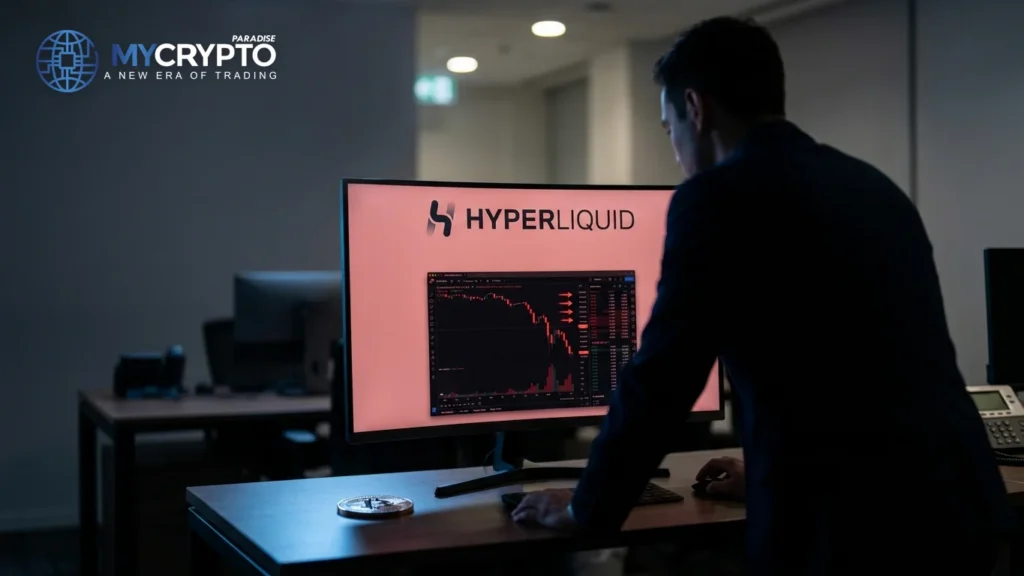
Market briefing: Wallets tied to North Korea's Lazarus Group pushed over 30 million dollars through Hyperliquid this August. BTC sat near 77,786 dollars, barely flinching, which tells you where this event ranks.
- Lazarus-linked wallets moved over $30 million through the Hyperliquid exchange in August.
- Funds rotated from Bitcoin into ETH and SOL, then bridged and deposited across several exchanges.
- The flow is a compliance red flag, not a price catalyst, with BTC near $77,786.
Source: U.S. Treasury OFAC
Lazarus-linked wallets pushed $30 million through Hyperliquid, yet Bitcoin barely twitched near $77,786. So does this laundering trail move the market, or is it noise?
Wallets tied to the North Korea-affiliated Lazarus Group moved more than $30 million in crypto through Hyperliquid this August. The trail did not stay in one place. Funds rotated out of Bitcoin, into ETH and SOL, then bridged across several networks before landing on KuCoin, Kraken, LBank and unidentified Tron-based services.
The pattern is familiar. Take a large, traceable Bitcoin position, fragment it, then wash it through a decentralized exchange and multiple bridges to blur the origin. Lazarus is a sanctioned entity under OFAC, and it is suspected of running the record exchange hack that drained roughly $1.4 billion in 2025.
Hyperliquid is the awkward character in this story. The same platform now handling laundered flows is reportedly exploring a US-regulated trading route with two partners. That is a difficult look for any exchange courting American approval.
Here is the honest read. Thirty million dollars is a serious number in a courtroom and a rounding error in daily crypto liquidity. It does not move BTC, ETH or SOL by itself, and the tape shows it. Bitcoin traded near $77,786 as this surfaced, down a fraction on the day.
So we treat this as what it is. A regulatory and reputational event, not a market catalyst. It reminds every DEX and bridge chasing a compliance badge that the plumbing they built for permissionless access is exactly what sanctioned actors want. The price impact is negligible. The scrutiny it invites is not.
How sanctioned flows tighten the screws
The transmission here is regulatory, not monetary. A $30 million laundering trail does not drain liquidity or crash a chart. What it does is hand regulators a fresh, concrete example of a sanctioned actor using a decentralized exchange and cross-chain bridges to clean money.
That matters because the timing is pointed. Hyperliquid is reportedly exploring a US-regulated route with two named partners. A high-profile Lazarus flow through your platform, while you knock on Washington's door, is the kind of headline compliance teams lose sleep over.
The wider mechanism is scrutiny creep. Every illicit flow through a DEX or bridge strengthens the argument for tighter know-your-customer rules, transaction monitoring, and bridge oversight. For traders, that is a slow-burn risk, not a same-day shock. It raises the friction of using permissionless infrastructure and nudges liquidity toward regulated, surveilled crypto exchanges.
There is a quieter point too. Lazarus rotated Bitcoin into ETH and SOL before bridging out. That is operational, not directional. It reflects which assets bridge cleanly, not a view on price.
So the honest framing is this. The event confirms a structural risk the market already knows exists. It does not create a new one. Regulatory pressure on DEXs and bridges was already building, and this simply adds a data point. The read on price stays anchored to macro and market structure, where the real forces sit, not to one laundering trail.
Thirty million against a deep ocean
Start with the tape, because it settles the argument. As this flow surfaced, BTC traded near $77,786, down about 0.3 percent on the day. ETH sat near $2,440 and SOL near $101.81, both softer but calm. No cascade, no liquidation spiral, no visible reaction.
That is the whole point. Thirty million dollars, spread across Bitcoin sales and multiple exchange deposits over three weeks, is too small and too gradual to shift open interest (OI, the total value of live derivative contracts) or bend the order book on any major pair.
Where it does show up is localized. Hyperliquid, KuCoin, Kraken, LBank and some Tron-based services see the flow directly. Those are micro shifts in specific books, not a market-wide move. The liquidity that decides BTC's next leg lives elsewhere, in spot exchanges, ETF creation baskets, and futures, none of which noticed this.
Down the risk curve, the story is the same. If $30 million cannot move Bitcoin, it certainly cannot move ETH or the alts in any measurable way. Any weakness in SOL today owes more to broad risk-off tone than to a laundering headline.
The realistic second-order effect is sentiment, not flow. Illicit-finance news feeds general unease, and unease in a cautious market can thin bids at the margin. But that is a mood, not a mechanism. Traders looking for a price driver here will not find one in the chain data.
Levels that decide the next flush
Watch the regulatory thread first, because that is where this story actually lives. If Hyperliquid's US-regulated route stalls or draws official pushback tied to illicit flows, that becomes a real headline for the platform and its token holders. Silence means the market has moved on.
On compliance, monitor whether other DEXs and bridges tighten monitoring in response. A visible industry reaction would confirm the scrutiny-creep thesis. No reaction confirms this stayed a one-day story.
For price, ignore this event and watch structure. BTC holding near the high-$77,000s keeps the range intact. A clean break below and a daily close under support would signal the deeper flush our read expects, where forced selling meets thin bids. A reclaim of higher levels on strong volume would challenge the bearish structure instead.
Watch ETH near $2,440 and SOL near $101.81 as risk barometers. If alts crack while Bitcoin holds, that is broad risk-off, not a Lazarus effect. If they hold, the market is shrugging this off, exactly as the tape suggests.
Invalidation for treating this as noise would be evidence of a much larger, coordinated illicit outflow that dwarfs $30 million, or a concrete enforcement action against a major exchange in the chain. Neither is confirmed. Until one appears, the confirmation path is boring on purpose. Price ignores the headline, regulators file it away, and the market keeps trading its own structure.
Why this transfer barely moves liquidity
The ParadiseTeam reads this as background noise laid over a bearish structure, and the two should not be confused. The $30 million flow is a compliance event. Our directional bias comes from the tape and the macro, not from a laundering trail.
With BTC near $77,786 as this surfaced, the market is cautious and, in our view, still distributing rather than bottoming. We see current strength as a retail-led hope trade, the kind that shows up before a final flush, not after one. Smart money is waiting for capitulation, and a headline like this does not deliver it.
Here is the edge. Retail reads Lazarus, North Korea and $1.4 billion, and feels fear. Professionals read $30 million against daily volume and feel nothing. When a scary headline produces no price move, that gap between emotion and reaction is the tell. It confirms the event is priced as noise.
So we do not tie any level to this news. We tie levels to structure. Losing the high-$77,000s on a daily close keeps the bearish path open toward deeper support, where we expect the real accumulation to happen. Reclaiming higher ground on volume would force a rethink.
The practical point for members is discipline. Do not let an illicit-finance headline pull you into a directional trade it cannot justify. Trade the structure, size for the flush our read still expects, and let the chain-analysis drama stay exactly where it belongs, off your risk sheet.
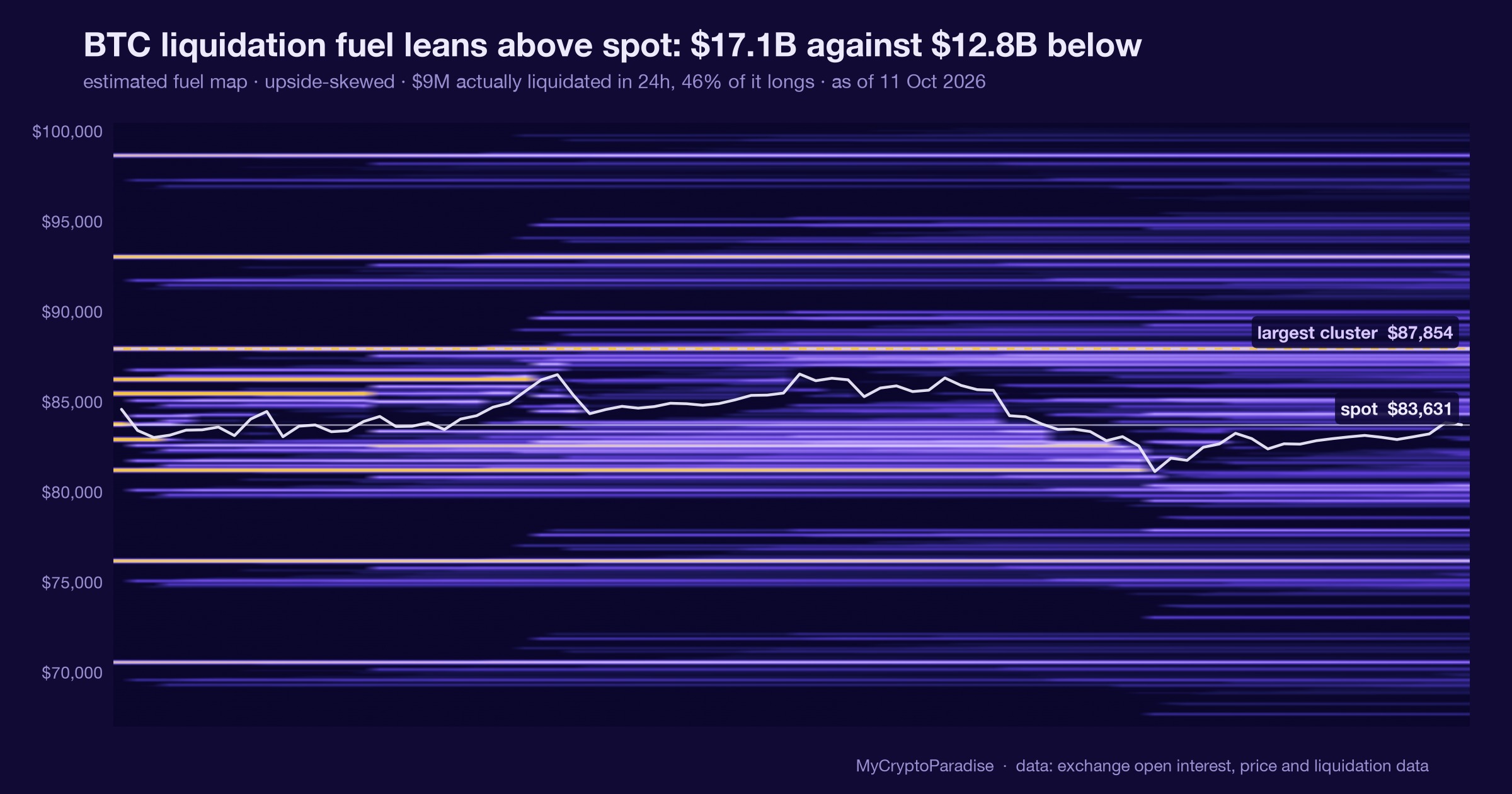
Track it live: our crypto liquidation heatmap and the Crypto Fear and Greed Index both update in real time, so you can watch this shift for yourself.
Related coverage
For exact entries, targets, and stop losses with full risk management, that is what ParadiseFamilyVIP is for. New to reading these moves? Start with our crypto trading strategies guide.
ParadiseTeam is monitoring the market situation closely, and we are taking these developments into consideration while building our trading tactics inside ParadiseFamilyVIP.
Crypto trading involves substantial risk. Prices are volatile and you can lose money. This article is educational and is not financial advice. Past performance does not guarantee future results.
Does the Lazarus Hyperliquid flow change anything for crypto over the next month?
This is how 29 Paradisers are calling it. Tap your call.
No calls on this one yet. Tap yours to be the first.
Free account, no password. Members just sign in.






Join the discussion 6
Compliance flags like these are useful for tracking liquidity, particularly on newer exchanges. I log the volumes and look for anomalies.
It is a valid point that compliance reports are not necessarily market movers, though the immediate basis reaction to such headlines is often instructive. I tend to check the funding rates on HL first.
i always try to pay attention to these compliance updates because it makes me wonder if i'm doing enough with my own opsec... like which exchange to use ??
totally Lena! like, teh rules for different regions on exchanges for KYC/AML, it's a minefield out there sometimes 🤯🗺️. good shout for bringing it up! 👍
i just watch the next level for a reaction its the only thing that matters
I always check for these compliance reports. It helps confirm my slow, fixed purchases are not encountering too much turbulence from these larger movements.