

Listen: the breakdown
Update on this developing report (September 02, 2026, 08:08 UTC):
Iranian officials have now publicly attributed the strike to the United States. Hormozgan Province deputy governor Ahmad Nafisi and Foreign Ministry spokesman Esmaeil Baghaei have accused Washington of carrying out the attack, moving the story from an unclaimed incident to a named state-level accusation.
Officials are framing the strike as part of a wider, escalating wave of U.S. military action against Iran rather than an isolated event. For traders this raises the probability of a sustained risk-off backdrop, though the immediate crypto reaction stays muted: BTC near $77,457 (-1.3% 24h) and ETH near $2,418 (-2.0% 24h), broadly flat versus the initial report.
What to watch now: Watch for an official U.S. response or Iranian retaliation threat, which would be the escalation trigger markets actually price.
Market briefing: A US airstrike on an Iran wedding killed at least five and injured 68, sharpening the Washington-Tehran standoff. Bitcoin held near $77,651, down under two percent, treating the shock as background noise.
- A US airstrike hit a wedding in Kuhestak, Iran, killing at least five and injuring 68, with children among the casualties.
- Bitcoin held near $77,651, down 1.8% on the day, showing little direct reaction to the escalation.
- We read the muted tape as smart money distribution below $79,000, not a fresh war trade.
A US airstrike on an Iran wedding killed at least five and injured 68, deepening the Washington-Tehran conflict. So why did Bitcoin barely blink near $77,651?
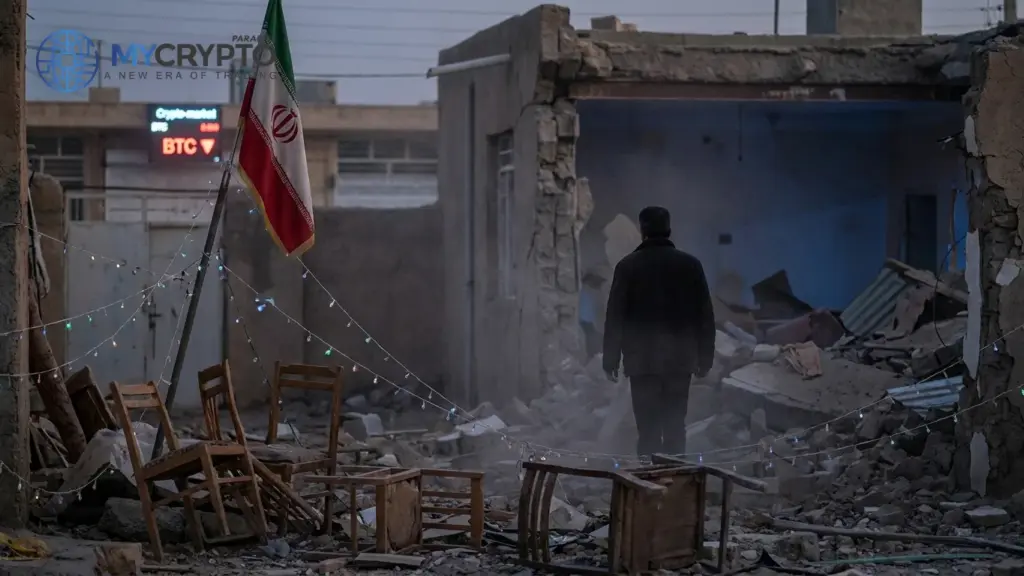
A US airstrike hit a home in Kuhestak, southern Iran. The house was hosting a wedding. At least five people were killed, and at least 68 were wounded. Children were among the casualties, according to figures released by Hormozgan Province's deputy governor, Ahmad Nafisi. A celebration became a disaster scene in minutes.
This lands on a market already tracking the Washington-Tehran conflict. Earlier this week we covered Iranian missile strikes on US bases, then a second wave reaching toward Kuwait. Those were military targets. A wedding is not. That distinction is the new part, and it raises the emotional and political stakes of this escalation sharply.
Yet Bitcoin barely moved. BTC traded near $77,651, down about 1.8% over 24 hours, and up a token 0.1% in the last hour. Ethereum sat near $2,422, softer by roughly 2.5%. The tape did not price a war premium.
That silence is worth respecting. There is no single confirmed catalyst driving crypto today, so treat any war-narrative explanation as our interpretation, not established fact. Our read is simpler. Price is following its own structure, sitting under heavy resistance while the headlines supply the noise. Smart money tends to prefer selling into fear stories rather than buying them.
Civilian deaths raise the escalation ceiling
Geopolitical shocks move markets through fear, not through crypto order books directly. A civilian strike raises the odds of retaliation, which raises the odds of a wider conflict. That chain pushes traditional investors toward safety: dollars, short-dated bonds, sometimes gold.
Risk assets sit at the far end of that flight. When capital hunts for shelter, the speculative tail gets sold first. Equities wobble, and crypto usually wobbles harder, because it trades every hour and carries more leverage.
Here is the honest caveat. This particular strike has not produced a measurable crypto reaction yet. The 24-hour dip is modest and predates any clean war-driven flush. So the mechanism is real, but the trigger has not fired at scale.
What escalation does reliably is thin out liquidity. Nervous market makers widen spreads and pull size from the book. Thin books turn ordinary orders into large candles, in either direction. That is why geopolitics matters even when the immediate print is quiet: it removes the market's shock absorbers.
For now, the conflict reinforces a risk-off backdrop rather than creating one from scratch. It stacks onto an already heavy chart. A market that wanted to fall now has one more reason, and a market that wanted to rally now has one more excuse to stall.
Risk-off flows meet a distribution tape
Start with Bitcoin, because liquidity flows there first. In a genuine risk-off wave, BTC is the crypto asset large players trade to cut exposure fast. A slide in Bitcoin sets the tone for everything beneath it.
Right now that slide is orderly, not violent. BTC near $77,651 with a 1.8% daily drop is drift, not panic. That matters, because a real geopolitical flush usually looks sharper and faster than this.
Ethereum tells the second chapter. ETH near $2,422 is down about 2.5%, underperforming Bitcoin slightly. That is the normal pecking order: when fear rises, capital leaves the riskier asset faster, and ETH sits a notch further out on the risk curve.
Altcoins sit at the very end of the whip. They carry the thinnest books and the most leverage, so any BTC-led drop tends to hit them two or three times as hard. In a real escalation cascade, alts bleed while everyone stares at the Bitcoin chart.
The tell today is that none of this has broken loose. The move looks like slow distribution, not a headline-driven dump. Retail keeps adding longs, convinced the worst is behind. Smart money appears content to feed them, absorbing that demand while the geopolitical noise does the emotional work for free.
The trigger that would wake the tape
Watch the response from Tehran first. Retaliation, or a credible threat of it, is what usually converts a grim headline into forced selling. Quiet de-escalation would let crypto keep ignoring the story entirely.
Then watch volume, not just price. A move that matters arrives with a surge in traded size and a jump in liquidations. The current drift carries neither, which tells you the market has not committed to the war narrative.
Track the classic havens too. If the dollar and gold catch a strong bid while bond yields fall, capital is genuinely fleeing risk. Crypto rarely swims against that tide for long. If havens stay calm, the escalation stays background noise.
Funding and open interest, or OI (the number of contracts still live), give the next clue. Rising OI into a falling price means fresh shorts and trapped longs, which sets up sharp two-way moves. We would treat a crowded long book as fuel, not comfort.
Invalidation of the risk-off read is straightforward. A firm reclaim of overhead resistance, on real volume, would say buyers absorbed the fear and the geopolitical premium never stuck. Until then, we lean on structure over headlines. The strike is tragic and serious, but the chart, not the news wire, still sets the near-term path.
What the strike changes below 79K resistance
The ParadiseTeam frames this strike against a chart that was already heavy. BTC near $77,651 sits just under $79,000, a level that has repeatedly rejected price. A shooting star candle printed there on both the daily and the weekly. This news does not create that resistance; it just adds fear that helps sellers defend it.
Our bias stays bearish into this zone. We read current strength as distribution, with smart money absorbing retail longs rather than chasing a war bid. The escalation gives that distribution cover, because panic headlines make it easier to sell size without pushing price against yourself.
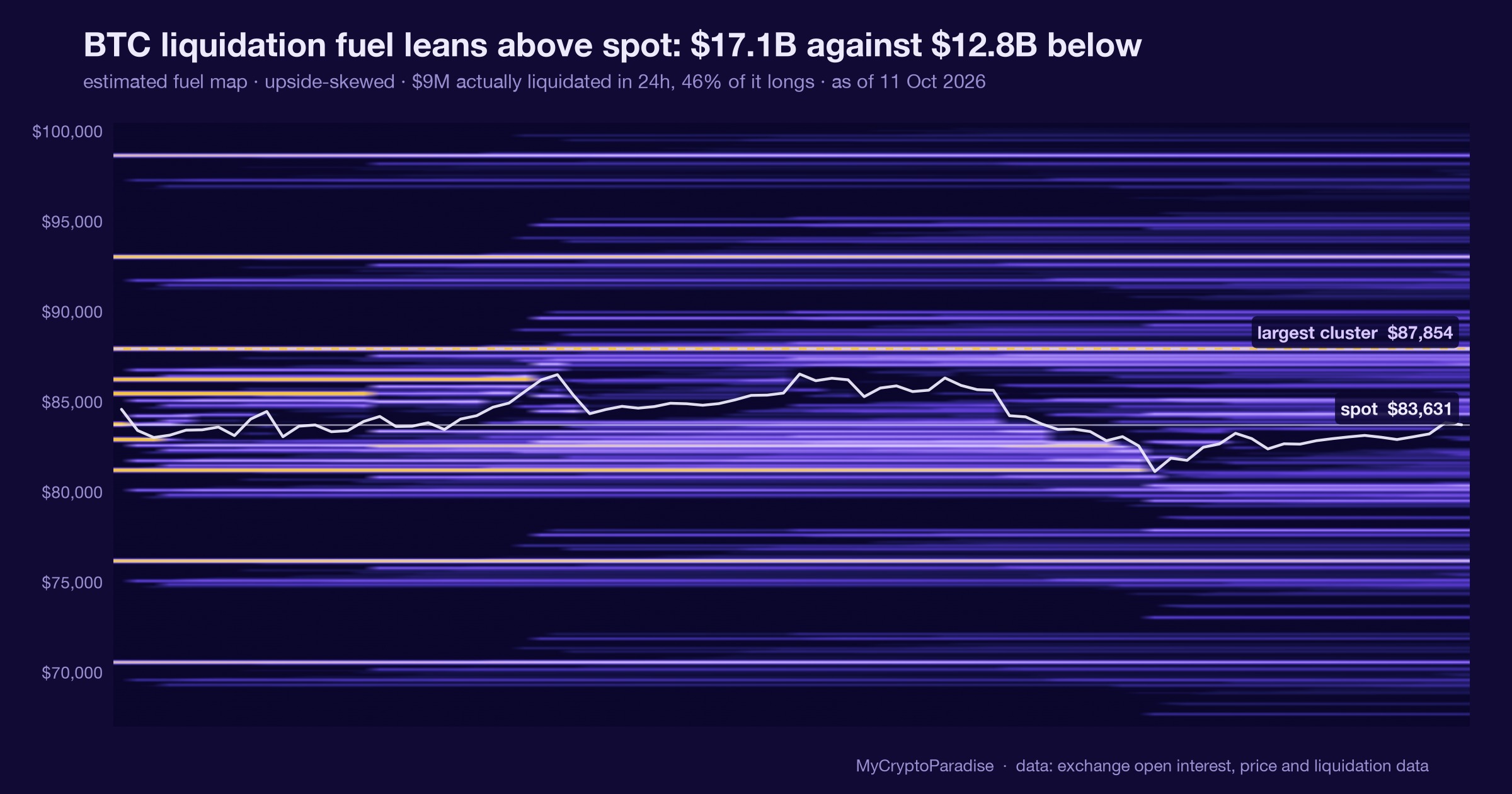
The map below is unchanged. A decisive break under $58,000 would open the path toward our $44,000 target. Long liquidation fuel clusters near $57,000, exactly where a cascade would find gasoline. Shorts only get squeezed up near $83,000, well above spot.
Invalidation is clean and specific. A strong reclaim above $79,000 would break the bearish structure and force us to step aside. The geopolitical story does not move those lines; it only changes the emotional weather around them. We would rather trade the levels than the headlines, and let retail supply the exit liquidity.
The read behind this: we framed this story through our own market analysis, Bitcoin Fails at $79K: Who Is Selling?
Track it live: our live crypto funding rates and the Crypto Fear and Greed Index both update in real time, so you can watch this shift for yourself.
Related coverage
For exact entries, targets, and stop losses with full risk management, that is what ParadiseFamilyVIP is for. New to reading these moves? Start with our crypto trading strategies guide.
ParadiseTeam is monitoring the market situation closely, and we are taking these developments into consideration while building our trading tactics inside ParadiseFamilyVIP.
Crypto trading involves substantial risk. Prices are volatile and you can lose money. This article is educational and is not financial advice. Past performance does not guarantee future results.
Does the Iran escalation push Bitcoin below 58,000 next?
This is how 18 Paradisers are calling it. Tap your call.
No calls on this one yet. Tap yours to be the first.
Free account, no password. Members just sign in.











Join the discussion 24
Even with such news, the open at $77,500 held well. I remember a time when any geopolitical event moved markets much more, especially early BTC.
...even with this news, the pressure on the price seems to be holding... Reminds me of when the Greek banks shut... you always brace for worse.
So, if this is "smart money distribution," does that mean we're likely to see a dip before it goes up again? przepraszam for asking, just trying to understand the terms!
i'd say "smart money distribution" often implies a ceiling on the current rally, rather than a definitive dip before a further move up. it might suggest resistance there.
Marta, not necessarily a dip. Distribution just means large players are exiting, and that can happen without an immediate price fall. 🤷♂️ Market usually finds its balance.
Not sure its necessarily distribution marta, given the perp-versus-spot basis is still positive. Seems more like range trading to me.
Marta, "smart money distribution" isn't a dip prediction, it's about shifting holdings. The core question is always, who is selling to whom, and at what valuation, right?!
i just watch what people do with their money its the best indicator for me anyway not the news itself
Hmm, a wedding hit... that's heavy. 😔 I always wonder how these events affect actual *people* trying to move money, not just the charts. 📉 Those legacy fees don't pause for anything. 😅
My process treats all news as risk input. Geopolitical events affect position sizing, not directional bias.
the 'smart money distribution below $79K' angle here feels a bit stretched, given the broader market structure. Open interest barely twitched, and perp-spot basis remains somewhat range-bound, suggesting less conviction than that phrasing implies.
Exactly! 🎯 And for me, funding rates were also not really pointing to any strong conviction below $79k 🤔. More like just quiet rebalancing.
I see the conviction differently. The open interest and perp-spot basis might be range-bound precisely because smart money is accumulating methodically, without generating large immediate directional signals.
hmm, i dunno tobias. i saw some pretty heavy shorts open up on that $79k wick - felt like conviction from my perch!! 🤔
Smart money distribution" is a narrative for price action, not a cause. Liquidity is what reprices, opinions just follow.
that $79k line was a solid debit for most books, no doubt. i always factor geopolitical ripples as a credit for volatility, helps keep the risk-reward clean. 📉 🤝
yes geopolitics matter for volatility but its about the timing, like how long the ripples last across a harvest season
The impact above $79k certainly felt like a broad unwind. I would have expected a wider basis given the news flow, perhaps.
chinedu, i see geopolitical "ripples" more as catalysts for liquidity events, often flushing out over-leveraged longs, not a clean volatility credit. the asymmetry is key.
Yeah, this really highlights how markets just absorb *everything* now. My first thought seeing the headline was "check the heat map for liquidity around 77k." So numb to it, honestly. 😔
Honestly, connecting *this* event to "smart money distribution below $79K" feels like quite a stretch. Four-hour noise is not a signal. 🙄
This is a bit scary... but if geopolitical events are mainly for position sizing, does that mean we watch the news but mostly ignore the emotional reactions to it? 🤔 A bit hard for me. 🐶
seen a lot worse get shrugged off. my wife just rolls her eyes when I tell her why the charts did what they did... doesn't care.
what's the one level that matters then, above all this noise