

Listen: the breakdown
Developing story update (October 13, 2026, 20:33 UTC):
UPDATE: Ledger said all confirmed fund losses in the CryptoBilis incident involve signers sold by the Southeast Asian reseller, while noting it has not confirmed the total number of affected users or the total value lost. Its Donjon team found an unauthorized implant that reads recovery phrases displayed during setup and transmits them over LTE.
Developing story update (October 13, 2026, 20:33 UTC):
LATEST: reveals how the CryptoBilis hack worked, a covert hardware implant read users’ 24-word recovery phrases from the screen and transmitted them over LTE via an eSIM, with estimated losses of up to $93.2M across 300+ wallets.
Developing story update (October 13, 2026, 17:24 UTC):
Ledger to Review Sale Policies After Crypto Spyware Attack
Market briefing: Trezor is ending reseller authorizations from January 1, 2027, after a hidden implant in third-party-sold wallets was found leaking users' recovery phrases. BTC held firm near $83,180, up about 0.8 percent on the day, while ETH sat around $2,506.
- Trezor will end all reseller authorizations on January 1, 2027.
- A hidden implant in wallets sold by a Southeast Asian retailer transmitted users' recovery phrases.
- BTC barely moved at $83,180, up 0.8 percent, signaling no broad liquidity shock.
A spy implant in hardware wallets just leaked recovery phrases, and Trezor is now cutting its resellers. So is self-custody trust quietly cracking?
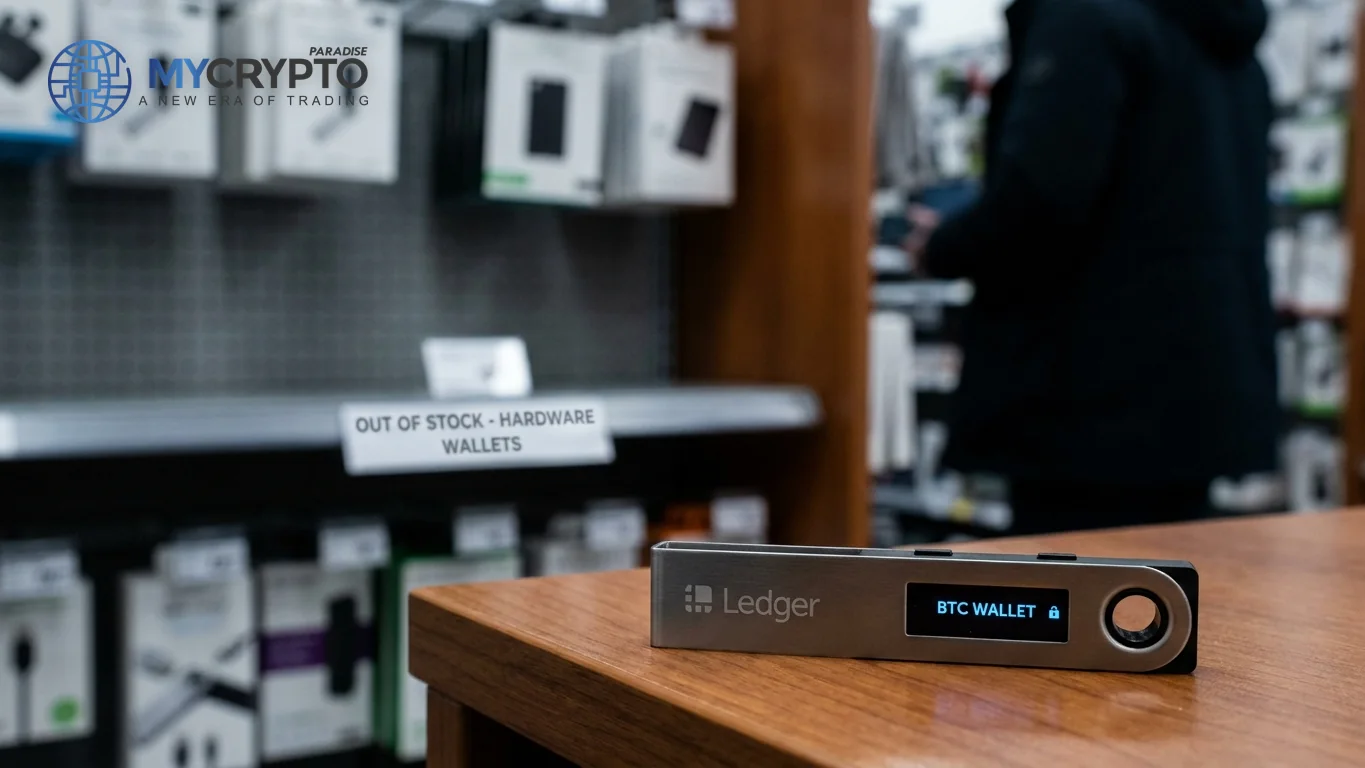
Trezor just drew a hard line through its own distribution network. The company will end all reseller authorizations on January 1, 2027, and buyers will have to source devices directly instead of through third-party sellers.
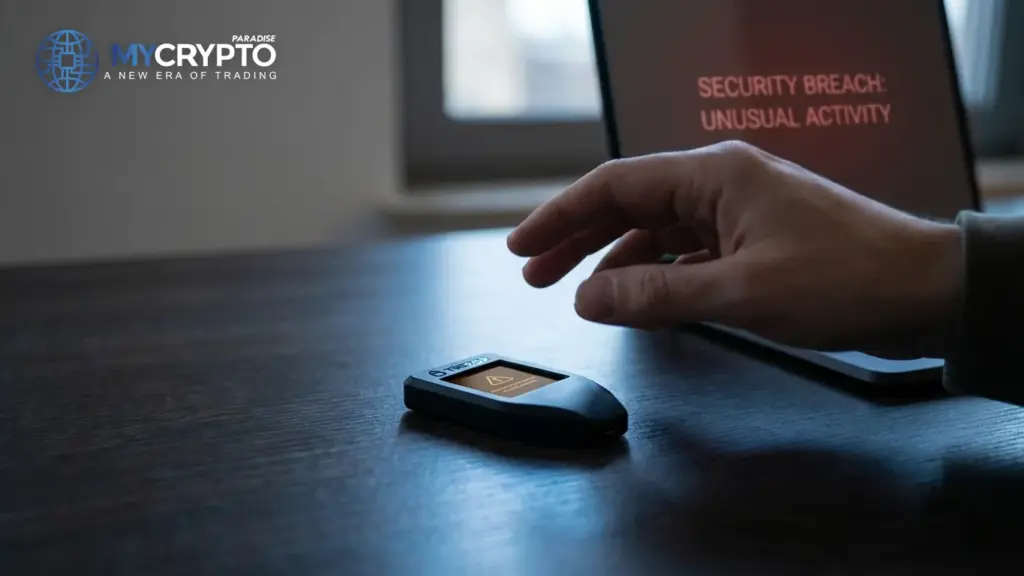
The trigger was ugly. A batch of wallets sold through a Southeast Asian retailer carried a hidden implant. That implant quietly read users' recovery phrases and shipped them back out, which is roughly the worst thing a device built to keep secrets can do.
This extends the implant story we covered earlier today, but the news here is the corporate response, not the exploit itself. One hardware maker found the breach. A second has now changed how it sells, before regulators or customers forced its hand.
That sequence matters. The attack did not break the cryptography. It broke the supply chain, the long and poorly lit path a device travels between a factory and a buyer's hands. Self-custody was always sold as removing counterparties. This is a reminder that the box itself is a counterparty until you verify it.
For traders, the instinct is to check the price for damage. There is almost none. BTC traded near $83,180 as of the brief, up about 0.8 percent over the day, and ETH sat around $2,506, down a fraction. The market treated a trust story as a rounding error.
That gap, between a serious structural warning and a flat tape, is the whole story. It tells you who is paying attention and who is not.
Why self-custody trust is the real exposure
The driver here is not a price event. It is a trust event, and trust is the asset self-custody is built on. Every cold-storage pitch rests on one promise: your keys never leave the device. An implant that exports recovery phrases breaks that promise at the hardware layer, where users have almost no way to inspect what they bought.
The macro transmission is slow and indirect, which is exactly why it is dangerous to ignore. Adoption of crypto by cautious newcomers depends on the belief that self-custody is safe when done correctly. Erode that belief and you do not get a sell-off. You get a quieter outcome: fewer coins leaving exchanges, more balances sitting with custodians, a slower drip back toward the very counterparty risk this industry claims to solve.
Trezor's response reads as damage control done early, cutting the weakest link before it spreads. Ending reseller authorizations removes the untrusted middle of the supply chain. It is a sensible move, and it is also an admission that the problem lived in distribution all along.
The honest read is that this has no single, confirmed same-day price catalyst. We are not claiming it moved the market. We are claiming it changes the risk map for self-custody, which is a structural concern that compounds over quarters, not hours.
That is why the flat tape is misleading. Liquidity did not react because this threatens individuals, not balance sheets. The slow bleed, if it comes, shows up in custody flows long before it shows up in the candle.
A trust shock that barely touched liquidity
Read through the standard cascade and this story stops almost immediately. A driver normally flows into macro sentiment, then liquidity, then BTC, ETH, and alts. Here the chain breaks at the first link, because the event hits individual holders rather than market-wide funding or balance sheets.
BTC confirms it. Price sat near $83,180, up roughly 0.8 percent on the day, with a flat 1-hour change. A market genuinely frightened about custody would show stress in spot and derivatives. It showed none.
ETH tells the same story from the other side, down about 0.3 percent to $2,506. That is noise, not a reaction. Alts, which amplify every real fear, stayed quiet in sympathy. So the near-term price impact is negligible, and we will say that plainly rather than manufacture drama. The verdict is bearish on the facts, because a confirmed implant erodes trust in self-custody, but bearish here means slow structural pressure, not an imminent drop.
The mechanism to watch is custody behavior, not the ticker. If nervous holders move coins back onto exchanges for safekeeping, exchange balances rise over time. Rising exchange supply is a bearish overhang, because it is inventory that can hit the order book fast when sentiment turns.
That is the real transmission risk from this story. Not a candle today, but a gradual reversal of the self-custody trend that tightened available float. Smart money is not treating it as market-moving, and the price agrees. The second-order effect on supply sitting with custodians is the part that could matter later.
The reseller deadline and the contagion risk
The confirmation signal for this story is boringly specific: whether the breach stays contained to one retailer or spreads to other names and other regions. One compromised Southeast Asian seller is a supply-chain incident. A second confirmed case would turn it into a pattern, and patterns move sentiment.
Watch the January 1, 2027 cutoff as the structural marker. If other hardware makers follow Trezor and tighten or end reseller programs, that confirms the industry now treats distribution as the attack surface. That would be healthy long term and mildly disruptive short term, as buying a device gets slower and more direct.
The invalidation of the bearish read is simple. If exchange balances keep falling and self-custody flows hold their trend over the coming weeks, the market has judged this a one-off, and the trust concern never transmits into supply pressure.
The quieter risk is retail behavior, and retail is already fearful in the current tape. Scared holders do two things: they either freeze or they run for the exits they trust least. If this scare nudges coins back toward custodians, we would expect exchange reserves to tick up. That is the number that would make the bearish case real.
Also watch whether any affected users report actual drained wallets. Confirmed losses change the emotional register entirely and could pull attention from price to safety. Until then, treat this as a structural warning on the slow burn, not a catalyst for the next move. The tape is telling you the market has, so far, filed it under noise.
What a custody scare means near support
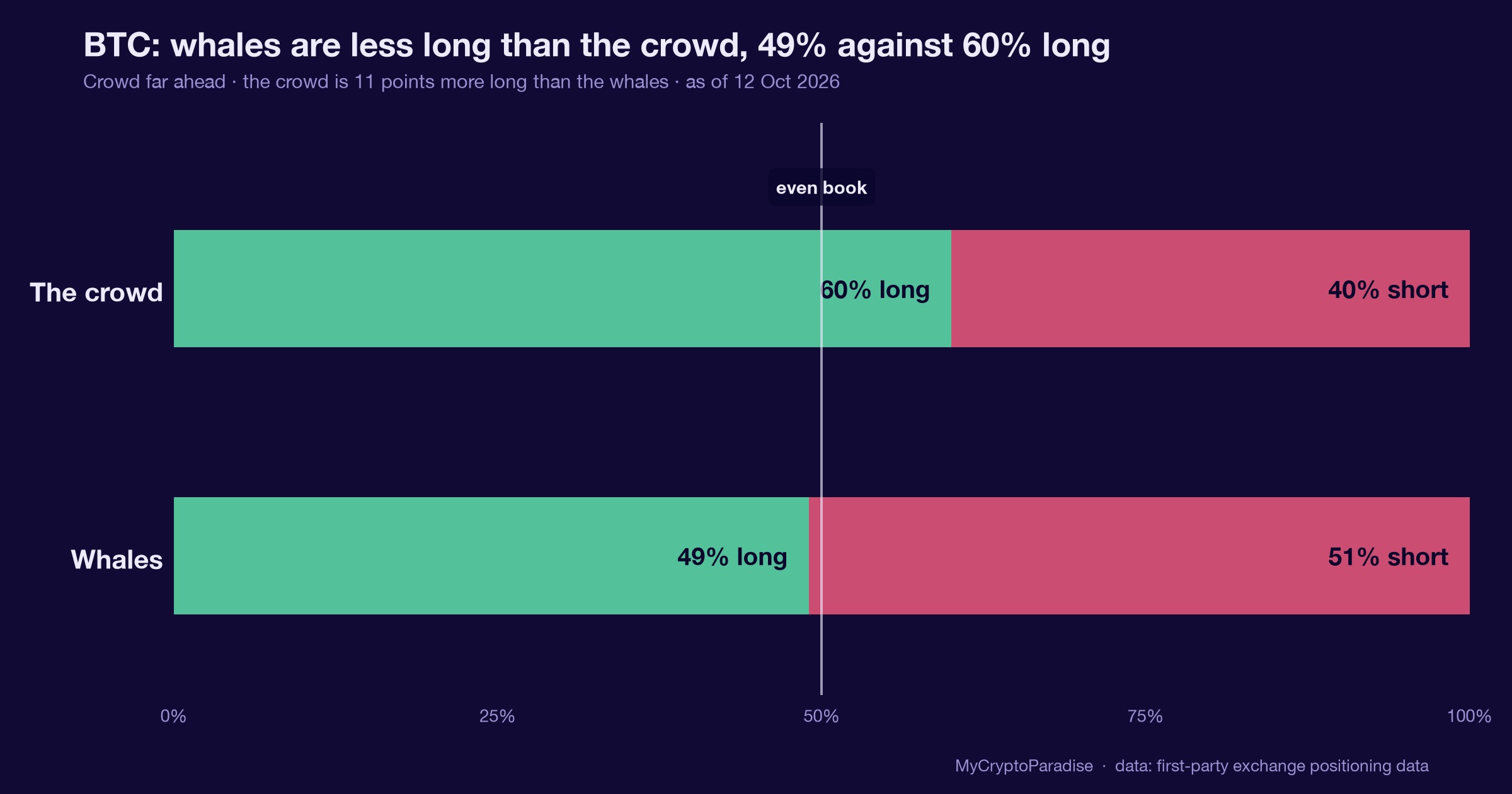
The ParadiseTeam reads this as a structural caution, not a price trigger, and the positioning context sits on Bitcoin's own chart rather than this headline. BTC was trading near $83,180 as of the brief, pressing against the $83,400 level that marked the previous high.
Our standing view coming into this is constructive while $81,500 holds as support, with $81,000 just beneath it. Smart money has been absorbing fearful retail selling and nudging price higher without heavy leverage, which is the opposite of panic. This custody story does nothing to change those levels.
What it does change is the quality of the risk conversation. A confirmed self-custody breach gives already-nervous retail one more reason to offload, and retail is doing exactly that here, closing longs into strength. That is usually the crowd handing inventory to patient buyers, not the start of a collapse.
So the ParadiseTeam frames the trust scare as background noise to a chart that still has to prove itself. The decisive line is $83,400. A clean reclaim and hold above it keeps the path toward the $90,000 short-term zone open, and this story stays a footnote.
Lose $81,500 and the picture gets more cautious, but note the mechanism: that would be a chart event, not a custody event. The implant news is a reason to verify your own hardware, not a reason to re-position. Strength can still meet selling at resistance, so we respect $83,400 as the level that settles the near-term argument, and we let the security story sit where the market has put it.
The read behind this: we framed this story through our own market analysis, Bitcoin Miner Moves $81M: Is $44K Next?
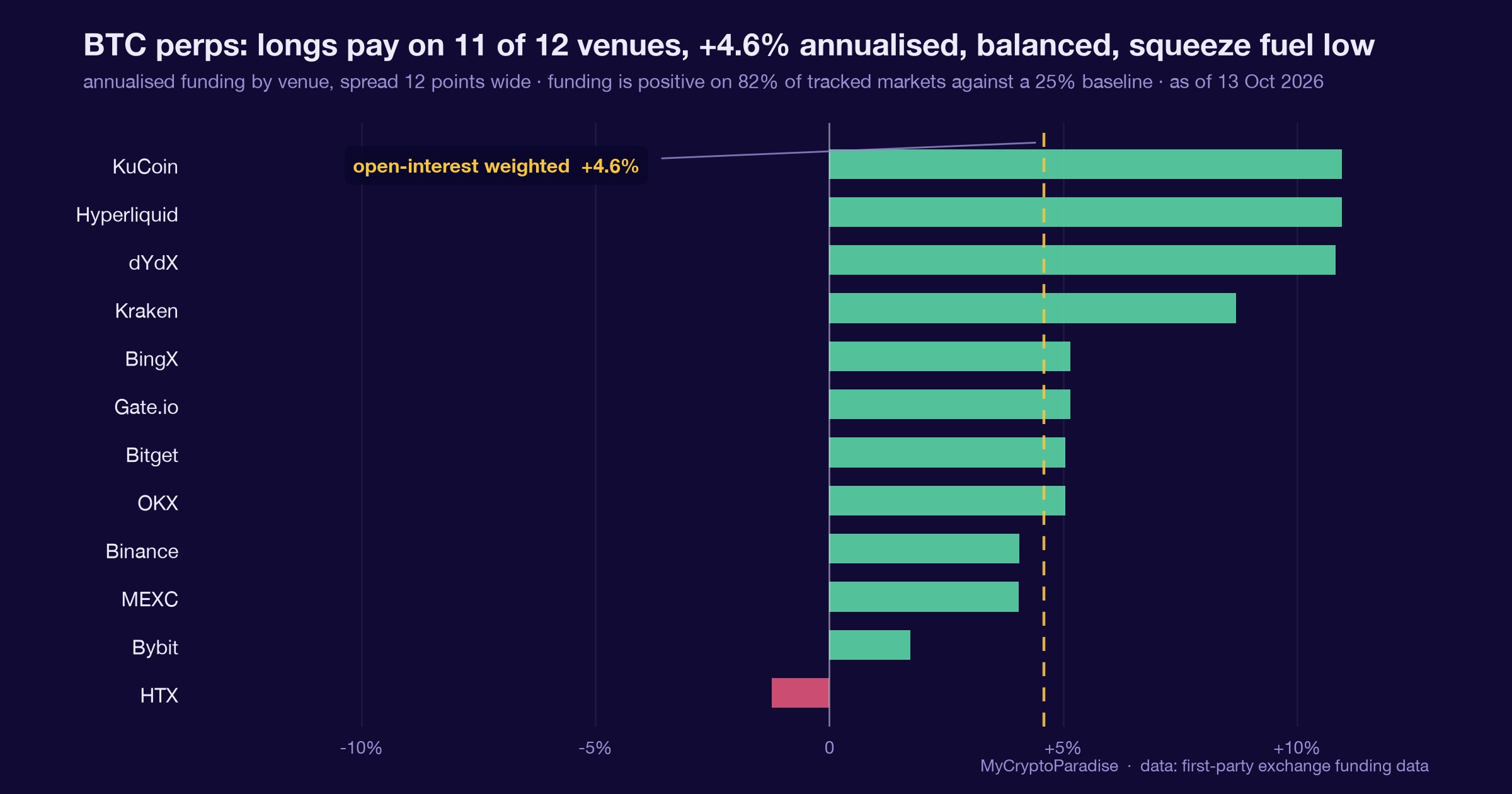
Track it live: our live crypto funding rates and the Crypto Fear and Greed Index both update in real time, so you can watch this shift for yourself.
Related coverage
For exact entries, targets, and stop losses with full risk management, that is what ParadiseFamilyVIP is for. New to reading these moves? Start with our crypto trading strategies guide.
ParadiseTeam is monitoring the market situation closely, and we are taking these developments into consideration while building our trading tactics inside ParadiseFamilyVIP.
Crypto trading involves substantial risk. Prices are volatile and you can lose money. This article is educational and is not financial advice. Past performance does not guarantee future results.
After this implant scare, where do most holders keep their coins next?
This is how 4 Paradisers are calling it. Tap your call.
No calls on this one yet. Tap yours to be the first.
Free account, no password. Members just sign in.









Join the discussion 4
i was just thinking about my own hardware. i'm so sorry, but does this mean there's a different way to check for tampering that we should know about?
This definitely makes me reconsider any secondary market purchases, even for unrelated hardware. I usually just order the Trezors direct, but my wife recently questioned why I needed more than one.
dang, this is why I only get mine direct from the manufacturer! too many sketchy middle men out there 😬. anyone else feeling this?
yeah it's a mess. always check what the supply chain is.