

Listen: the breakdown
Developing story update (September 27, 2026, 09:40 UTC):
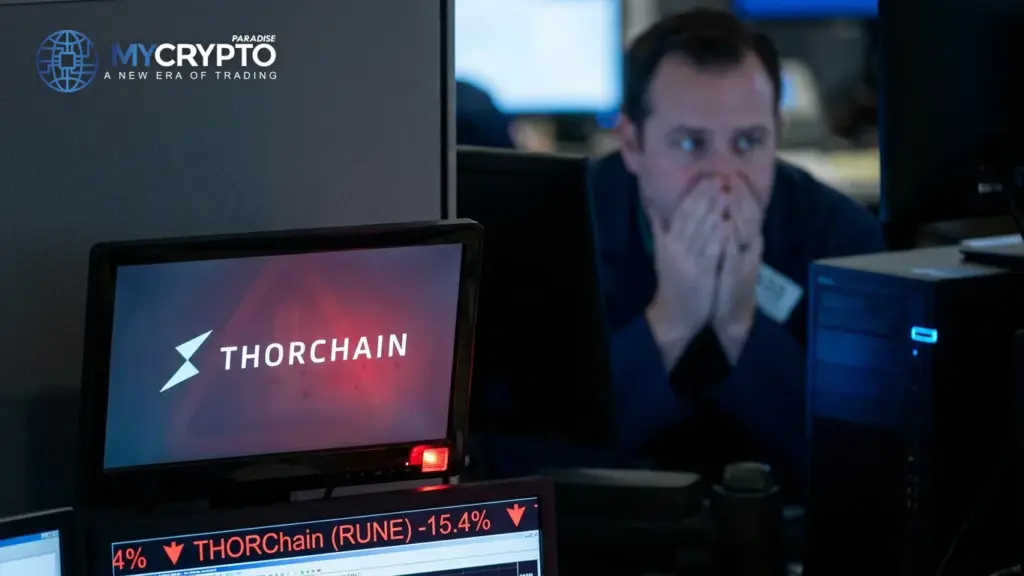
GoPlus Challenges THORChain’s Decentralization Claims Over DPRK-Linked Fund Flows
GoPlus Security argued that THORChain should not compare itself directly with Bitcoin or Ethereum when defending its inability to block illicit flows. It said THORChain outbounds rely on threshold signatures from a relatively small active validator set, while the protocol already includes pause, per-chain signing halt and governance mechanisms. GoPlus pointed to prior intervention during THORChain’s own exploit and argued that FBI- or OFAC-attributed DPRK-linked funds could be blocked under the protocol’s existing emergency framework.
Market briefing: A major debate has ignited over THORChain's decentralization claims and its role in processing stolen funds. This raises significant regulatory questions for the DeFi sector, even as Bitcoin trades near $84,462.
- GoPlus Security stated THORChain is not strictly decentralized and advised against enabling criminals for swap fees.
- THORChain defended its permissionless design, comparing itself to Bitcoin and Ethereum, and rejected responsibility for stolen funds.
- Major industry figures, including OKX founder Star Xu, refuted THORChain's claims of true decentralization.
A critical debate has erupted around THORChain's decentralization claims and its handling of illicit funds, drawing scrutiny from security firms and industry leaders. Is permissionless design becoming a regulatory liability?
GoPlus Security recently stated that THORChain has never been strictly decentralized. The security firm specifically advised against enabling criminals or putting the industry at risk by taking swap fees on stolen funds.
THORChain had previously described itself as 'decentralized and permissionless like Bitcoin, Ethereum, and BNB Chain'. This comparison is now at the heart of the contention, as critics argue its operational reality differs significantly.
Slow Mist's Yuxian echoed these concerns, stating that THORChain claimed 'decentralization and non-interference' while continuing to earn fees from large cross-chain transactions by hackers. This directly challenges the protocol's self-proclaimed neutrality.
Adding to the pressure, THORChain rejected responsibility for the Bitget theft, asserting that no authority can approve or block transactions on its protocol. This stance highlights the tension between a protocol's design principles and real-world accountability.
OKX founder Star Xu later posted on X, directly refuting THORChain's claim of being truly decentralized. This broader industry pushback signifies a growing discomfort with the practical implications of certain decentralization claims, especially when illicit funds are involved.
Decentralization's shifting definition
This event highlights the increasing scrutiny on the very definition and practical implications of 'decentralization' within the crypto industry. The debate moves beyond theoretical ideals to real-world operational accountability, particularly regarding illicit funds.
The core tension lies between permissionless protocol design and the ethical and regulatory pressures to prevent money laundering. When a protocol facilitates transactions of known stolen funds, its 'decentralized' nature is questioned, and with it, its immunity from responsibility. This controversy could significantly influence future regulatory frameworks for cross-chain protocols and the broader Decentralized Finance (DeFi) ecosystem. Regulators are increasingly focused on preventing illicit finance, and this debate provides ammunition for stricter oversight.
Protocols perceived as enabling illicit activities, even inadvertently through their design, face potential reputational damage. This can erode user trust and attract enforcement actions, pushing the industry towards a more compliant, albeit potentially less permissionless, future.
Ultimately, this debate forces a re-evaluation of how true decentralization is measured and whether it can coexist with the broader societal demand for financial integrity. The industry's response will shape how DeFi is regulated and adopted moving forward.
DeFi alts face future capital flight
This debate over THORChain's decentralization and its role in processing stolen funds primarily impacts the perceived regulatory risk for DeFi and cross-chain protocols. While Bitcoin (BTC) was trading near $84,462, showing limited immediate reaction, the long-term implications are more significant.
There is no direct immediate liquidity impact on major assets like BTC, Ethereum (ETH), or BNB. Their prices remain relatively stable, suggesting the market is not yet pricing in a systemic risk from this specific controversy.
However, the potential for future capital flight from perceived risky or non-compliant protocols is a real concern. Investors, especially institutional ones, may become more cautious about allocating capital to DeFi projects that are embroiled in such controversies or face regulatory uncertainty.
For DeFi and cross-chain altcoins, this event creates indirect negative sentiment. Protocols that heavily rely on the 'permissionless' ethos without clear mechanisms for addressing illicit activity may see their valuations pressured as regulatory fears grow. This debate adds to the ongoing narrative of regulatory uncertainty for the DeFi sector. While the immediate price action in major assets like BTC, ETH, BNB, and XRP (which saw a slight dip) remains contained, the underlying risk profile for the broader altcoin market, particularly within DeFi, has shifted towards caution.
Regulatory rhetoric and protocol shifts
Traders should closely monitor the evolving regulatory rhetoric surrounding decentralization and illicit funds. Any official statements from regulators or government bodies in response to this debate would serve as a significant confirmation of escalating scrutiny.
Observe how other cross-chain protocols react to THORChain's situation. Any proactive adjustments to their own policies, transparency measures, or public statements regarding fund screening could indicate a broader industry shift towards compliance.
Watch for shifts in capital flows, particularly within the DeFi ecosystem. A sustained rotation of funds out of protocols perceived as high-risk or non-compliant into more transparent or 'regulatory-friendly' solutions would confirm investor concern.
Further comments from prominent industry figures, security firms, or researchers will also be important. Their continued engagement in this debate can amplify its impact and shape public and regulatory perceptions.
Finally, any formal actions against protocols for their handling of illicit funds would be a strong invalidation of the idea that 'decentralization' offers complete immunity. This would signal a tougher regulatory stance and could trigger wider market adjustments.
Reading DeFi risk through smart money
This THORChain debate, unfolding as Bitcoin was trading near $84,462, aligns with the ParadiseTeam's macro bearish bias for the broader market. While BTC's price holds for now, this event adds a layer of significant regulatory risk to the DeFi sector.
Smart money will likely view this controversy as a critical factor in assessing the risk profile of cross-chain protocols and the wider DeFi landscape. They are unlikely to be accumulating aggressively into protocols facing such fundamental questions about their operational integrity and legal standing.
The ParadiseTeam maintains that a sustained rally above $99,000 is illogical from an on-chain and data perspective, implying smart money expects lower prices. This debate contributes to the overall risk-off sentiment for riskier assets, particularly within the altcoin space.
While Bitcoin is currently attempting to reclaim $82,000 as support, the regulatory cloud over DeFi means that any capital inflows into alts might be short-lived or come with increased caution. Retail interest tends to spike on price dumps, suggesting a deeper correction is needed to attract aggressive re-entry, and this news adds to the potential catalysts.
Traders should factor in this heightened regulatory risk when considering positions in DeFi and cross-chain alts. The ParadiseTeam anticipates a significant correction to the $55-44k 'exchange of hands zone' in the broader market, and controversies like this only reinforce the need for a risk-first approach, especially for protocols potentially caught in regulatory crosshairs.
The read behind this: we framed this story through our own market analysis, Can Bitcoin Push to $99K?
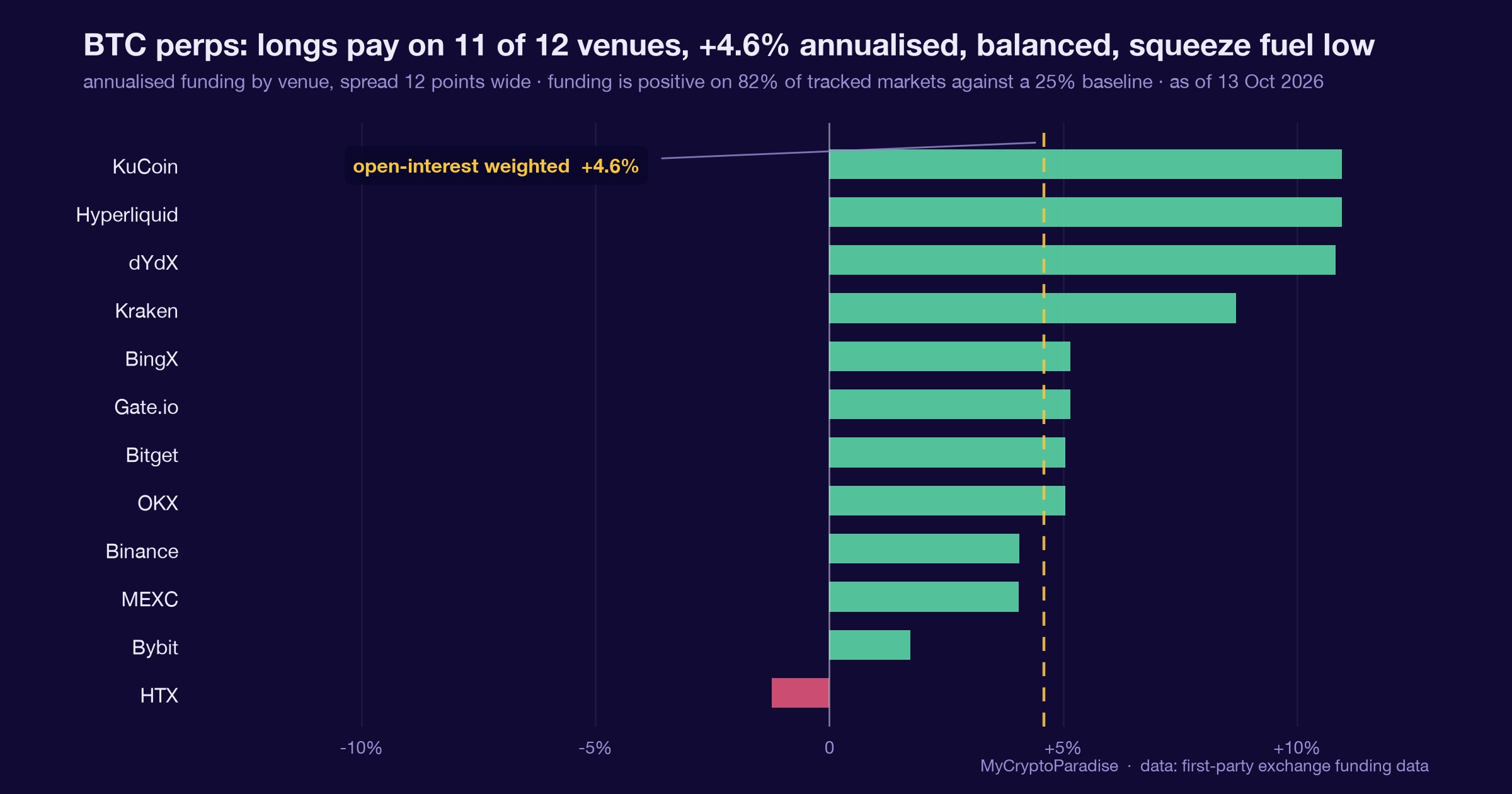
Track it live: our Crypto Fear and Greed Index and the live crypto funding rates both update in real time, so you can watch this shift for yourself.
Related coverage
For exact entries, targets, and stop losses with full risk management, that is what ParadiseFamilyVIP is for. New to reading these moves? Start with our crypto trading strategies guide.
ParadiseTeam is monitoring the market situation closely, and we are taking these developments into consideration while building our trading tactics inside ParadiseFamilyVIP.
Crypto trading involves substantial risk. Prices are volatile and you can lose money. This article is educational and is not financial advice. Past performance does not guarantee future results.
Will DeFi protocols be forced to centralize by regulators?
This is how 14 Paradisers are calling it. Tap your call.
No calls on this one yet. Tap yours to be the first.
Free account, no password. Members just sign in.




Join the discussion 9
all this talk of regulation and decentralisation but what's the one level that matters here
The "stolen funds" part is a red herring. It's the regulatory response to those funds, or lack thereof, that's the actual hurdle for DeFi, not the crime itself.
oh wow, this reminds me of when my stablecoins got stuck in a small wallet last year, i thought id lost them 😅. regulatory stuff does make me nervous 😬.
It's like a bad UI for market structure, isn't it? The regulatory friction points are becoming clearer every day, hard to ignore. 😬
it is a bit like that... especially with all the talk about what the chain should or shouldnt do with the funds. thanks for bringing this up, Chloe.
For me, the "decentralization challenged" headline feels a little clickbaity 🤔. It's like my family trying to say my altcoin addiction is "challenged" by reality, haha. 😅 We know how that goes... 📈📉
yeah its a bit much like saying the ocean is challenged by waves. what's the one level that matters here
oh, this is something i worry about a lot actually, the regulatry stuff. thanks for pointing it out like this.
that's fair, i think the jurisdictional aspect for what constitutes a stolen fund is often quite complex too.