


Listen: the breakdown
Developing story update (November 01, 2026, 16:31 UTC):
Talis Protocol has moved from stating it plans to return the stolen assets to actually doing so: more than 26,000 NFTs have now been sent back from its contracts to their original owners, based on our sources.
The team has also widened its precautionary pause on new listings and auctions to cover its other chains, not only the contracts directly hit. The attacker’s realized profit still appears limited to roughly $3,100, consistent with thin liquidity in the targeted collection offers rather than a high-value drain.
What to watch now: Whether the full set of escrowed NFTs is returned and when Talis safely restores listings and auctions.
Market briefing: Talis Protocol on Injective says an attacker exploited its marketplace and auction contracts, taking roughly 5,700 escrowed NFTs and dumping them into open bids. BTC traded near $78,006 as of 15:13 UTC, unmoved, with ETH flat around $2,270.
- Talis Protocol says an attacker exploited its marketplace and auction contracts
- Roughly 5,700 escrowed NFTs were taken and sold into open collection offers
- ETH and BTC stayed flat, so the damage looks contained to the Talis ecosystem
A bug in Talis Protocol let an attacker walk off with 5,700 escrowed NFTs on Injective. So why did the Talis exploit leave BTC and ETH completely unmoved?
Talis Protocol, an NFT marketplace built on Injective, says an attacker found a bug in its marketplace and auction contracts. The exploit hit on a Saturday.
The method was blunt but effective. The attacker took roughly 5,700 NFTs sitting in escrow. Then they sold those NFTs straight into open collection offers, converting other people's locked assets into instant proceeds.
Think about what escrow is supposed to do. It holds an asset safely while a trade completes, so neither side can run off. When the contract guarding that escrow has a flaw, the safe box becomes the easiest door in the building.
This is an application-layer failure, not a chain-level breach. Injective itself was not compromised. One marketplace's logic was, and that distinction matters for how far the fear travels.
It also matters for who carries the loss. The pain lands on Talis users whose NFTs sat in escrow, and on the collection bidders who suddenly bought dumped supply. The wider market barely registered it.
That is the quiet tell here. A genuine drain of thousands of assets, and the majors did not flinch. BTC held near $78,006 as of 15:13 UTC, and ETH ticked up fractionally.
For traders, the story is less about contagion and more about a familiar weak point. NFT marketplace auction and escrow code keeps getting treated as a solved problem. Attackers keep demonstrating that it is not.
Escrow code remains a soft target
The transmission here is narrow by design, and that is the whole point. A smart contract bug in one marketplace drains escrowed assets. The loss stays inside that marketplace's users unless the broken code touches shared infrastructure.
It does not here. Talis runs on Injective, but the flaw lived in Talis marketplace and auction contracts, not in the chain. So the macro effect on Injective-related assets is confidence, not mechanics.
Confidence is a slow leak, not a flood. When a marketplace loses escrowed NFTs, listers hesitate, bidders widen their spreads, and liquidity on that specific platform thins. None of that forces a seller of ETH or a holder of BTC to do anything.
That explains the flat tape. ETH moved a fraction on the hour, and BTC sat quiet. There is simply no liquidity bridge carrying this loss into the majors.
The deeper lesson is structural. NFT escrow logic sits at the join between custody and settlement, which is exactly where bugs hide. Attackers love that seam because the payoff is immediate: locked assets become sellable the moment the lock breaks.
We have watched this pattern through several cycles now. The marketing calls it a marketplace. The attacker treats it as an unsupervised warehouse. So the event is real and bad for Talis, yet contained. It reads as a protocol-specific security failure, not a catalyst that reorders how capital sits across crypto this week.
Why the majors shrugged off the drain
Start with the liquidity map, because it decides everything downstream. The stolen assets were NFTs, illiquid and collection-specific, not fungible tokens that route through deep markets. Dumping them into open offers hurt those bidders, but it created no selling pressure on BTC or ETH.
That is why the cascade effectively stops at the source. BTC was the first place a real contagion would show, and it stayed near $78,006 as of 15:13 UTC, up on the day. No stress bled through.
ETH tells the same story. It printed a fractional move on the hour and traded around $2,270, firm rather than fearful. If the market read this as systemic, ETH would be the natural pressure valve, and it was not touched.
Alts tied to Injective's NFT economy are where any real impact concentrates. Talis listings, its native activity, and adjacent NFT liquidity absorb the confidence hit first. That damage is local and it is bearish for those specific corners.
Here is the honest read. On its own facts this is negative, because a drained marketplace signals security and confidence risk for the affected ecosystem. But the negativity is bounded.
Bounded still means bidders who caught dumped supply are now holding assets they did not choose at a price nobody wanted to set. That is a genuine, if small, loss of trust.
For the broader book, the practical impact is a reminder to audit where your assets actually sit. Escrowed is not the same as safe when the escrow contract has a hole.
Where the stolen NFTs land next
Track the attacker's exit first, because that confirms how finished this is. The proceeds from selling into open offers have to move somewhere. If they scatter into bridges or mixers, recovery odds fall and the loss crystallises for Talis users.
Watch Talis itself for a contract pause and a full post-mortem. A credible team freezes affected functions, publishes the bug, and details any reimbursement path. Silence or a slow drip would widen the confidence damage well beyond the stolen 5,700.
The next real tell is whether the fear stays local. If Injective's broader NFT and DeFi activity keeps functioning normally, the market has correctly priced this as a single-marketplace failure. That is the base case given the flat majors.
Invalidation of that calm read would be contagion signals we do not currently see. A second exploit on related contracts, visible outflows from Injective-linked assets, or a sharp drop in the chain's NFT liquidity would turn a contained story into a trend.
Also watch the open-offer mechanic everywhere else. If other marketplaces share similar auction and escrow patterns, copycat attempts become the real risk. The code template, not the single victim, is the thing to monitor.
For BTC and ETH, the watch item is simply the absence of reaction continuing. As long as majors ignore this, the event stays a security headline, not a liquidity one. The moment they stop ignoring it, the story changes, and nothing in today's data suggests that yet.
A contained exploit against a cautious tape
The ParadiseTeam separates this cleanly: a Talis-specific security failure on one side, and our standing BTC structure on the other. They are not connected, and conflating them is how traders talk themselves into bad decisions.
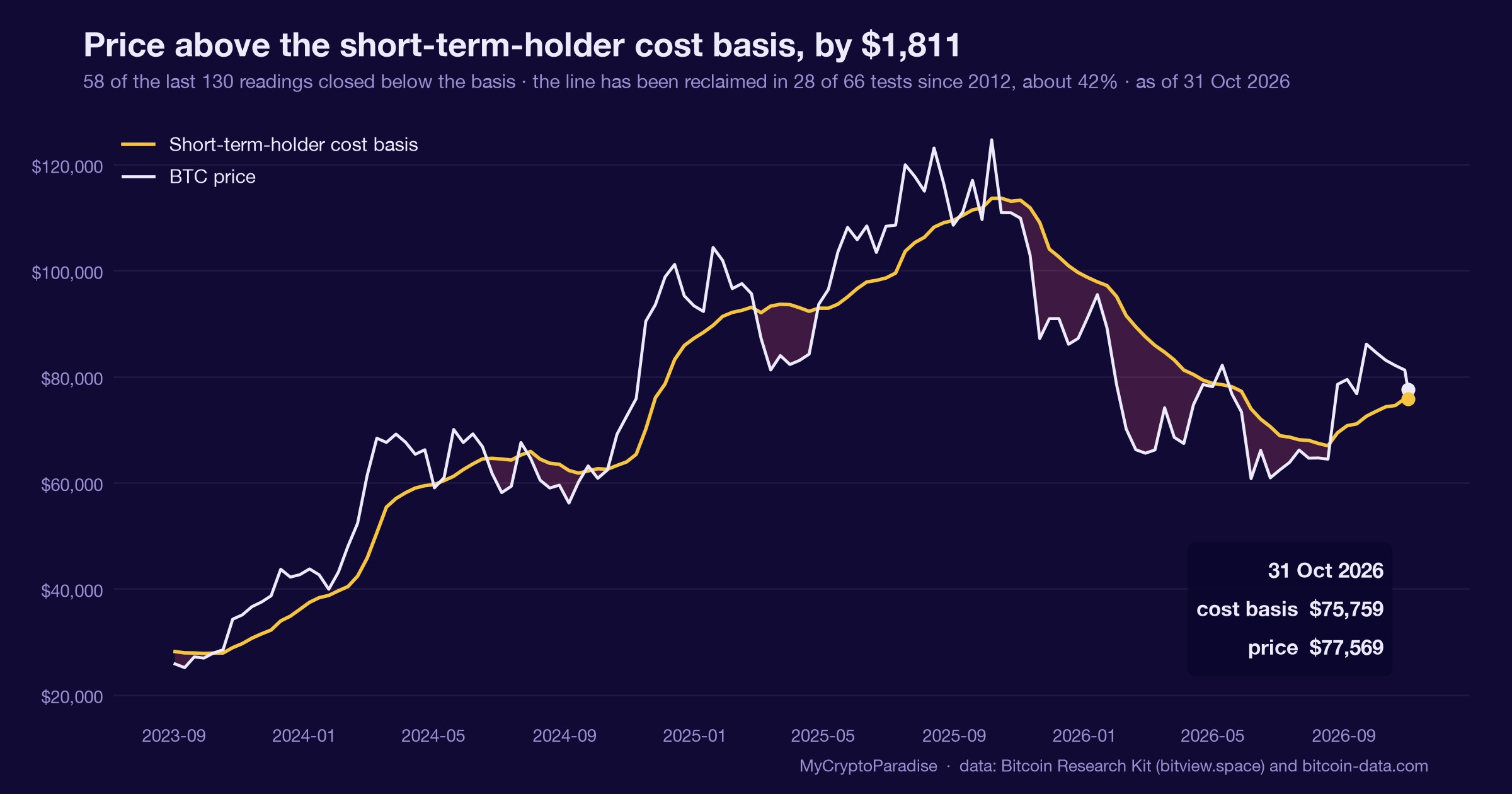
On the majors, our lens stays short-term neutral-to-cautious at a decision point. BTC traded near $78,006 as of 15:13 UTC, inside the zone we treated as distribution near $79,000 to $87,000. Prior selling was referenced up near $121,000, long before any hack headline.
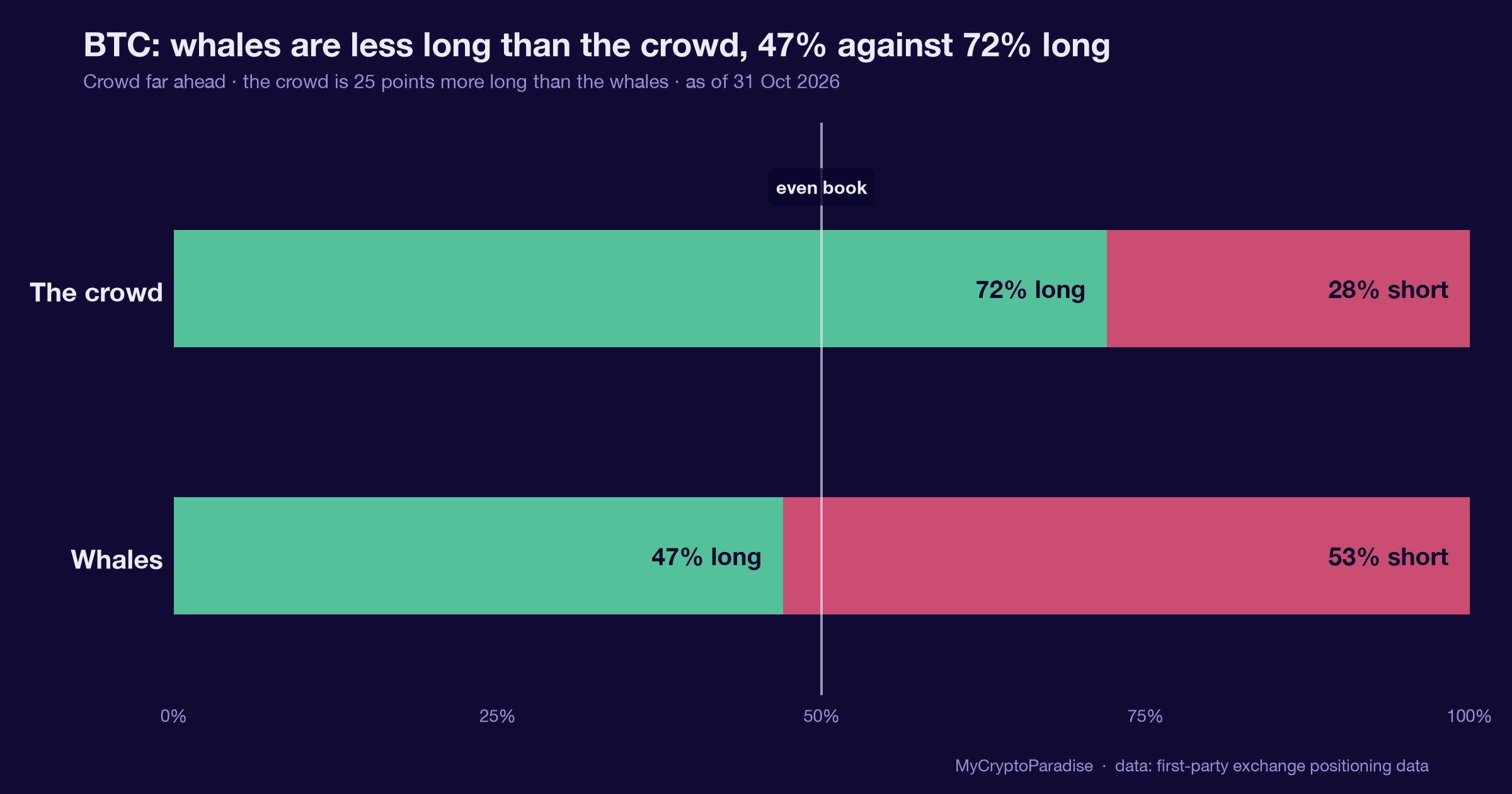
That framing matters for this story. We read exploits and hacks as catalysts, not causes. The move that de-risked BTC was set by liquidity and whale positioning well before the news, and one NFT marketplace drain does nothing to that structure.
The trigger we care about is the 0.618 Fibonacci reclaim. Reclaim it and odds rise for a push toward the top of the first wave. Lose the lower boundary of the now-neutral former support zone, and the cautious read deepens.
For Injective NFT exposure specifically, the ParadiseTeam treats escrowed assets as at-risk until Talis proves the contract is sealed. Trust is the position here, and it just took a hit.
The retail tell is predictable. Some will conflate this small exploit with the broader hack-fear mood and sell majors into it. Smart money is not repositioning BTC over 5,700 NFTs on a single marketplace. Keep the two files apart.
The read behind this: we framed this story through our own market analysis, Binance Hack: Is Bitcoin's Small Drop Bullish?
Track it live: our Crypto Fear and Greed Index and the live crypto funding rates both update in real time, so you can watch this shift for yourself.
Related coverage
For exact entries, targets, and stop losses with full risk management, that is what ParadiseFamilyVIP is for. New to reading these moves? Start with our crypto trading strategies guide.
ParadiseTeam is monitoring the market situation closely, and we are taking these developments into consideration while building our trading tactics inside ParadiseFamilyVIP.
Crypto trading involves substantial risk. Prices are volatile and you can lose money. This article is educational and is not financial advice. Past performance does not guarantee future results.
Does the Talis exploit stay contained to its own marketplace?
How 5 Paradisers are calling it
The first call is still open
Free account, no password. Members just sign in.











Join the discussion 2
wait so 5,700 escrowed nfts just walked out the door and btc and eth didn't even blink?! how does an escrow contract get drained like that anyway 😅
the part i keep snagging on is "btc and eth didnt even blink" like thats supposed to reassure anyone. a drained escrow is a drained escrow, where exactly is the checklist that says the majors matter here