

Listen: the breakdown
Developing story update (September 05, 2026, 19:49 UTC):
Update: The pattern we flagged is still compounding, with two more named protocols hit since publication. A Solana-based automated market maker, Aquifer, was drained of about $2.5 million, and the attacker was handed a deadline of September 3 at 14:00 UTC to return 80% of the funds. This kind of negotiated bounty-style return has become a recurring feature of 2026 exploits, though there is no guarantee the funds come back.
Separately, lending protocol Tectonic was hit hard: its total value locked collapsed from roughly $121.7 million before the attack to around $3 million after, and the attacker routed 2,659 ETH through Tornado Cash to obscure the trail. That is a near-total evaporation of a protocol’s deposits, and the laundering step signals the funds are unlikely to be recovered.
For traders the read is unchanged and arguably reinforced: DeFi deposits remain a high-risk venue, and each fresh exploit tightens the case for smart money staying patient on the sidelines rather than chasing yield into thinly protected protocols.
What to watch now: Whether Aquifer's attacker meets the September 3 return deadline, and if Tectonic-style TVL collapses spread to other lending venues.
Developing story update (September 05, 2026, 17:57 UTC):
The estimated damage from the Tectonic exploit has been revised higher. Based on our sources, the loss figure has climbed to around $75 million, up from an earlier estimate of roughly $66 million, as more of the drained positions are accounted for.
For traders, the direction of the revision matters more than the number: post-hack loss estimates on this attack are still moving up, not down. Tectonic’s total value locked remains gutted, sitting near $3 million versus roughly $121.7 million before the breach, so there is little on-chain cushion left to recover.
What to watch now: Whether the Tectonic loss estimate keeps climbing as more drained positions are tallied.
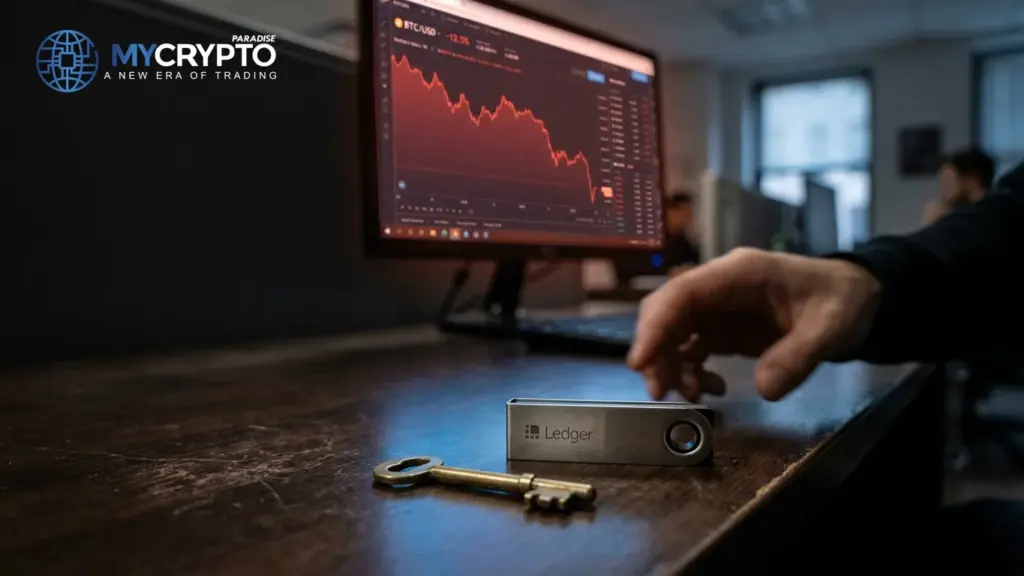
Market briefing: DeFi has lost $1.3 billion to hacks in 2026, and stolen keys now top the attack list for the first time on record. With BTC near $80,068, the ParadiseTeam reads this trust shock as fresh pressure on a thin, leveraged market.
- DeFi hacks have drained at least $1.3 billion in the first eight months of 2026.
- Stolen private keys have overtaken smart contract bugs as the top attack vector for the first time on record.
- Thin spot demand and crowded longs leave DeFi tokens and ETH most exposed to the fear.
DeFi hacks have drained $1.3 billion in eight months, and for the first time stolen keys, not broken code, lead the way. So who really pays when the trust cracks?
DeFi hacks crossed a grim line in 2026. Protocols have lost at least $1.3 billion to exploits in the first eight months of the year. The number alone is loud. The pattern behind it is louder.
For the first time on record, stolen private keys have overtaken smart contract bugs as the leading attack vector. The code is no longer the weak point. The people and the keys guarding it are.
Drift Protocol showed the scale in April. Attackers drained $285 million in a single strike. Other protocols have since followed a similar script, and the script keeps working.
August offered a strange kind of comfort. The sector logged 50 major hacks, yet total losses fell 49.5% to $136.3 million. Fewer dollars stolen, but no shortage of attempts.
The smaller incidents tell the real story. An Aquifer exploit, on a Solana-based automated market maker, drained $2.5 million, with a whitehat resolution deadline set for 3 September. A Tectonic attacker moved 2,659 ETH through a mixing service. Tectonic's total value locked (TVL), the money parked inside a protocol, collapsed from roughly $121.7 million to around $3 million.
That last number is the point. Trust in DeFi is not abstract. It is measured in capital that stays or flees. When keys become the soft target, every protocol inherits the same doubt, and capital notices fast.
Stolen keys expose DeFi's trust problem
The mechanism here is trust, and trust is the fuel DeFi runs on. Every dollar in a protocol is a bet that the keys stay safe. When stolen keys become the top attack vector, that bet gets harder to make. So capital starts asking for a bigger discount to stay.
This is the transmission chain. Security failures raise perceived risk across the whole DeFi sector. Higher risk means investors demand more reward to park funds. When they cannot get it, they pull liquidity instead.
Less liquidity is not a cosmetic problem. It widens spreads, thins order books, and makes every move sharper in both directions. Thin markets punish latecomers and reward whoever moves first.
The shift from code bugs to stolen keys matters more than it sounds. A smart contract bug can be audited and patched. A compromised key is a human and operational failure, and those are far harder to promise away in a press release.
Institutions read these headlines too. They were already cautious about DeFi custody and counterparty risk. A record year for key theft hands them a clean reason to wait, and waiting institutions mean slower capital inflow.
That is the quiet cost of $1.3 billion in losses. It is not only the money taken. It is the money that never arrives because the risk finally looks real.
Thin liquidity meets a $1.3B trust hit
Watch how the damage travels, because it rarely stops where it starts. DeFi lives mostly on ETH and Solana rails. So a crisis of confidence in DeFi lands hardest on ETH and the altcoins tied to it.
BTC tends to absorb the first shock differently. In risk-off moments, capital often rotates toward Bitcoin as the relative safe haven of the space. BTC was trading near $80,068, up 0.6% on the day, when this picture set in.
ETH sat near $2,478, up 1.1%, but the relative strength is thin. A modest green day does not undo a $1.3 billion trust problem. It just delays the question.
The real pressure sits further out the risk curve. DeFi tokens and smaller alts carry the most exposure to security fear. When liquidity retreats, these move first and fall fastest.
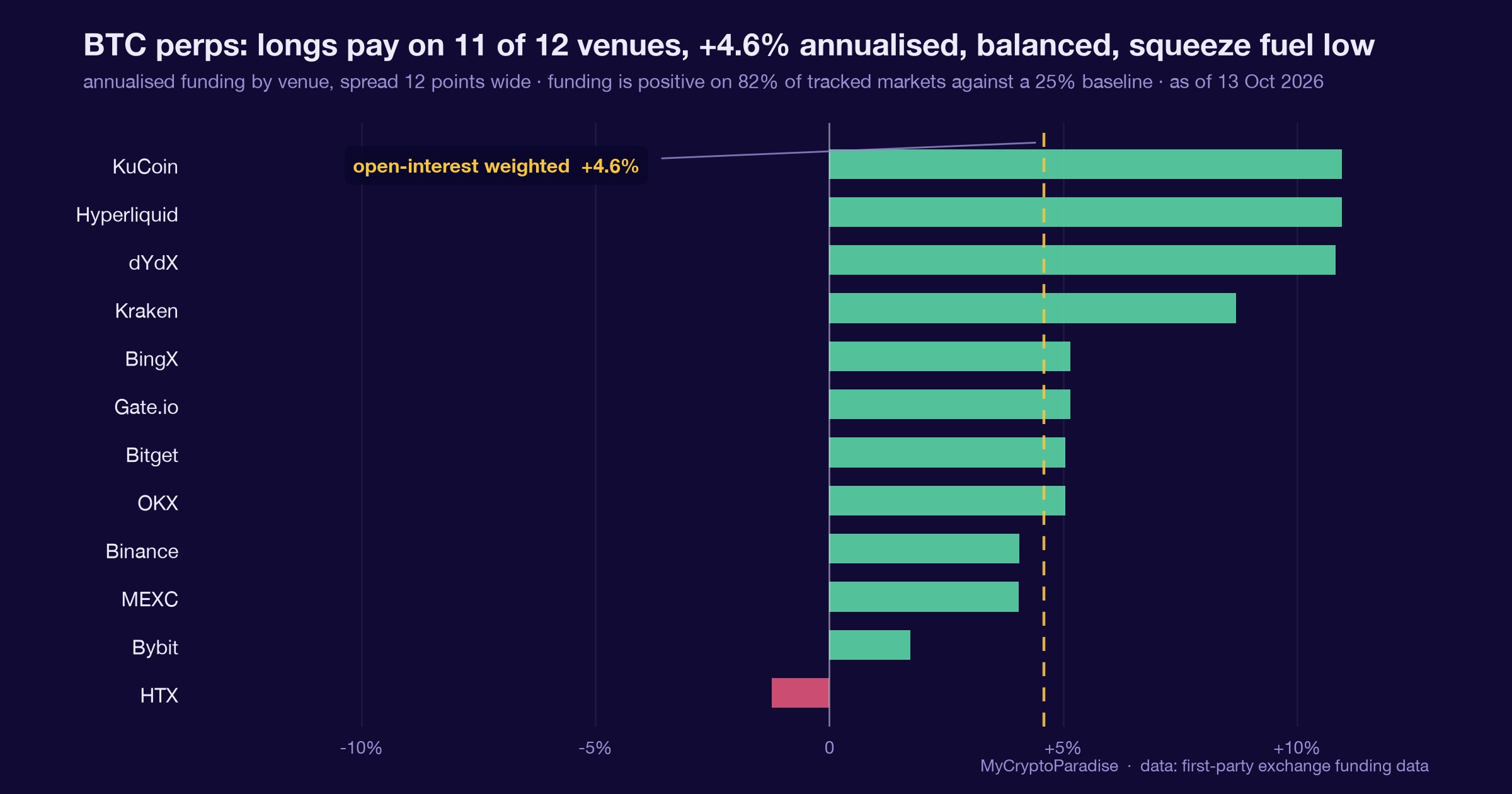
Here is the uncomfortable part. Open interest (OI), the total value of open derivative positions, keeps making higher highs while spot buying stays absent. That gap describes a market leaning on borrowed money, not fresh conviction.
A security shock into that setup is dangerous. Crowded longs need a steady bid to survive. Security fear removes exactly that bid at the worst time. So the cascade reads simply. Shaken DeFi trust drains liquidity from alts, pressure builds on ETH, and BTC holds firmer only until broad sentiment turns.
Flows and levels that decide direction
The next signals are about behavior, not headlines. The first thing to track is whether DeFi capital keeps fleeing. Tectonic's TVL falling from roughly $121.7 million to around $3 million is the template for how fast trust evaporates.
The Aquifer whitehat window has already closed, with its 3 September deadline now behind us. How that $2.5 million exploit resolves will hint at whether attackers or protocols hold the initiative right now.
Watch for a rising drumbeat of new incidents. August logged 50 major hacks even as dollar losses fell 49.5%. More attempts with smaller payouts still keep fear alive, and fear is what drains liquidity.
Confirmation of more downside would be simple to spot. Continued outflows from DeFi protocols, weak spot demand, and alts underperforming BTC would all say the risk-off read is correct.
Invalidation looks different. Stable or rising TVL across major protocols, calmer key-security headlines, and returning spot volume would suggest the fear is fading rather than spreading.
On price, the tell sits with Bitcoin. A clean reclaim and hold above resistance would weaken the bearish case. A rejection there, with alts bleeding, would confirm it.
The honest framing is this. One quiet week does not fix a record year for stolen keys. Traders should watch flows, not promises, because capital votes with its feet long before the narrative catches up.
How the hack wave pressures crowded longs
The ParadiseTeam reads this through structure, not panic. BTC was near $80,068 when the story landed, sitting inside a resistance band the ParadiseTeam marks at $79,000, $81,000, and $84,000. That is not where fresh trust usually enters.
Below, support sits at $76,000, then $74,000, then the $70,000 to $72,000 zone. A security shock like this rarely creates new buyers up here. It gives waiting capital another reason to stay patient.
The structure underneath matters more than the news itself. Spot buying, measured by cumulative volume delta (CVD, net buying versus selling), is close to absent, while OI keeps climbing. That is borrowed conviction, not real demand.
Retail still holds crowded longs in greed mode. A $1.3 billion trust story feeds exactly the fear that squeezes those longs. The ParadiseTeam sees smart money on the sidelines, not chasing this bid.
For confirmation of weakness, the ParadiseTeam watches for another bearish candle close and continued alt underperformance versus BTC. For invalidation, a decisive reclaim and hold above $81,000 would question the bearish read.
None of this is a promise about the next candle. It is a probability read. In a thin, leveraged market, a security shock tilts the odds toward more downside before relief, and the ParadiseTeam would rather see lower prices and real spot volume before trusting any bounce.
The read behind this: we framed this story through our own market analysis, Bitcoin Wipes $247M Longs: More Pain Coming?
Track it live: our Crypto Fear and Greed Index and the live crypto funding rates both update in real time, so you can watch this shift for yourself.
Related coverage
For exact entries, targets, and stop losses with full risk management, that is what ParadiseFamilyVIP is for. New to reading these moves? Start with our crypto trading strategies guide.
ParadiseTeam is monitoring the market situation closely, and we are taking these developments into consideration while building our trading tactics inside ParadiseFamilyVIP.
Crypto trading involves substantial risk. Prices are volatile and you can lose money. This article is educational and is not financial advice. Past performance does not guarantee future results.
Where does BTC head next as DeFi trust cracks?
This is how 37 Paradisers are calling it. Tap your call.
No calls on this one yet. Tap yours to be the first.
Free account, no password. Members just sign in.









Join the discussion 7
1.3B by 2026? Seems like a round number projection, and "stolen keys" is too vague. Is that private key theft, or seed phrase loss?! Big difference for a solution.
The projection is less relevant than what your stop loss does if the market reacts. Does your trade plan account for the risk of that kind of event?
Those projected losses of 1.3B by 2026 feel a bit… arbitrary, don't they 🤔? Like someone just pulled a number out of a hat 🎩📈. Still, "stolen keys" is a proper worry, as Amara said 😬.
I just wish my colleague had seen this earlier. "Stolen keys" covers a lot, but fake wallets and phishing are still hitting hard.
these numbers 💸 are like a bad dream 😩. seeing "stolen keys" top the list... it just takes me back to FTX, my chest still gets tight 😤. we need to do better! 🚀
ya, that chart with 'stolen keys' worries me cuz I'm always checking my own wallet like it's my phone... 😅 def makes me double-check everything.
Still remember that panic when I *thought* I lost my seed phrase 😩, almost as bad as seeing these numbers 💸. Key security needs to be front & center for real adoption, no? 🔐