

Listen: the breakdown
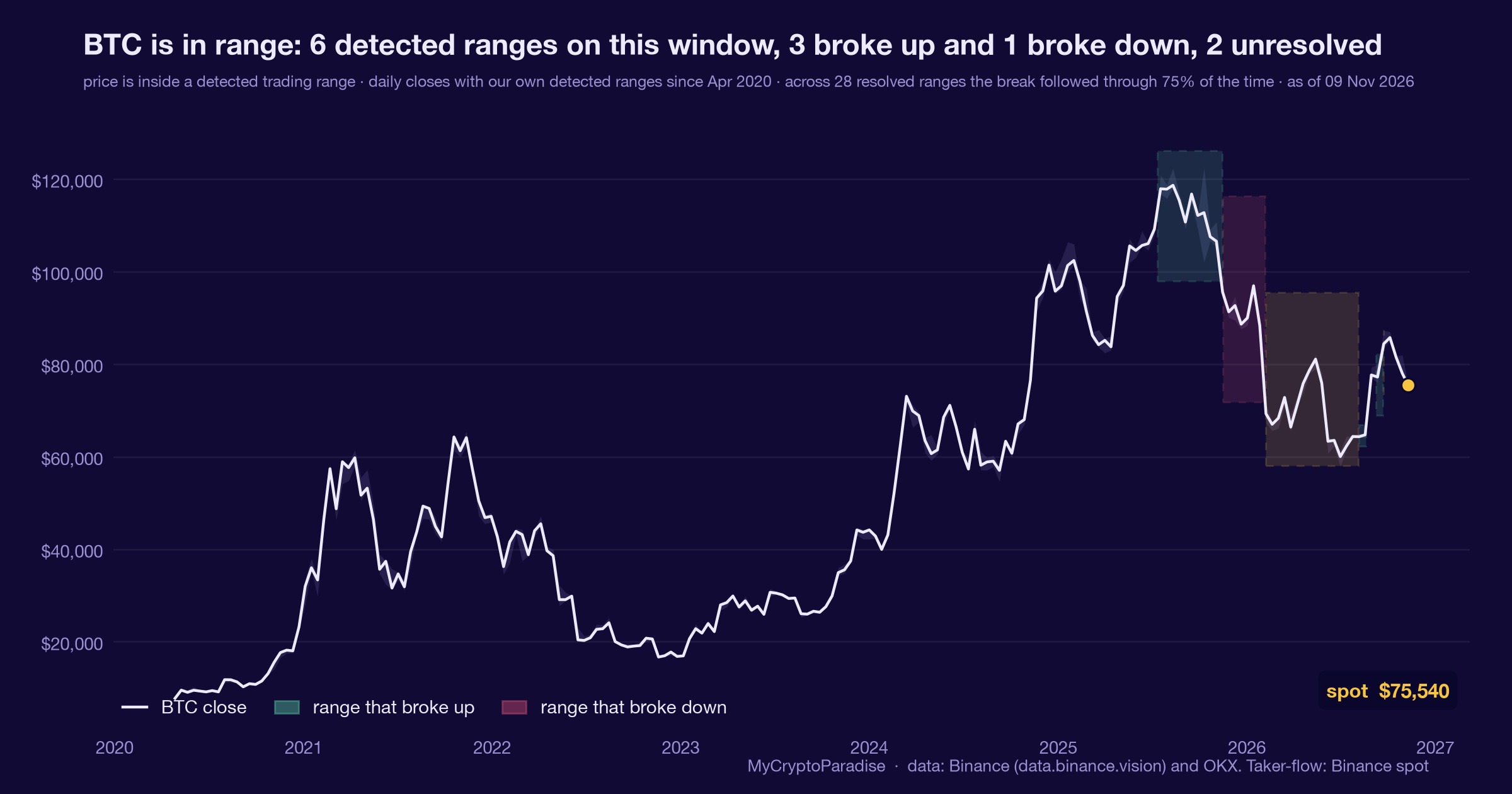
Market briefing: South Korea's regulator told exchanges to raise cold storage after the Binance hot-wallet breach. BTC traded near $77,067 as of 01:48 UTC, with little fresh reaction to the compliance headline.
- Korea's FSC met exchanges on Nov. 2 and pushed for higher cold storage ratios.
- The move answers a roughly $6.3 billion unauthorized transfer from a Binance hot wallet.
- BNB sat down 2.2% on the day, suggesting the hack itself is largely priced.
Source: Korea FSC
South Korea just told its exchanges to deepen cold storage after the Binance breach. Is this a new reason to sell, or regulators simply tidying up after a hack the market already digested?
South Korea's financial regulator pulled the country's crypto exchanges into a room on November 2. The message was blunt. Hold more customer crypto in cold storage, and watch the doors more closely.
The trigger sits outside Korea entirely. An unauthorized transfer drained roughly $6.3 billion from a Binance hot wallet. Regulators everywhere are now checking their own defences against the same failure.
Korea's exchanges already run a strict regime. Under the Virtual Asset User Protection Act, they must keep at least 80% of customer deposit assets offline in cold storage. The regulator wants that floor raised further.
The directive went beyond ratios. Exchanges were also urged to add reserves, run constant live transaction monitoring, and report abnormal access attempts the moment they appear. So the chain is clean. A hot wallet on one exchange failed abroad, and a different jurisdiction tightened the rules at home. Regulators, as ever, arrive with the fire extinguisher once the building has already cooled.
None of this changes what a Korean exchange can custody. It changes how much sits where, and how fast teams must flag trouble. That is operational hygiene, not a shift in market structure.
The underlying hack had already moved prices before this headline landed. BNB was down 2.2% on the day, a soft move rather than a fresh panic. This follow-on compliance story is the aftershock, not the earthquake, and the tape is treating it that way.
Cold storage rules harden after a hot wallet failed
The transmission here is narrow by design. A cold storage mandate touches custody mechanics, not liquidity conditions. It does not drain dollars from the system or tighten funding anywhere.
That matters because traders often confuse regulatory noise with macro force. This is neither a rate decision nor an inflow story. It is a jurisdiction patching a hole after watching someone else's wall fail.
The deeper point is trust. The Virtual Asset User Protection Act already pushed Korea toward strong custody standards. Lifting the cold storage floor and demanding live monitoring is risk-management catch-up, aimed at keeping domestic users confident that their coins stay put.
For exchanges, the cost is real but small. Moving more assets offline adds operational friction and can slow withdrawals at the margin. It does not force selling of any asset.
That is the key distinction. A rule that reshapes where coins sit is not a rule that creates sell pressure. The float available to trade barely changes.
We read this as institutional housekeeping mirrored across borders. Other regulators are weighing similar steps after the same breach. Expect a wave of look-alike announcements that read scary in a headline and change almost nothing in a balance sheet.
The honest frame is that this restores confidence more than it threatens price. A safer custody regime is a long-run positive for adoption. In the short run, it is simply the system cleaning itself, and the market has priced the hack that prompted it.
BNB wears the softness, BTC barely flinches
Start with the first mover. BNB carried most of the hack-related weight, trading down 2.2% over 24 hours while ticking slightly positive on the hour. That is residual softness, not a fresh leg down.
The spillover to majors stays thin. BTC changed hands near $77,067 as of 01:48 UTC, off 1.8% on the day. That move belongs to the broader tape, not to a Korean custody memo.
ETH and the wider alt complex show the same pattern. There is no clean liquidity cascade running from this directive into other assets. The hack already did its damage days ago.
Think about where the pressure actually sits. A cold storage rule affects the operating model of Korean exchanges. It does not create forced sellers in BTC, ETH, or the majors. That is why the order book looks calm. Headlines like this tend to get absorbed as noise rather than treated as incremental bad news.
The residual risk is sentiment, not mechanics. If a string of regulators pile similar demands onto the same event, retail may read it as a crackdown rather than a cleanup. Perception can move price even when plumbing does not.
For now the read is neutral. BNB carries the scar from the breach. The majors trade on their own structure. This compliance follow-on is an aftershock being bought through, not a new catalyst dragging the complex lower.
Compliance noise bought through or sold into
The single thing worth tracking is reaction, not the rule itself. Watch whether this style of compliance headline keeps getting absorbed as background noise.
Confirmation of the calm read is simple. If BNB holds its range and the majors ignore the directive, the market is telling you it already closed the book on the hack. That is the base case.
Invalidation looks different. It would need a cluster of regulators stacking fresh demands onto the same breach within days. A coordinated tightening story can shift tone from cleanup to crackdown.
So separate the two cleanly. One memo from Seoul is housekeeping. A pattern across jurisdictions becomes a theme, and themes move sentiment.
Keep an eye on Korean exchange flows too. If deeper cold storage slows withdrawals or sparks user complaints, that operational friction could leak into local premiums. Watch for any gap between Korean prices and global ones.
BNB remains the honest tell. A deeper break below its current level would suggest the breach is still being digested. A stabilizing BNB says the worst is behind it.
Finally, listen to the crowd. Right now retail is mostly relaying the headline rather than reacting to it. If that chatter turns fearful, watch for emotional selling that structure does not justify.
Until one of those triggers fires, this stays a low-signal story. The driver was the hack. This is the paperwork that followed, and paperwork rarely sets the trend.
Reading a reaction the tape already digested
The ParadiseTeam frames this exactly as a catalyst story, not a cause story. The Binance breach accelerated a move that structure had already set in motion. This Korean directive is a late footnote to that same event.
Ground it in price. BTC traded near $77,067 as of 01:48 UTC, sitting below the $79,000 to $87,000 zone we had flagged as a distribution area. That zone has since gone neutral, and reclaiming it is the first thing we want to see.
Here is the structural read. Selling was largely done up near $121,000 before any hack headline hit. The news arrived after the top, not before it, which is how these things usually go.
Smart money was positioned early. The whale we track, Keel, closed his long right before the breach and flipped short. That is repositioning on structure, not a reaction to a cold storage memo.
So what does this event change for levels? Almost nothing. A custody rule does not move the 0.618 Fibonacci retracement that we treat as the trigger for price discovery mode.
The real question is reclaim. If BTC pushes back above the former support zone and holds it as resistance turned support, odds improve for a run at the top of the first wave. Lose momentum below, and the neutral-to-cautious stance stays.
Retail is busy relaying this headline. The ParadiseTeam is watching whether the level reclaims, because that, not the memo, decides the next leg.
The read behind this: we framed this story through our own market analysis, Binance Hack: Is Bitcoin's Small Drop Bullish?
Track it live: our live crypto funding rates and the Crypto Fear and Greed Index both update in real time, so you can watch this shift for yourself.
Related coverage
For exact entries, targets, and stop losses with full risk management, that is what ParadiseFamilyVIP is for. New to reading these moves? Start with our crypto trading strategies guide.
ParadiseTeam is monitoring the market situation closely, and we are taking these developments into consideration while building our trading tactics inside ParadiseFamilyVIP.
Crypto trading involves substantial risk. Prices are volatile and you can lose money. This article is educational and is not financial advice. Past performance does not guarantee future results.
Will tighter cold storage rules move crypto prices much from here?
How 12 Paradisers are calling it
The first call is still open
Free account, no password. Members just sign in.








Join the discussion 33
wait so if this only applies to exchanges in korea does that mean the ones based elsewhere can keep most things online 😅 trying to work out what that means for someone using a foreign app
Ah go on, I'm not convinced cold storage rules are the real story here, more that exchanges got caught with their pants down after Binance 😅 Tighter rules won't fix a hack if the hot wallet is still the weak spot tbh, so I'd watch what they actually do with it 🤔
so after my ftx money sat frozen for months i still get a knot in my stomach when exchanges say "security" 😤 cold storage rules are great but why did it take a hack for anyone to care? 🙄
Me, I track how much BNB actually sits in hot wallets week to week, since a rule on paper tells you little until withdrawal queues show it.
i dont care how many rules they write if the coins still sit on somebody elses server. if you dont hold the key its just a promise from a company, and companies break promises
Honestly the Coincheck week still shapes how I look at cold storage, since I had funds there the night of the hack and the wait for answers was rough. Olivia, that frozen-money feeling is exactly why I want to see the actual reserve percentages before I trust any "security" wording.
kenji the coincheck wait is the part i think about too 😬 one thing i'd add, does anyone track how long withdrawals stay paused after a freeze? for people sendng money home that gap is the whole story 🤔
Hm, a rule that just says "go deeper on cold storage" sounds nice until you ask who checks it. Nobody audits the offline vault from outside?! I'd want proof, not a press line 🤨
lowercase start, but the audit point is the real question. if the vault is only checked by the exchange itself then "proof" is just their word again, so i'd want the attestation date and who signed it
Fair point Ricardo, and the audit question is the one that matters most. Even a yearly attestation of reserves in the cold wallets would tell us more than a policy line, and it would be worth asking whether the auditor sees the actual keys or just the balances.
so i keep an alert on the exchange reserve ratio for BNB and honestly the cold storage numbers are the only thing i check before the price does anything. if they move the rule, the reserve series will show it first
so the reserve ratio is a good tell, but it lags the rule text by a few days in my experience. worth checking the withdrawal queue depth too, that moved before the numbers did in the last reorg
lowercase start, a quick reply: the reserve series is a good tripwire, stefan. i'd add that a cold storage rule change usually shows up in the disclosures before the headlines, so pulling those dates alongside the ratio might help.
lowercase start, so not "south korea". ok try: wait so do the BNB holders get any say in how the cold storage gets set up or is that all on the exchange side?? i always get lost in who is actually responsible 😅
I see it a bit differently, Yuki. Holders don't get a vote on the setup, that's the exchange's call, but the new rules push exchanges to disclose how much sits offline, and that's the part that helps us judge the risk. 🙂
lowercase start yuki and you still didnt get it... the say is on the exchange side, and thats exactly how mt gox happened to me.... you dont get a vote on the cold wallet, so keep your coins somewhere you hold the key
Mt Gox is exactly why I keep saying the say matters, Ray!! Users never voted on the cold wallet setup, and that's the gap I'm worried about. Holding your own key is one answer, but it doesn't fix the exchange-side rules that decide how much sits in cold storage in the first place!? I'm sorry for the sharp tone, but I still think the point stands 😅
ok but Olivia's knot in the stomach is exactly why I'd rather see these rules show up in withdrawal logs than in a press release 😅 my corridor data only trusts what I can trace 👀
Yes!! a withdrawal log is something you can actually check.... my kindergarten brain trusts what it can trace too 🙂 maybe it could even show how much stays offline each month?
honestly i read the headline twice and still cant tell if this touches BTC at all or only the exchanges holding BNB.... is that the part the article gets into? 🙈
if more of the float sits offline, does the order book thin out first, or do the withdrawal queues just get longer?
good question isabella, most people only ask about the price side. the queue part is what actually matters when you need your money out, so keep asking it
honestly the bit about what this does to the tape is the part i dont buy yet. a custody rule changes how much sits offline, not how much anyone wants to buy, so id want to see the flows before connecting it to price.
yeah fair, the flows would tell you more than the rule does lol. but ngl the bit i keep thinking about is who's actually holding the keys when it's cold, the exchange or the customer 🤔
I watch the rule itself less than the wording around it, since a cold storage mandate only tells you what exchanges are allowed to call safe. The BNB side will be the real test of whether the language matches the custody.
honestly the offline percentage matters less to me than how much of the reserve sits in dollar stablecoins when liquidity tightens.... that number moves first, usually a few weeks before anyone writes about it
Hmm, pero stablecoins caindo primeiro nao quer dizer sempre que a liquidez ja esta saindo, as vezes so é o pessoal se protegendo da volatilidade 😅 o cold storage ainda diz mais sobre o risco de hack, que foi o que o artigo puxou 🤷
Cold storage tells you about hack risk, sure, but it says nothing about where the reserve is heading. When liquidity tightens, the dollar stablecoin share is the number that moves first, usually weeks before the reports come out. Volatility protection doesn't explain why the shift shows up across the whole reserve at once... so my read stays the same.
so if BNB holders dont get a vote on cold storage, who actually decides how much stays offline? asking because i dont really know how these rules get enforced??
Sorry if this is obvious, but when exchanges say "security" I always picture my ward's drug cabinet, everything locked and nobody can get in without a sign-off!! Does the rule also cover how fast they can move stuff back out?
Marta, a drug cabinet is locked by someone who answers to you.... Mt Gox had a lock too, and the people holding the keys walked off with my coins anyway. Self-custody isn't paranoia, it's the lesson I paid for.
I keep reading that the rule is about deepening cold storage, but nobody says what happens to the BTC and BNB that get moved offline.... if it's just locked away, how is that safer for someone like me who only holds a little?
yeah that's the bit that got me too samuel, locked away sounds safe but if i only hold a little i'd want to know who can get at it and how fast if something goes wrong 😅