

In short
MyCryptoParadise founder Simon Mach joined Boris Agranovich on the Risk Management Show, the podcast of Global Risk Community, to talk about managing risk in the only market that never closes. His core argument: a trader should judge himself by his process, not by his last result. Over the half hour Simon covers the risk point system the ParadiseTeam borrowed from George Soros, why no position is a position, how liquidity decides where and when to enter, how the Fear and Greed Index helps, and why you should only trade money you feel nothing about.
Simon Mach is the founder of MyCryptoParadise, a crypto trading signals and market analysis firm operating since 2016. On 5 October 2026 he appeared on the Risk Management Show, hosted by Boris Agranovich. Boris is the founder and CEO of Global Risk Community, a network for risk and compliance professionals. The episode, “Crypto Risk Management: Why Most Traders Fail (And How to Win)”, runs about 28 minutes and is embedded further down this page. What follows is a summary of the ideas Simon returned to most, in his own words, alongside our free crypto risk management guide.
What is different here
Most crypto companies stay anonymous. The people behind MyCryptoParadise are named. Here the founder answers a risk professional’s questions about crypto, in public, on a show built for risk managers. Everything here is education, not financial advice.
Why does Simon Mach trade only crypto?
Boris opened with the career path. Simon is from Prague and traded forex and stocks before he discovered Bitcoin. He never went back. He still watches traditional markets, but only for context on how money moves between them.
The reason he gave is about attention, not about crypto being better.
“If we can focus only on one thing, then we can really do the one thing the best we can.”
Spread your focus too wide and, in his words, we cannot be that good in one thing
.
How do risk points work in crypto trading?
Boris asked what risk management looks like when exposure never stops. Simon answered with the rule the ParadiseTeam uses for every trader. Each trader gets a maximum number of risk points, units of risk he is allowed to spend in a cycle. I’ve actually borrowed this from George Soros
, Simon said.
“So when the trader is at base, like at zero, he starts slow.”
Only a winning streak earns the right to risk more. And the ladder has a top.
“So we go to a certain point of risk points and then we reset the cycle and we put the trader back to the baseline.”
The reset is the part most traders skip. A long winning run feels like skill, so they keep sizing up until one loss erases the run. The reset is built to stop a winning run from turning into overconfidence. Each trader works his own strategy inside his own risk points.
Why do traders who outperform often blow up?
Boris mentioned a fund manager from the news who, as he told it, had a strong run and then blew up this summer. Simon used it to describe a pattern he has seen many times. Heavy leverage, borrowed money that multiplies gains and losses, meets no attention to the downside. Then even a small crash can undo the run. It need not be a true black swan, a rare and extreme shock nobody prices in.
He has watched the same story repeat since 2016, across three major market cycles of roughly three to four years each. There was always someone who beat the ParadiseTeam for a year or two.
“But then sometimes the black swan event hits, right, and who is not focusing on the risk management basically gets eaten by the market.”
His word for that group is gamblers. They can win for a while. Then they give the profits back to the market, because nothing in their process plans for the bad day.
Why is no position sometimes the best position?
Boris summed it up as capital protection ahead of returns and asked what that means in practice. Simon’s answer was a filter. The team would rather miss a trade than risk capital unnecessarily, even if that looks too conservative from outside.
“So if we don’t see that we can have an edge in the market, we don’t trade.”
An edge is a measurable reason the odds favor your trade. Without one, every entry is a coin flip with fees attached. So Simon counts three positions, not two. There is long, a bet that price rises. There is short, a bet that it falls. And then the third position, which is usually the hardest one to take, is no position at all, actually
.
“And actually sitting on your hands is sometimes the most profitable thing you can do.”
When does liquidity risk become a problem in crypto?
This was Boris’s most technical question. A position can be easy to enter on a calm day. Thin order books, weekend gaps and sudden volatility can make the exit a different story. Simon agreed it has always been crypto’s problem: Crypto is highly illiquid and high volatile market.
“So you need to really pay attention into what coins you’re entering, right?”
That means the coin, the price and the volume you enter with. He described three guards. First, the team watches the volume it produces as a group, so its own buying does not push the price. Because what we don’t want to do is a pump and dump.
That is a price pushed up and then sold into. Size that moves the market attracts bots hunting stop losses. It also draws market makers, the large firms quoting both sides, who can trade against your exits.
“So we are trading only the top 50 market cap coins where there is some kind of a nice liquidity.”
The third guard is timing. It’s not only important about the price where you enter the trade, but also the time when you enter the trade.
A larger order is best filled when someone else is supplying the liquidity.
How does the Fear and Greed Index help with entries?
That is where sentiment comes in. Simon pointed listeners to our crypto Fear and Greed Index, a gauge of whether the crowd is acting from fear or from greed. Resistance is a price level where rises have repeatedly stalled. When extreme greed meets Bitcoin at resistance, the crowd’s buying gives the team liquidity to sell into.
The mirror image works at support, a level where falls have repeatedly stopped. Extreme fear plus a strong support level means the crowd is selling exactly where a reversal is more likely.
“Most of the people are selling into support. It’s probably not the smartest idea to do.”
In his reading, that is where the probability of a reversal rises.
Sentiment is one input among many. Simon combines technical analysis with fundamentals and on-chain data, the activity recorded on the blockchain itself. Then comes order flow, the record of who is actually buying and selling. Because the more data you gather, the higher probability trades you can do.
Much of that data sits in our free crypto insights tools. In his words, it’s free for everybody to see.
What is the biggest misconception about crypto trading?
Asked for a personal opinion, Simon named the belief that you can make money quickly in crypto without a strategy. The trap is that it sometimes works. A careless, illogical trade can still pay, because the market itself is sometimes illogical.
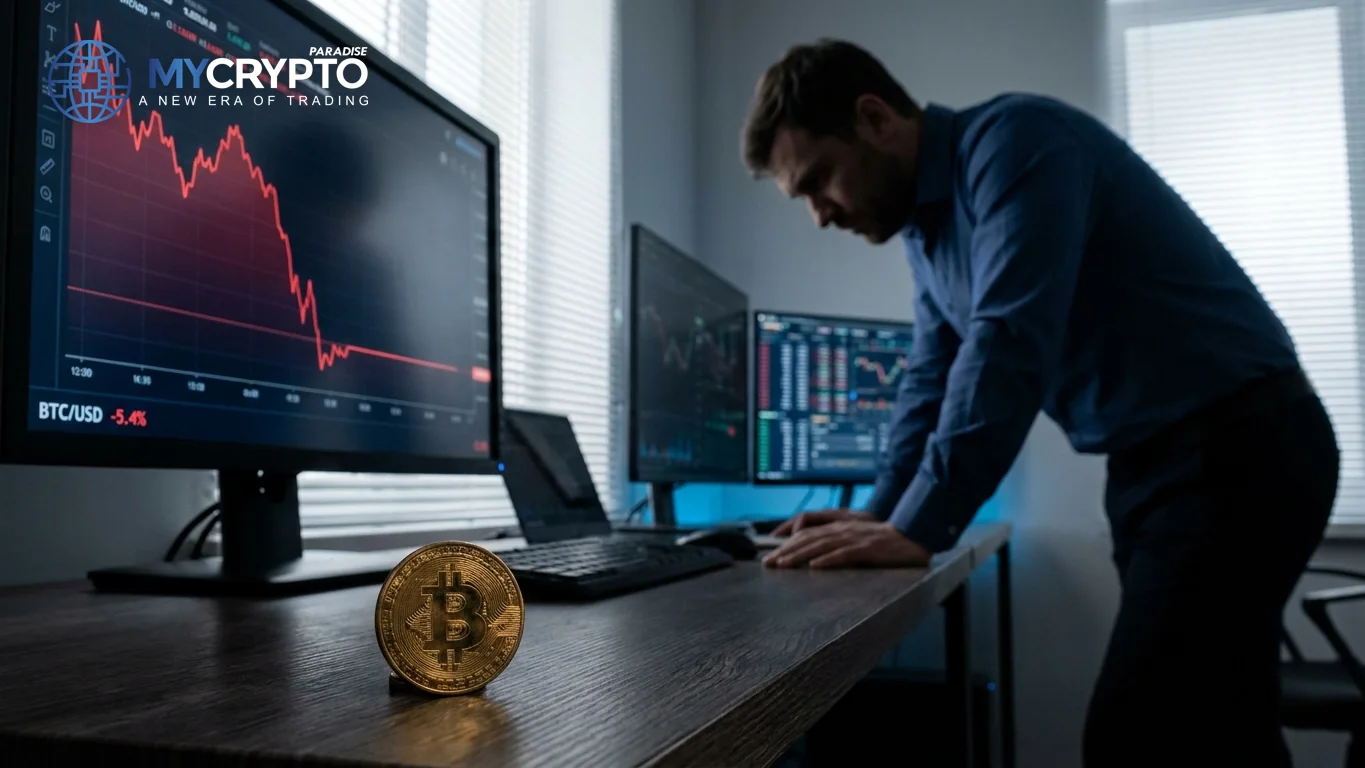
“Because in crypto, it’s very easy to make money, but the hard thing is to keep the money in the long run, right?”
Without strategy and risk management, he warned, sooner or later, the market will humble you
. The other side of the table has been trading for decades. He compared it to a casino. A gambler can win for a night. But on every bet, you take the bet with less odds than what the owner of the casino has
. Over enough bets, the probability plays out.
Why do leveraged crypto markets crash in cascades?
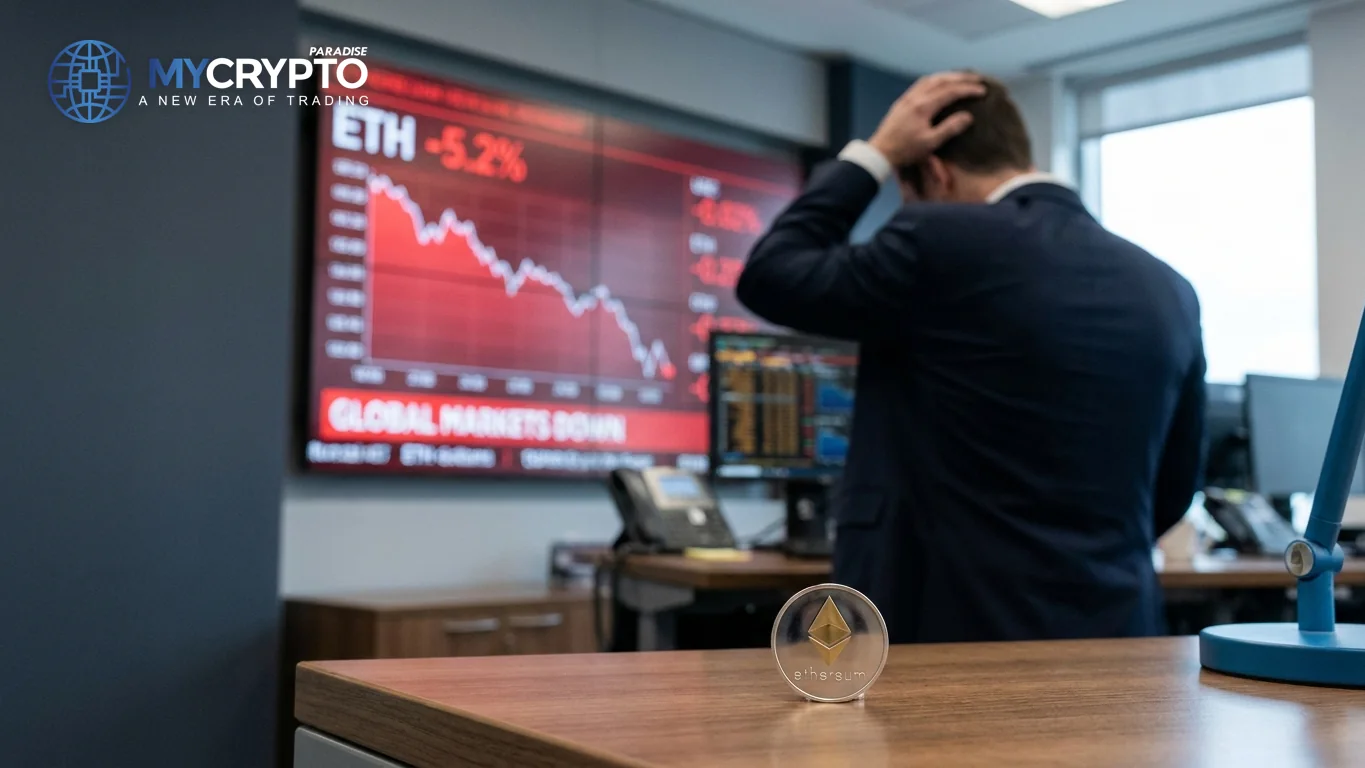
Boris noted the crowd’s habit of piling into leveraged longs during euphoria, then getting cut by a sudden turn. Simon explained the mechanics. Whales are holders big enough to move the price. When longs are crowded, whales can push it to the first cluster of liquidations. Those are positions closed by force once losses eat the margin.
Each forced close sells contracts, which pushes price lower and triggers the next cluster.
“And that’s what we call the domino effect. And that’s how the black swan events happen.”
Simon’s case that the risk-first approach holds up rests on the public record. Since 2018, we didn’t have any losing year.
That is the year the team started tracking its results in public.
We have tracked our results since 2018, and they are independently reviewed and verified by a third party. CryptoSignalsReview checked all 3,450 signals against the original posts, trade by trade. Every one of the 11 yearly result sheets closed positive: ORIGINAL 2018 to 2025 and SCALPING 2023 to 2025. The figures follow the stated risk strategy, not any subscriber’s own returns, and the full sheets are on our verify our results page. Past results never guarantee future ones.
The defense is perspective. A pump on a small chart can be a correction inside a larger bear trend. Simon pointed to last October, when there was a peak indeed, but it was just a corrective move in an overall bear trend
. A bear trend is a longer falling market. Reading several timeframes together is how a professional tells a correction from a new trend.
How does Simon Mach tell beginners to start?
Boris asked what someone starting today should put in place before risking real capital. Simon started with the person, not the market. Risk appetite differs, and so does the amount of money that triggers fear.
“So first of all, I would start trading with money I’m comfortable with losing.”
He uses a thought experiment with new traders. Imagine burning the capital you plan to trade and throwing it out of the window. Then he asks how they feel. The right answer is nothing. No feelings attached at all.
That detachment is what lets a trader follow his system through the bad stretches. Every system has them.
“Even the best systems in the world, they go through some profit streaks and they go through some losing streaks as well, right?”
If you abandon the system during the losing streak, you are never there for the winning one.
What does process over outcome mean for traders?
Boris closed by asking for one takeaway. Simon’s answer: Focus on the process, not on the outcome.
Most people start trading to make a lot of money. He calls that the wrong mindset, the same one that sinks businesses started to get rich quick.
He pointed to how Jeff Bezos built Amazon, focused on the product rather than the money.
“And then the money came as a side product of that successful process.”
For a trader, the process means entering only the highest probability trades with the best risk to reward. That means the potential gain is large next to the planned loss. Then you repeat it. In the short run, luck plays a part. Simon’s point is that in the long run, the probabilities will play out
, so the only thing worth judging is whether you followed the process.
Watch the full conversation
The full episode runs about 28 minutes, with Boris’s questions in full.
About Simon Mach
Simon Mach founded MyCryptoParadise in 2016. It began as a group of friends posting their trades in a free Telegram channel. It grew into an analysis and education company built around risk and process, not price predictions.
He came to crypto from forex and stocks. The mission has stayed the same for a decade: make crypto a professional, process-focused space instead of a casino.
Simon speaks regularly about trading psychology, risk management and disciplined execution. He explained why professionals think like the casino owner on the Crypto and Coffee podcast. He argued that psychology decides more than strategy on the Market Mamas podcast. He described what a real signal contains on The Gambling Files, and building a company to survive every market cycle on 21st Century Entrepreneurship. He also spoke about hearing the signal over the noise on the Crypto Hipster podcast.
Process over outcome is something you can watch happen. See how the ParadiseTeam defines the risk before every trade in our free official Telegram channels.
Simon Mach on the Risk Management Show: FAQ
Who is Simon Mach?
Simon Mach is the founder and CEO of MyCryptoParadise, a crypto trading signals and market analysis firm operating since 2016. He was born in Prague, entered crypto after trading forex and stocks, and speaks publicly about risk management, trading psychology and disciplined execution.
What is the Risk Management Show podcast?
The Risk Management Show is the interview podcast of Global Risk Community, hosted by its founder and CEO Boris Agranovich. Each episode features one guest on risk, security, compliance and leadership. Simon Mach’s episode, published 5 October 2026, covers crypto risk management in a market that never closes.
Where can I listen to Simon Mach on the Risk Management Show?
The episode, published 5 October 2026, is on YouTube, Spotify, Apple Podcasts and the show’s Libsyn page, and it is embedded on this page. It runs about 28 minutes. The video is on the Global Risk Community YouTube channel, and the audio is in the Risk Management Show feed.
Are MyCryptoParadise results independently verified?
Yes. MyCryptoParadise has tracked its results since 2018, and they are independently reviewed and verified by a third party, CryptoSignalsReview. It checked all 3,450 signals against the original posts, trade by trade. All 11 yearly result sheets, ORIGINAL 2018 to 2025 and SCALPING 2023 to 2025, closed positive. Past results never guarantee future ones.
How much money should you trade crypto with?
Only money you are emotionally detached from. Simon Mach suggests imagining the whole amount already lost: if that thought still hurts, the amount is too large. Money that carries feelings leads to emotional decisions, and those break a trading system during its normal losing streaks.
Crypto trading involves substantial risk and is not suitable for everyone. Nothing here is financial advice; it is education only. Never risk more than you can afford to lose.



Join the discussion 28
yeah its so easy to forget about process... Carlos is right that sometimes u just wanna swing... but for me, I'm watching my severance. 😅 Gotta be careful.
I get it, but four-hour noise is not a signal. Stick to weekly closes for real swings. 📊
I hear you, Ingrid, but four-hour charts are great for catching moves that weekly charts miss. 📈 I don't wanna wait that long... I need to see what's happening now.
Forgetting the process often meant retesting prior support for me. Carlos is right that sometimes one wants to just swing, but that rarely ends well.
Lukas, liquidity determines the outcome more than process for me. Everything reprices eventually..
Retesting prior support" - that phrase saved my account more than once after chasing a pump. Clear invalidation, that's the only thing that matters.
Lukas, true talk! Forgetting the process means the debits just keep piling up. I always book my stop-loss distance first. 😅
The dollar liquidity data for Q3 suggests more about capital flows than technical levels... macro drivers are still dictating the swings. 🫠
It is encouraging to see this mindset highlighted; a systematic approach, like my father taught with traditional investments, has been key for me in crypto.
systematic is great for long term, but for the 1m scalper over here it's just getting chopped up a different way 😬 ha. process works for those guys, right?
It's the only way to protect what you have, simple as that. For me, a dollar that stayed a dollar overnight was a revelation. 💯
how does he measure "no-position trades" in practice, especially with smaller altcoins that sometimes just dont have an exit?
Katya, your question is an excellent one, and touches upon the very craft that allows one to trade with a quiet mind. It truly boils down to levels, even for the smaller caps.
That's the one Katya! 💯 Small sizing saved my arse back in the day, fair play to you for figuring it out early. 🙌📉
yeah, my father's rules for my allowance notebook were less complicated but the principle is the same. process is all that matters. carlos, good luck with your altcoin rotators.
i remember the first time i heard about this idea, it just made sense. its how i buy my bitcoin, a little bit every shift break
for me its the opposite of easy tommy and that data backs it up too, the funding tells a different story on exchange inflows
Tommy, that makes sense for DCA'ing Bitcoin but the "process over outcome" article is about managing *risk* in your trades. 🤷♀️ So it's about more than just buying every shift break, no? 🤔📉
the article is about managing risk amara. my process *is* how i manage risk. buying a little every shift break is how you stop chasing highs and selling bottoms.
i get what Simon is saying but sometimes u just gotta know when to rotate, ya know? 🤷🏾♀️ like, how do you balance process vs catching the move?? 🤔🔥
i totally get the process over outcome but sometimes that fear and greed index 😱 makes me do crazy things! 📉 How do you guys stay calm? 🤔
Process over outcome is great for the big guys, but for us altcoin rotators 🔄 and small caps, sometimes you just gotta swing for the fences and pray 🤞, right?! Sitting out a whole cycle... boring!! 😴
carlos, that's why watching the global liquidity picture helps… you still swing but you know if the tide's coming in or going out for real.
It's why I track the DXY and sovereign debt spreads more than specific charts... feels like half the process is just understanding where the tide is going globally.
Session opens are my focus. Daily process avoids unnecessary noise.
Kenji-san, I really appreciate you saying that. It's so easy to feel a bit out of place with a smaller account, but the process applies to everyone! 😌
Process over outcome" is the only thing that works for me, especially buying slowly into cold storage after a rough year. 🙏 You definitely sleep better. 😴
exactly ricardo. its all about the risk level for me. when that's hit you out.