

Listen: the breakdown
Market briefing: Community banks are suing to block the national trust bank charters crypto firms like Coinbase and Ripple use to enter US banking. No price reaction yet, with BTC near $86,006 and XRP flat at $1.51, but this is the fight over how fast crypto's banking expansion can continue.
- The community banking lobby ICBA sued the OCC in D.C. federal court to block national trust bank charters for crypto firms
- Six named firms including Coinbase, Ripple, Circle, BitGo, Fidelity Digital Assets and Paxos hold charters now under direct legal fire
- Zero same-day price impact: XRP flat at $1.51, BTC near $86,006; the real stakes are medium-term institutional on-ramp capacity
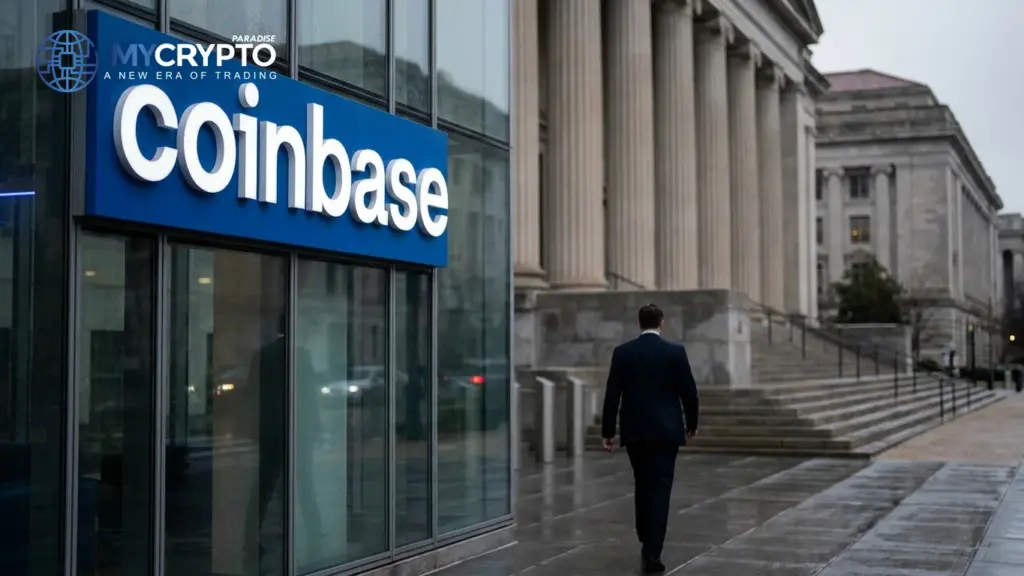
Traditional banks just sued to shut the door crypto firms used to reach bank-grade status, and the bank charters held by Coinbase, Ripple and Circle are now under fire. Does this stall crypto's banking push?
The Independent Community Bankers of America sued the OCC in federal court. The group represents US community and small banks. It wants crypto firms blocked from national trust bank charters. The case landed in the U.S. District Court for the District of Columbia.
The target is not a price. It is a pathway.
The complaint names six crypto firms directly: Coinbase, Ripple, BitGo, Fidelity Digital Assets, Circle, and Paxos. Each holds an OCC-granted or conditionally granted national trust charter. The filing counts 21 trust charters approved or conditionally approved under the current administration. At least 13 of them belong to crypto companies, including one tied to a presidential family and a conditional charter for Coinbase.
ICBA argues the OCC bent its own rules. It points at a March 2026 chartering rule and a 2021 interpretive letter. Those, it says, let crypto firms gain bank-like status without bank-grade capital, deposit insurance, or full compliance obligations. The community banking lobby calls these charters a backdoor into the banking system.
Crypto screens barely noticed. XRP sat flat at $1.51. BTC traded near $86,006.
That calm is the honest headline today. This is an early-stage filing, not a ruling, and suits like this move in months and years, not candles. But the question underneath it is large: how fast can crypto firms keep building a regulated US banking footprint.
The backdoor into US banking
National trust charters are the quiet engine of crypto's banking ambitions. They let a firm custody assets and settle under federal oversight. That status is what large institutions want to see before they route serious money through a crypto partner.
So this suit targets the on-ramp itself. If the OCC's chartering path narrows, the regulated bridge between traditional finance and crypto narrows with it. Fewer charters means slower institutional adoption, and slower adoption means thinner, later inflows. That is the mechanism. Not a price shock, a pipe being questioned.
The dispute also tests who writes the rules. ICBA says the OCC stretched a 2021 letter and a 2026 rule past their limits. If a court agrees, the chartering framework could tighten for everyone, not just the six named firms.
There is a familiar pattern here too. Incumbents rarely welcome new entrants through the front door. They tend to prefer the newcomers arrive slowly, under heavier rules, and ideally a little later than planned. A trade-association lawsuit is a patient and effective way to buy that time.
For crypto, the risk is not today's price. It is tempo. A stalled charter pipeline caps how quickly the institutional money everyone keeps forecasting can actually arrive, and tempo is exactly what a long legal fight erodes.
Flat prices today, slower on-ramp ahead
The immediate market impact is nothing, and that matters. XRP held $1.51. BTC held near $86,006. No liquidity left the system because nothing operational changed today.
But read it forward, not sideways. The bearish weight of this story sits in the medium term, not the session. Institutional on-ramps are how fresh capital reaches BTC first, then ETH, then the long tail of alts. Threaten the on-ramp, and you threaten the order size behind the next leg higher.
BTC feels this least and last. It carries the deepest liquidity and the least reliance on any single charter. If institutional flow slows, large caps grind rather than crack.
ETH sits one step closer to the risk. Much of its institutional story runs through custody and settlement partners that want clean bank-grade status. XRP sits closer still, since Ripple is named directly in the complaint.
Named in a filing is not the same as damaged by it. XRP's flat tape says traders agree, for now.
The honest read is that this is a slow-burn headwind on crypto's banking expansion, not a same-day sell trigger. It trims the ceiling on how fast money can arrive over the coming quarters. It does not open a trapdoor under current prices, which is why the tape stayed quiet on the day.
A court fight measured in months
Watch the court calendar, not the candles. The first real signal is procedural: whether the D.C. court lets the case proceed or dismisses it early. An early dismissal defuses the whole overhang.
Watch the OCC's response too. A confident defense of its March 2026 chartering rule signals the pathway stays open. Any hint of pausing new approvals while litigation runs would be the bearish confirmation: a frozen pipeline, which is exactly what ICBA wants.
Watch the named six. If Coinbase, Ripple, Circle, BitGo, Fidelity Digital Assets, or Paxos announce a charter delay or a changed plan, the abstract risk becomes concrete. Until then, their operations continue as before. And watch for silence. No ruling for months is the base case.
Invalidation of the bearish read is simple. A dismissal, a narrow ruling, or a clear statement that existing charters stand would remove the overhang and reopen the adoption runway.
Confirmation is the opposite. A court injunction, an OCC approval freeze, or a widening of the suit to more firms would tell us the banking door is genuinely closing. That is the point where price would start to care, because the institutional tempo so many have already priced in would need repricing lower.
A regulatory overhang on institutional on-ramps
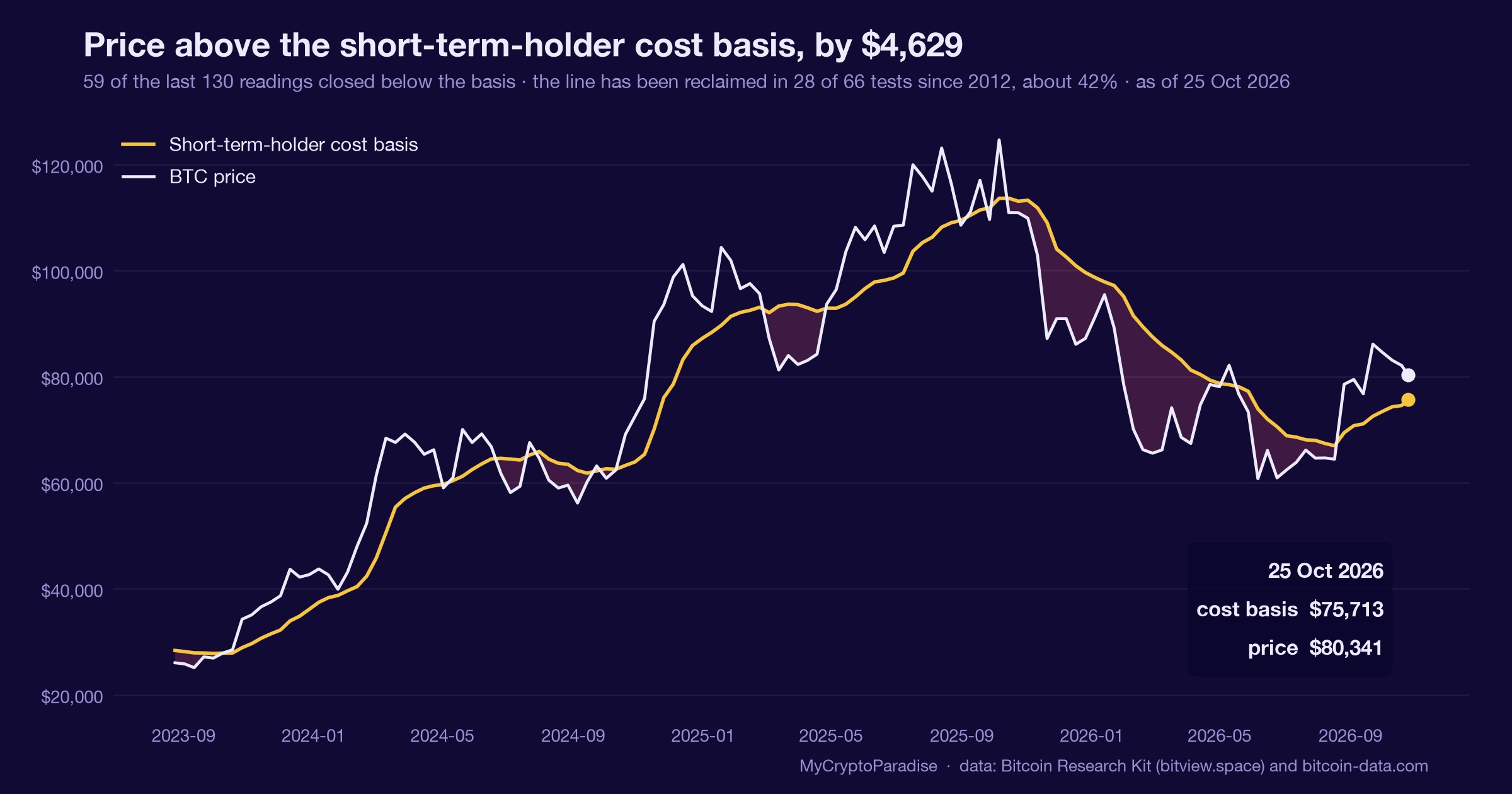
Start with what this story does not change. BTC was trading near $86,006 as of 09:02 UTC, sitting just under the $88,000 to $90,000 resistance the ParadiseTeam has been watching. This filing adds no fresh fuel and removes none. The levels that mattered yesterday still matter today.
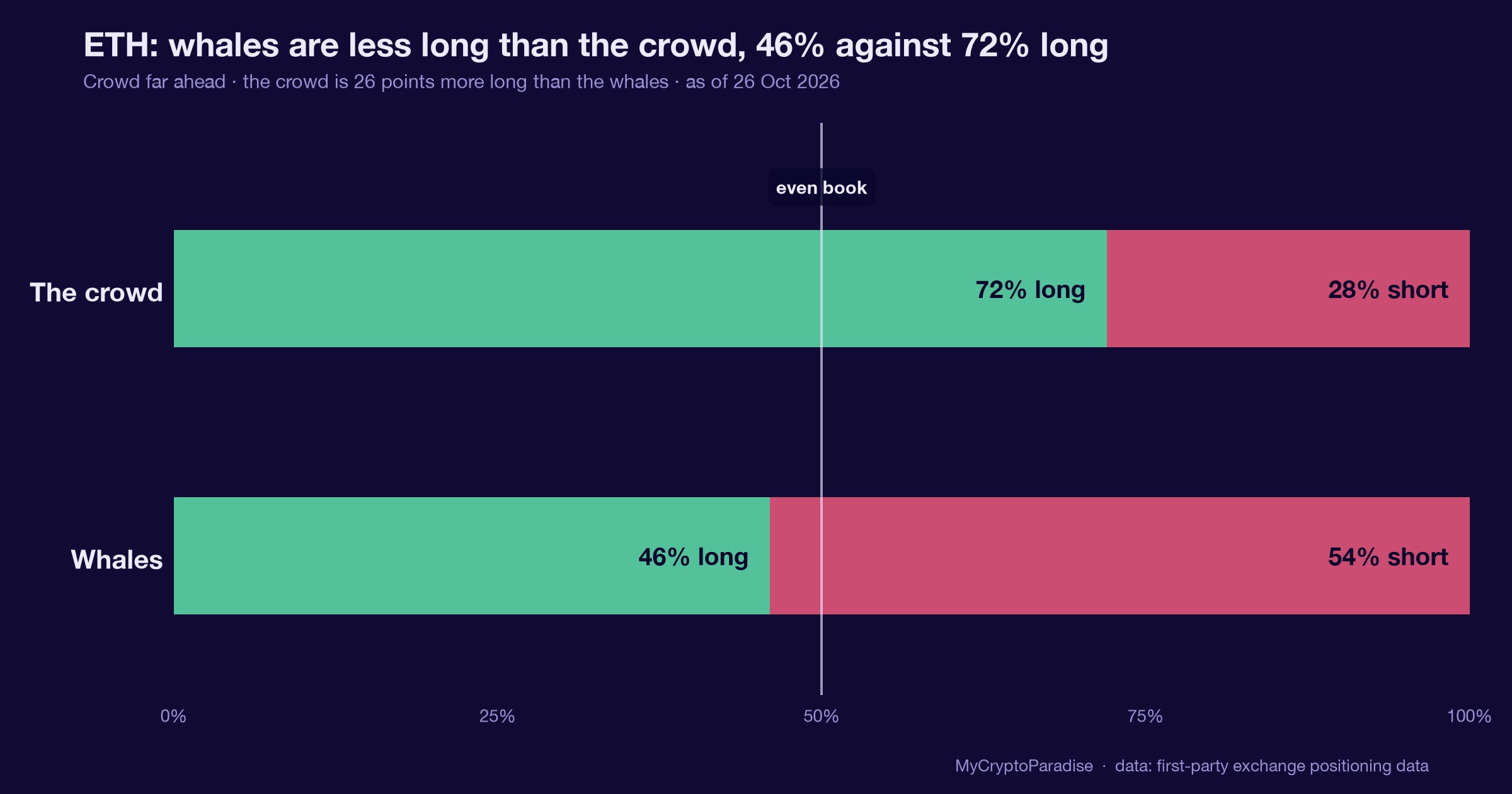
What it does add is a slow medium-term headwind. The ParadiseTeam frames crypto's banking expansion as part of the longer institutional bid. A stalled charter pipeline weakens that bid at the margin, and it lands while whales are already net sellers, roughly 65 percent against 35 percent buying.
That combination keeps the ParadiseTeam cautious into $88k to $90k. Strength into that zone, on a bearish daily momentum backdrop, is where distribution usually hides. News like this gives larger players one more reason to sell into relief rather than chase the breakout.
On the downside, the $82,000 support zone remains the line. Selling pressure there has been absorbed so far, and fearful retail raises short-squeeze odds. This lawsuit does nothing to break that support today. So the ParadiseTeam treats it as a watch item, not a trigger.
The read in one breath: a structural overhang on the banking runway, layered onto a market already leaning toward rejection at resistance. Probabilities, not promises.
The read behind this: we framed this story through our own market analysis, Can Bitcoin Bounce From Support?
Track it live: our live crypto funding rates and the Crypto Fear and Greed Index both update in real time, so you can watch this shift for yourself.
Related coverage
For exact entries, targets, and stop losses with full risk management, that is what ParadiseFamilyVIP is for. New to reading these moves? Start with our crypto trading strategies guide.
ParadiseTeam is monitoring the market situation closely, and we are taking these developments into consideration while building our trading tactics inside ParadiseFamilyVIP.
Crypto trading involves substantial risk. Prices are volatile and you can lose money. This article is educational and is not financial advice. Past performance does not guarantee future results.
Will the community banks' lawsuit actually slow crypto's US banking expansion?
How 15 Paradisers are calling it
The first call is still open
Free account, no password. Members just sign in.








Join the discussion 16
here we go again, the little guy taking the hit for the big boys 🙄 feels like 2008 all over again, just different tech 😡📈📉. always bailing out the same lot.
nah, i get it. but "little guy" implies they're not trying to get in on it themselves, right? seems like they just want their own slice 🤷♂️
Yes, it always feels like this, doesn't it? Just when you think things might change for the better, the old guard pulls the rug out again. It makes me wonder about adoption.
It's always the same playbook, isn't it? The incumbents protect their ledger at all costs, despite what it means for everyone else.
Ah, these guys blocking all the fun 😤. Makes you wonder if some big players are secretly loving the chaos, no?! 🤔 They always find a way to make it harder for us... 🙄
Oh, I'm sorry, Carlos, but I actually see it differently - I think these banks might just be protecting their own members, not making chaos for us.
wonder if these banks have run the numbers on what it costs them to keep correspondent accounts open for crypto firms instead of them having direct access. its not exactly cheap or fast from what i've seen.
Honestly, I'm just looking at the risk-reward line for those banks. Are they really protecting their balance sheet or just creating a bigger contingent liability for themselves? 🤔📉
so this goes straight into my "regulatory risk" checklist point under external factors. its a slow burner but needs tracking.
all this certainly reinforces the need for true decentralization, a reminder of why i first read the whitepaper.
i always watch who they let handle the money, and who they dont. makes you think whos really afraid of change.
And they wonder why people lose faith in the system... They only care about protecting their own books, not the people who actually need to move their money. It's a joke.
right?? 🤷♂️ they're always going to try and shut down what they can't control. like the rest of us are just playing with monopoly money, huh?
It's always a bit... disheartening to see the established players try to hold back the new ideas. I keep a little note on my wall to remind me that things take time. 🐕🦺
It's disheartening to see, but I wonder what the on-chain activity looks like for these specific firms in the context of these legal filings.
it's just like when the supermarkets wanted to open on sundays and all the small shops kicked up a fuss innit, but what actually happens when they win? 😟 does it just stay how it is then?