

Listen: the breakdown
Market briefing: A task-scam operator lost roughly 60 BTC, about $4.8 million, after hackers drained his Ledger hardware wallets through a supply chain backdoor. BTC was trading near $82,193 as the security fear spread.
- A task-scam operator lost about 60 BTC, roughly $4.8 million, to a Ledger hardware wallet hack
- Hackers used a supply chain injection backdoor on October 9 to drain the three wallet addresses
- The wider Ledger CryptoBilis incident drained $102 million from 324 wallets, with proceeds routed through Tornado Cash
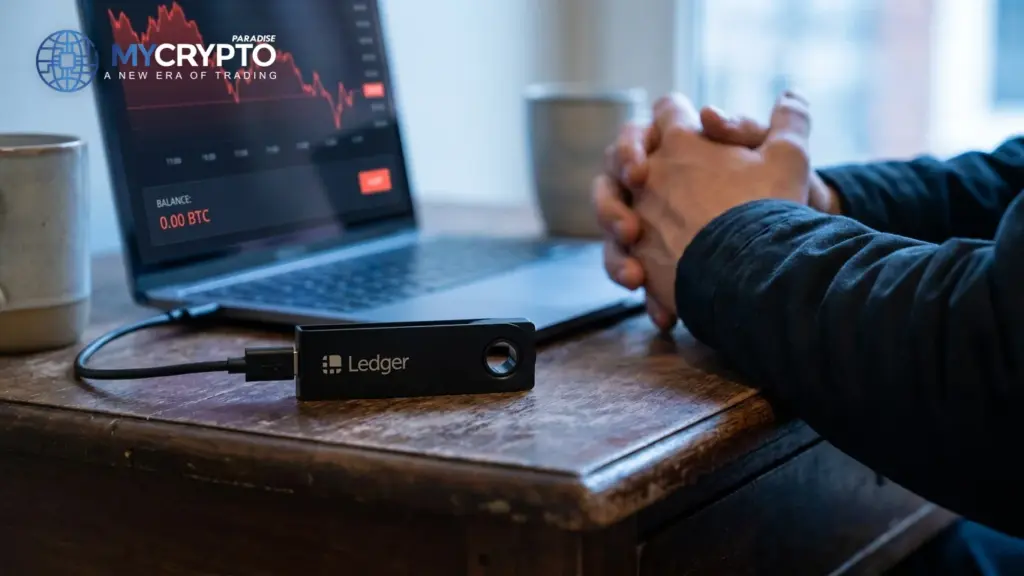
A task-scam operator parked 60 BTC on three Ledger hardware wallets, then watched hackers empty them through a supply chain backdoor. So what breaks when the safe itself has a key cut for someone else?
The story reads like a morality tale, but the lesson is purely technical. A task-scam operator moved roughly 60 BTC, about $4.8 million, into three Ledger hardware wallet addresses on September 22. The funds were illicit proceeds from a task-based scam, the kind where participants fabricate sales and reviews for a fee that rarely arrives.
On October 9, hackers reached the coins anyway. They exploited a supply chain injection backdoor, also described as a permission vulnerability, and drained the wallets. The man who thought he had outrun the law could not outrun a compromised device.
This single loss sits inside a far larger event. The broader Ledger CryptoBilis incident drained $102 million from 324 separate wallets. The thief swapped USDD into ETH, then pushed the ETH through Tornado Cash, the standard laundromat for stolen crypto.
That scale matters more than the irony. Hardware wallets are sold as the final answer to custody risk, the cold storage that keeps keys away from the internet entirely. A supply chain attack bypasses that promise at the source, before the owner ever plugs the device in.
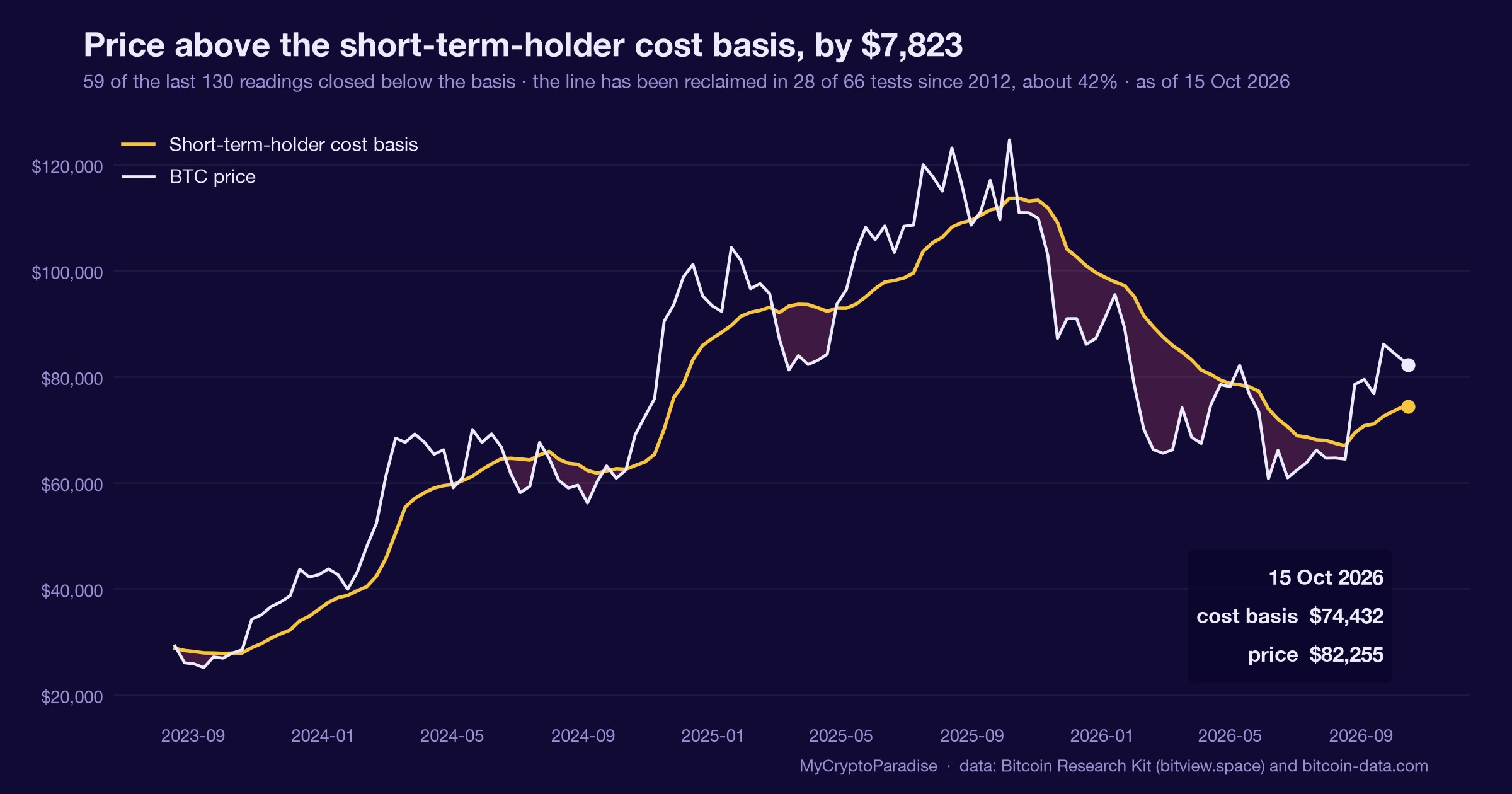
So the headline here is not one scammer losing dirty money. It is 324 holders learning that the hardware they trusted had a door they never saw. BTC traded near $82,193 as the news circulated, up on the day, which tells you the market read this as a security story rather than a supply story. For once, the price was not the point.
A backdoor in the hardware meant to protect
The mechanism matters because it attacks the one layer most holders treat as sacred. Cold storage works by keeping private keys offline, away from phishing links and exchange failures. A supply chain injection backdoor defeats that by compromising the device or its software before the user ever trusts it.
When the safe is built with a second key, the owner's caution is irrelevant. That is the quiet horror of this incident. The victim can follow every rule, store the seed on paper, never touch a suspicious link, and still lose everything to a flaw baked in upstream.
The $102 million CryptoBilis figure gives the fear a number. 324 wallets is not a rounding error. It is a visible crack in the self-custody thesis that the industry has spent a decade selling to retail.
The transmission into markets runs through confidence, not order books. Self-custody exists to pull coins off exchanges and into private hands. Every credible hardware exploit nudges some holders to reverse that, moving funds back onto exchanges they distrust slightly less than a compromised device.
That shift thins the supply of coins in genuinely independent custody. It also keeps a steady hum of outflow anxiety running under the market. None of this moves price by itself today. But it raises the baseline unease that makes every later shock land harder, and it hands regulators another exhibit in the case against letting people hold their own keys.
Custody fear bleeds into BTC and alts
The direct price impact of this single theft is close to nothing. BTC traded near $82,193 and held a gain on the day. No cascade of liquidations traced back to one scammer losing coins he should not have had.
The real effect is slower and broader. Security scares work on sentiment first, liquidity second, and price last. When holders doubt their own storage, some move coins onto exchanges, and exchange balances rising is a classic precursor to selling pressure rather than accumulation.
Bitcoin feels this least. It is the asset large holders are most willing to secure through regulated custodians and funds, so the self-custody wobble passes through it quickly.
Ethereum sits more exposed. The stolen proceeds were swapped into ETH before laundering, a reminder that ETH remains the default rail for moving and hiding value at speed. That utility is real, but it also keeps ETH structurally tied to every major exploit's cleanup phase.
Alts carry the most fragile confidence of all. Smaller tokens live or die on retail conviction, and retail is exactly the cohort a hardware wallet scare rattles hardest. When the crowd grows nervous about holding anything themselves, the thinnest books feel it first.
So the honest read is a slow bearish drip, not a shock. This event does not sell the market down on its own. It adds one more weight to a tape already carrying fund outflows and elevated security fear, and weights like that accumulate until something else provides the trigger.
Tornado Cash flows and the next exploit
The first thing to track is whether this stays one incident or becomes a pattern. A single compromised batch of devices is a contained problem. A second confirmed supply chain exploit on hardware wallets would turn a security story into a structural one, and that is when exchange inflows would likely climb in earnest.
On-chain, the laundering trail is the live thread. The thief routed stolen ETH through Tornado Cash, and any further large movements from the CryptoBilis addresses signal the proceeds are still being worked. Dormant stolen funds are a nuisance. Moving stolen funds are a market input.
Exchange balances are the cleanest confirmation signal. If self-custody fear is real, coins flow back onto exchanges and reserves rise. That would validate the bearish read, since more coins on exchanges usually means more potential supply overhead.
The invalidation case is just as important to name. If exchange reserves stay flat, if no second exploit surfaces, and if the CryptoBilis wallets go quiet, then this fades into background noise within days. A market that shrugs off a $102 million hack is telling you the fear was shallow.
Watch BTC's behaviour around $78,000 too. That is the support that matters structurally, and it is where any broad security-driven selling would first get tested. Price holding there despite the headlines would suggest the custody scare never translated into real distribution, which is the outcome a slightly higher BTC on the day already hints at.
Reading security panic through crowded retail longs
The ParadiseTeam frames this through who actually gets scared and who stays calm. A hardware wallet exploit rattles retail far more than it rattles the large spot holders who custody through regulated channels. That split is the whole read.
Retail long positioning is already crowded, with positive funding and a recent $900 million-plus wave of long liquidations that many quickly reopened. A security scare sitting on top of nervous, over-leveraged longs is the kind of thing that keeps squeeze risk alive, in both directions.
With BTC near $82,193, the ParadiseTeam treats $78,000 as the support that defines the near-term structure. A custody panic that pushed coins back to exchanges would most likely be tested there first. Lose $78,000 on real volume and the macro caution toward the $44,000 region gets louder.
To the upside, $90,000 remains the level where strength has historically met selling. We are watching for distribution signatures rather than clean breakouts, given the bearish volume divergence still showing higher price highs on lower volume.
The honest part: this specific theft changes none of those levels. It is a sentiment weight, not a catalyst. What it does is reinforce our standing posture of waiting for smart money to absorb capitulation rather than chasing. Fear events like this are where the crowd sells storage and conviction at the same time, and that is usually the worst moment to join them.
The read behind this: we framed this story through our own market analysis, Can Bitcoin Hold Its Final Support?
Track it live: our Crypto Fear and Greed Index and the live crypto funding rates both update in real time, so you can watch this shift for yourself.
Related coverage
For exact entries, targets, and stop losses with full risk management, that is what ParadiseFamilyVIP is for. New to reading these moves? Start with our crypto trading strategies guide.
ParadiseTeam is monitoring the market situation closely, and we are taking these developments into consideration while building our trading tactics inside ParadiseFamilyVIP.
Crypto trading involves substantial risk. Prices are volatile and you can lose money. This article is educational and is not financial advice. Past performance does not guarantee future results.
Does this Ledger hack make self-custody riskier than holding on an exchange?
This is how 1 Paradiser is calling it. Tap your call.
No calls on this one yet. Tap yours to be the first.
Free account, no password. Members just sign in.












Join the discussion
No comments yet. Members, share how you are reading this.