

Listen: the breakdown
Market briefing: Russia just banned crypto mining across Moscow through 2032, yet Bitcoin barely moved, trading near $63,548. This is hash rate relocation, not removal, and smart money is treating it that way.
- Government Decree No. 936 bans mining and mining pool participation across Moscow from August 15 to December 31, 2032.
- The stated reason is grid protection, not an anti-crypto stance, so miners relocate rather than shut down.
- BTC traded near $63,548 with a muted 24-hour move, signaling the market already prices in relocation.
Russia's Moscow mining ban sounds severe, but Bitcoin barely blinked near $63,548. So is this a real threat to the network, or just a map redraw?
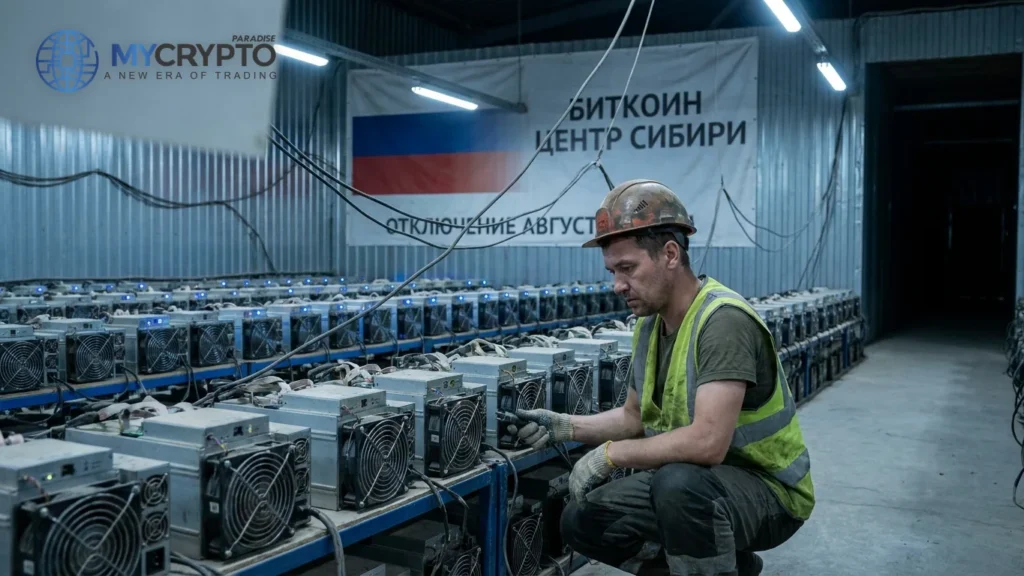
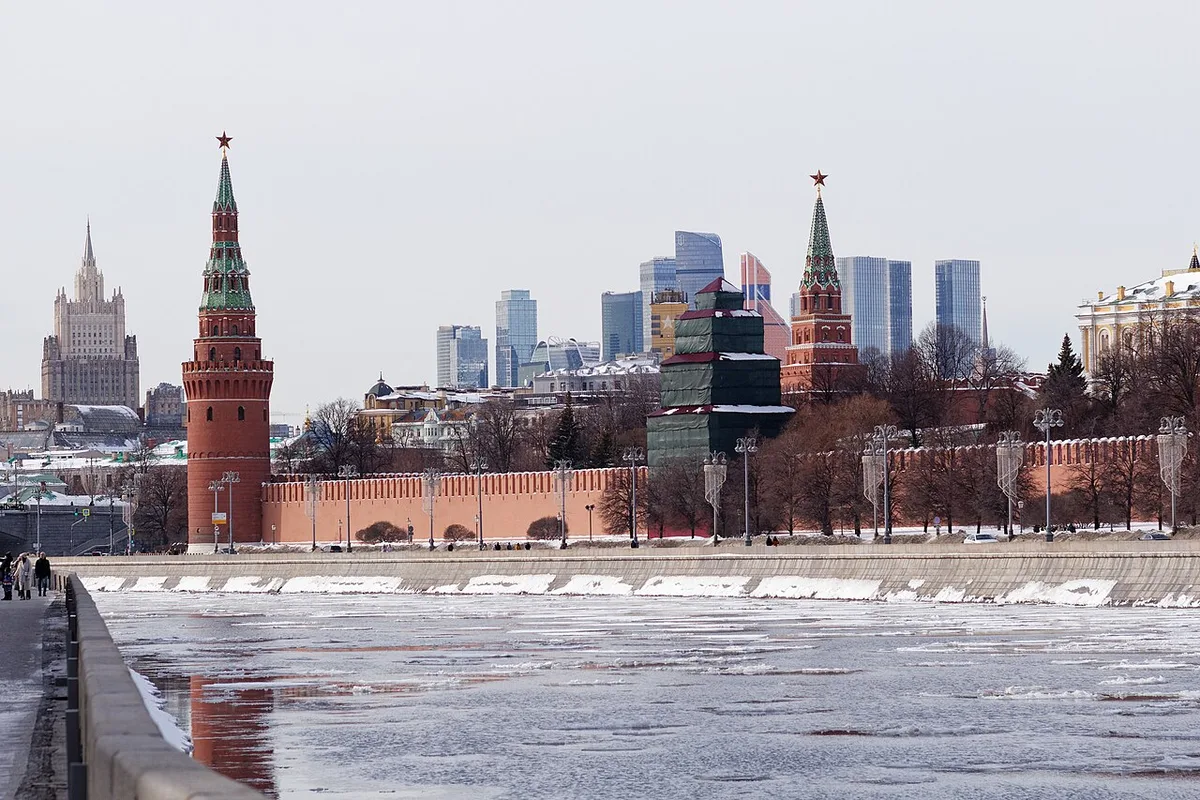
Russia has banned crypto mining across Moscow and its surrounding region. Government Decree No. 936, signed by Prime Minister Mikhail Mishustin on July 25 and published on July 31, sets the rules. Mining stops on August 15, and the ban runs all the way through December 31, 2032.
The order also reaches into parts of the Kursk region. It amends an earlier December 2024 decree, extending and hardening what was already on the books. This is not a sudden reversal. It is a planned tightening.
One detail matters more than the headline. The ban does not just target mining machines. It also prohibits participation in mining pools, which widens the net considerably.
The stated motive is unglamorous and probably honest: protect an overstretched power grid from collapse. Moscow's energy planners would rather keep the lights on than host rigs that hum through winter. Crypto policy here is really energy policy wearing a different coat.
Russia holds a meaningful share of global Bitcoin hash rate, so a headline like this reads as a shock. Yet Bitcoin traded near $63,548 as the news landed, up a modest 0.6% on the day. That muted reaction tells you how the market read it. Machines do not vanish when a border closes to them. They move. The network adjusts, difficulty resets, and the hum starts up somewhere with cheaper, more welcoming power.
Why a grid decree moves hash rate not price
The transmission mechanism here is narrow, and that is the whole point. This is a domestic energy decision, not a global crackdown on Bitcoin itself. Russia is defending its grid, not declaring war on the network, so the macro channel to price is thin.
When a jurisdiction bans mining, the hash rate rarely dies. It relocates. Miners are among the most mobile industrial operators alive, chasing cheap power the way water finds the lowest ground. Rigs power down in Moscow and, over weeks and months, reappear in more accommodating regions.
That migration matters for network mechanics but not for supply. Bitcoin issuance is fixed by code, not by geography. Fewer machines in one place lowers difficulty, which makes remaining miners more profitable and pulls capacity back toward equilibrium. The security budget wobbles, then rebalances.
So the honest read is a supply-side reshuffle with little bearing on long-term issuance or scarcity. No coins are destroyed. No new selling pressure appears beyond whatever affected miners liquidate to fund a move.
The one genuine unknown is the mining pool clause. Banning pool participation, not just machines, could complicate how Russian hash reconnects abroad. Watch that. It is the part most easily underestimated. Even so, a 2032 horizon gives operators years to plan an orderly exit, and orderly exits rarely make for violent price events.
How muted this lands across BTC ETH and alts
Start with the tape, because it settles the argument fast. Bitcoin held near $63,548 with a 0.6% daily gain as the decree circulated. A ban of this scale that barely moves price is itself the signal.
The liquidity story is small. Affected miners may sell some Bitcoin to fund relocation, hardware, and logistics. That is a modest, one-off flow, not a structural change in demand or supply. It does not cascade.
For BTC specifically, the read is a temporary difficulty dip as Moscow rigs go dark, then a recovery as capacity reappears elsewhere. Traders who expected a hash rate cliff will likely be disappointed, which is usually how relocation events resolve.
Ethereum has no direct exposure here at all. ETH secures itself through staking, not mining, so a proof-of-work grid decree touches it only through general sentiment. That link is weak on a day this quiet.
Altcoins follow the same faint thread. With no broad risk-off impulse from this story, alts take their cue from Bitcoin's stability rather than from a Moscow headline. There is no liquidity shock to ripple outward.
The cleaner conclusion is that this news reallocates industrial capital across borders far more than it reallocates trading capital across order books. Retail may read the word ban and brace for impact. The market, so far, is reading a logistics memo.
What to track as the August deadline nears
The first thing to watch is global hash rate around and after August 15. If total network hash rate dips briefly and then recovers over following weeks, the relocation thesis confirms itself in the clearest way possible. That is the base case.
Invalidation would look different. A sustained, deep drop in hash rate with no recovery, alongside signs that Russian capacity cannot reconnect through foreign pools, would suggest this ban destroys more than it moves. The pool participation clause is the variable that could produce that outcome, so treat it as the real risk, not the headline.
Watch the receiving jurisdictions too. Capacity tends to resurface where power is cheap and rules are friendlier. A visible uptick in mining activity in the usual destination regions would quietly close the loop on this story.
On price, the level to respect is Bitcoin's behavior around current support. If BTC keeps absorbing bearish-sounding headlines like this without breaking down, that resilience is information. Buyers are present.
The invalidation for the calm read is simple: a decisive break below support on rising volume, which would mean the market was not as unbothered as the tape suggested. Absent that, treat each fresh ban headline as noise layered on an existing trend. And keep one eye on whether other Russian regions copy the decree, because a national pattern would change the calculus that a single-city rule does not.
What the ban means for positioning at support
The ParadiseTeam reads this as a non-event for structure, and structure is what pays. With Bitcoin trading near $63,548, the decree changes nothing about the levels that actually matter to positioning.
Our working invalidation sits at $62,500. As long as BTC holds above that line, this ban is background noise, not a reason to flip bias. A relocation story does not alter supply, so it does not alter the case for the higher target near $79,000 that our current lens still favors.
Here is the mechanism worth naming. Bearish-sounding headlines arriving while price holds firm above support are often where informed buyers do their quiet work. Retail sees the word ban and considers de-risking. Steadier hands see a logistics reshuffle and let their positioning breathe.
That gap in interpretation is the edge. When fear headlines fail to produce fear candles, it usually means supply near support is being absorbed, not distributed.
So the ParadiseTeam view is patience, not reaction. This news would only matter to our read if it coincided with a clean break below $62,500 on real volume, which would signal something the tape is not yet showing. Until then, the plan is unchanged: respect the invalidation, let the higher levels stay in play, and refuse to trade a border decree as if it were a network event. The market has already told us how much this counts. We are inclined to listen.
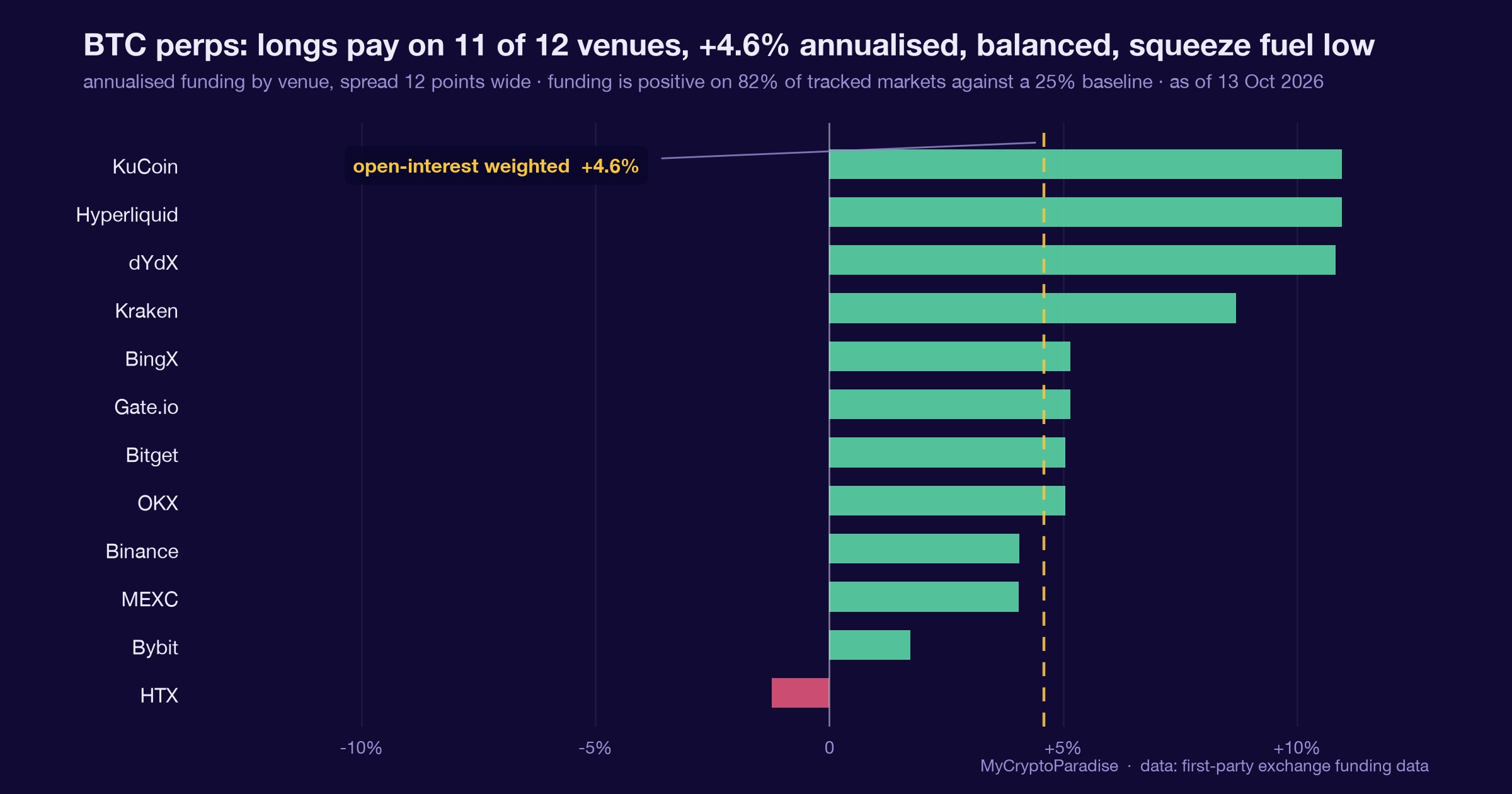
Track it live: our Crypto Fear and Greed Index and the live crypto funding rates both update in real time, so you can watch this shift for yourself.
Related coverage
For exact entries, targets, and stop losses with full risk management, that is what ParadiseFamilyVIP is for. New to reading these moves? Start with our crypto trading strategies guide.
ParadiseTeam is monitoring the market situation closely, and we are taking these developments into consideration while building our trading tactics inside ParadiseFamilyVIP.
Crypto trading involves substantial risk. Prices are volatile and you can lose money. This article is educational and is not financial advice. Past performance does not guarantee future results.
Does the Moscow mining ban change anything for BTC over the next month?
This is how the Paradisers are calling it. Tap your call.
No calls on this one yet. Tap yours to be the first.
Free account, no password. Members just sign in.









Join the discussion
No comments yet. Members, share how you are reading this.