


Listen: the breakdown
Market briefing: Orochi Network's ON #6 sets verifiable rules for tokenized collateral as real-world assets quietly move on-chain. BTC barely flinched, trading near $82,859, while the plumbing for institutional DeFi gets built underneath.
- Orochi Network's ON #6 defines verifiable NAV, reserves, and eligibility for tokenized collateral
- Tokenized Treasury bills, stocks, and private credit funds already back on-chain loans, with one credit fund powering DeFi leverage
- Fresh reserve, redemption, and anti-money laundering standards point toward slow institutional adoption, not an instant price move
Orochi Network's ON #6 just set verifiable rules for tokenized collateral in DeFi. The tape barely moved, so who exactly is this infrastructure being built for?
Orochi Network published ON #6, and the focus is unglamorous by design. It lays out verifiable NAV, reserves, and eligibility rules for tokenized collateral. NAV here means net asset value, the honest worth of the fund behind a token.
Tokenized Treasury bills, stocks, and private credit funds now sit as collateral inside on-chain lending protocols. One tokenized private credit fund is already powering DeFi leverage strategies. That is real money, borrowed against real-world assets, on public rails.
The ON token anchors the network. Developers pay transaction fees in it. Validators and ZK Sequencers stake it, users spend it to lease distributed storage, and holders use it to vote on governance.
Meanwhile, regulators are drawing fresh lines. New standards cover reserve assets, redemption protocols, risk management, operational backstops, and foreign issuer supervision. Treasury Department officials will handle anti-money laundering and sanctions through a separate process. Sui has committed to helping build a common rulebook for tokenized assets.
Reserve requirements will not be uniform. They can shift with the lender, the leverage, the loan size, and the transaction type.
None of this moved the chart. BTC was trading near $82,859 as of the print, up a rounding error on the day. That gap, between a serious infrastructure step and a flat tape, is the whole story. The plumbing is being built quietly while the market looks elsewhere.
Why proof beats yield for institutions
Tokenized collateral only works if everyone trusts the number behind it. That is the problem ON #6 attacks. Verifiable NAV and reserves let a lender confirm, on-chain, that the asset backing a loan is actually there and actually worth what the screen says.
That matters because the biggest barrier to institutional DeFi is not yield. It is proof. A large allocator cannot post Treasury bills as collateral if it cannot audit the reserves in real time. Verifiable standards turn a leap of faith into a checkable fact.
Regulatory alignment sharpens the point. New rules for reserve assets, redemption, and foreign issuer supervision give compliance teams a framework to say yes. Add Treasury-led anti-money laundering oversight and a shared rulebook, and the legal path widens.
Here is the transmission chain. Clearer standards lower the risk premium on tokenized assets. A lower risk premium invites larger, slower capital. That capital does not chase memecoins; it parks in compliant, collateral-grade products first.
The honest caveat is that this is foundation work, not a flood. Capital of this kind moves in quarters, not candles. We read the market's shrug as indifference to timing, not to direction.
Where tokenized collateral sends liquidity next
Expect no instant repricing from this. The near-term impact on BTC, ETH, and alts is close to nil, and the flat tape confirms it. This is a story about where liquidity goes next, not today.
Read it through the stack. Deeper tokenized collateral markets mostly live on Ethereum and its scaling layers, so ETH is the first beneficiary of credible real-world asset rails. More collateral posted means more on-chain borrowing, more fees, and more reasons for serious capital to hold ETH as the settlement layer.
BTC sits one step removed. It is the reserve asset and the risk gauge for the whole space. A more institutional, more compliant DeFi lifts the entire asset class's legitimacy, which supports BTC's role as the macro anchor over time.
Alts are the sharpest edge, in both directions. Infrastructure tokens tied to tokenization, storage, and zero-knowledge proving stand to gain if this category scales. The rest do not. This is not a broad alt-season signal.
The mechanism is slow by nature. Real-world asset flows arrive through mandates, audits, and committees. So the price effect is a drip, not a cascade. Smart money positions for the drip early, while retail waits for a headline that already happened.
Adoption data over roadmap promises
Watch adoption, not announcements. The real test of ON #6 is more tokenized collateral actually posted into lending protocols, and more private credit funds plugged into leverage strategies. Usage confirms the thesis; a press release does not.
Track the reserve and redemption standards next. If lenders adopt verifiable NAV as a default requirement, the framework is sticking. If it stays a single-network feature, the common rulebook stalls.
Keep an eye on the regulatory track in parallel. The Treasury-led anti-money laundering and sanctions process is the gate institutions care about. Progress there confirms the path; silence or friction invalidates the optimism.
On price, the honest read is caution. BTC near $82,859 is pinned inside a resistance band that recently turned against buyers. A slow-burn adoption story cannot override that structure in days.
So the confirmation we respect is structural, not narrative. We want to see tokenized collateral volumes climb and more protocols support verifiable reserves. That would mark real demand.
Invalidation is just as clear. If standards fragment across networks, if regulators stall, or if the private credit experiment in DeFi hits a redemption scare, the institutional thesis cools fast. One failed redemption teaches more than ten whitepapers. We weigh usage data over roadmaps every time.
Reading the collateral push against resistance
The ParadiseTeam treats this as a positioning story, not a trigger. Nothing here moves BTC off its current structure, so we map it against the levels that do.
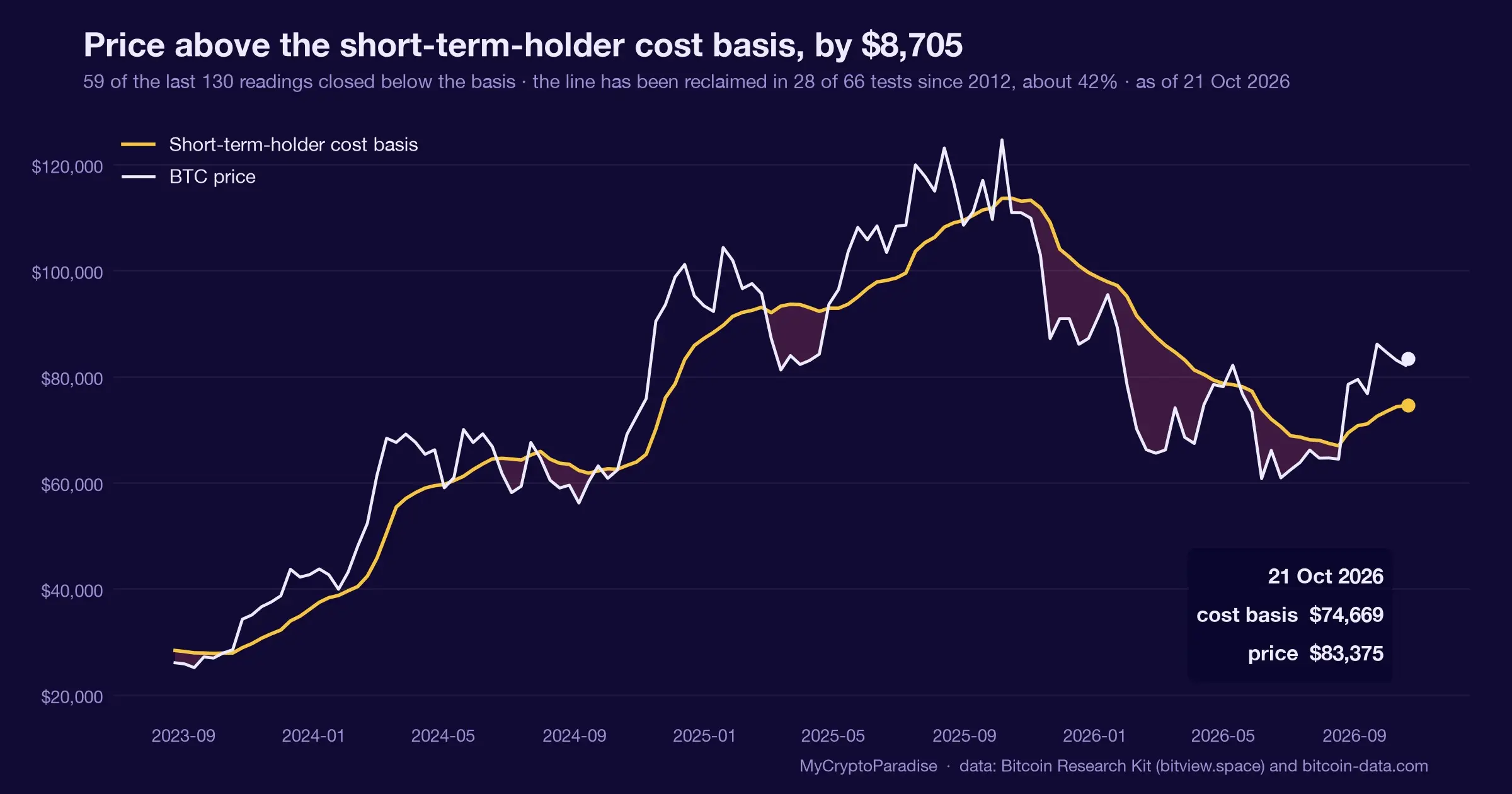
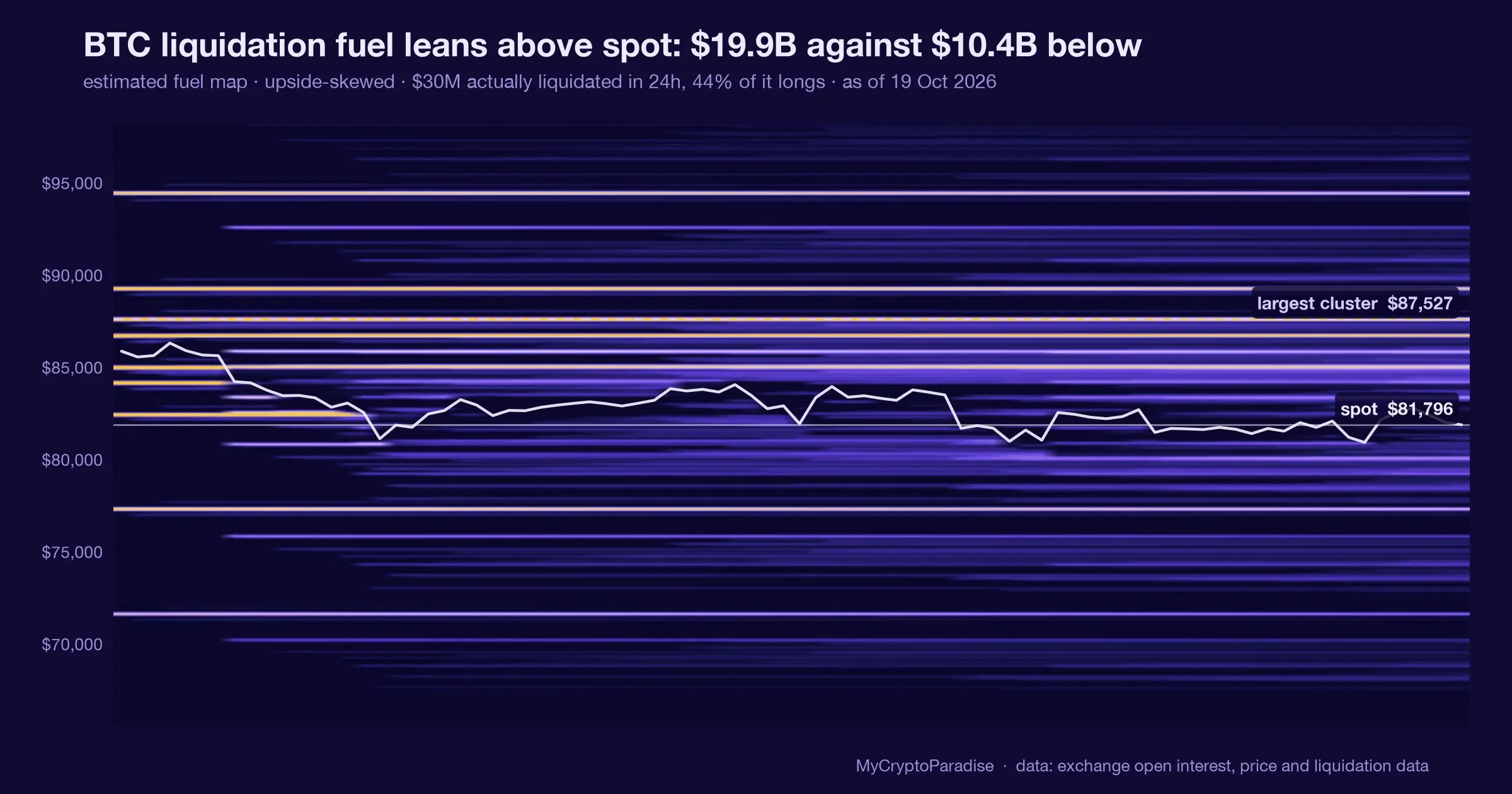
BTC was trading near $82,859 as of the print, sitting right inside the $82,000 to $84,200 resistance band that recently turned red. That zone is the near-term battleground. Whales have been heavy sellers lately, so strength into this band can meet supply rather than follow-through.
Our standing bias stays macro cautious. We still expect price to test lower structure before a durable bottom, with $73,000 the level that matters. A daily close below $73,000 would change market structure and put the slow real-world asset thesis on ice for traders, even as the plumbing keeps being built underneath.
To the upside, a clean reclaim of $84,200 opens the path toward $90,000, where we would expect sellers to reappear. Medium-term bullish divergences suggest bears are tiring, so a bounce is plausible before any larger rejection.
Here is how the ParadiseTeam frames the news itself. Verifiable collateral standards are a reason to hold quality through chop, not a reason to chase. Smart money accumulates infrastructure ahead of flows that arrive in quarters. Retail tends to notice only after the chart has already run. We would rather be early and patient than late and loud.
The read behind this: we framed this story through our own market analysis, Can Bitcoin Recover From This Support?
Track it live: our live crypto funding rates and the crypto liquidation heatmap both update in real time, so you can watch this shift for yourself.
Related coverage
For exact entries, targets, and stop losses with full risk management, that is what ParadiseFamilyVIP is for. New to reading these moves? Start with our crypto trading strategies guide.
ParadiseTeam is monitoring the market situation closely, and we are taking these developments into consideration while building our trading tactics inside ParadiseFamilyVIP.
Crypto trading involves substantial risk. Prices are volatile and you can lose money. This article is educational and is not financial advice. Past performance does not guarantee future results.
Will verifiable collateral standards pull real institutional money into DeFi this cycle?
This is how 1 Paradiser is calling it. Tap your call.
No calls on this one yet. Tap yours to be the first.
Free account, no password. Members just sign in.











Join the discussion
No comments yet. Members, share how you are reading this.