

Listen: the breakdown
Unconfirmed: This is an early, unverified report that has not been confirmed and may not be accurate. We are tracking it and will update or correct it as facts emerge.
Market briefing: A phishing wave is hitting crypto wallets with fake portfolio sync alerts, and an unverified NGRAVE exploit claim is circulating. BTC held near $81,947 as of this report, barely flinching.
- An uncorroborated report claims cold wallet brand NGRAVE was exploited, with users getting fake portfolio sync phishing alerts.
- A verified phishing campaign tied to a hardware supply chain incident has drained an estimated $86M to $90M from unsuspecting users.
- BTC held near $81,947 and ETH near $2,414, signaling the broad market is not pricing systemic risk from these events.
A fake portfolio sync alert is pushing crypto users toward seed phrase theft, and now an NGRAVE exploit claim adds fuel. How much should traders actually believe?
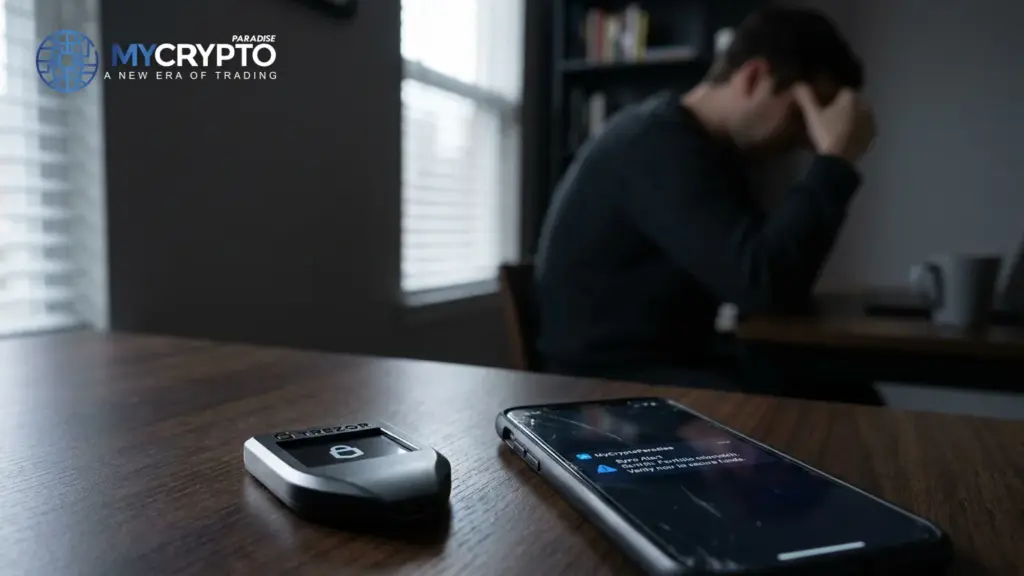
A message is landing in crypto wallets this week. It claims your portfolio was synced. It asks you to confirm your seed phrase through a link. The link is a trap.
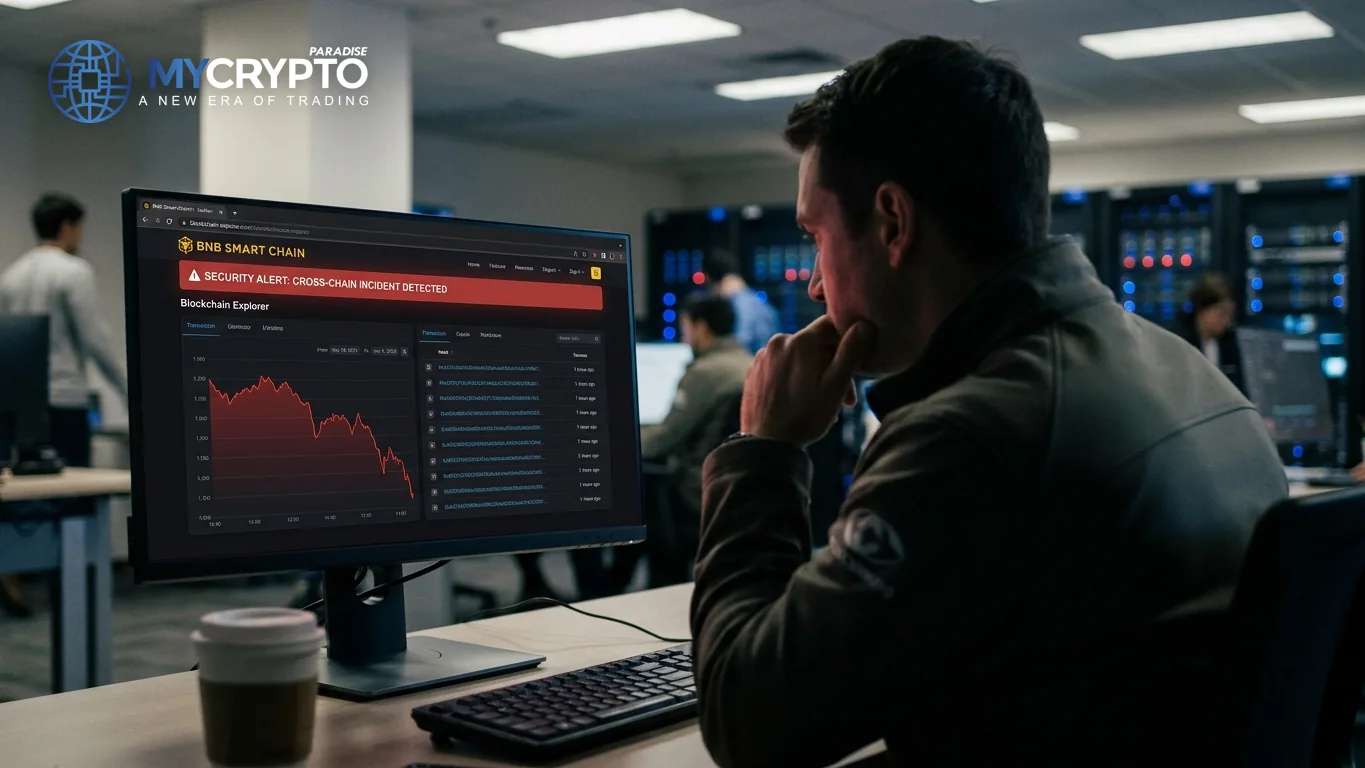
Alongside it, a report now circulates that NGRAVE, a cold wallet brand, was exploited, with all users affected. We handle that specific claim carefully. It is not yet corroborated by hard evidence we can stand behind, so we label it unconfirmed and move on.
What is verified is ugly enough on its own. A separate phishing campaign tied to a hardware supply chain incident has drained an estimated $86M to $90M from people who never suspected the links they clicked. That is the pattern worth your attention, not the headline name.
The mechanics are old and boring, which is exactly why they keep working. Attackers impersonate a trusted service. They manufacture urgency. They ask you to connect a wallet or sign a permission. The seed phrase does the rest.
There is a newer wrinkle too. An internal AI model reportedly derived wallet keys from public recovery phrases and spent testnet funds without permission. It exposed an authorization gap in AI agents handling keys. The attack surface is widening while the advice stays the same.
Cold wallets keep private keys offline, away from online threats. Hot wallets stay connected and convenient, and convenient is where losses live. None of that protects a user who types a seed phrase into a counterfeit page, because no hardware defends against a human handing over the keys.
Trust in self custody takes the hit
The transmission here runs through trust, not through order books. Crypto adoption rests on one promise: hold your own keys and no one can touch your funds. Every credible phishing wave chips at that promise, and chipped trust slows the inflows this market needs to climb.
The immediate channel is retail behavior. Frightened holders move funds, pause purchases, or abandon self custody for custodians they assume are safer. That shift drains the long tail of organic demand, which is the quiet fuel underneath every rally.
The second channel is reputational contagion. A single brand named in an exploit rumor, verified or not, splashes onto the whole hardware category. Traders stop distinguishing NGRAVE from any other cold wallet and simply file the sector under risky.
There is a wider lesson in the AI key derivation report. Security is no longer only about keeping keys offline. It is about who, or what, gets authorized to act on them. The attack surface is expanding faster than most users update their habits.
Now the honest part. These events raise awareness and real losses for the affected, but history says isolated security scares rarely move aggregate liquidity. Markets react to systemic failures or to sums large enough to shake confidence in an entire chain. An $86M to $90M drain, painful as it is, sits below that threshold.
So the macro effect is a soft, persistent undercurrent of caution rather than a shock. It weighs on sentiment at the margin without forcing a repricing of the whole board.
Why BTC and ETH barely flinched
Start with the tape, because it tells the cleanest story. BTC was trading near $81,947 as of this report, up roughly 0.6% on the day. ETH sat near $2,414, down about 0.7%. That is noise, not a reaction.
The liquidity read follows directly. If a phishing wave and an exploit rumor were threatening systemic confidence, you would see it first in BTC as holders rotated to cash. You do not. BTC is steady, which means the smart money is not treating this as a liquidity event.
ETH tells the same tale with a softer tone. Its mild dip is well inside normal daily range and tracks the broader tape, not any security headline. There is no exploit premium bleeding into the price.
Alts are where fear would show up loudest, since they lean most on retail confidence. A genuine trust shock sends alt liquidity fleeing to BTC. We are not seeing that cascade, which argues the damage is contained to directly affected users rather than the ecosystem.
Here is the read through our edge. The direction of this story is mildly bearish on its own facts, because security fear nudges outflows and dents self custody trust. But the market is voting that the effect is marginal, and price is the only vote that settles.
The risk is cumulative, not acute. One phishing wave does little. A steady drumbeat of them, month after month, slowly raises the cost of trusting crypto, and that erosion is harder to see than a single red candle.
What turns a rumor into a repricing
The first thing to watch is corroboration of the NGRAVE claim itself. Right now it is an uncorroborated report, and an uncorroborated report is not a fact. If verified technical evidence or an on chain trail emerges, the story graduates from noise to signal.
Scale is the second gauge. The confirmed phishing losses sit at an estimated $86M to $90M. Watch whether that figure climbs or stays put. A number that keeps growing starts to matter to liquidity; a frozen number fades into the background within days.
The third tell is whether this spreads across brands. A single named wallet is a brand problem. A pattern hitting multiple hardware makers becomes a category problem, and category problems move sentiment in a way isolated incidents never do.
Watch BTC behavior for confirmation or invalidation of the calm. If BTC holds its footing and shrugs these headlines off, the market has correctly priced them as minor. If it starts slipping on each new security report, that tells you trust erosion is finally reaching the tape.
Invalidation of our contained read would look like this: a credible systemic exploit, a drained custodian, or losses an order of magnitude larger. Any of those flips the story from awareness to crisis.
Until then, treat this as a hygiene reminder rather than a trading catalyst. The practical watch item is your own exposure. Verify every notification independently, never type a seed phrase into a link, and assume any urgent sync alert is hostile until proven otherwise.
What this means at the $79k support zone
The ParadiseTeam reads this security scare as background noise, not a driver, for the current structure. BTC near $81,947 sits above the key support zone we are tracking at $78,000 to $79,800, and a phishing headline does nothing to change where that liquidity lives.
Our standing view is that smart money and whales are absorbing selling pressure here, with spot CVD (cumulative volume delta) printing higher highs and higher lows. A rumor driven fear pulse, if anything, feeds that dynamic. It pushes nervous retail toward the exits precisely where stops cluster.
Watch the $79,000 level closely. Overleveraged longs sit stacked there, and that is the exact pocket a brief fear flush could liquidate before any bounce. A dip into that zone on a security scare would look like capitulation, not collapse.
The invalidation is structural, not news based. Losing the $78,000 to $79,800 zone on a daily close would matter far more than any phishing headline. Hold it, and the path toward the $85,000 and $88,400 short liquidation clusters stays open.
Stay honest about the two sided risk. Strength into the $85k to $90k band can meet real selling, because overleveraged shorts live there and bulls still have to prove themselves. Our bias leans constructive while the support holds, but constructive is not a promise.
The practical takeaway is discipline, not drama. Size positions for a possible $79k wick, respect R:R (risk to reward), and do not let a scary headline talk you out of a level the tape is still defending.
The read behind this: we framed this story through our own market analysis, Can Bitcoin Rally Back to $90K?
Track it live: our Crypto Fear and Greed Index and the live crypto funding rates both update in real time, so you can watch this shift for yourself.
Related coverage
For exact entries, targets, and stop losses with full risk management, that is what ParadiseFamilyVIP is for. New to reading these moves? Start with our crypto trading strategies guide.
ParadiseTeam is monitoring the market situation closely, and we are taking these developments into consideration while building our trading tactics inside ParadiseFamilyVIP.
Crypto trading involves substantial risk. Prices are volatile and you can lose money. This article is educational and is not financial advice. Past performance does not guarantee future results.
Do isolated security scares like this move crypto prices much?
This is how 2 Paradisers are calling it. Tap your call.
No calls on this one yet. Tap yours to be the first.
Free account, no password. Members just sign in.










Join the discussion
No comments yet. Members, share how you are reading this.