


Listen: the breakdown
Developing story update (September 03, 2026, 17:17 UTC):
New financials sharpen the picture on Nakamoto Inc. (NASDAQ: NAKA). Against roughly $371.8 million in first-half net losses, the company’s total operating revenue was only about $35.9 million, underlining how little cash the underlying businesses generate relative to the losses being absorbed.
For traders, the key structural read is that the Bitcoin treasury model has stalled: with the stock trading below the value of its own Bitcoin holdings, issuing fresh shares to buy more BTC is now far harder, which probably removes a buyer that the market had been pricing in. Treat leveraged treasury vehicles as higher-risk proxies, not clean Bitcoin exposure.
What to watch now: Whether Nakamoto is forced to sell Bitcoin holdings to fund operations given thin revenue against heavy losses.
Developing story update (September 03, 2026, 16:54 UTC):
Update: Since our original coverage, the company appears to be repositioning. Nakamoto is signaling a shift away from a pure Bitcoin accumulation model toward cash-generating businesses and share buybacks, based on our sources. This is management’s first visible attempt to address a stock that still trades below the value of its own Bitcoin holdings.
For traders, this is a structural change in the thesis rather than a rescue. Buybacks may slow the bleeding, but they do not resolve the roughly 371.8 million dollars in first-half losses or the 99 percent drawdown from the peak. Treat any relief bounce as unconfirmed until the balance sheet backs it up.
What to watch now: Whether the pivot to cash-flow businesses and buybacks actually narrows the gap between NAKA's market value and its Bitcoin holdings.
Developing story update (September 03, 2026, 14:40 UTC):
There is a new development traders should note. Nakamoto’s Bitcoin-treasury model is now openly faltering, and the company is signaling a strategic pivot away from pure coin accumulation toward cash-generating businesses and share buybacks. Based on our sources, this is management effectively conceding that stacking Bitcoin above net asset value is no longer a viable standalone strategy.
For positioning, a buyback program can put a short-term floor under a stock trading below the value of its own coins, but it also consumes the treasury capital that made the equity a Bitcoin proxy in the first place. The probable read is that this reduces the leveraged upside these vehicles were bought for, and it may keep confidence in similar Bitcoin-proxy names under pressure.
What to watch now: Whether the buyback narrows the discount to Bitcoin holdings or drains treasury capital and deepens it.
Developing story update (September 03, 2026, 13:54 UTC):
An added detail sharpens the picture for traders: the company is now valued at less than half the worth of the Bitcoin it actually holds. When a treasury vehicle trades at a deep discount to the coins on its own balance sheet, the market is pricing in doubt about management and dilution rather than the asset itself.
The two reported quarterly losses now sum to a first-half net loss of roughly $371.8 million, underlining that the cash burn is structural rather than a one-off. Based on our sources, this discount-to-holdings dynamic is a pattern to watch across other leveraged Bitcoin treasury plays, since it can turn into forced selling pressure if confidence keeps eroding.
What to watch now: Whether the discount to Bitcoin holdings widens further or forces asset sales.
Developing story update (September 03, 2026, 13:05 UTC):
Update: The pressure on the Official TRUMP memecoin has escalated from market losses to Washington. US Senators Elizabeth Warren and Richard Blumenthal have now urged the SEC to investigate the token, adding regulatory risk on top of the roughly 98 percent collapse from its January 2025 peak.
For traders, this widens the risk beyond price. A formal regulatory probe into a politically branded token can freeze liquidity and headline sentiment across similar personality-driven plays. The token is now changing hands near $2.17, and any escalation in the investigation is likely to keep a lid on speculative recovery attempts.
What to watch now: Whether the SEC formally opens an investigation into the TRUMP token, and any spillover into other politically branded crypto ventures.
Market briefing: A Trump-linked Bitcoin treasury company, Nakamoto, has collapsed roughly 99% from its peak and now trades below its own Bitcoin holdings. Bitcoin sits near $77,905, up 1.7% on the day, but the story is retail excess unwinding.
- Nakamoto stock closed at $7.05, down 5.87%, with the company now worth less than half its Bitcoin stack.
- Nakamoto booked roughly $371.8 million in losses across Q1 and Q2 2026, breaking the raise-and-buy engine.
- The parallel TRUMP memecoin has fallen 98% from its $49.26 peak to $2.17, drawing Senate calls for an SEC probe.
A $760 million Bitcoin treasury bet just collapsed 99% from its peak. So when a Bitcoin treasury company trades below its own coins, who was really the buyer, and who is left holding the loss?
David Bailey raised roughly $760 million so Nakamoto Inc. could accumulate Bitcoin at scale. The pitch was simple: sell shares, buy coins, repeat, and let the premium do the compounding. That machine has now seized up.
Nakamoto stock closed at $7.05, down 5.87% on the day, and roughly 99% below its peak. More telling than the price is the structure underneath it. The company's market value now sits at less than half the value of its Bitcoin holdings.
That single fact breaks the model. When shares trade below the coins they represent, issuing new stock to buy more Bitcoin destroys value instead of creating it. The flywheel that made the story work only spins upward.
The balance sheet confirms the strain. Nakamoto posted a net loss of $238.8 million in Q1 2026 and another $133.0 million in Q2, roughly $371.8 million gone in half a year. Bailey chairs the company and advises Trump on crypto, which is why this failure travels further than a normal small-cap blowup.
It does not travel alone. The Official TRUMP memecoin has fallen 98% from its $49.26 high to $2.17. US Senators Elizabeth Warren and Richard Blumenthal have urged the SEC to investigate, citing nearly one million investors and roughly $3.81 billion in losses.
Bitcoin itself sat near $77,905, up 1.7% on the day. The coin is steady. The speculative wrappers built around it are not, and that gap is the whole story.
When a treasury trades below its Bitcoin
The transmission runs from a broken corporate model to broader risk appetite. Nakamoto was sold as leveraged, always-up exposure to Bitcoin. Once its shares fell beneath the value of its coins, that leverage inverted into a trap.
A treasury company only accumulates when its stock trades at a premium to net asset value. It sells expensive shares, buys coins, and the premium widens. Below par, that door closes. Nakamoto can no longer issue equity to add Bitcoin without diluting existing holders into a deeper hole.
This is where the macro backdrop bites. US debt just crossed $40 trillion, geopolitical tension is rising, and regulators are tightening around politically linked crypto assets. The Warren and Blumenthal letter is a signal that the era of the loud, thinly governed crypto vehicle is drawing scrutiny.
Here is the uncomfortable part for retail. The story that pulled people in, a Trump ally raising three-quarters of a billion dollars, is the same story now unwinding on them. The glossy press release and the balance sheet were never quite the same document.
For Bitcoin holders, the direct effect is small. Nakamoto's coins are not being force-sold today. The indirect effect is larger. Every collapsed treasury and dead memecoin trims the speculative demand that inflated this cycle, and thinner demand at these levels matters more than a single day's price tick.
Speculative excess bleeds into broader risk
Bitcoin held near $77,905 while the wrappers around it imploded, and that divergence is the tell. The coin is not the problem. The leverage layered on top of it is.
Start with BTC. Price is grinding under the $79,000 resistance zone, not breaking out on this news. A collapse in treasury-vehicle demand removes a marginal buyer that helped absorb supply on the way up. That absence shows up slowly, as failure to reclaim, not as an instant crash.
The damage concentrates one layer down. Nakamoto equity holders and TRUMP token buyers are the retail cohort now carrying real losses, nearly $3.81 billion cited for the memecoin alone. That capital does not rotate cleanly into alts. It leaves, or it freezes.
Alts feel this most. Speculative, narrative-driven tokens depend on exactly the risk appetite that stories like Nakamoto and TRUMP just vaporised. When politically linked assets fall 98% and 99%, the confidence that funds smaller-cap bids drains with them.
Stablecoin flows are worth watching here. Losses of this size tend to sit in cash rather than chase the next rotation. That is a liquidity headwind, not a tailwind.
So the current 1.7% uptick reads as fragile, not corrective. Bitcoin looks resilient on the surface while the speculative ecosystem beneath it thins out. That is usually distribution wearing a calm face.
Confirmation levels around the fifty-eight thousand break
The cleanest signal now is whether Bitcoin can reclaim $79,000 on a daily and weekly close. It has repeatedly failed there, printing a shooting star on both timeframes, and each rejection strengthens the distribution case.
Watch $58,000 as the trigger. A decisive break below it would confirm that this speculative unwind is bleeding into spot Bitcoin, not staying contained in dead equities and memecoins. That level is the hinge between chop and continuation lower.
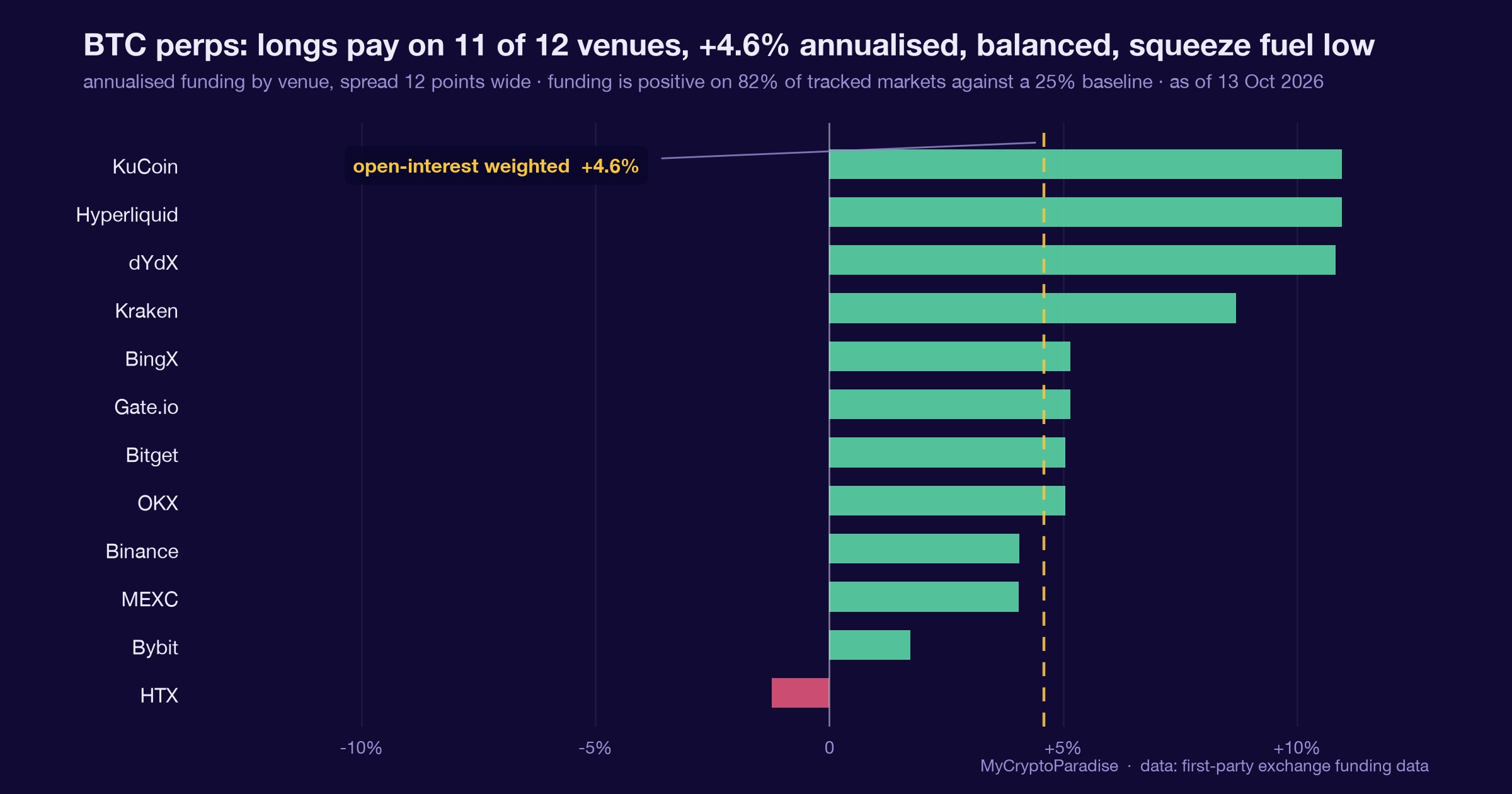
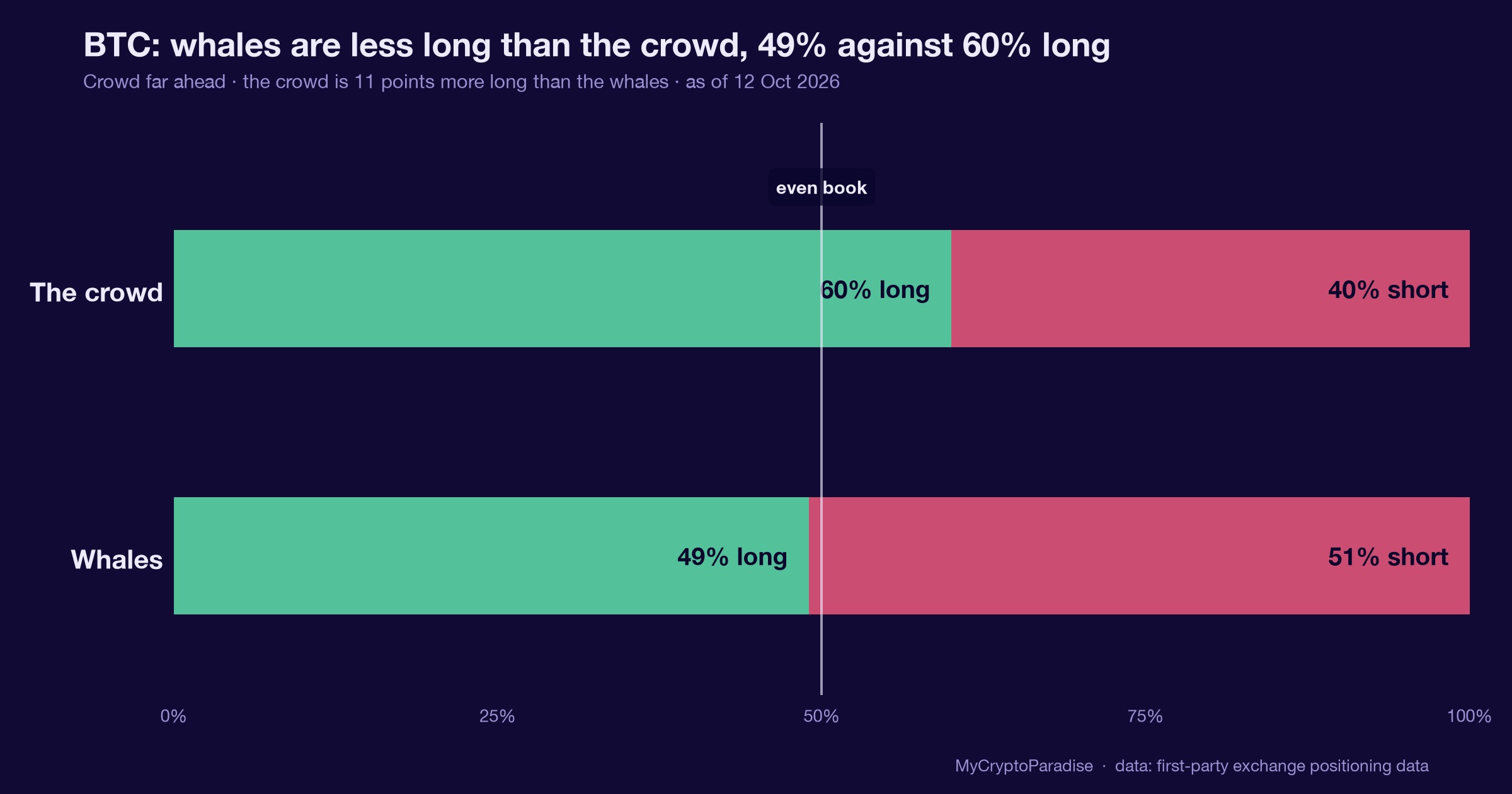
On the downside, the liquidation cluster near $57,000 marks where trapped longs sit. Retail has been piling into longs and calling the bear phase over. If price loses $58,000, those stops become fuel, and the move can accelerate through them fast.
Invalidation is equally clear. A weekly close back above the previous high near $79,000, on real volume, would break the bearish structure and force a rethink. Until that happens, rallies are suspect.
Watch the next weekly candle for a bearish engulfing confirmation. A second red weekly close under the rejection would validate the pattern the ParadiseTeam is tracking.
Finally, watch regulation. If the SEC formally opens a review of politically linked tokens, expect a fresh chill across speculative crypto. That would reinforce, not counter, the risk-off read.
The simplest question: does Bitcoin defend $58,000, or does the same excess that killed Nakamoto pull spot down with it?
Reading distribution through the Nakamoto collapse
The ParadiseTeam sees Nakamoto's collapse as confirmation of the theme, not a new catalyst. A treasury company trading below its own coins is a textbook end-of-euphoria marker. It is what speculative excess looks like when the tide goes out.
Applied to Bitcoin at $77,905, this fits the current lens cleanly. Price is failing at the $79,000 resistance with a shooting star on the daily and weekly. Retail is buying longs and declaring the downtrend finished. Stories like Nakamoto and TRUMP are exactly the sentiment that tops are built on.
The read is that smart money is absorbing this retail long pressure, not chasing it. Market makers carry an incentive to push lower while liquidation clusters sit stacked near $57,000. Bearish news at rejection, with crowds still bullish, is usually distribution, not a bottom.
Structurally, the ParadiseTeam is tracking an ABC expanded flat with the C-wave incomplete, and an ending diagonal projecting a final flush toward $44,000 before continuation. The $58,000 break is the checkpoint that would open that path.
The edge here is patience. This is the stage where the impatient get liquidated and the disciplined wait. The invalidation is honest and specific: a weekly reclaim above $79,000 breaks the thesis outright.
No single confirmed catalyst is driving today's tape. This is fragility surfacing through failed speculative vehicles, and the ParadiseTeam treats the 1.7% bounce as a level to watch, not to trust.
The read behind this: we framed this story through our own market analysis, Bitcoin Fails at $79K: Who Is Selling?
Track it live: our live crypto funding rates and the crypto liquidation heatmap both update in real time, so you can watch this shift for yourself.
Related coverage
For exact entries, targets, and stop losses with full risk management, that is what ParadiseFamilyVIP is for. New to reading these moves? Start with our crypto trading strategies guide.
ParadiseTeam is monitoring the market situation closely, and we are taking these developments into consideration while building our trading tactics inside ParadiseFamilyVIP.
Crypto trading involves substantial risk. Prices are volatile and you can lose money. This article is educational and is not financial advice. Past performance does not guarantee future results.
Where does Bitcoin head next as speculative treasuries unwind?
This is how 13 Paradisers are calling it. Tap your call.
No calls on this one yet. Tap yours to be the first.
Free account, no password. Members just sign in.









Join the discussion 3
i wonder if the lack of price elasticity here suggests some larger players are content to let this drop without support. it raises questions for other projects with similar models.
This whole "treasury model" thing just sounds like another bailout waiting to happen, artificially propping things up until it all collapses again 📉. learned that lesson the hard way in '08 😠.
Another example of treasuries creating artificial demand floors. I track these specifically for exit liquidity when reclaims fail.