


Listen: the breakdown
Market briefing: MARA has pledged 18,750 BTC, more than half its stack, to back six hundred million dollars in fresh loans. BTC sits near 64,752 dollars, barely moved on the news.
- MARA pledged 18,750 BTC to secure $600 million in new loans.
- The collateral is 53% of its stack and worth $1.2 billion at closing.
- A liquidation clause activates if BTC drops below required levels.
MARA pledged 18,750 BTC to back a $600 million loan, over half its stack. Is this a miner's conviction bet or a hidden liquidation trap for the next dip?
MARA Holdings just told the market something important, and it did it in the quiet language of a quarterly filing. The miner pledged 18,750 BTC to secure $600 million in new loans. That collateral was worth about $1.2 billion at closing.
The money arrived in two equal halves. Coinbase Credit supplied $300 million. Two Prime supplied the other $300 million. Both loans sit against the same pool of Bitcoin.
Here is the number that matters most. Those pledged coins are 53% of everything MARA holds. So one of the largest Bitcoin miners has now leaned more than half its treasury against fresh debt.
The filing also carries a clause traders should read twice. The lenders can liquidate the pledged BTC if the price falls below required levels. In plain terms, a hard enough drop turns a conviction position into forced selling.
None of this is a crisis today. BTC was trading near $64,752 as of the print, down a modest 0.2% on the day. The market shrugged, which is often what markets do right before they remember.
What changed is not the price. What changed is the structure sitting underneath it. A large, known holder now has a mechanical reason to become a seller on a deep enough dip, and that overhang did not exist last week.
Why leveraged miner collateral shapes supply
The transmission here runs through supply mechanics, not sentiment. When a miner pledges Bitcoin as collateral, those coins leave immediate circulation. They are locked against the loan and cannot be casually sold. In the short term, that removes float and can feel supportive.
But the same pledge builds a second, opposite force. A liquidation clause is a conditional sell order sitting below the market. It does nothing while price holds. It becomes very real if price breaks required levels.
So MARA's decision quietly converts $1.2 billion of Bitcoin into a two-state asset. In state one, calm, it is off the market. In state two, stress, it can hit the tape all at once.
That matters for every trader because forced sellers do not care about your levels. They sell to protect the lender, not to time a bottom. Their flow lands hardest exactly where liquidity is thinnest, on the dips retail already fears.
Raising $600 million against your own coins is also a statement of intent. MARA clearly prefers borrowing to selling, which reads as long-term conviction on Bitcoin. A miner who thought the top was in would simply sell.
The honest read is that both truths coexist. Conviction and fragility now live in the same position. That is the real reason this filing deserves attention well beyond MARA's own share price.
How the loan overhang reaches ETH and alts
Start with BTC, because this is a BTC-collateralized story first. The immediate price effect is small, and the tape confirms it with a 0.2% move. The impact is not spot, it is structural.
Think of the pledged coins as a shelf of potential supply parked beneath the market. As long as BTC holds its footing, that shelf stays untouched and even mildly reduces available float. The danger only wakes on a deep flush.
That is where the liquidity cascade lives. If price probes lower and required levels come into view, forced selling can stack on top of ordinary stop runs. Sell-side liquidity then thickens precisely on the dips, which can turn an orderly pullback into a sharper one.
ETH inherits this second-hand. Ether rarely ignores a violent Bitcoin flush, because leveraged books get marked against BTC first. When BTC volatility spikes, ETH usually amplifies it rather than dampens it.
Alts sit at the far, thin end of the chain. They have the least depth and the widest spreads. A forced-selling event in BTC drains risk appetite fast, and the smallest coins bleed the most on the way down.
None of this is a forecast of collapse. It is a map of where the pressure would travel if a real dip arrives. The overhang is now part of the terrain.
What confirms or defuses the liquidation risk
The cleanest thing to watch is simple. Does BTC keep holding its higher-timeframe support, or does it start probing toward the levels where collateral math turns hostile? Structure, not headlines, will answer that.
Confirmation of the bullish path looks like strength that ignores this news entirely. If BTC absorbs the filing, holds firm, and grinds without a deep flush, the pledged coins stay dormant. The overhang then fades into background noise.
Invalidation looks different. It is a decisive break below key support on rising volume, with acceptance under the level rather than a quick wick. That is the environment where forced-selling clauses stop being theoretical.
Watch behavior on the dips specifically. Healthy dips get bought and reclaim quickly. A dip that accelerates, with sell pressure feeding on itself into lower liquidity, is the tell that mechanical sellers may be active.
Keep one eye on the calm, too. Very low volatility near resistance is not the same as safety. It is often the pause where positioning quietly gets one-sided before the next expansion.
Above all, separate the story from the price. The filing is a confirmed fact. The dip scenario is our read of the risk it creates. Let the chart, not the fear, confirm which state the market chooses. Patience beats prediction here.
What this pledge means at current levels
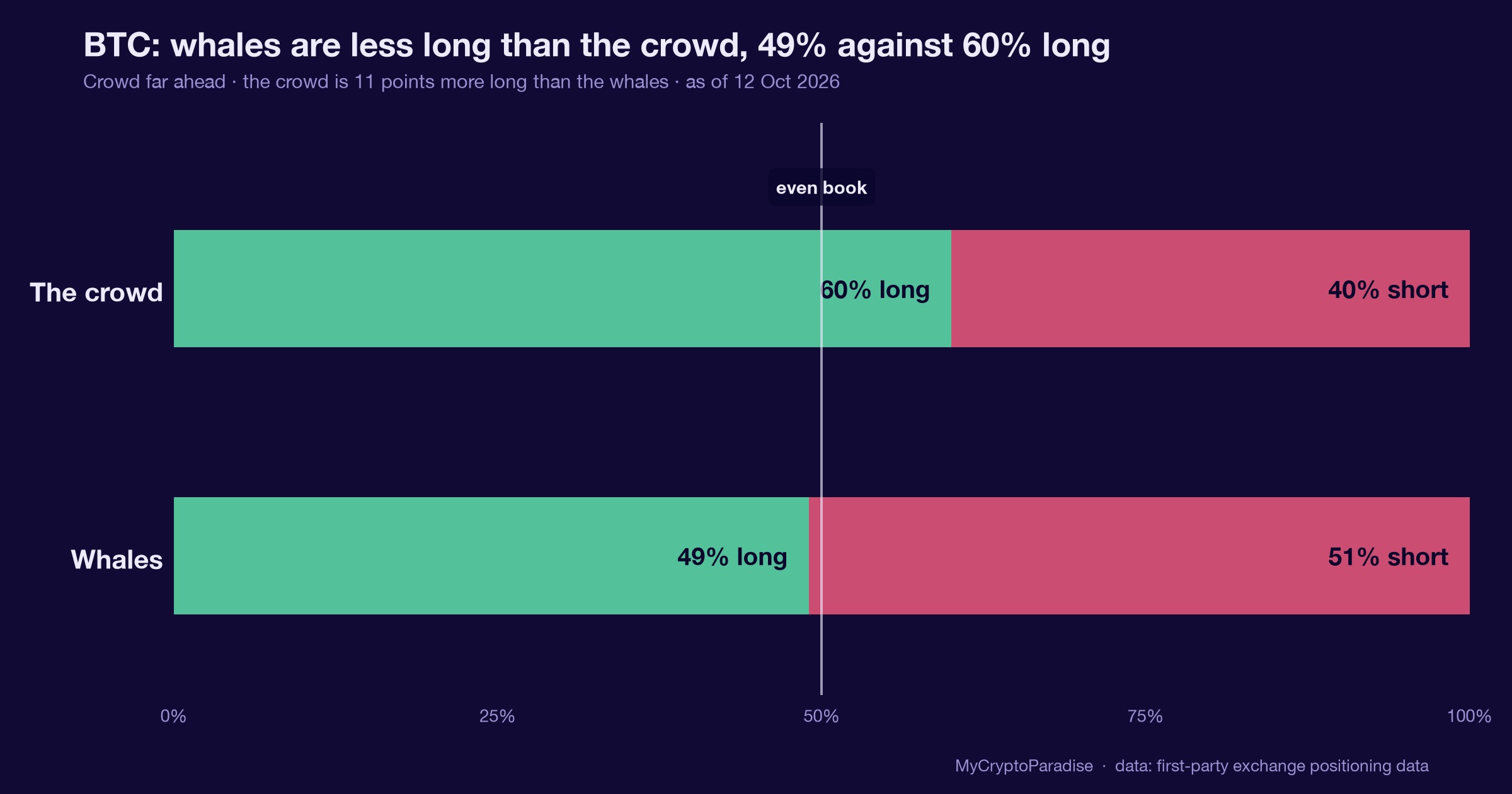
The ParadiseTeam reads this through positioning, not panic. Our working view has smart money reaccumulating Bitcoin and waiting for a pullback into the $61,000 to $59,000 zone for higher-conviction longs. This filing does not change that map. It sharpens it.
With BTC near $64,752 and resistance absorbing buys, this news adds a specific hazard to any dip. If price slides toward $61k to $59k, a forced-selling clause could deepen the flush beyond what retail expects. That is the trap in a benign-looking bit of corporate news.
Here is the reframe. The same deeper flush that hurts late longs is exactly the liquidity smart money wants to buy into. Retail currently buying into resistance is the group most exposed if that air pocket opens. So the ParadiseTeam treats aggression into resistance as the higher-risk behavior right now. The lower-risk stance is patience toward the $61k to $59k demand zone, R:R (risk-to-reward) permitting, and only on a reclaim rather than a falling knife.
Confirmation would be that zone holding and reclaiming after any wick. Invalidation is sustained acceptance below it, where the liquidation math starts to bite. Probabilities, not certainty, guide the read, and this remains a two-sided tape until support proves itself.
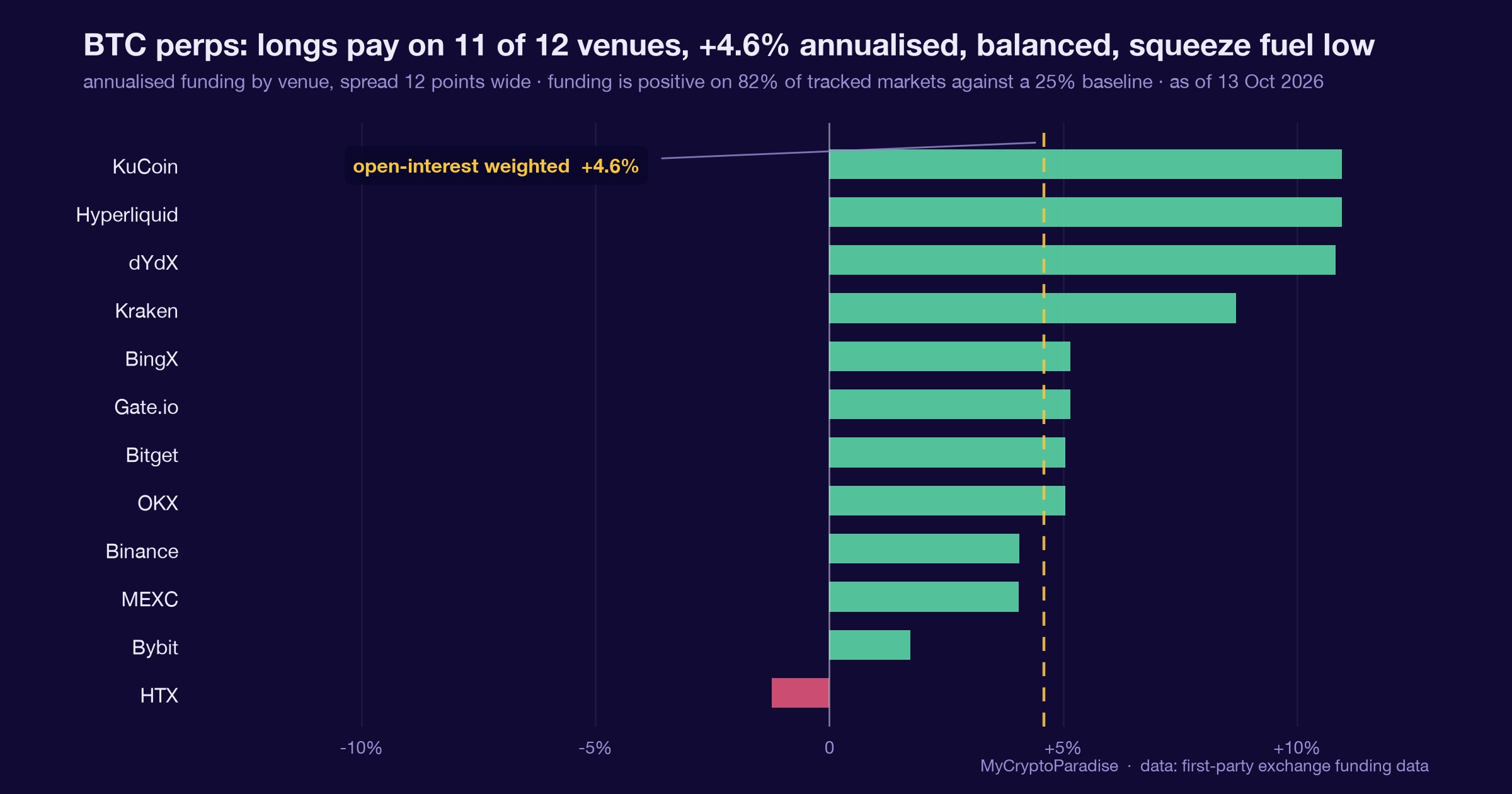
Track it live: our crypto liquidation heatmap and the live crypto funding rates both update in real time, so you can watch this shift for yourself.
Related coverage
For exact entries, targets, and stop losses with full risk management, that is what ParadiseFamilyVIP is for. New to reading these moves? Start with our crypto trading strategies guide.
ParadiseTeam is monitoring the market situation closely, and we are taking these developments into consideration while building our trading tactics inside ParadiseFamilyVIP.
Crypto trading involves substantial risk. Prices are volatile and you can lose money. This article is educational and is not financial advice. Past performance does not guarantee future results.
Does MARA's pledged BTC end up as forced selling on the next dip?
This is how the Paradisers are calling it. Tap your call.
No calls on this one yet. Tap yours to be the first.
Free account, no password. Members just sign in.









Join the discussion
No comments yet. Members, share how you are reading this.