


Listen: the breakdown
Market briefing: Roughly $396M in leveraged crypto longs were flushed in 24 hours while BTC barely moved, trading near $76,843. The viral '$200M, one whale wiped out' framing undersells the real scope.
- Longs took nearly all the damage: around $340M liquidated versus about $38.9M in shorts.
- The single largest order was an $8.78M BTCUSDT long on Binance, with no confirmed trader identity.
- BTC only drifted 0.4% lower, so this reads as a leverage unwind, not a directional crash.
A long liquidation flush near $400M hit in a day where BTC barely moved. So if the price held, what exactly got broken, and by whom?
Roughly $396 million in leveraged crypto positions were liquidated across the past 24 hours. Longs wore almost all of it. One aggregator puts long liquidations near $340 million against just $38.9 million in shorts. Yet BTC barely flinched, drifting 0.4% lower on the day to trade near $76,843.
The single largest order to go was an $8.78 million BTCUSDT long on Binance. That one fill made every feed. It became the face of the day.
A tidier headline went viral: $200 million gone, one whale wiped out completely. Our own trackers tell a less tidy story. Independent counts converge closer to $396 to $397 million, roughly double the figure doing the rounds. The claim that a single trader lost everything has nothing behind it.
What we can confirm is narrow. One $8.78 million order was the biggest single liquidation of the day. The identity, the account size, and the total loss remain unknown. A good story rarely waits for the balance sheet.
The real event sits behind the drama. This was not a crash that forced selling. It was forced selling that never needed a crash. Over-built long leverage was already stacked on the table. A mild intraday slip was all it took to knock it over.
There is no single confirmed catalyst for the day. That framing is our interpretation, offered honestly, not a dated event. The pattern itself is the message: a market carrying this much one-sided leverage flushes on almost any excuse.
Why one-sided leverage made this inevitable
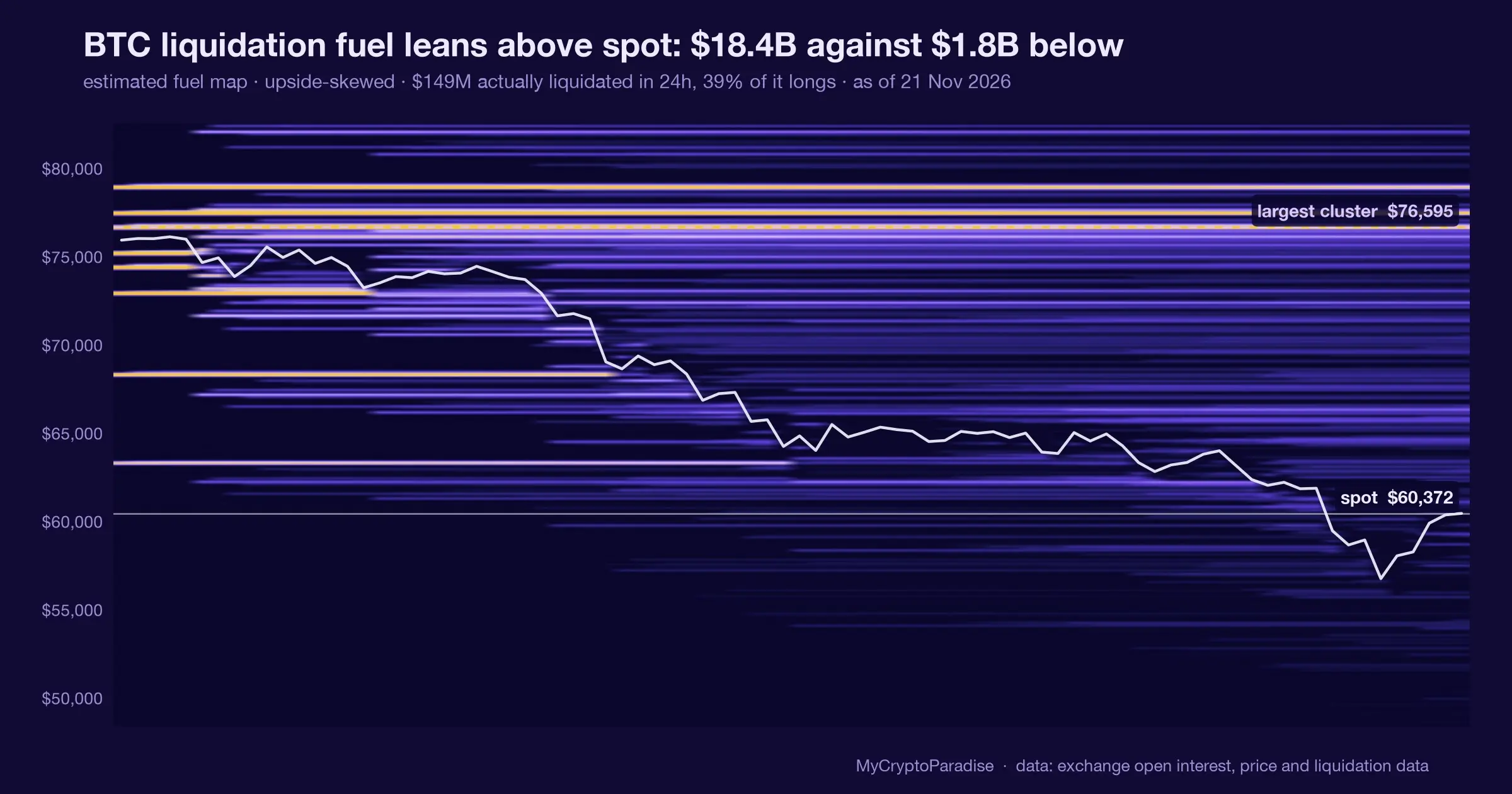
The mechanism matters more than the number. Overbuilt long leverage into a stalling BTC price is a loaded spring. Price does not need to fall hard. It only needs to stall and dip enough to touch the first cluster of stops. From there, forced unwinds do the rest.
That is what the data describes. Longs made up the overwhelming share of liquidations, and BTC lost less than half a percent. Organic sellers do not behave that way. Margin engines do.
Notice how little the trackers agree. One source cites $379 million, three cluster near $396 to $397 million, and another reaches $1.54 billion. That spread is itself a signal. Providers are each capturing different exchange slices rather than one clean total.
In a calm market, those numbers would sit close together. In a leverage-heavy one, they scatter. The disagreement tells you how much hidden positioning was in play.
This is why the flush reads as a cleansing, not a verdict. The system shed excess open interest, the dollar value of outstanding leveraged bets, without the spot price breaking down. Weak hands paid the margin call. Stronger balance sheets did not have to sell at all. The leverage left the market faster than the conviction did.
How the unwind rolled through majors
On its own facts, this flush leans bearish for the near term. Long-dominated liquidations mean forced sellers, not buyers, set the day's flow. That pressure clears order books and thins the bids that would otherwise catch the next dip.
BTC absorbed the brunt first and best. As the deepest book, it took the largest single order yet surrendered little ground. The flush passed through it rather than through its price.
ETH followed the same script one rung down. Around $60 million in ETH longs were unwound, a proportional echo of the BTC move rather than a separate story. Alts took similar long-side hits, spreading the deleveraging across majors in near lockstep. That correlation is the tell. When every major bleeds longs together on a quiet tape, the driver is shared leverage, not any single asset's news.
Here is the honest risk. A flush that keeps longs stepping back in is not finished flushing. Each failed bounce invites the next cohort to add leverage into weakness. If BTC cannot hold its footing, those fresh longs become the fuel for a second cascade. The structure stays fragile until the leverage that caused it genuinely resets.
What confirms a reset versus a relapse
Watch open interest, not price, for the real tell. OI (open interest) is the total value of outstanding leveraged bets. A healthy reset shows OI falling and staying down while price stabilises. That means the leverage left and did not come straight back.
The opposite would worry us. If OI rebuilds fast while BTC stays heavy near current levels, longs are simply reloading into weakness. That sets up a second flush rather than a bottom.
Funding rates carry the same message. Funding is the periodic fee longs and shorts pay each other on perpetual contracts. If funding stays positive and crowded while price drifts lower, the long side has not learned its lesson yet.
CVD (cumulative volume delta), which tracks whether aggressive buyers or sellers dominate, is the confirmation layer. Sellers still leading on bounces keeps the bearish read intact.
Invalidation is cleaner than it sounds. A reclaim of the $79,000 zone, held as support rather than rejected, would flip the short-term picture and suggest the flush cleared the path higher. Until then, assume the deleveraging may not be done.
One more thing to watch quietly: the stories we are told about these days. The whale narrative travels faster than the facts, and traders position on the narrative.
What the flush signals for liquidity now
The ParadiseTeam reads this through structure, not the headline count. BTC was trading near $76,843 as of the current print, sitting below the $79,000 edge of the zone Simon has flagged as a prior distribution area. So this flush is happening underneath that level, not at it.
That location matters. We already de-risked BTC since $121,000 and distributed into the $79,000 to $87,000 band. This leverage unwind is playing out beneath ground we had already stepped off, which keeps our caution intact rather than tempting us to chase.
The long-skewed damage fits our view cleanly. Retail reacting to headlines and chasing price tends to carry the most leverage into exactly these flushes. The tracked whale Keel closed his BTC long before the Binance hack and has since flipped short. Smart money repositioned early; the margin engine collected from those who had not.
For traders, the practical read is patience over prediction. A reclaim of the $79,000 zone as support, not resistance, is what would open odds of attacking the top of the first wave. Rejection there keeps the neutral-to-cautious stance in force.
We size for the possibility this is not the last flush. Define your SL (stop-loss) before entry, keep R:R (risk-to-reward) honest, and let the leverage reset finish before deciding the move is over.
The read behind this: we framed this story through our own market analysis, Binance Hack: Is Bitcoin's Small Drop Bullish?
Track it live: our Crypto Whale Alert and Tracker and the live crypto funding rates both update in real time, so you can watch this shift for yourself.
Related coverage
For exact entries, targets, and stop losses with full risk management, that is what ParadiseFamilyVIP is for. New to reading these moves? Start with our crypto trading strategies guide.
ParadiseTeam is monitoring the market situation closely, and we are taking these developments into consideration while building our trading tactics inside ParadiseFamilyVIP.
Crypto trading involves substantial risk. Prices are volatile and you can lose money. This article is educational and is not financial advice. Past performance does not guarantee future results.
Was this just a leverage flush, or the start of a deeper BTC drop?
How 20 Paradisers are calling it
The first call is still open
Free account, no password. Members just sign in.
Follow this topic: Crypto liquidation news









Join the discussion 9
ok the part i keep getting stuck on is the "who got forced out" bit. the article never says which exchange the $400M came from, so i cant check if it's one venue or the whole market
...so I had the same flush up on my phone at a depot once, and I told myself I'd check the chart properly that evening. By morning the move was gone, and I still have that screenshot in my journal.
Not convinced the flush tells us much about what comes next. Price barely moved, so what broke was the leverage, not the market, and one day of forced selling is a weak load case to read a trend from.
ok so i always check funding rates before i even look at the total.... i still cant picture who gets forced out first when price barely moves, could someone walk me through that part 🙏
glad you asked this, honestly i still find it hard to picture too. my guess is the highest-leverage longs closest to their liquidation levels go first, but i'd want to check the liquidation heatmpa before i'm sure.
the funding is one piece but the part that matters for who gets forced out first is where the liquidation levels cluster, not the rate. with price flat, the longs closest to their liq price go first, usually the highest leverage ones. check that before you read anything into the total.
Ok ok i get the levels part now thanks Sandra.... but dont the levels only tell you where the forced sells sit, not who is actually closest when price barely moves? If two longs have the same leverage but one put in more margin, wouldnt the liq price be way lower for that one?? 🙏
still not sold on the part where btc barely moved so the flush must mean something bigger is coming. guys on my break lose whole weeks to size they didnt have, and the chart doesnt care what they borrowed
Where did the $400M liquidation total come from? Exchange feeds often disagree by a lot on days like this, so I'd want the on-chain side before trusting the number.