


Listen: the breakdown
Developing story update (October 27, 2026, 21:26 UTC):
Keystone hardware wallet maker pulls devices after attackers stole factory authentication key. 25,964 buyer records exposed; recovery phrases and private keys unaffected. based on our sources ·
Market briefing: Hardware wallet maker Keystone will destroy 18,835 devices after a website breach exposed buyer records and leaked a key that verifies genuine hardware. BTC held near $79,756, down 0.8 percent on the day.
- Keystone will destroy 18,835 unsold devices and suspend shipments after a website breach
- 25,964 buyer records and shipping details were exposed, and an authentication key was stolen
- The stolen key lets fakes pass genuine checks, but existing cold-storage wallets are not directly exposed
A hardware wallet breach rarely moves BTC, yet the Keystone breach touches the one thing self-custody sells: trust. So what does it quietly cost the market?
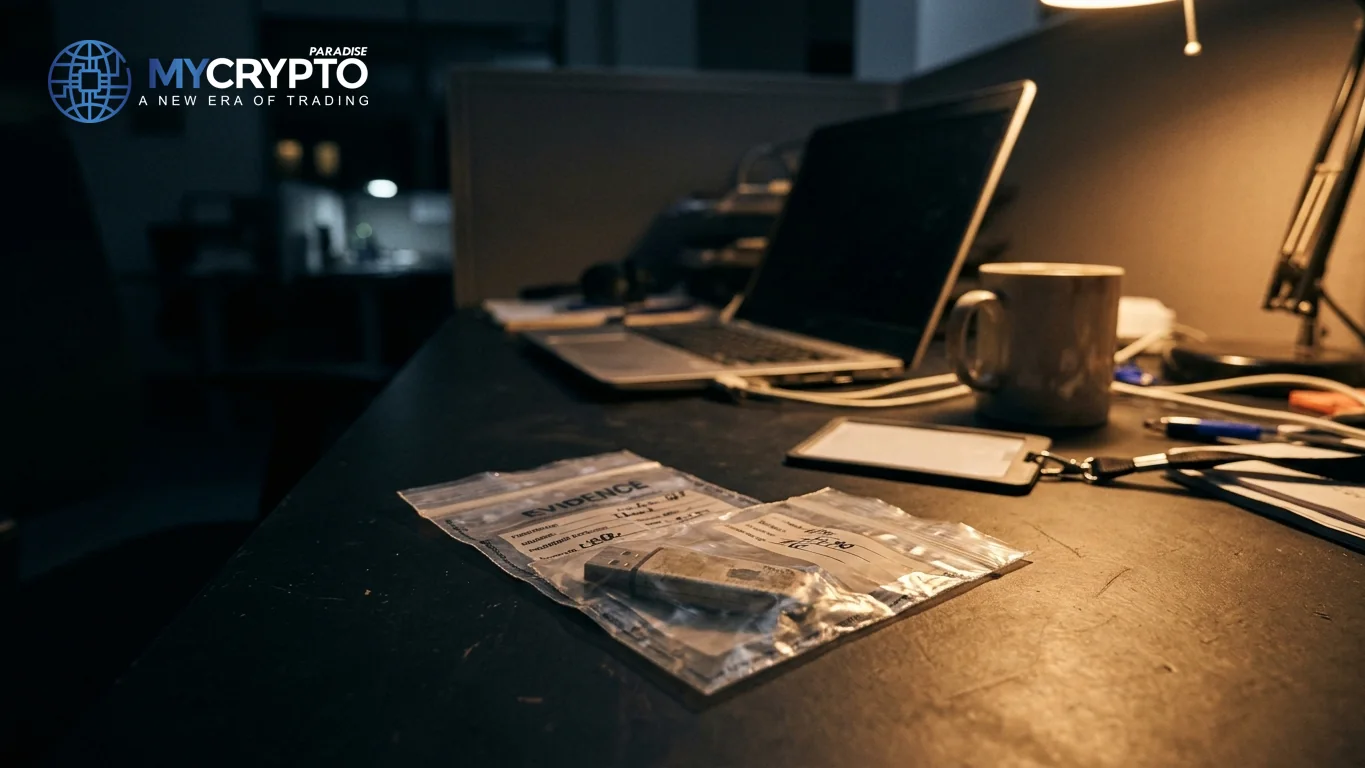
Hardware wallet maker Keystone will destroy 18,835 unsold devices after attackers breached its website. The company is also suspending shipments while it cleans up the damage. For a brand built on keeping coins safe, that is an awkward sentence to publish.
The breach exposed 25,964 buyer records. Customer shipping information leaked alongside them, which is uncomfortable for anyone who prefers the world not know a cold wallet sits in their house.
The sharper problem is the key. Attackers stole an authentication key that verifies whether a device is genuine. With it, a counterfeit unit could pass the same checks a real one does. That is why the unsold stock is going to the shredder rather than the shelf. Keystone cannot easily prove which devices in the pipeline are clean, so it is treating all of them as suspect.
One point matters more than the headline fear. This is not a key to anyone's existing wallet. Coins already secured in cold storage are not directly exposed by this incident.
The real exposure sits in the supply chain, future buyers and the counterfeit risk, not in funds already held. That distinction is everything, and it is exactly the part retail tends to skip while panicking. So the story is a vendor failure, not a protocol failure. The blockchain did not break. A website did, and a company that sells security is now explaining why it had to destroy its own inventory to contain the fallout.
Stolen key breaks the device trust chain
Trust is the only product a hardware wallet really sells. You buy the device because you believe it is genuine, uncompromised and yours alone. A stolen authentication key chips directly at that belief, because it means a fake could wear a real one's credentials.
That is the quiet transmission here. The money in existing wallets is fine, but confidence in the self-custody supply chain takes a small knock. Confidence, not code, is what persuades people to pull coins off exchanges and hold them cold.
When that confidence wobbles, some users hesitate to self-custody at all. A few drift back toward leaving funds on an exchange, which is the opposite of what a security product is meant to encourage.
We treat this as bearish at the margin for crypto sentiment, not for crypto's plumbing. The driver is reputational: one vendor forced to destroy its own stock and admit a breach. That headline travels further than the reassuring detail underneath it.
Still, the damage is contained to a supply chain, not a settlement layer. No chain halted. No ledger rewrote. The core security model that lets anyone hold their own keys is untouched by this event.
So the macro weight is light but real. It adds one more brick to the wall of caution retail is already building, at a moment when belief in the whole space is thin and easily spooked.
Counterfeit fear meets a flat tape
The direct price impact is close to nothing, and we will say so plainly. BTC was trading near $79,756, down about 0.8 percent on the day but up 0.29 percent on the hour. This is a company's bad week, not the market's.
BTC's softness traces to broad positioning and thin liquidity, not to one wallet maker's shredder. Honestly, there is no single confirmed catalyst behind the daily drift, so treat the move as background noise, not breach fallout.
ETH mirrored the mood, trading near $2,311 and down roughly 1 percent. Nothing in this story reaches ETH's fundamentals. It simply sits inside the same cautious tape that is pressing most majors lower.
Alts carry no fresh weight from this either. A hardware vendor breach does not reroute liquidity into or out of smaller tokens. The usual rotation logic stays intact, driven by risk appetite rather than headlines about counterfeit devices.
Where the breach does land is narrower and slower. Hardware wallet demand may cool for a spell, and rival makers inherit the nervous buyer. That is a sector story, not a chart story.
The retail reflex is the part to watch. Fear tends to generalise, so some holders will read one vendor's failure as a verdict on self-custody itself. Smart money reads it the opposite way: isolated, contained, and already explained. The gap between those two reactions is where the sentiment, not the price, actually moves.
Signs the damage stays inside Keystone
The first thing to watch is containment. Keystone destroying 18,835 devices is the honest, expensive response, and it signals the problem sits in unsold stock rather than in the field. If no counterfeit units surface in the wild, the story stays a one-vendor affair.
Shipments are the second tell. A clean, credible restart of deliveries would mark the incident as closed. A long, vague silence would do the opposite and let the fear compound.
Contagion is the real risk to monitor. If buyers start questioning hardware wallets broadly, or other makers report similar website weaknesses, a narrow story turns into a sector one. That would be the point where sentiment, not just one brand, takes the hit.
On the chart, watch whether any of this bleeds into BTC's defence of its lower shelf. We doubt it will. The breach is not heavy enough to decide where price sits, but a jittery tape plus jittery headlines can feed each other.
Invalidation of the bearish reading is simple. If demand for self-custody hardware holds, rivals stay quiet, and no fakes appear, the trust knock fades fast and the market forgets by next week.
Confirmation runs the other way. More exposed records, a confirmed counterfeit in circulation, or a second vendor stumbling would show the fear is spreading, and that is when a reputational story starts to carry genuine weight.
Why a vendor breach barely shifts BTC
Keep the proportion right. The ParadiseTeam treats this breach as a sentiment footnote, not a price driver, and the levels that matter sit on the chart, not in Keystone's press release.
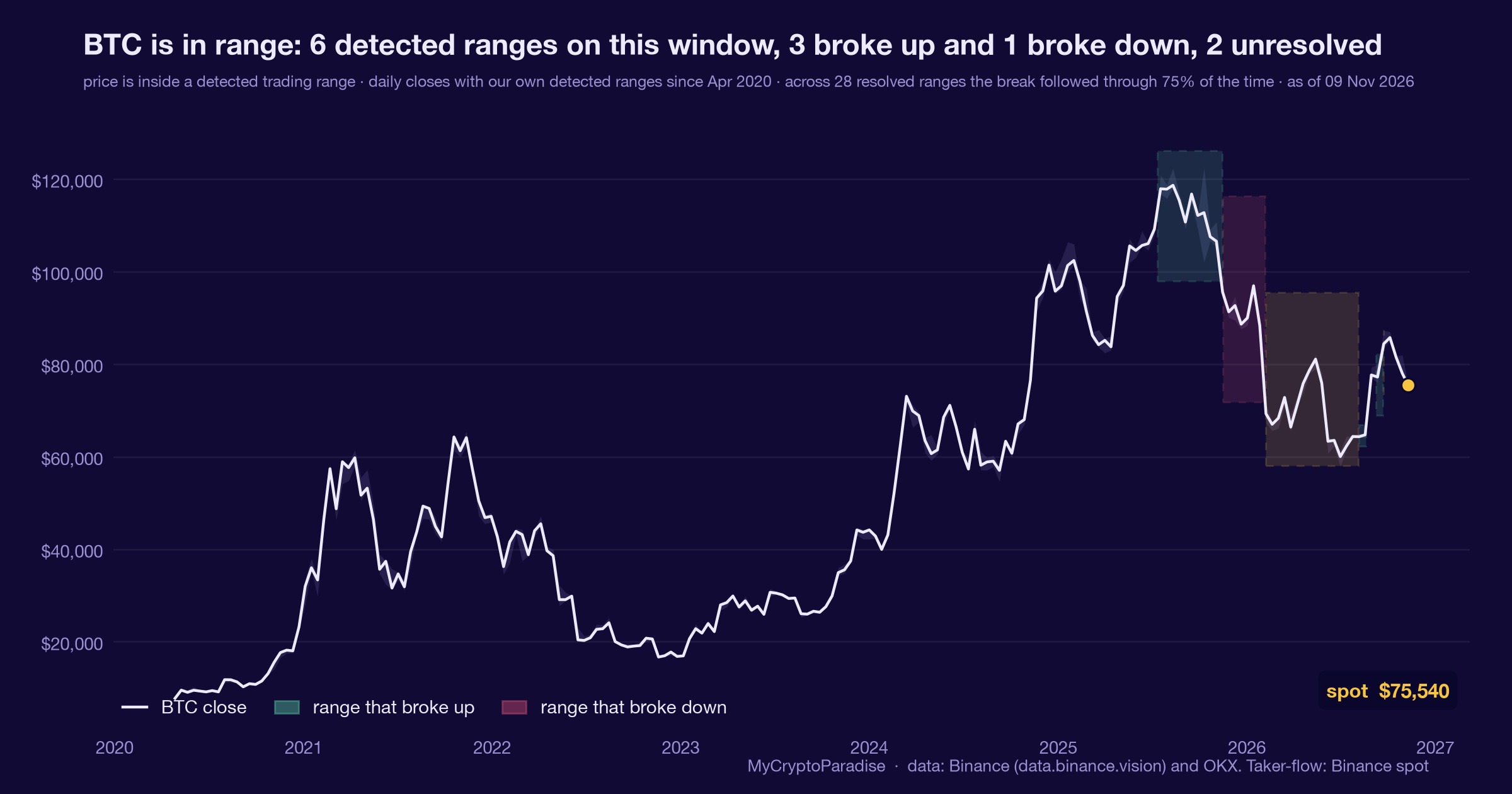
BTC near $79,756 is wedged in a tight zone. Our read puts first support at $79,500, with $79,000 the critical line whose loss would invalidate the medium-term bullish structure and open a far deeper path toward $44,000 over time.
Above, $81,000 is the first resistance that was not defended, and $81,350 is where a cleaner trigger lives. A reclaim there keeps the higher path toward $90,000 in play, still our base case for a final push before any larger reversal.
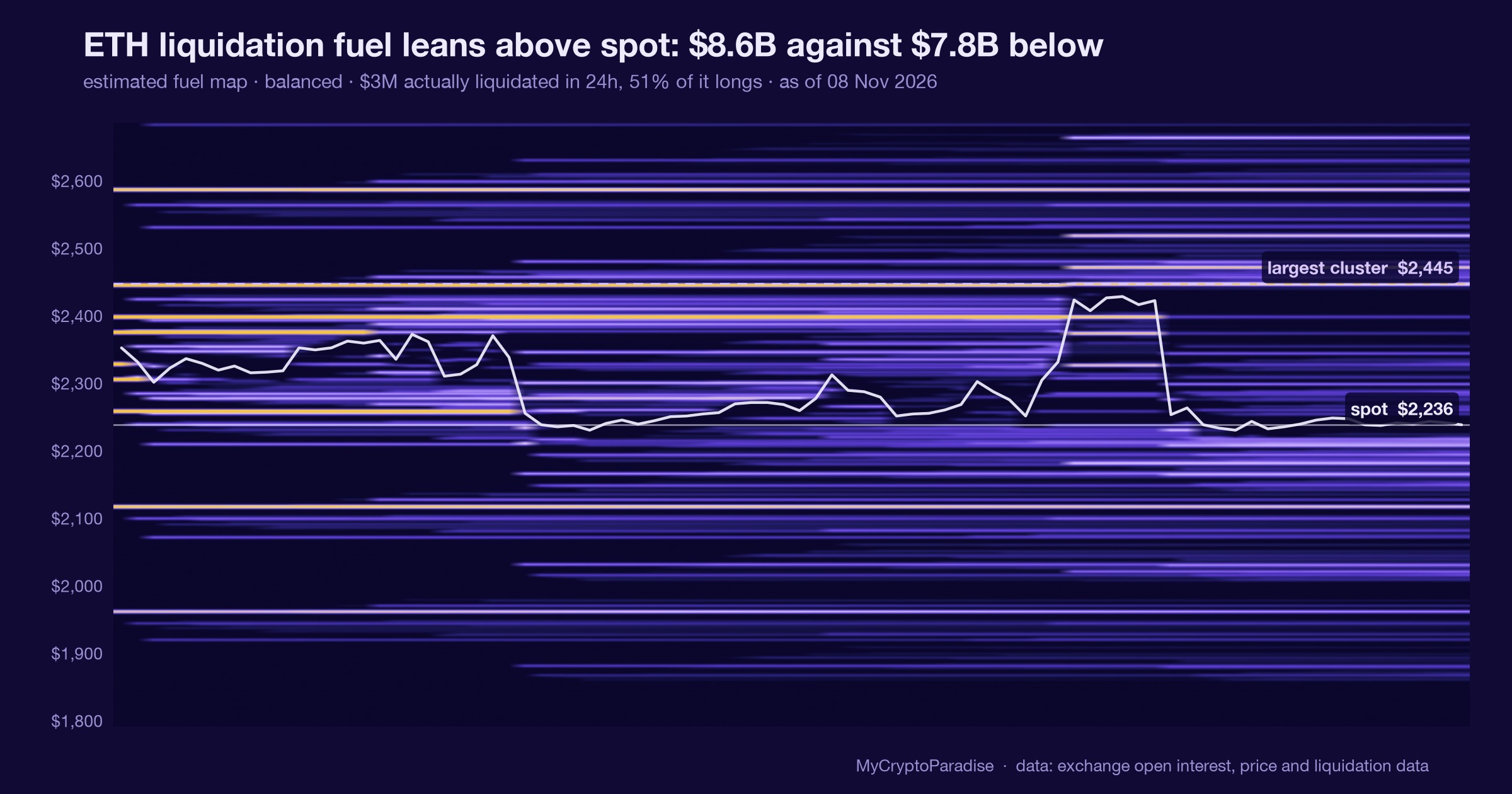
Here is where the breach connects. It adds one more thread of retail fear into a market where funding has flipped positive without price following, meaning longs are already crowded. Nervous headlines on top of crowded longs is exactly the fuel market makers use to sweep stops below $79,000 in thin liquidity.
Smart money, by contrast, reads the breach as isolated and is not distributing on it. We have seen only early, unconfirmed signs of fresh long accumulation, not full conviction, so we respect $79,000 as the hinge for the whole structure.
The practical point: do not let a wallet maker's bad week pull you into the chart. Trade the levels, mind the crowded longs, and let $79,000 decide the bias.
The read behind this: we framed this story through our own market analysis, Bitcoin at Support: Can Bulls Fight Back?
Track it live: our Crypto Fear and Greed Index and the live crypto funding rates both update in real time, so you can watch this shift for yourself.
Related coverage
For exact entries, targets, and stop losses with full risk management, that is what ParadiseFamilyVIP is for. New to reading these moves? Start with our crypto trading strategies guide.
ParadiseTeam is monitoring the market situation closely, and we are taking these developments into consideration while building our trading tactics inside ParadiseFamilyVIP.
Crypto trading involves substantial risk. Prices are volatile and you can lose money. This article is educational and is not financial advice. Past performance does not guarantee future results.
Does the Keystone breach dent trust in self-custody beyond this one brand?
How 36 Paradisers are calling it
The first call is still open
Free account, no password. Members just sign in.










Join the discussion 14
yeah this is why i dont store keys on an exchange or a web service even if its a cold wallet provider- they still need to secure their own systems from these types of attacks.
Man, this is why I like to double check the site address every time I log in... just a quick glance. Kinda scary to think about... 😟 🔐
destroying" wallets feels like such a weird choice of words here, like wiping a database is security Theater 🎭. makes me remember how many "fixes" in 2021 just led to more exploits later...
oof. "destroy" is an interesting word choice here 🤔 they just delete a database, right? like, is it gone gone?? 💀
Benny, you are correct to question "destroy." A database deletion is not the same as a cryptographic destruction of keys.
Lol fair Benny 😅 but even if the db is gone, the keys and the buyer list already leaked, so the damage is kinda done before the delete button, no? 🤷♂️
oh wow, this is why i always try to make sure my browsers security is up to date... really makes you think 🤔
Hannah, good point about the site security… and the same goes for our own devices, keeping the software up to date for when we click something by mistake.
Ugh, my kitchen-table freelance days taught me to check every login twice too!! I once sent a whole invoice to a lookalike address and only caught it because the font looked wrong 😅
so if they're "destroying" wallets, is that like a permanent burn or can they just restore from a backup later? 🤨 Four-hour noise is not a signal.
honestly the 18k wallets part is what got me, cold storage people in pune still talk about the 2008 style of just locking everything down and waiting. no leverage, no drama, just wait it out!! 🙏
Burning 18,835 wallets only makes sense if the keys were the problem, and I'm not sure the article shows that. If the device authentication key leaked, why isn't the fix a key rotation instead of a full shipment freeze?
always keep the cold storage truly cold.. never trust anyone else with your keys. liquidity decides.
Destroying" the wallets isn't the debit, it's a credit to security after a breach. The real ledger entry is the 18,835 accounts in the red from this exposure. 🤔 Gotta reconcile those risks!