


Listen: the breakdown
Market briefing: Spark Finance has launched an FX Layer that funds both sides of a single stablecoin pool, a leaner liquidity model for issuers. The market shrugged: Bitcoin sat near $79,495, down about 1.1 percent on the day.
- Spark's FX Layer funds both sides of the RLUSD/USDS pool, with SentoraHQ supporting deployment.
- The model lets a stablecoin issuer get trading liquidity without committing its own capital.
- No price reaction: BTC traded near $79,495 and the SPARK token was quoted at €0.00.
Spark Finance just launched an FX Layer that funds both sides of one stablecoin pool, letting an issuer seed liquidity without locking up its own capital. Clever plumbing, but does the market care?
Spark Finance just launched an FX Layer, and the pitch is refreshingly plain. Launching a stablecoin normally means funding a separate pool against every asset your users hold. That scatters capital and it is expensive. Spark's model does something different.
The FX Layer funds both sides of the RLUSD/USDS pool at once. SentoraHQ is supporting the deployment. The design lets an issuer get trading liquidity without committing its own capital to each pairing.
In plain terms, this is market plumbing. It changes how liquidity gets provisioned, not what anyone can buy. For an issuer, that is a real saving, because locked capital is dead capital.
Here is the honest part. The market noticed none of it. The SPARK token is quoted at €0.00, which tells you how much immediate price discovery this announcement triggered. Bitcoin was trading near $79,495 as of 10:25 UTC, down about 1.1 percent on the day, and nothing in that move traces back to Spark.
So why cover it? Because the structure matters even when the price does not. Stablecoin rails are the quiet backbone of this market. Every alt trade, every leverage cycle, every exit to safety runs through them.
A cheaper way to seed stablecoin liquidity is a small improvement to that backbone. It will not move BTC this week. But these plumbing changes compound, and the firms that cut their cost of liquidity first tend to win the next cycle's volume.
A leaner way to fund stablecoin liquidity
Stablecoins are the dollar layer of crypto, so anything that changes their economics matters structurally. An issuer that can seed liquidity without locking capital against every pair runs leaner. Leaner issuers can scale supply faster and quote tighter spreads.
That is the transmission chain in theory. More efficient provisioning means deeper stablecoin pools. Deeper pools mean lower slippage for the traders who actually use them. Lower slippage pulls more flow onto those rails over time.
But theory and this week's tape are two different things. The macro backdrop here is thin. There is no rate decision, no inflows surge, no supply shock attached to Spark's launch. The causation chain runs from a technical announcement straight into a flat market reaction.
We will not dress that up. This is an interpretive read, not a confirmed catalyst. No single same-day event is moving crypto on the back of an FX Layer design.
What the news does signal is direction of travel. Capital efficiency is becoming the competitive battleground for stablecoin issuers. The ones who need less balance sheet to offer the same depth will undercut the rest.
For now, though, the effect on broad liquidity is marginal. One pool model on one protocol does not reprice BTC or ETH. It is a building block, and building blocks only show up in the price much later, if at all.
Plumbing upgrade with no price catalyst attached
Bitcoin felt nothing from this, and that is the correct first read. BTC was near $79,495 as of 10:25 UTC, drifting lower with the broader tape. Nothing in that candle belongs to Spark.
ETH sat near $2,299, down about 1.2 percent on the day. Ether is the asset most exposed to DeFi plumbing, so if any large-cap would react, it is ETH. It did not. The move is ambient market weakness, not a response to a liquidity model.
Alts are where stablecoin rails matter most, because thin pairs live and die on pool depth. In principle, cheaper provisioning helps the long tail of tokens that trade against stablecoins. In practice, one new pool model changes nothing for them today.
The liquidity cascade this template usually traces, driver to macro to BTC to alts, simply does not fire here. There is no driver forceful enough to cascade. The honest label is non-event for prices.
That is not a criticism of the design. Good infrastructure is supposed to be boring. The plumbing that works is the plumbing nobody talks about.
So the market impact, measured in price, rounds to zero this week. The impact measured in issuer economics is real but slow. Traders should file this under structure, not catalyst, and keep their attention on the macro levels that are actually moving the tape.
Signs this model earns real adoption
Adoption is the only metric that turns this from a design into a driver. Watch whether other issuers copy the single-pool funding model. If the FX Layer becomes a template, that is confirmation the approach works at scale.
Pool depth is the next thing to track. Deeper RLUSD/USDS liquidity with tighter spreads would show the model delivering what it promises. Shallow, static pools would quietly invalidate the pitch.
SentoraHQ's continued involvement is worth monitoring too. Infrastructure partners stay close to projects that gain traction and drift from ones that stall. Their commitment is a soft signal of where this goes.
The invalidation case is simple. If capital efficiency does not translate into real usage, the FX Layer stays a clever idea with no flow behind it. Crypto has a long graveyard of elegant mechanisms nobody used.
On the price side, there is nothing Spark-specific to watch, because the token prints at €0.00 and the market is ignoring the launch. That may change if volumes build, but it has not yet.
For the broad market, keep your eyes on Bitcoin's structure instead. The levels that matter this week are macro, not protocol. A stablecoin plumbing upgrade will not override what BTC does at support. So the watch list is adoption, depth, and partner commitment over weeks, not a price reaction over hours. This story earns attention slowly or not at all.
One pool, both sides, and liquidity depth
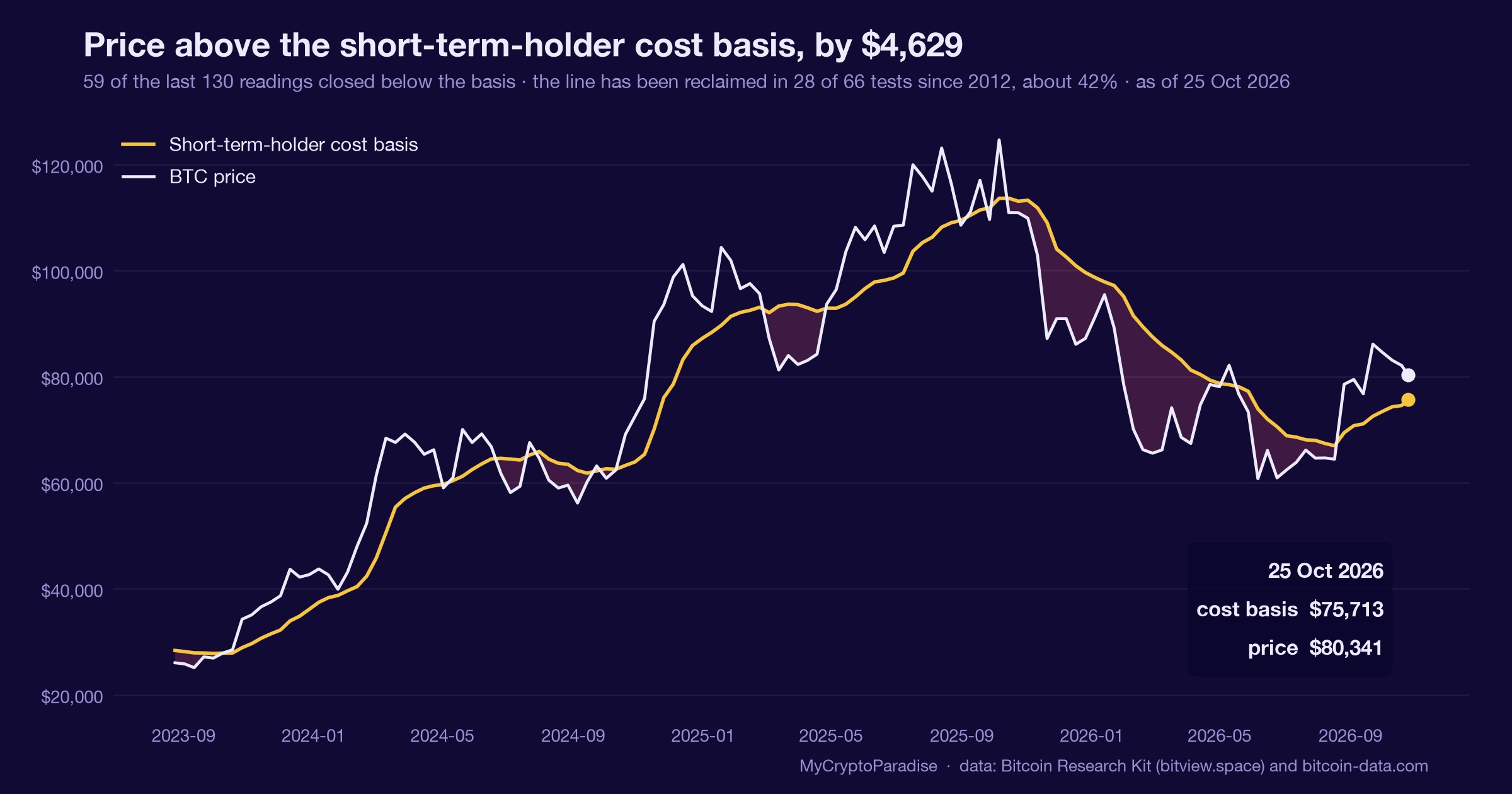
The ParadiseTeam treats this as a structure story, not a trade trigger, and the current tape backs that up. Bitcoin was near $79,495 as of 10:25 UTC, pressing on a zone that decides the medium-term picture.
Our standing read matters here. We see $81,000 as important support that was not defended, with smart money selling back after failing to hold it. The $79,000 level is the critical line; lose it, and the medium-term bullish structure invalidates toward a deeper move.
A stablecoin liquidity upgrade does nothing to those levels. It will not add the demand needed to reclaim $81,350 or fuel the push toward $90,000 we still see as the higher-probability path. Spark's FX Layer is not the catalyst that flips this chart.
So who benefits? Issuers, slowly, through cheaper liquidity. Not traders positioning this week. There is no smart-money accumulation visible on this specific news, and no retail crowd chasing it.
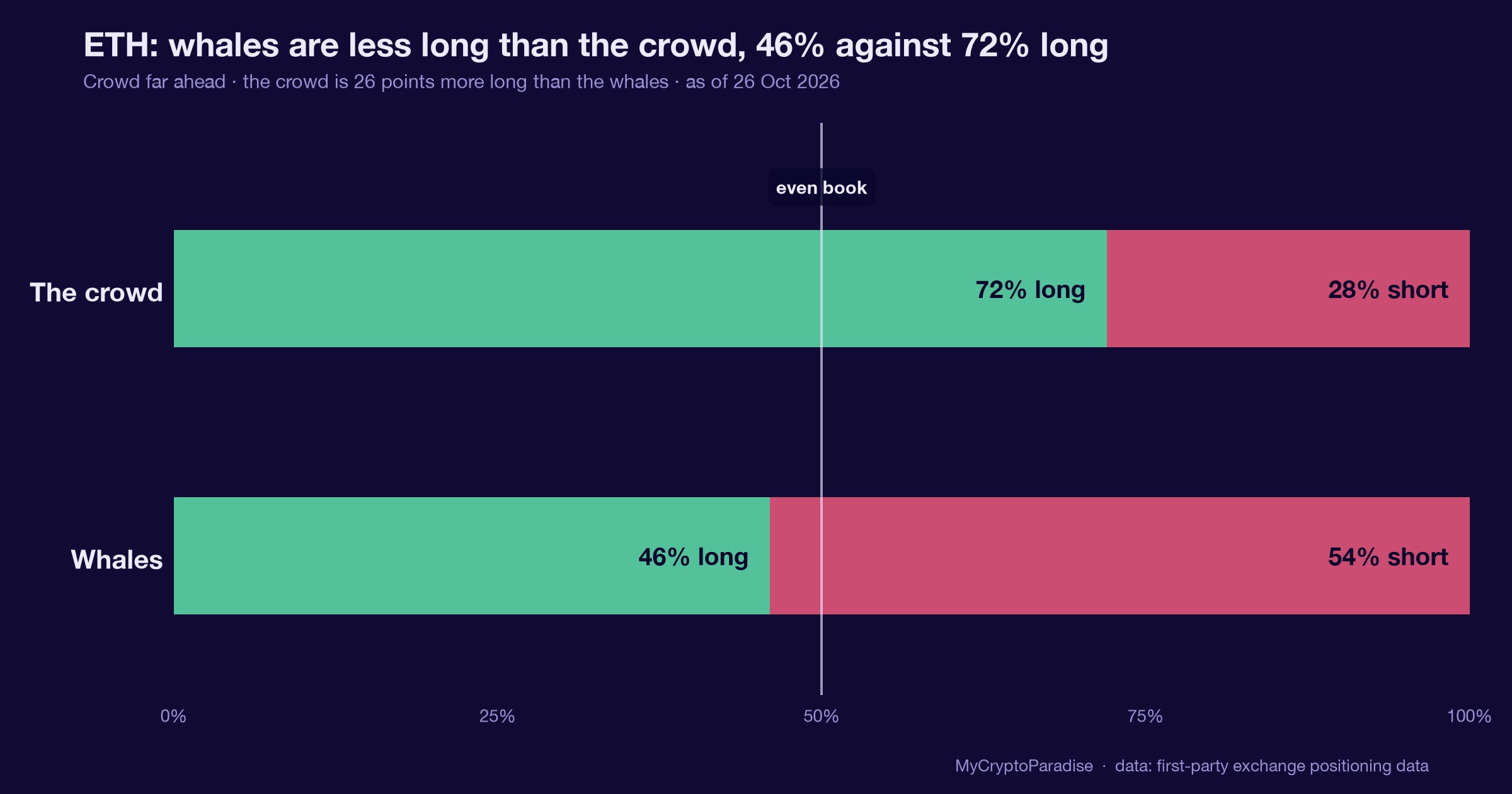
We would add one caution from the lens. Funding rates are flipping positive without price following, which tells us longs are crowded and sentiment is tracking price rather than leading it. Strength into resistance in that condition often meets selling, so good infrastructure news is not a reason to lean long.
Net, the ParadiseTeam files Spark under watch, not act. Let the $79,000 line, not a pool design, decide your bias this week.
The read behind this: we framed this story through our own market analysis, Bitcoin at Support: Can Bulls Fight Back?
Track it live: our live crypto funding rates and the crypto liquidation heatmap both update in real time, so you can watch this shift for yourself.
Related coverage
For exact entries, targets, and stop losses with full risk management, that is what ParadiseFamilyVIP is for. New to reading these moves? Start with our crypto trading strategies guide.
ParadiseTeam is monitoring the market situation closely, and we are taking these developments into consideration while building our trading tactics inside ParadiseFamilyVIP.
Crypto trading involves substantial risk. Prices are volatile and you can lose money. This article is educational and is not financial advice. Past performance does not guarantee future results.
Will single-pool funding become the standard for stablecoin issuers?
How 3 Paradisers are calling it
The first call is still open
Free account, no password. Members just sign in.
Follow this topic: Stablecoin news











Join the discussion
No comments yet. Members, share how you are reading this.