

Listen: the breakdown
Market briefing: Hope for an Iran-US ceasefire is gone after the extension was rejected, yet crypto barely moved. BTC held near $64,136 while smart money quietly defended support.
- Iran-US ceasefire extension rejected, ending near-term peace hopes.
- BTC held $64,136 and ETH $1,895 with only minor hourly wobbles.
- Smart money appears to defend $62,500 as fearful retail sells.
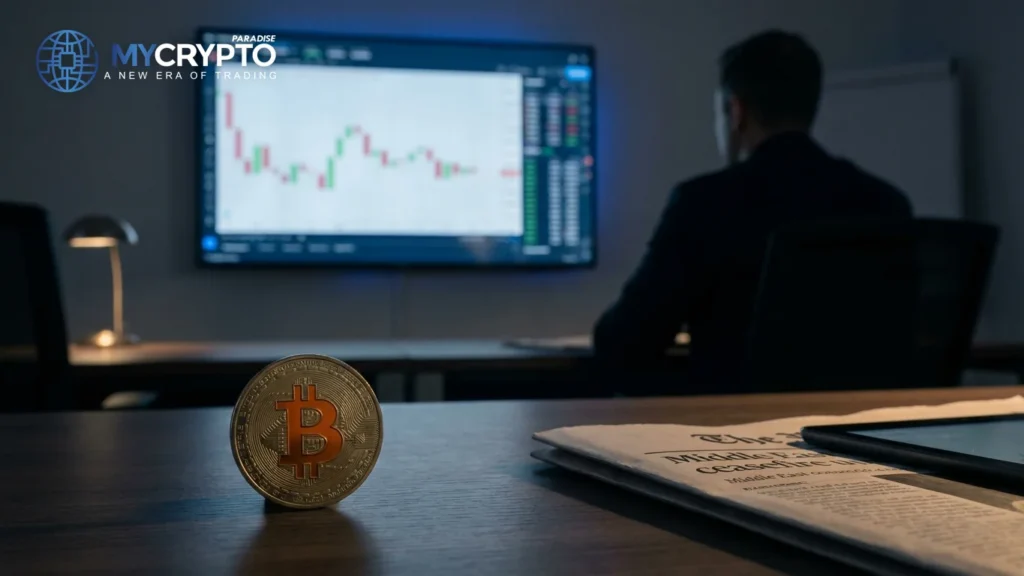
The Iran-US ceasefire rejection ended peace hopes overnight, yet Bitcoin held firm near $64,136. So who is quietly buying the fear retail is selling?
The chance of near-term peace between Iran and the United States is gone. A report confirmed that the ceasefire extension was rejected, closing the diplomatic window that markets had loosely priced as an off-ramp. In plain terms, the calm case just weakened.
Geopolitics usually punishes risk assets first and asks questions later. Traders expected crypto to flinch, because fresh conflict risk normally drains liquidity from anything speculative. This time the reaction was almost insulting in its calm.
Bitcoin was trading near $64,136 as of the latest read, up 1.2% over 24 hours and down a fractional 0.2% on the hour. Ethereum sat at $1,895.72, up 0.1% on the day. Those are not the numbers of a market in fear.
That gap between a heavy headline and a flat tape is the real story. When genuinely bad news lands and price refuses to break, someone on the other side is absorbing the selling. Markets that shrug off fear are usually being held up on purpose.
We should be honest about causation here. There is no single confirmed catalyst driving today's tape, so the ceasefire rejection is context, not a proven trigger. Our read is interpretive: risk aversion rose, liquidity thinned slightly, and yet key supports stayed intact. The interesting question is not why crypto fell, because it did not. It is who kept it from falling.
Why fading peace hopes pressure risk liquidity
The transmission mechanism here runs through risk appetite, not through crypto directly. A rejected Iran-US ceasefire raises the odds of conflict, and conflict risk pushes global capital toward safety. That means a mild bid for the dollar and defensive assets, and a mild drag on speculative liquidity.
Crypto sits at the far, thin end of that liquidity chain. When risk aversion rises, the marginal dollar leaves the riskiest seats first, and Bitcoin often trades as the world's most liquid fear gauge. So a headline like this should, in theory, tighten conditions for BTC, ETH, and especially smaller alts.
Our weekly macro bias remains cautious, even bearish, so we are not dismissing that pressure. Geopolitical shocks can compound an already fragile backdrop and sap the depth that keeps orderly markets orderly. But theory and tape disagreed today. The feared liquidity drain did not show up in price. That absence matters as much as any move, because it tells us how much fear was already discounted.
Markets spend most of their time pricing stories that never fully arrive. Peace hopes were always a soft, unpriced positive, so removing them is a smaller blow than it sounds. The structural takeaway is simple: risk aversion is a real headwind, yet it is currently being met by steady demand at support rather than a rush for the exits.
How the calm tape ripples across BTC and alts
Start with Bitcoin, because BTC sets the tone for the entire risk stack. Price held near $64,136 with only a 0.2% hourly dip, which is noise, not a trend. A genuine geopolitical liquidation event would have gapped support, triggered stops, and cascaded. It did not.
Ethereum followed the same script. At $1,895.72 and up 0.1% on the day, ETH mirrored BTC's refusal to break. When the two majors move together and calmly, correlation is doing the work, and no idiosyncratic panic is bleeding through.
Alts are where a liquidity drain shows first, because they are thinnest and most reflexive. A real risk-off cascade would have hit them hardest and fastest. The relative quiet across the board suggests the feared cascade simply has not fired.
Here is the liquidity logic. Fearful headlines tempt retail to sell into support, which stacks resting sell orders and stop-losses just below price. That pool of forced supply is exactly what a patient buyer wants to absorb.
SL means stop-loss, the automatic exit that fires when price hits a level. Clusters of stops below $62,500 are fuel, not danger, for whoever is defending that zone. So the impact is not the crash the headline implied. It is a quiet transfer: nervous sellers hand coins to steadier hands while price barely moves. That is the least dramatic and most important thing happening today.
What confirms absorption versus a delayed break
The first thing to watch is whether $62,500 keeps holding on a closing basis. Supports are only real once they are retested and defended, so a clean bounce from that zone would confirm buyers are present. A daily close below it would invalidate the resilient read and hand momentum back to sellers.
Watch the pace of any dip, not just its depth. Slow, grinding drift lower that gets bought is accumulation behaviour. A fast, high-volume flush that keeps going is capitulation, and that is the scenario that would change our stance.
OI, or open interest, is the total value of open derivative positions. Rising OI into a falling price warns that leveraged shorts are pressing, which raises squeeze risk in either direction. Watch whether new shorts pile in on this fear or whether they hesitate.
The geopolitical story itself is the wildcard. This is a developing situation, and a genuine escalation, not just a rejected ceasefire, could force the liquidity drain that today avoided. Headlines can turn a controlled tape into a disorderly one quickly.
Finally, watch how quickly fear fades from sentiment. If retail stays scared while price holds, that divergence usually resolves in the buyers' favour. If price and sentiment break down together, respect it. Confirmation is a defended $62,500 with cooling downside momentum; invalidation is a decisive breakdown on rising volume and spreading conflict risk.
What the calm reaction signals about positioning
The ParadiseTeam reads this as a textbook case of fear meeting demand at support. Bad news arrived, peace hopes died, and price near $64,136 barely blinked. When the story is scary and the tape is calm, the tape is usually telling the truth.
Our medium-term lean is cautiously bullish, and this event does not change that; if anything it reinforces it. The mechanism is straightforward: retail sells geopolitical headlines into support, and steadier participants absorb that supply around $62,500. Weak hands leave, strong hands add.
We frame $62,500 as the line that matters. Held, it defines a zone where selling is being defended rather than joined. That is where the risk-to-reward, or R:R, the ratio of potential loss to potential gain, tilts toward buyers who wait for confirmation instead of chasing.
We stay honest about the macro. Our weekly bias remains cautious, and a real escalation could still force the drain that today dodged. Resilience is not immunity, and one calm session does not cancel a fragile backdrop.
So the positioning read is patience, not bravado. Let $62,500 prove itself, watch whether hourly weakness keeps getting bought, and respect a decisive break if it comes. Markets that refuse to fall on bad news are rarely doing it by accident. Someone wanted these coins at these prices, and today they got them cheaply from people who scared themselves out.
Track it live: our Crypto Fear and Greed Index and the live crypto funding rates both update in real time, so you can watch this shift for yourself.
Related coverage
For exact entries, targets, and stop losses with full risk management, that is what ParadiseFamilyVIP is for. New to reading these moves? Start with our crypto trading strategies guide.
ParadiseTeam is monitoring the market situation closely, and we are taking these developments into consideration while building our trading tactics inside ParadiseFamilyVIP.
Crypto trading involves substantial risk. Prices are volatile and you can lose money. This article is educational and is not financial advice. Past performance does not guarantee future results.




Join the discussion
No comments yet. Members, share how you are reading this.