

Listen: the breakdown
Developing story update (September 20, 2026, 06:05 UTC):
Two developments have firmed up since we published. Air defenses have now been activated at the US base in Kharab al-Jir in Syria, a concrete on-the-ground move rather than another travel warning. At the same time, based on our sources, Iran has passed seven conditions to Washington as the price of opening any negotiations. That is a two-track picture: hardware going live on one side, a diplomatic channel being tested on the other.
For traders the read has not changed, only sharpened. Price is still pinned: BTC near $80,484 and ETH near $2,578, both roughly flat on the hour and modestly red on the day, so the market is still not pricing a hot escalation. The activated air defenses argue for tail risk if headlines turn, while the seven conditions leave a real path to de-escalation, which is why spot is refusing to break down. Below Simon’s $82,000 to $84,000 daily resistance, this news likely keeps a reclaim capped for now.
What to watch now: Whether Iran's seven conditions move toward talks (de-escalation) or lapse into further military posturing that finally forces a crypto repricing.
Developing story update (September 20, 2026, 05:22 UTC):
A fresh development on top of the escalation: the US State Department’s Rewards for Justice program is now offering up to $15 million for information that helps disrupt the Revolutionary Guard’s financial networks. This is a direct financial-pressure move against Iran alongside the military alert and the embassy warnings, and it signals Washington is widening the campaign beyond posturing.
For traders the read is unchanged. Bitcoin is still holding near $80,500 with a flat 1-hour change and a slight negative over 24 hours, so the market has not repriced this. In our bearish lens that muted response is where whales likely keep distributing into retail demand, and a deeper risk-off turn could still pull price toward lower support.
What to watch now: Whether the financial-pressure escalation triggers an actual risk-off break below current support, or price keeps absorbing news with no reaction.
Developing story update (September 20, 2026, 04:41 UTC):
An update to this developing story: the US State Department, through its Rewards for Justice program, is now offering up to $15 million for information that helps disrupt the financial networks of Iran’s Islamic Revolutionary Guard Corps and its Quds Force. Based on our sources, this is a direct financial-pressure move layered on top of the military alert and the embassy security warnings already in play.
For traders, this widens the standoff from a purely military footing into a financial and sanctions dimension, which historically keeps geopolitical risk premium elevated for longer. Price action stayed muted on the news, with BTC still hovering near $80,400 and ETH near $2,583, little changed from where they sat when we first published.
The read does not change from our side. A flat reaction into an escalation like this is the kind of backdrop where larger holders can keep distributing into any flight-to-safety bounce rather than a durable move higher. Probabilities favor watching support levels rather than chasing strength.
What to watch now: Whether the financial-pressure track (sanctions, reward programs) escalates alongside the military alert, and if BTC loses the $80K area.
Developing story update (September 20, 2026, 03:40 UTC):
Update: based on our sources, the US President has now given the order to proceed with a military operation named Operation Epic Fury. This moves the story beyond heightened alert postures toward the possibility of direct action, which raises the near term risk premium traders were already pricing in.
The market response so far remains muted. Bitcoin is holding near 80,300 and Ethereum near 2,580, both still modestly lower on the day. That subdued reaction is consistent with our read that whales are likely using this escalation to keep distributing into crowded retail longs rather than triggering an immediate flush.
Watch for confirmation or denial of any operational activity and for whether a sharp risk off move develops. Until that arrives, we continue to favour treating bounces into resistance as probable distribution zones rather than durable reversals.
What to watch now: Whether the named operation produces confirmed on the ground activity, and if that triggers a risk off break below near support.
Developing story: This story is still unfolding. We are tracking it and will update this article as more details are confirmed.
Market briefing: Iran placed its armed forces on maximum alert while US embassies across the Middle East issued security warnings. Bitcoin sat near $80,362, down about 1% on the day, as risk-off pressure met an already fragile structure.
- Iran put its armed forces, IRGC, and police on their highest alert as US embassies issued regional security warnings.
- Trump returned early to the White House and the US ambassador to Israel told embassy staff to leave today.
- BTC held near $80,362 and ETH near $2,582; the dip looks like cover for distribution, not a fresh catalyst.
Iran raised its armed forces to top alert as US embassies warned across the Middle East. But is this the real reason Bitcoin is bleeding, or just convenient cover?
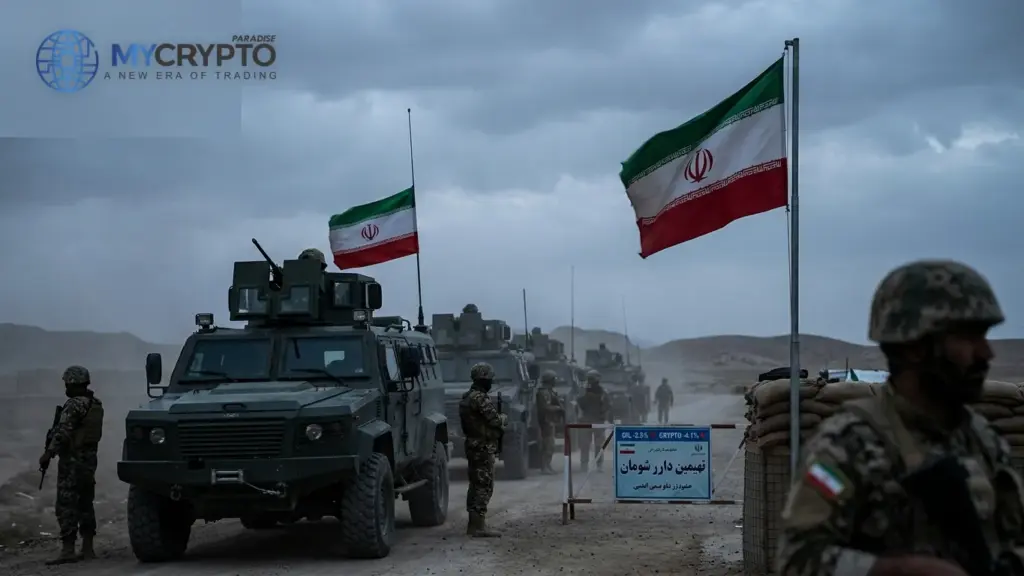
Iran has placed its entire military machine on its highest alert. The Islamic Revolutionary Guard Corps, the regular armed forces, and the police are all now on maximum readiness. That is not a routine posture.
Washington moved in parallel. President Trump cut short his time at Camp David and returned to the White House unexpectedly. Every US diplomatic mission across West Asia issued a security alert, urging Americans to exercise caution.
The list of named countries reads like a map of the region: Iraq, Bahrain, Oman, Saudi Arabia, Iran, Qatar, Lebanon, Kuwait, and Jordan. The US ambassador to Israel went further, advising embassy staff to leave today. Air defenses were activated at the US base in Kharab al-Jir, Syria.
Behind the alerts sits a diplomatic thread. Iran has conveyed seven conditions to Washington as the price of even starting negotiations. Meanwhile the US Rewards for Justice program is dangling up to $15 million for information to disrupt IRGC financial networks.
So the pieces are real and the tension is genuine. Yet Bitcoin was trading near $80,362, down roughly 1% on the day. That is a flinch, not a collapse.
And that gap between a frightening headline and a modest price move is the whole story. Markets have watched this movie before. When the reaction is this quiet, the news is rarely the driver. It is usually the excuse.
Why war fear reprices risk assets
Geopolitical shocks work through global markets in a predictable order, and crypto sits at the far end of the chain. Escalating US-Iran tension pushes capital toward safety. Traders reach for the dollar, for short-dated government paper, sometimes for oil. Risk assets, the ones people own with borrowed money, get sold first.
That is the macro transmission. Fear raises the perceived cost of holding anything volatile. When uncertainty rises, leverage becomes expensive to carry, and the marginal buyer steps back. Crypto has no earnings and no coupon to defend it, so it absorbs the sentiment directly.
Here is where honesty matters. We cannot point to a single confirmed same-day catalyst that moved price by exactly this much. The Middle East alert is real, but the modest 1% dip predates and outlives any one headline. Framing this as the sole cause would be a story, not a fact.
What the news genuinely does is supply a narrative. A frightening backdrop gives cover to selling that was already underway. It lets larger holders reduce exposure while retail reads the same headline and assumes the dip is temporary.
Structurally, that is the point. The event does not need to cause a crash to matter. It only needs to keep uncertainty elevated while the market's own internals stay fragile. That combination is what turns a routine pullback into a slow, grinding drift lower.
How the selloff moves through BTC and alts
The liquidity picture starts with Bitcoin, and Bitcoin is where the pressure shows first. Near $80,362 and down about 1% on the day, BTC is soft but not panicked. That calm is exactly what allows large holders to sell without breaking the tape.
The mechanism is simple. Retail longs are crowded and funded with leverage. Their buying provides a steady bid. Larger sellers meet that bid, offload size into it, and price barely moves because the two forces cancel. On paper the market looks stable. Underneath, ownership is quietly changing hands.
Ethereum tells the same tale, only louder. ETH was trading near $2,582, down about 1.6% on the day, underperforming BTC. When the second-largest asset leads the drop, it signals that risk appetite is thinning, not just rotating.
Alts sit at the end of the whip. They carry the highest beta and the thinnest liquidity, so a mild BTC wobble becomes a sharper alt bleed. In a risk-off tape, that fragility compounds fast.
The tell is the size of the reaction versus the size of the headline. A supposed regional war scare produced a 1% Bitcoin dip. Markets that were genuinely terrified would gap far harder. This measured slide is more consistent with distribution than with capitulation.
So the cascade is orderly, and orderly is the warning. Quiet selling into strong bids is how tops are built, not bottoms.
Signals that confirm or break the bearish path
The next move hinges on whether Bitcoin can reclaim its overhead levels or keeps failing at them. The zone between roughly $78,000 and $79,000 is the immediate battleground. A clean push above it, held on real volume, would challenge the bearish read.
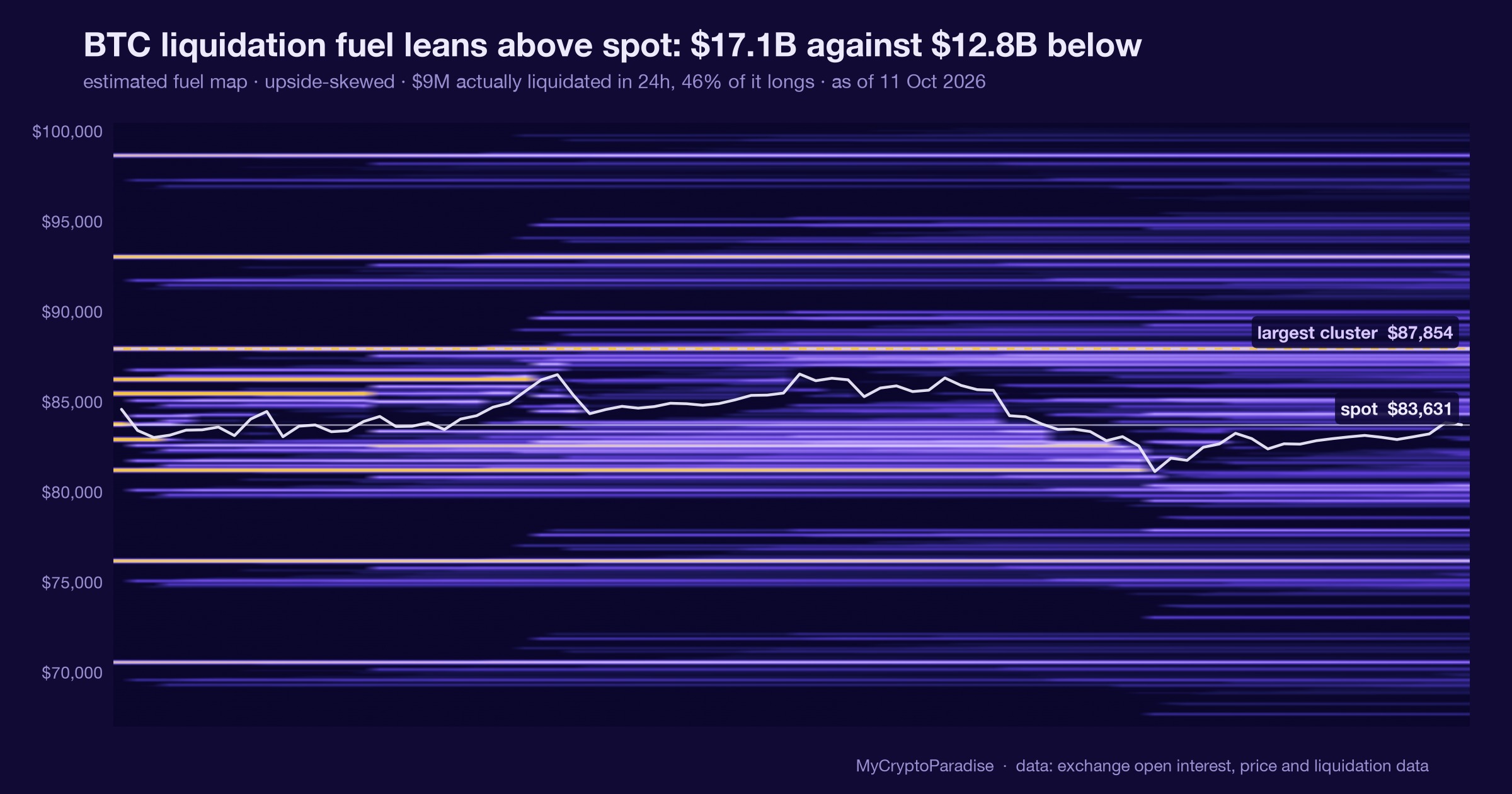
Watch the funding and the crowd, not just the candle. If retail longs stay crowded with positive funding while price stalls under resistance, that is classic distribution fuel. The bounce becomes the trap. If instead longs get flushed and funding resets negative, the market clears its excess and the downside case weakens.
Geopolitically, the confirmation and invalidation are external. A genuine de-escalation, or Washington and Tehran actually opening talks around those seven conditions, would drain the risk-off narrative quickly. That could spark a relief bounce. The question is whether such a bounce holds or simply offers a better exit for sellers.
On the downside, the levels to respect sit lower. A decisive break of the mid-$70,000s, and later the far larger $58,000 shelf, would confirm that the structure has broken rather than merely wobbled.
Also watch Ethereum as the honest signal. If ETH keeps lagging BTC on every bounce, risk appetite is still contracting. Leadership from ETH on a recovery would say the opposite.
The cleanest confirmation, though, is the boring one: another scary headline that price shrugs off. That non-reaction tells you who is really in control.
What this alert means for market positioning
The ParadiseTeam reads this event through structure, not through the headline's fear. With Bitcoin near $80,362, the geopolitical alert changes very little about the underlying picture. It mostly adds a reason for the selling that was already in motion.
Our bias remains firmly bearish across the daily and weekly frames. On the tape, larger holders are distributing into retail's crowded longs, and cumulative volume delta, or CVD, which measures net buying versus selling pressure, backs that up. This news simply hands them a louder story to sell into.
The levels frame the risk. Overhead, the $78,000 to $79,000 area and the heavier $82,000 to $84,200 band are where bounces have stalled. We treat rallies into those zones with suspicion, not enthusiasm, because that is where distribution tends to complete.
Below, the map runs through the mid-$70,000s, then the major $58,000 shelf, with our longer-term attention as low as the $44,000 to $55,000 region. Those are the levels a genuine risk-off unwind would pressure over time.
The reframe is the edge here. Retail is greedy while the tape is fragile, and a frightening headline that only dents price by 1% is not fear, it is absorption. Smart money needs a nervous crowd to sell into, and geopolitics obligingly provides one. So the ParadiseTeam view is patience over reaction. Probabilities favor lower levels after any bounce, and that bounce is the risk to respect, not the opportunity to chase.
The read behind this: we framed this story through our own market analysis, Bitcoin Whale Sells $9M: Is a Drop Next?
Track it live: our live crypto funding rates and the Crypto Fear and Greed Index both update in real time, so you can watch this shift for yourself.
Related coverage
For exact entries, targets, and stop losses with full risk management, that is what ParadiseFamilyVIP is for. New to reading these moves? Start with our crypto trading strategies guide.
ParadiseTeam is monitoring the market situation closely, and we are taking these developments into consideration while building our trading tactics inside ParadiseFamilyVIP.
Crypto trading involves substantial risk. Prices are volatile and you can lose money. This article is educational and is not financial advice. Past performance does not guarantee future results.
After this Iran alert, where does Bitcoin go over the next two weeks?
This is how 18 Paradisers are calling it. Tap your call.
No calls on this one yet. Tap yours to be the first.
Free account, no password. Members just sign in.











Join the discussion 4
it's always the same.. everyone expects war to pump but liquidity doesnt care about your opinions or their alerts. i prefer to buy when everyone else is panicking anyway.
Yeah this is what I'm looking at too! 🧐 feels like big funds are just chilling, waiting for some panic 😬 I'm not touching anything till after the weekend lol 📉
The market does not necessarily need panic to move. Sometimes it is just a reclaim of a zone.
Is it really distribution if the price barely moved at all? I'm sorry, I'm still learning this.