

Listen: the breakdown
Update on this developing report (September 20, 2026, 00:57 UTC):
Update: further detail on the signed measure shows it does more than expand sanctions on Russia. Based on our sources, the law also authorizes tariffs of up to 100%, a lever that raises the potential economic pressure well beyond the original headline.
Moscow has also signalled that the package complicates its ability to use major economic projects as bargaining chips in negotiations with the US. For traders this is a slow-burn macro input, not a crypto-specific catalyst: BTC and ETH remain effectively flat, consistent with a market absorbing the news rather than repricing on it.
What to watch now: Watch for any concrete tariff activation or a formal Russian countermeasure, which would be the first real escalation step.
Market briefing: A new US sanctions law on Russia drew a sharp Kremlin warning, yet crypto barely blinked. BTC sat near $81,211 as smart money kept quietly distributing into retail strength.
- Trump signed the bipartisan H.R. 5334 sanctions law targeting Russia
- The Kremlin called it unfriendly and warned it could prolong the war
- BTC held near $81,211 and ETH near $2,628, showing crypto shrugged off the headline
Source: U.S. Congress
A fresh US sanctions law hit Russia and the Kremlin fired back hard. Yet Bitcoin barely moved. When a headline this big fails to shift price, who is really in control?
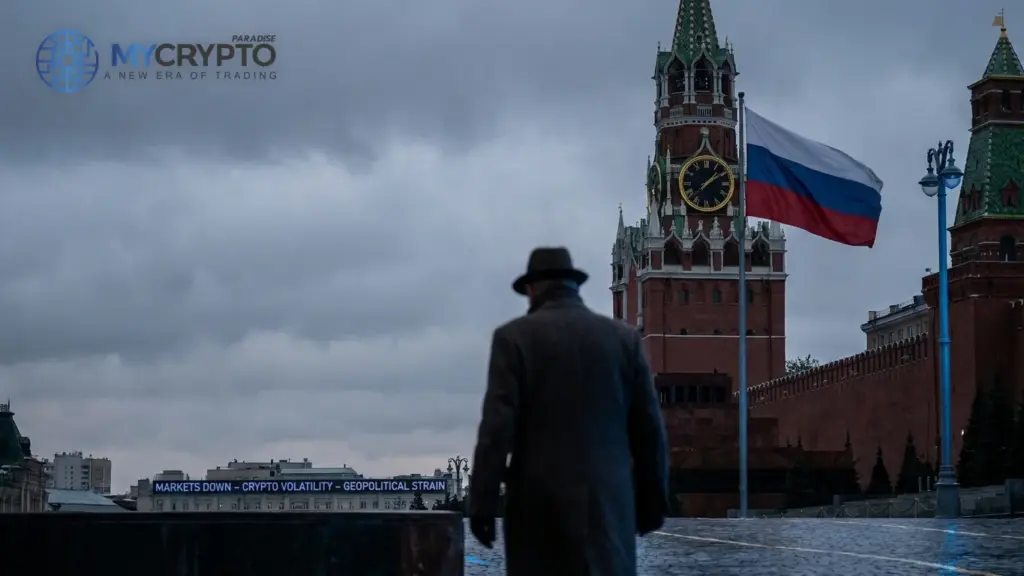
The US President signed the bipartisan H.R. 5334 law, known widely as the hell sanctions act. It tightens the screws on Russia. Moscow responded fast and loud.
The Kremlin spokesman called the measure an unfriendly move. He warned it would complicate any peaceful settlement in Ukraine. He added that it could push US fuel prices higher and prolong the war. Moscow also said the sanctions would hinder its use of major economic projects as bargaining chips with Washington.
On paper, this reads like a serious escalation. Energy risk, a longer conflict, and frozen diplomacy usually rattle markets. Traditional assets often turn defensive on news like this.
Crypto did not follow the script. Bitcoin traded near $81,211, up about 0.5% on the day. Ethereum sat near $2,628, up roughly 0.8%. The hourly change was effectively zero. For an event billed as hellish, the reaction was almost polite.
That silence is the real story. Big geopolitical headlines that fail to move price tell us something about who is positioned and how. When sanctions this heavy land with a shrug, the market has likely already decided its direction from other forces.
We read this as background noise sitting on top of an existing structure. The sanctions are confirmed and real. Their immediate crypto impact is not. Price is being driven by liquidity and positioning, not by a press release from Moscow. That gap between the drama and the tape is where traders get careless.
Why a loud headline moved nothing
This matters because of the transmission chain, not the drama. Sanctions raise geopolitical risk. That risk theoretically threatens energy prices and global growth. Higher fuel costs feed inflation fears, which usually tighten financial conditions.
Tighter conditions drain liquidity from risk assets. Crypto sits at the far, thirsty end of that pipe. So in theory, this news should pressure Bitcoin and Ethereum lower over time.
But theory and tape rarely agree on the same day. The immediate price impact here is minimal. That tells us the market is not repricing macro risk right now. It is absorbing the headline into whatever trend already exists.
And the existing trend is what deserves your attention. When a genuinely large geopolitical event cannot force a reaction, the driver of price is internal, not external. It is liquidity and positioning, not sanctions.
Here is the honest part. There is no single confirmed same-day catalyst moving crypto. This is our interpretation, not a proven cause. We are reading structure, not headlines.
The transmission risk is slow-burn, not instant. If sanctions do lift energy costs and inflation expectations over the coming weeks, that squeezes liquidity later. Crypto would feel it as a headwind, not a shock. For now, the market has filed this under noise, and price action agrees.
How crypto absorbed the sanctions shock
Start with Bitcoin, because Bitcoin sets the tone. BTC held near $81,211 with almost no reaction to the sanctions news. That calm is not strength. It is a market already committed to its own positioning.
Ethereum mirrored the move, sitting near $2,628 with a small gain. When ETH simply tracks BTC on a major headline, alts have no independent story either. The whole complex is moving as one block.
That matters for liquidity. A shock that fails to trigger volume rarely changes the flow. Instead, it lets existing flows continue undisturbed. Here, that flow looks like steady distribution.
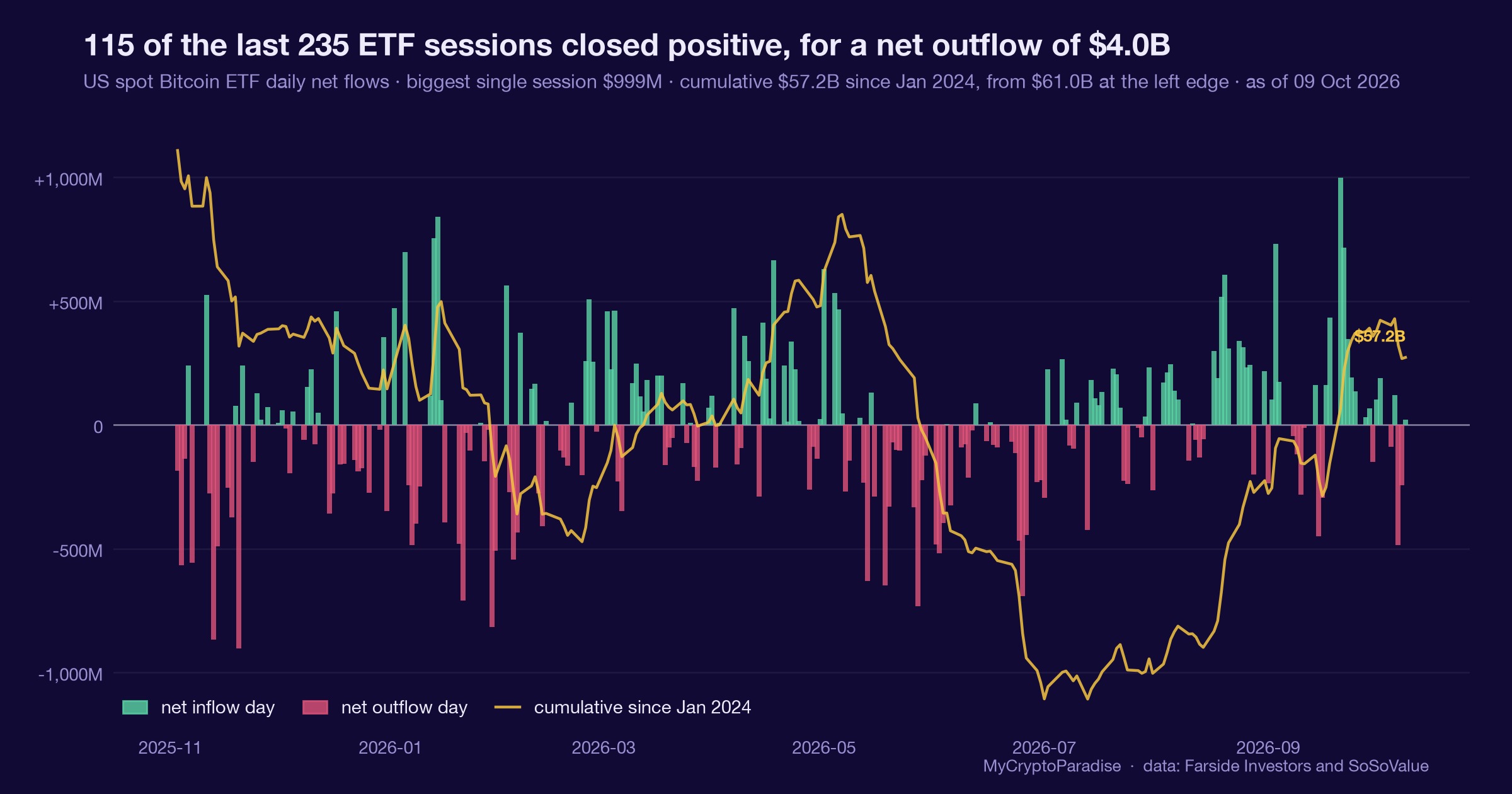
We see whales selling into strength on spot markets. Cumulative volume delta, or CVD, which tracks buying versus selling pressure, has been leaning to the sell side even as price holds. That combination is telling. Someone is offloading into a bid that retail is providing.
Retail is the other half of this. Crowd sentiment is bullish and greedy. Open interest, or OI, the total value of live futures contracts, sits on the long side with positive funding. Leveraged longs are paying to stay bullish.
So the sanctions headline becomes a test of that setup. It gave retail no reason to panic and no reason to chase. Price stayed pinned. Smart money keeps its exit quiet while the crowd holds the door open. That is how distribution hides in plain sight, disguised as calm.
Signals that confirm or break the calm
Watch whether this calm holds or cracks. The sanctions story itself is now largely priced as noise. The next real move comes from structure, so track that instead.
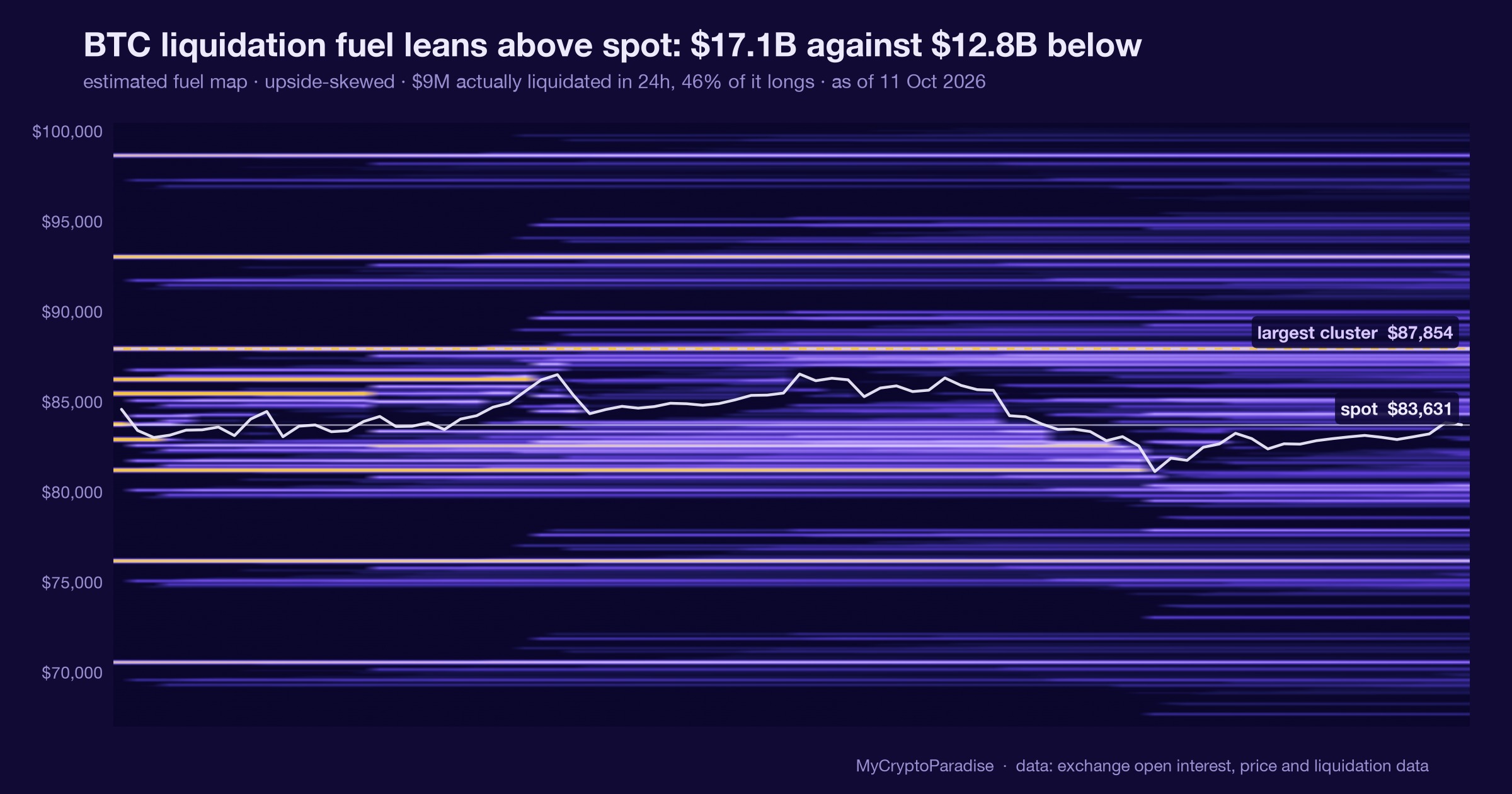
First, watch the reaction at overhead resistance. BTC near $81,211 is pressing into a heavy supply zone around $82,000 and higher. A stall there on fading volume would confirm distribution. That is our base case.
Second, watch cumulative volume delta against price. If price grinds sideways while CVD keeps sliding, whales are still selling into retail bids. That divergence is the tell.
Third, watch funding and open interest. If longs stay crowded and funding stays positive into resistance, the crowd is trapped and paying for it. That fuel usually burns downward.
Now the invalidation, because a one-sided view is dangerous. A clean reclaim and hold above the $82,400 to $84,200 band would force us to respect the bulls. Strong volume on that break would weaken the distribution read.
On the downside, a decisive push below $74,900 would confirm the sellers. Below that, $58,000 becomes the next magnet, with a deeper zone at $44,000 to $55,000 in view over time.
Also keep half an eye on the slow macro channel. If sanctions genuinely lift energy prices and inflation talk over the coming weeks, liquidity tightens. That would add a real fundamental headwind on top of the structural one. For now, the tape says wait.
What the frozen tape reveals about positioning
The ParadiseTeam reads this event as confirmation, not catalyst. A sanctions headline this size hit the tape and price barely flinched near $81,211. That non-reaction fits our existing bearish structure rather than challenging it.
Our bias stays bearish across the daily and weekly. The mechanism is distribution. Whales are selling spot into a greedy, leveraged crowd, and the geopolitical noise simply gave retail no reason to flinch.
Apply that to the levels. Price is pressing the $82,000 supply zone, with heavier resistance at $82,400 to $84,200. We treat a stall there into weak volume as smart money continuing to offload. Retail buying any dip is the liquidity they need.
Risk sits below. We watch $75,500 and then $74,900 as the line that separates chop from breakdown. A clean loss of $74,900 opens $58,000, and structurally we still see $44,000 to $55,000 as a longer-term target after any bounce.
On positioning discipline: crowded longs with positive funding are the crowd holding the door for larger sellers. When everyone leans one way, the exit gets narrow.
Invalidation keeps us honest. A strong reclaim above $82,400 to $84,200 would pause this read and demand respect for the bulls. Until then, the ParadiseTeam sees the calm as the setup for the next leg, not proof the bottom is in. Manage risk-to-reward, or R:R, first and let the structure confirm itself.
The read behind this: we framed this story through our own market analysis, Bitcoin Whale Sells $9M: Is a Drop Next?
Track it live: our live crypto funding rates and the Crypto Fear and Greed Index both update in real time, so you can watch this shift for yourself.
Related coverage
For exact entries, targets, and stop losses with full risk management, that is what ParadiseFamilyVIP is for. New to reading these moves? Start with our crypto trading strategies guide.
ParadiseTeam is monitoring the market situation closely, and we are taking these developments into consideration while building our trading tactics inside ParadiseFamilyVIP.
Crypto trading involves substantial risk. Prices are volatile and you can lose money. This article is educational and is not financial advice. Past performance does not guarantee future results.
With sanctions ignored, where does BTC go from $81,211 next?
This is how 17 Paradisers are calling it. Tap your call.
No calls on this one yet. Tap yours to be the first.
Free account, no password. Members just sign in.










Join the discussion 4
calling this "smart money" is a stretch given the actual flows. can we see the on-chain data to support that claim?
yeah, what is smart money even doing right now - half the time I feel like I'm the exit liquidity for some whale anyway lol. what do you guys think? 🤔
Smart money" here feels like a stretch, given the limited basis reaction to macro developments. One might argue it's merely a continuation of current range behavior.
Exactly. If "smart money" is really active, you'd expect a clearer signal than just holding a range. Looks more like a lack of conviction to me.