

Listen: the breakdown
Market briefing: Iran has tied reopening the Strait of Hormuz to the end of Middle East wars, yet crypto barely blinked. Bitcoin held near $77,835 as the threat landed, a shrug that tells us more than the headline.
- Iran links Strait of Hormuz navigation to the end of regional wars, but sets no active blockade.
- Crypto barely reacted: BTC near $77,835, down 0.3%, ETH near $2,417, down 1.6% on the day.
- No confirmed same-day catalyst; we read the calm as attention fixed on internal structure, not geopolitics.
Iran just tied the Strait of Hormuz reopening to the end of Middle East wars, yet Bitcoin barely moved. So what is the market really watching instead?
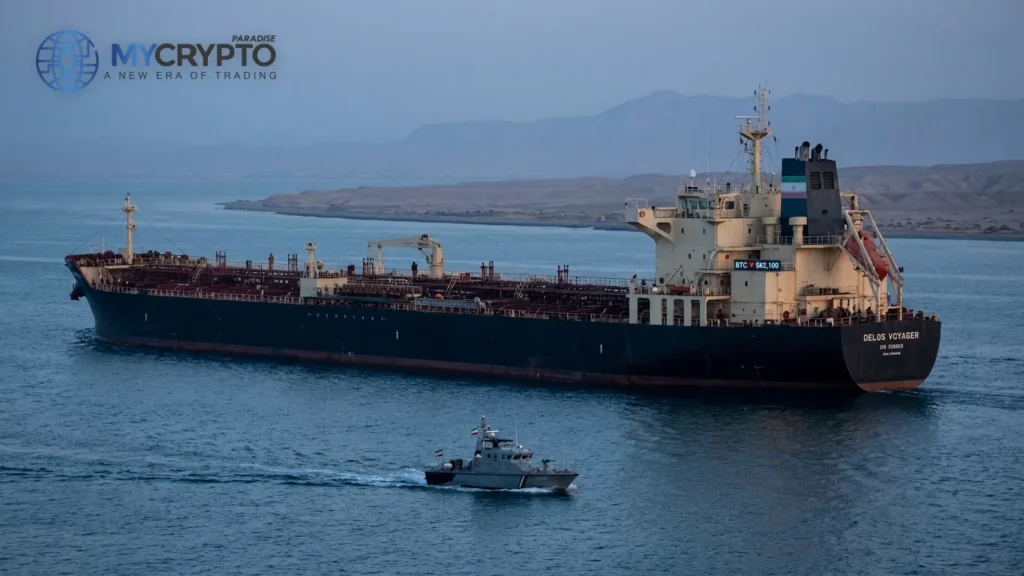
Iran has drawn a hard line around one of the world's most important waterways. A senior security official said navigation through the Strait of Hormuz stays restricted until the region's wars end. The conditions are specific. The Gaza conflict must stop. Israel must leave Lebanon. Attacks on Syria must halt.
This is not a small chokepoint. A large share of the world's seaborne oil passes through that narrow channel every day. When Iran attaches oil flow to a political checklist, energy traders listen.
So did we. Yet the market reaction was almost nothing. Bitcoin traded near $77,835 as the statement circulated, down a quiet 0.3% on the day. Ethereum slipped near $2,417. For a headline about oil and war, that is a shrug.
That gap between the drama and the price is the real story. Geopolitical threats used to jolt risk assets on contact. This one did not.
We read it honestly. There is no single confirmed catalyst driving crypto today, and this statement is not it. The words raise the temperature without changing supply yet. No tanker has been turned away. No barrel has been blocked. Markets price actions, not adjectives.
Still, the calm deserves attention. A market that ignores a Hormuz threat is either confident or distracted. We suspect the second. Traders are watching internal structure, not the map. That tells us where their attention, and their fear, really sit right now.
Oil chokepoint risk and the liquidity link
The mechanism here runs through oil, not through crypto directly. The Strait of Hormuz carries a huge slice of global crude and gas. Choke it, and energy prices spike fast. That is the channel every risk asset feels eventually.
Higher oil feeds straight into inflation. Fuel, freight, and food all reprice upward. Central banks then face a familiar trap. They cannot cut rates into rising prices without risking credibility.
Tighter policy for longer means less cheap money in the system. Liquidity is the water every speculative asset swims in. When it drains, Bitcoin and altcoins feel the tide go out first.
So the threat matters in theory. A genuine Hormuz closure could lift energy costs, harden central bank stances, and squeeze the liquidity that fuels crypto rallies. That chain is real, and it is why the region never fully leaves a trader's screen.
But theory is not today. The statement sets conditions, not a blockade. Oil has not spiked. Rate expectations have not moved. The transmission line is intact but carrying no current yet.
This is why we separate the map from the money. A structural risk can sit dormant for months. It only bites when a real supply shock forces central banks to react.
For now the Strait of Hormuz is a slow-burn variable, not a trigger. We file it as a condition to monitor, not a reason to reposition. The moment tankers actually stop, that judgment flips.
Crypto barely flinched at the headline
Watch how the reaction, or lack of one, travels down the risk curve. Bitcoin barely moved, holding near $77,835 as the news spread. That steadiness at the top set the tone for everything below it.
Ethereum was slightly weaker, down about 1.6% on the day near $2,417. That small underperformance is normal. ETH tends to bleed a little faster when traders trim risk quietly.
Altcoins sit at the far end of that curve. They amplify whatever BTC and ETH do. A calm top meant alts drifted rather than crashed on this headline.
The absence of a cascade is itself the signal. A real oil shock would hit differently. We would expect a sharp risk-off leg, BTC dropping first, ETH following, and alts gapping lower as leverage unwound. None of that happened.
That tells us leverage did not treat this as a live threat. Positioning stayed put because traders saw words, not barrels.
There is a quieter risk in this calm. Complacency stacks up when threats keep failing to bite. Each ignored warning trains traders to ignore the next one. Then one actually lands.
That is when the Strait of Hormuz stops being background noise and becomes a fast liquidity event. For now, the liquidity cascade is theoretical.
We treat this as a market storing risk, not releasing it. The chain from oil to crypto is loaded but not pulled.
Signals that would turn noise into catalyst
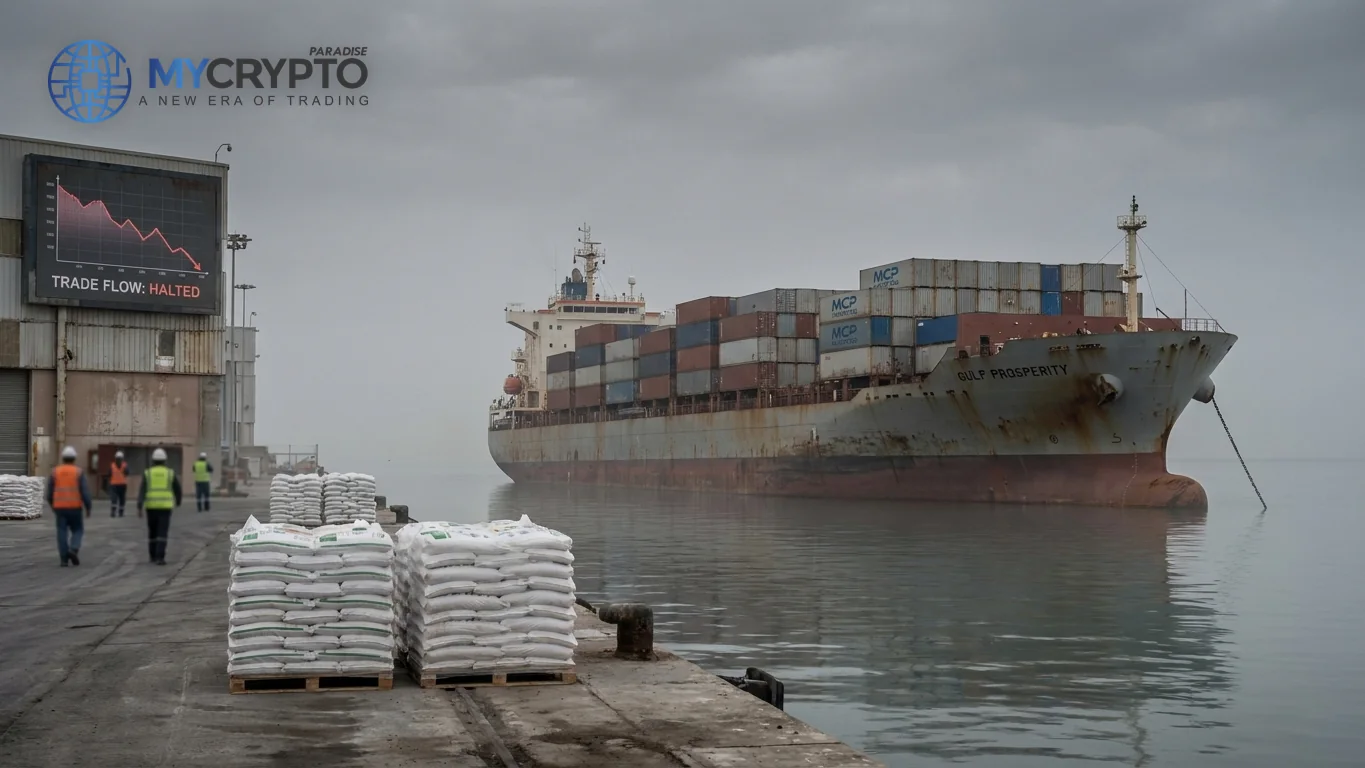
The one thing that turns this story real is a physical change in the Strait of Hormuz. Words are cheap. A tanker actually blocked or rerouted is not.
Watch oil first, not crypto. A sharp, sustained spike in crude is the earliest honest signal that the threat has teeth. Crypto would react second, through the liquidity channel.
If oil stays calm, this statement decays into background noise within days. That is our base case. The market has already voted with its shrug.
On the crypto side, we watch Bitcoin around $77,700. Price sits just above that level, which our lens flags as a broken low turned resistance. Losing it cleanly would signal weakness that has nothing to do with Iran.
A push toward $79,000 is the other edge. That zone turned bearish after a rejection, so strength into it invites sellers, not buyers. Watch how price behaves there.
Invalidation of the calm looks like a real oil shock paired with a BTC break below $77,700 on rising volume. That combination would mean geopolitical risk finally found the liquidity channel.
Confirmation of the calm is simpler. Flat oil, BTC holding its range, and this headline forgotten by the weekend.
We are not repositioning on a threat that has not moved a single barrel. We are marking the trigger and the levels, so if the Strait of Hormuz story graduates from words to action, we already know what breaks first.
Reading the calm through smart money
The ParadiseTeam reads this calm as confirmation of where attention really sits. Traders ignored a Hormuz threat because they are fixated on internal market structure, not the Middle East. That fixation is the tell.
Our medium-term lens stays cautious. Bitcoin near $77,835 sits in an awkward spot, just above the $77,700 low that flipped to resistance. Price below a former support is a weak position, geopolitics aside.
Above sits $79,000, a level that rejected price and printed a shooting star. We treat strength into that zone as a place sellers wait, not a launchpad. The structure stays bearish until proven otherwise.
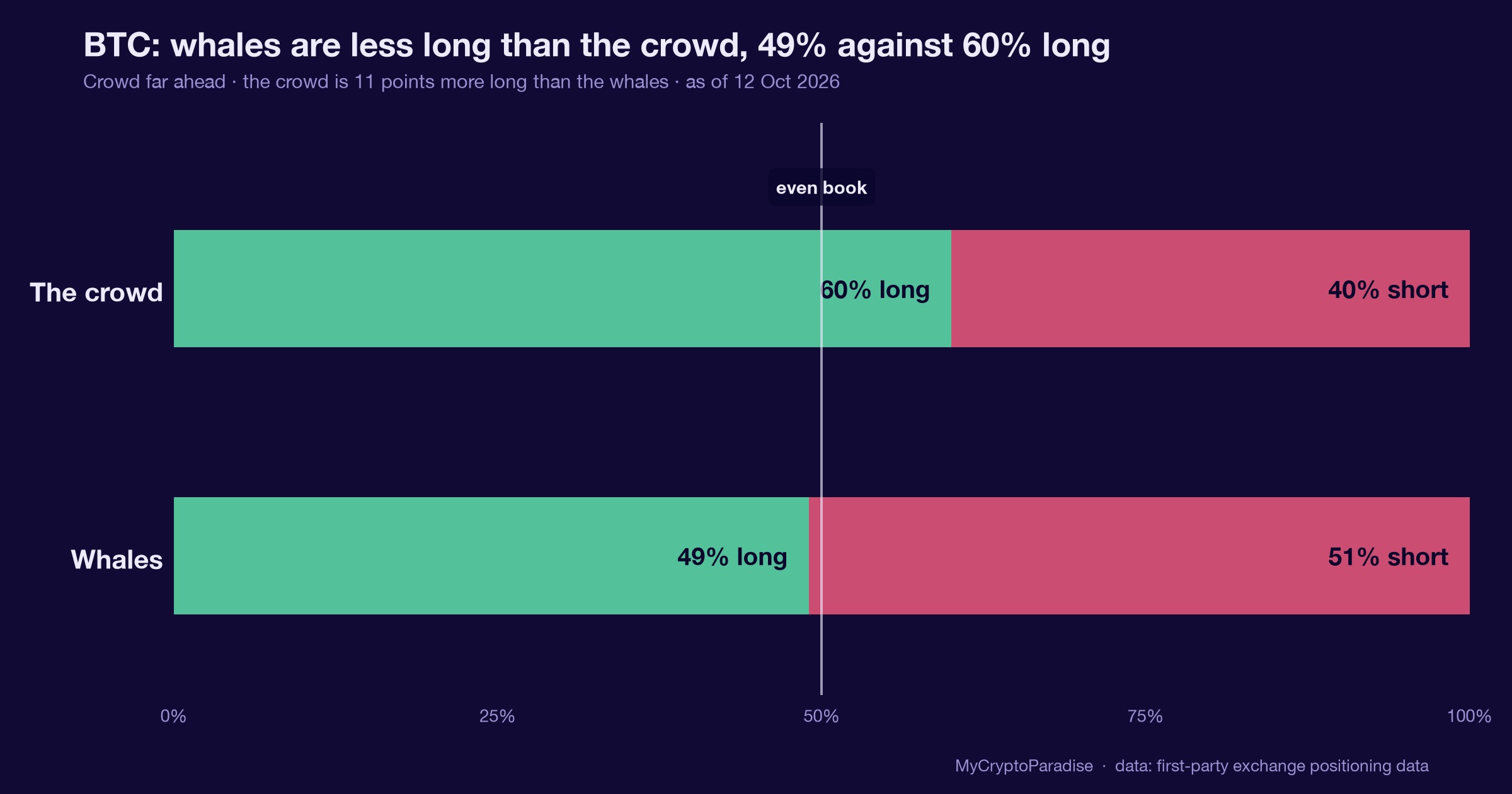
Here is the part that matters. Retail is loud and optimistic, calling for numbers we last heard near the top. Demand from the crowd is spiking while price sits at prior lows. That combination usually marks premature hope, not a bottom.
Smart money is doing the opposite. Professionals are waiting for institutions and miners to capitulate, to realize losses and hand over supply. That flush has not happened yet.
So a geopolitical headline that fails to move price fits the pattern perfectly. The market is grinding through an internal process, not reacting to news. Our downside references stretch toward $72,000, and structurally lower into the $55,000 to $44,000 zone.
The ParadiseTeam is not trading the Strait of Hormuz. We are watching whether the real capitulation smart money awaits finally arrives. Probabilities favor patience over premature optimism.
The read behind this: we framed this story through our own market analysis, Bitcoin Looks Like 2022: Another Crash Coming?
Track it live: our Crypto Fear and Greed Index and the crypto liquidation heatmap both update in real time, so you can watch this shift for yourself.
Related coverage
For exact entries, targets, and stop losses with full risk management, that is what ParadiseFamilyVIP is for. New to reading these moves? Start with our crypto trading strategies guide.
ParadiseTeam is monitoring the market situation closely, and we are taking these developments into consideration while building our trading tactics inside ParadiseFamilyVIP.
Crypto trading involves substantial risk. Prices are volatile and you can lose money. This article is educational and is not financial advice. Past performance does not guarantee future results.
Does the Strait of Hormuz threat move crypto before the weekend?
This is how 30 Paradisers are calling it. Tap your call.
No calls on this one yet. Tap yours to be the first.
Free account, no password. Members just sign in.


Join the discussion 13
I appreciate the angle that "smart money" shrugged, but if that's true, why are some of us still feeling the ripples so intensely??
smart money" shrugged? 🙄 families on my street are seeing their savings evaporate from projects *wearing* crypto's clothes, not geopolitics. that's the real threat. 🤦♀️🤯
Oh Amara, that sounds so hard to witness on your street. 😟 It really does make you want to be extra careful, doesn't it?
Funny how the article ignores the real risk is whats already booked to sail. Ships dont divert on a headline.
dunno, teh idea of "smart money" shrugging at this feels a bit like whistling past the graveyard, doesn't it? 😬 like, geopolitics always feels like a sleeping dragon 🐉. Amara's right, families are feeling this stuff. 🤷♂️
How is the risk to portfolio accounted for when the geopolitical impact is external to the trading plan?
what "smart money" shrugged? it’s almost like some of us have seen these cycles before and know how much real people lose when the narratives change. 🙄
funny how "smart money" never looks at the ships actually moving thru the straits, only the headlines.
exactly !! 🚢 everyone is too busy trading the tweets, no one looks at the actual impact on the logistics chains 📉😂
the smart money watches the calendar more than the headlines tommy. we are well into the season for this kind of talk
honestly, the smart money *should* be looking at fundamentals, not playing chicken with geopolitics to justify holding. its not a game!! 😠
geopolitics is always part of the fundamentals for real-world assets and crypto isnt so different
i watch usdt flows off exchanges instead of headlines for these geopolitical events, always tells a clearer story than what gets reported.