

Listen: the breakdown
Developing story update (September 29, 2026, 05:41 UTC):
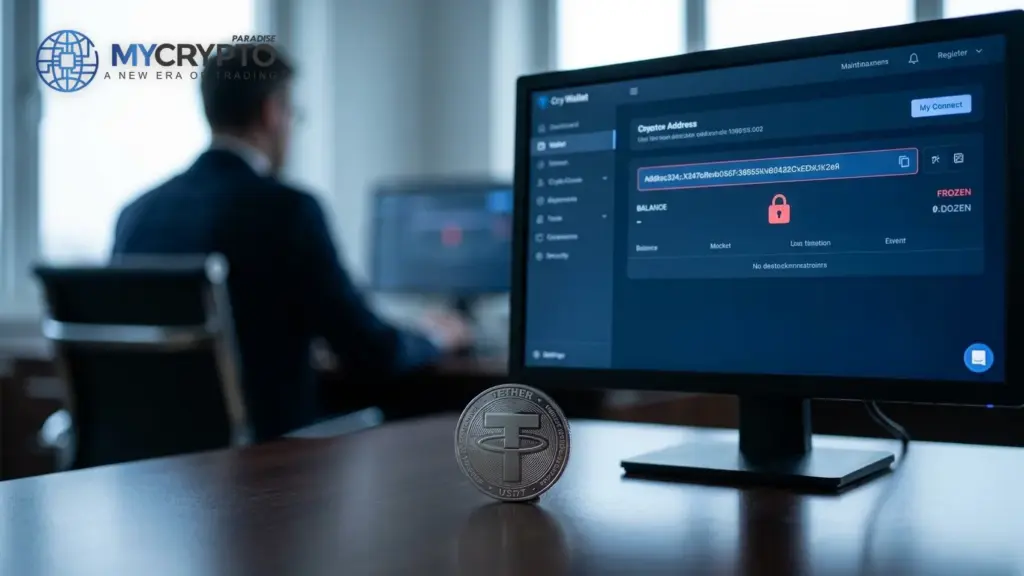
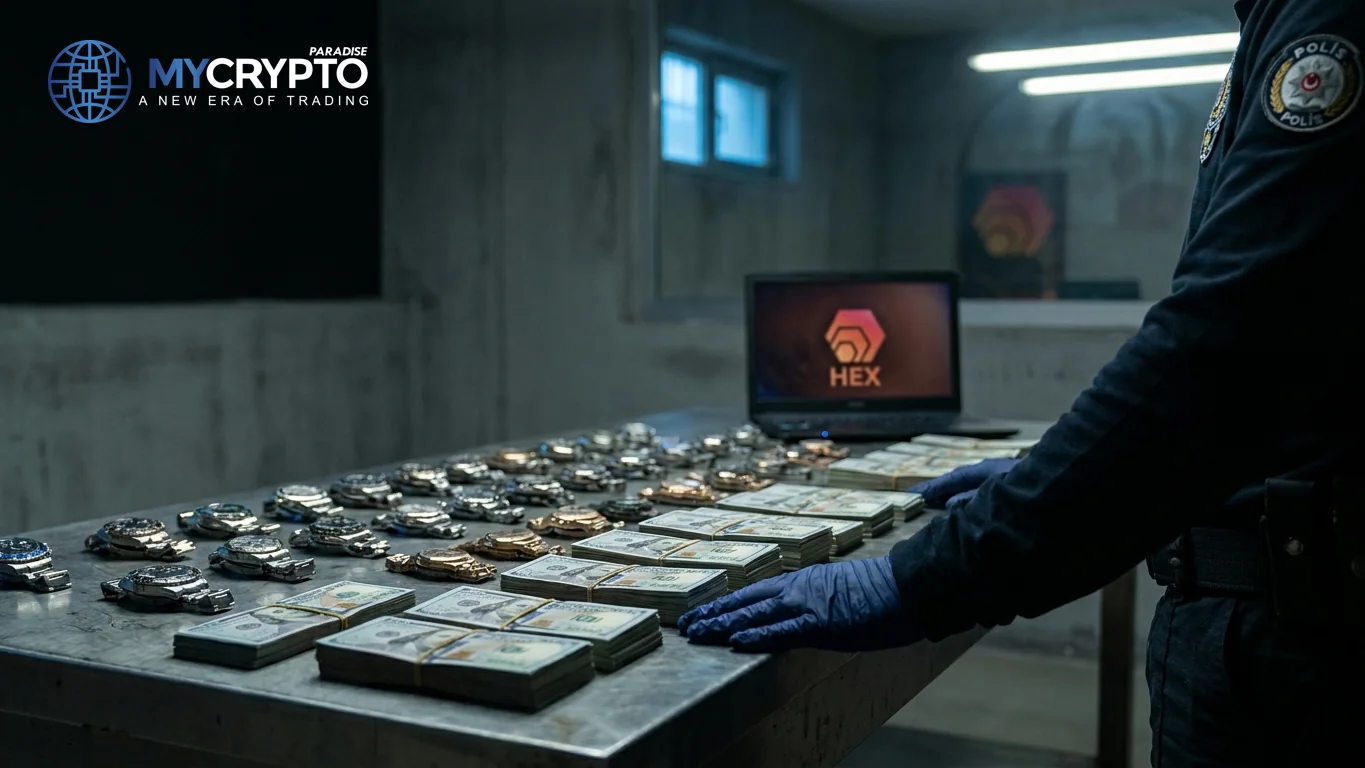
Tether says it helped freeze $550M in Iran-linked USDT this year. The disclosure came as Senate Democratic investigators alleged USDT had become a key part of Iran’s shadow banking network.
Developing story update (September 29, 2026, 00:16 UTC):
Tether has supported nearly $550 million in Iran-linked USDT freezes as U.S. expands sanctions campaign
Developing story update (September 28, 2026, 16:26 UTC):
Tether Defends as US Senate Probe Finds USDT Used in 84% of Sanctioned Iran’s Wallets. Stablecoin issuer Tether on Monday pushed back against a U.S. Senate Democrats’ investigation that found Iranian crypto wallets used USDT stablecoin to evade sanctions. The company claimed it has already frozen nearly $550 million in Iran-linked USDT this year at the request of U.S. authorities. Ad Ad US Senate Democrats Probe Finds Heavy Iranian Use The post Tether Defends as US Senate Probe Finds USDT Used in 84% of Sanctioned Iran’s Wallets appeared first on CoinGape.
Developing story update (September 28, 2026, 14:07 UTC):
LATEST: Tether says it has supported the freezing of nearly $550 million in Iran-linked USDT in 2026 as the U.S. expands its sanctions campaign.
The company says it works with more than 340 law enforcement agencies across 67 countries.
Market briefing: Tether says it helped freeze roughly 550 million dollars in Iran-linked USDT this year, working with US authorities. BTC traded near 83,687 dollars, down 1.4 percent on the day, and the peg held at a dollar.
- Tether helped freeze about $550M in USDT tied to Iran's central bank and sanctions networks in 2026
- Its blacklist reached roughly 9,597 addresses holding $5.69B by July 2026, and USDT held its $1 peg
- A Senate probe found 84% of 846 Iran-linked wallets used USDT, exposing systemic scrutiny risk
Source: U.S. Department of Justice
Tether says it helped freeze nearly $550M in Iran-linked USDT this year. So is a compliant stablecoin bullish for crypto, or a warning about who has been using it?
Tether has helped freeze roughly $550 million in USDT tied to Iran's central bank and sanctions networks during 2026. The issuer says it supported US law enforcement and sanctions authorities. This is not a peg wobble or a hack. It is a stablecoin issuer acting as an extension of enforcement.
The mechanics are simple. A USDT freeze happens when an address lands on Tether's on-chain blacklist. By July 2026 that list covered about 9,597 addresses holding $5.69 billion. Once frozen, an address can still receive new USDT, which then also becomes stuck. It is a roach motel for sanctioned money.
The scale of the underlying problem is the uncomfortable part. A US Senate investigation found that 84% of 846 crypto wallets linked to Iran, and sanctioned by the US and Israel, primarily or exclusively used USDT. That is not a rounding error. It is a system.
Enforcement has moved beyond blacklists too. US federal prosecutors filed a civil forfeiture complaint on July 15, 2026, seeking roughly $84.2 million tied to Capstone, a Montana-based payments company.
Through all of it, USDT held its $1 peg. That matters, because the token that clears most of crypto's spot volume just demonstrated it can absorb a compliance shock without breaking. The tool that sanctioned actors leaned on is now the tool freezing them.
Why compliant plumbing lowers systemic crypto risk
The transmission runs through regulatory risk, and this event pushes that risk lower, not higher, at the margin. USDT is the settlement layer for most of crypto's spot activity. Anything that threatens its legitimacy threatens the liquidity the whole market runs on.
For years the bear case on stablecoins has been simple. Regulators would eventually decide the largest one was an illicit-finance conduit and act accordingly. That case does not disappear, but a proactive issuer freezing sanctioned funds and cooperating with authorities changes the story. It moves Tether from target to partner.
The Senate finding cuts both ways, and honesty demands we say so. Learning that 84% of Iran-linked wallets used USDT is a stark exposure of systemic misuse. Retail may read it as a scandal. The more useful read is that the misuse is now documented, quantified, and being actively drained.
The freeze data supports the enforcement-is-real interpretation. Among addresses frozen in 2025, only 3.6% were later unfrozen, and the median unfreeze took 18.2 days. These are not reversible gestures for show. They stick.
So the macro effect is a stablecoin base that is becoming harder for a regulator to shut down on principle. That is quietly constructive for the liquidity that flows into BTC, ETH, and everything downstream of them.
How a firmer stablecoin base feeds spot liquidity
Read on its own facts, this is a slow-burn positive for crypto liquidity rather than a same-day catalyst. Price reaction was muted, and that is the point. BTC traded near $83,687, down about 1.4% on the day, with ETH around $2,694. No panic, no relief rally, just a market that barely blinked.
The liquidity chain starts with confidence in the settlement asset. If the market trusts that USDT will hold its peg and survive regulatory scrutiny, traders keep parking size in it between positions. That parked capital is the dry powder that rotates into BTC first when risk appetite returns.
BTC sits at the top of that cascade. A more durable stablecoin base does not push price up today, but it removes a tail risk that would otherwise cap how much institutional money is willing to hold on-chain. Lower tail risk supports higher sustainable positioning over time.
ETH follows BTC in the usual order, and alts sit at the far, thinner end. Alts are the most sensitive to any stablecoin scare, because they clear almost entirely against USDT pairs. A freeze regime that targets sanctioned addresses, not ordinary users, protects those pairs.
The honest caveat: no single confirmed catalyst explains today's tape. The muted move is a market pricing legitimacy slowly, not repricing on the headline.
Signs enforcement stays surgical, not systemic
The confirmation to watch is whether freezes stay surgical. As long as blacklist additions target sanctioned and criminal addresses, the market reads this as clean-up and the constructive interpretation holds. The peg holding through $550 million of freezes is the first piece of evidence.
Invalidation would look different. If enforcement broadened toward ordinary users, exchanges, or entire jurisdictions, confidence in USDT as neutral plumbing would crack. That is when parked capital gets nervous and alt pairs feel it first. Nothing in the current facts points there, but it is the line that matters.
Watch the unfreeze statistics as a tell. The 3.6% unfreeze rate and 18.2-day median from 2025 show a deliberate, sticky process. A sudden spike in reversals would suggest legal pushback is working; continued stickiness suggests enforcement has firm footing.
Keep an eye on the regulatory follow-through from the Senate findings too. The 84% figure is the kind of number lawmakers cite when drafting rules. New stablecoin legislation could arrive as either a clarity gift or a compliance burden.
The peg itself is the simplest gauge. Any slip from $1 under this scrutiny would override everything else. So far it has not moved, and a boringly stable peg is exactly what a maturing settlement asset should look like.
What sticky freezes mean for stablecoin trust
The ParadiseTeam reads this as legitimacy news that lands in a market our standing lens still treats cautiously. It de-risks the plumbing without changing the macro map, so we weigh it as background support, not a reversal signal.
On structure, BTC was trading near $83,687 as of the current print, wrestling with the $82,000 shelf we flagged as previous resistance now being tested as support. This news does not move that level. It does mean the liquidity feeding any defense of $82,000 rests on a settlement asset that just proved durable.
Our wider bias remains cautious into strength. We still see a potential push toward the $88,000 to $90,000 zone as the more probable rejection area before any deeper reset. A firmer USDT base supports the fuel for that push; it does not guarantee the market clears the level.
Smart money likely views compliant plumbing as a reason to keep size on-chain rather than a reason to chase price higher. That distinction matters. Lower systemic risk raises the ceiling on positioning over months, not the price this week.
Retail may read the 84% wallet figure as a scandal and the freezes as drama. The steadier interpretation is a maturing asset absorbing enforcement while holding its peg. We treat that as quiet confirmation the base is sturdier, and let price prove the rest at $82,000 and above.
The read behind this: we framed this story through our own market analysis, Can Bitcoin Push to $99K?
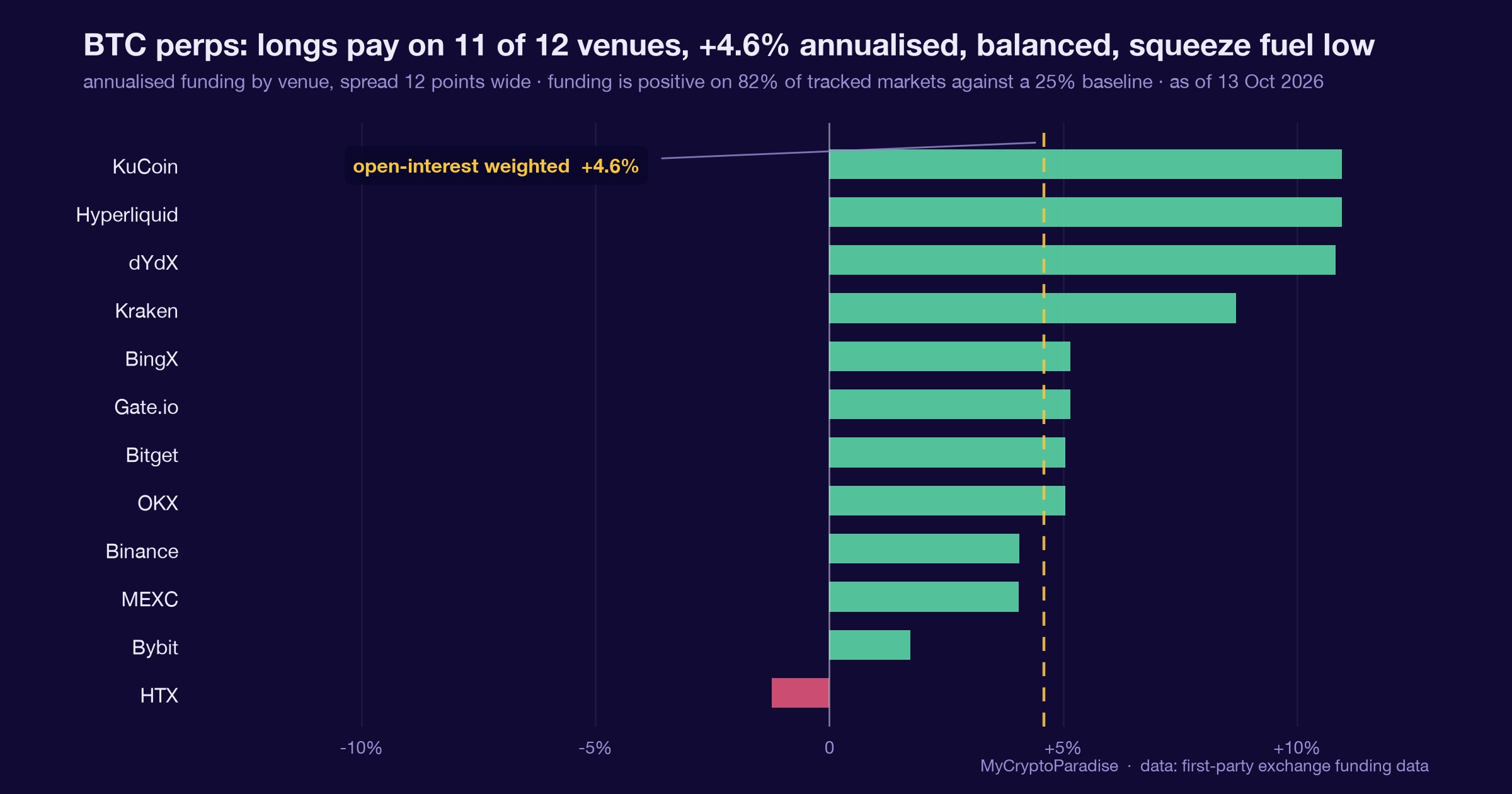
Track it live: our Crypto Fear and Greed Index and the live crypto funding rates both update in real time, so you can watch this shift for yourself.
Related coverage
For exact entries, targets, and stop losses with full risk management, that is what ParadiseFamilyVIP is for. New to reading these moves? Start with our crypto trading strategies guide.
ParadiseTeam is monitoring the market situation closely, and we are taking these developments into consideration while building our trading tactics inside ParadiseFamilyVIP.
Crypto trading involves substantial risk. Prices are volatile and you can lose money. This article is educational and is not financial advice. Past performance does not guarantee future results.
Is Tether freezing sanctioned USDT net bullish or bearish for crypto over the next few weeks?
This is how 23 Paradisers are calling it. Tap your call.
No calls on this one yet. Tap yours to be the first.
Free account, no password. Members just sign in.
Follow this topic: Stablecoin news



Join the discussion 32
With that much centralized control, I wonder how many other balances are frozen that we just don't hear about.. 🤔
Right so, all this talk of freezes and sanctions, it's a bit like playing whack-a-mole eh? 😅🇮🇪 Makes you wonder how much goes under the radar 🤔.
Yes, the challenge with any decentralized system is always in how we define and enforce boundaries. It raises the question of what exactly would alter the fundamental thesis of such a system.
it ain't whack-a-mole liam its them deciding who gets to play the game and who dont.
Right, Liam, and it makes you think about all the other moving parts too... how even a small leak can throw off the whole system.
It's good to see the transparency on this, especially for us wanting to use stablecoins to cut those huge transfer fees back home 🤝🏾🏠. Still, $550M frozen?? That's a lot of liquidity held up... 🤔💸
yeah, that frozen amount is massive Amara, think of the project budgets that could cover! 😬 liquidity is everything.
Yes, exactly, I was wondering about that money too! Doesn't it also make it harder for people who are just trying to send money without issues, you know? So sorry if that's a silly question.
The focus here should be on how stablecoin asset seizure risk affects our own capital. Counterparty risk does not disappear simply because a peg holds.
It’s always a thought, how quickly things can be frozen even if it’s for good reason. Makes you think about the “decentralized” part 🤔.
Freezing funds is one thing, but the stability claim relies on what's left. The market isn't a port; you cannot reroute around lost volume easily.
I watch these stability numbers like a hawk... knowing it's there when you need it just makes it all easier. 🤞 I remember a time when... not so much. 🤔
It's good that Tether can help with this... keeping stablecoins safe and pegged is important for us, especially when saving what we earn.
wow that much frozen 🥶 that's amazing! digital transfers made sending money home so much easier for my family 🇻🇳💸. stability like this helps us all trust the system more 📈.
My first engineering project had a similar issue with material traceability. It is crucial to know the source of your loads, financial or otherwise.
I can see that, but with USDT the source is not really the point… it's more about the company's ability to act on those funds. Thank you.
With financial loads, the ability to act is a direct function of traceability. If you cannot trace the material source, you cannot verify the applied loads, and your design becomes speculative.
The increasing scrutiny on asset flows shows the evolving structure. I track these shifts as a persistent factor for broader market stability.
Lukas for me the only level that matters is the one that gets hit
lukas, traceability is for authorities... the peg is for us.
Yeah, the freezing part is wild when you think about it. always wondered how much of that "safe" money out there is actually, ya know, *safe*. 😬 Keeps things interesting for scalps tho, right?! 🤷♂️
Totally! That's the real UX problem, isn't it? If the 'unbanked' can't even count on it staying unfrozen, it just adds a whole new layer of opacity to the system. 🙄
It's truly something, how much a robust audit trail clarifies things, even for assets we thought were just "parking money" and thus boring. This kind of transparency is always a net positive. 👍
it’s true, an audit trail just makes the whole operation safer for us too, knowing theres traceability on the other side... reduces a lot of the unknowns when trading.
That's a hefty debit for illicit funds, no doubt. But the piece doesn't really reconcile the line between "cooperation" and the precedent it sets for a user's balance sheet. 🤔
it's hard to see how blocking funds is a win for a permissionless asset, regardless of the peg. this is a liquidity question, not a tracing one.
Absolutely, Isabella. It also makes you wonder about the long-term impact on transaction volume if users are worried about accessibility.
Oh, I am so sorry, Isabella, but I think it could be a tracing question actually? Knowing *where* things come from feels very important to me.
Seeing these figures... makes you wonder how much more value this unlocks for people who just need to move money... helped my family immensely.
seeing tether do this reminds me why i hold my own keys, cant trust anyone with it for too long.
Fair enough. But the question is also what happens to your keys if you're not around to manage them.
you're right tommy, knowing that any third party can freeze assets is a good reminder to focus on self custody of actual bitcoin.