

Listen: the breakdown
Market briefing: A Coldcard hack put stolen Bitcoin back in the spotlight, but the coins are traceable and the market barely flinched. BTC traded near $64,195, down about 1.4% on the day.
- A Coldcard hack drained real Bitcoin, yet the price stayed flat near $64,195.
- Stolen Bitcoin lives on a public ledger, so investigators trace it toward regulated exchanges.
- The theft shifts trust, not supply, while retail stays crowded in leveraged longs.
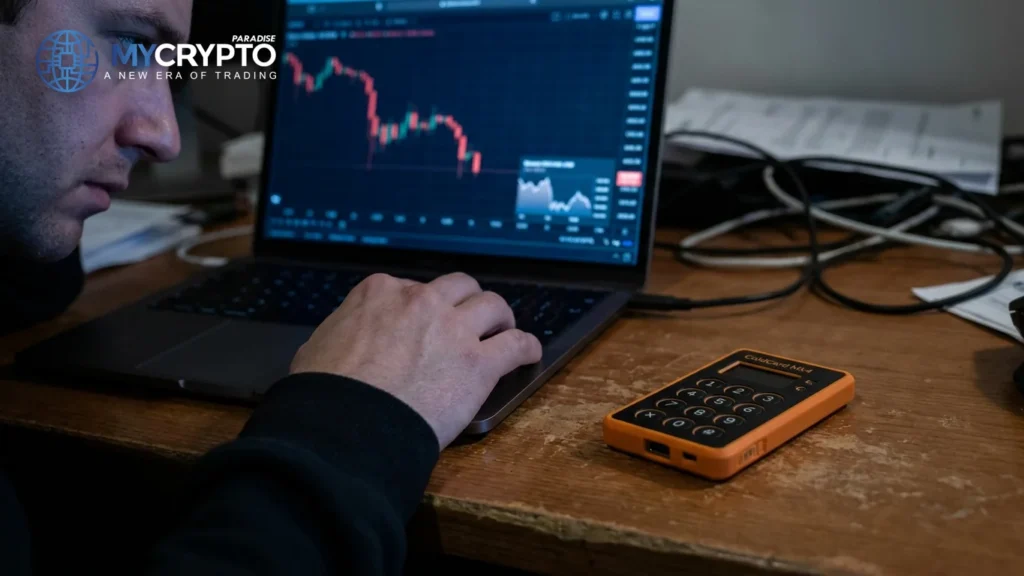
A Coldcard hack turned cold storage into a crime scene, and the stolen Bitcoin left a permanent trail. So how do investigators actually trace stolen Bitcoin?
Someone lost Bitcoin. A hardware wallet built to be a fortress became a crime scene instead. Coldcard holders learned the hard way that even cold storage can bleed coins once an attacker finds a way in. The loss is real, and it is a blunt reminder that self custody carries weight.
The good news is that Bitcoin never forgets.
Investigators rarely chase the thief. They chase the coins. Every stolen output leaves a permanent mark on a public ledger. Analysts cluster the addresses, follow the flow through mixers and hops, and wait for the funds to touch a regulated venue. That is usually where the anonymity quietly ends.
This was not a market event. Bitcoin traded near $64,195 as we wrote, down about 1.4% on the day. The Coldcard hack did not move price at all. But it sharpens a question every holder should sit with: who really controls your keys, and who can follow the money if things go wrong?
Structurally, a self custody theft shifts trust, not supply. The coins are not destroyed. They move, they get flagged, and they often sit frozen at the exchange door. That distinction shapes how we read risk across the whole market, because fear over custody spreads faster than the actual damage does.
Why self custody risk still bites holders
The mechanism here is trust, not tokens. A Coldcard hack removes no Bitcoin from existence. It simply moves coins from a careful holder into a thief's wallet, where the whole market can watch them travel.
That matters because self custody is the backbone of Bitcoin's promise. When people believe cold storage is safe, they hold longer and sell less. Confident holders thin the tradable supply and dampen volatility. When a theft headline lands, some of that confidence leaks away.
Here is the quieter transmission. Scared holders often drift back toward exchanges, thinking custody is someone else's problem now. That choice concentrates coins where they are easier to seize, easier to trace, and far easier to dump in a panic. Comfort and risk trade places.
Tracing changes the incentive math too. Stolen Bitcoin that cannot be cleanly cashed out is worth less to the attacker than the headline suggests. The public ledger turns theft into a slow, watched negotiation with law enforcement patience on one side.
So the real macro effect of a Coldcard hack is psychological. It nudges the marginal holder to reconsider where their keys live. Multiply that across a nervous market, and custody behaviour, not supply, becomes the thing worth watching. The gap between a scary headline and the actual on chain damage is where clear thinking pays.
How the theft ripples through Bitcoin liquidity
A single wallet theft rarely moves Bitcoin, and this one did not. Price held near $64,195 while the story circulated. Isolated losses drain confidence, not order books, so the tape barely registered the Coldcard hack.
The transmission still runs underneath the price. When self custody feels fragile, some holders shuffle coins back onto exchanges. That concentrates supply where it is simple to trace and simple to sell. It also thins the patient float that usually cushions selloffs.
The cascade sorts by fragility. For BTC, the effect is marginal and deep liquidity absorbs it. For ETH, custody scares tend to push users toward custodial staking and wrapped products, adding a layer of counterparty risk. For smaller alts, thin books mean any custody panic bites hardest, and liquidity leaves the weakest names first.
Stolen coins add real sell pressure only if they ever clear an exchange. Until then, the flagged Bitcoin just sits, watched and largely stuck.
Smart money reads these moments coldly. It knows a traced hoard is a frozen hoard, not fresh supply hitting the bid. So the honest market impact of this Coldcard hack is a slow erosion of trust, not a shock to price. The battleground for the next move sits elsewhere, in leverage and positioning, not in one drained wallet.
What decides Bitcoin's next real move
Watch the coins, not the outrage. The clearest tell in any Coldcard hack is whether the stolen Bitcoin starts moving toward exchanges. Flow into a regulated venue often means the thief is trying to cash out, and that is exactly where tracing tends to freeze the funds.
If the coins get flagged and stall, the story stays contained. That confirms the read that this is a trust event, not a supply event. Price should keep ignoring it.
Invalidation would look different. A wave of copycat custody failures, or a broader loss of faith in self custody, could push more coins back onto exchanges. That would add genuine sell pressure over time, not from this theft alone but from the behaviour it triggers.
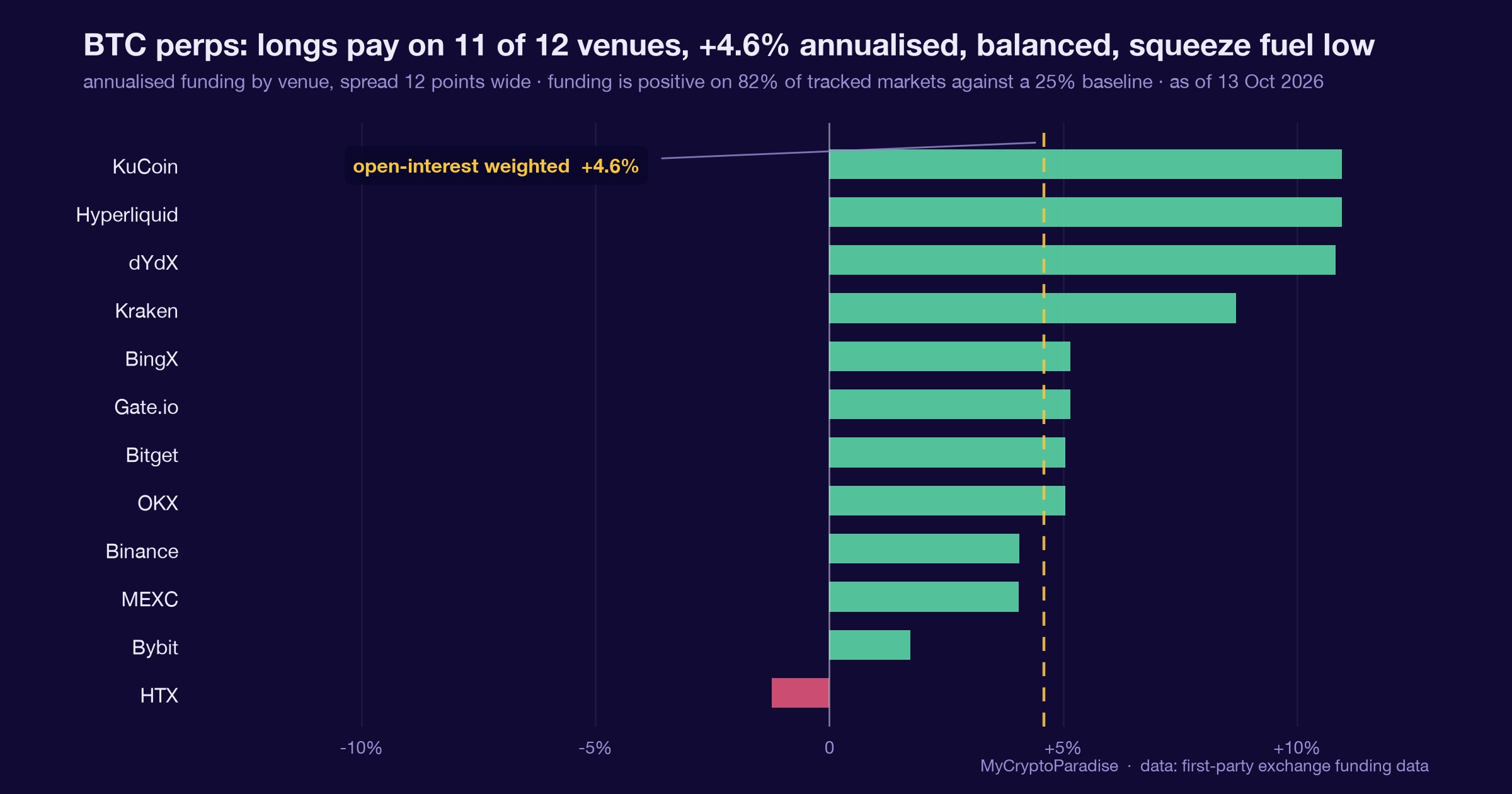
On the market side, keep your eyes on leverage. Funding rates stay positive, and the Fear and Greed reading sits elevated. Both say retail is crowded into longs. A crowded long book is fuel for a squeeze, and a squeeze can move price far more than any single hack.
So the confirmation you want is boring: stolen coins get traced, get frozen, and the market moves on. The warning sign is the opposite: custody fear spreading while over leveraged longs sit exposed above spot. One is a footnote. The other is a setup for real volatility.
What tracing stolen coins signals for positioning
The ParadiseTeam treats this Coldcard hack as noise over signal. It changes custody behaviour, not our market map. Bitcoin near $64,195 still sits inside a battleground we have flagged for weeks, and one drained wallet does not shift the levels that matter.
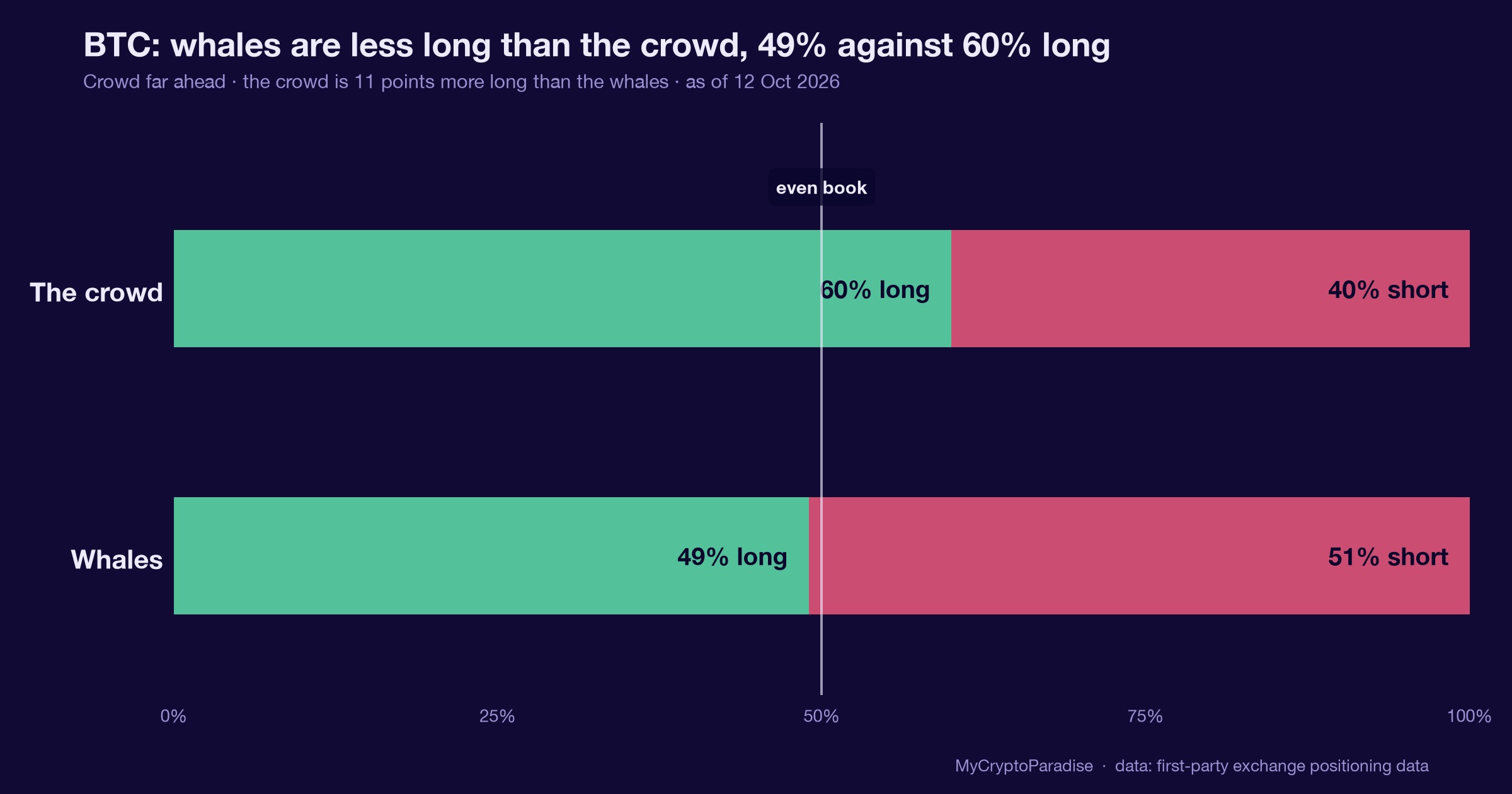
Our read stays the same. Retail is crowded long. Positive funding rates and an elevated Fear and Greed reading tell one story: too many traders lean the same way. That crowd is fuel for a long squeeze before any clean push higher.
We reaccumulated near $61,000 and we watch $44,000 as the deeper macro reaccumulation zone. A recent large whale buy around $86M fits that same patient posture. Smart money is not chasing this price. It is waiting for weakness to buy.
An interim push toward $69,000 to $79,000 stays possible if the squeeze resolves upward first. But we treat rallies into that band as distribution risk, not confirmation. Strength into resistance while retail is euphoric is where careful hands sell.
The tracing story carries one durable lesson for traders. Control your keys, size your risk, and keep a stop-loss, or SL, that survives a fake move. Theft is permanent. A bad entry does not have to be.
Track it live: our live crypto funding rates and the Crypto Fear and Greed Index both update in real time, so you can watch this shift for yourself.
Related coverage
For exact entries, targets, and stop losses with full risk management, that is what ParadiseFamilyVIP is for. New to reading these moves? Start with our crypto trading strategies guide.
ParadiseTeam is monitoring the market situation closely, and we are taking these developments into consideration while building our trading tactics inside ParadiseFamilyVIP.
Crypto trading involves substantial risk. Prices are volatile and you can lose money. This article is educational and is not financial advice. Past performance does not guarantee future results.
Where does Bitcoin head next from the $64K battleground?
This is how the Paradisers are calling it. Tap your call.
No calls on this one yet. Tap yours to be the first.
Free account, no password. Members just sign in.




Join the discussion
No comments yet. Members, share how you are reading this.