

Developing story update (August 02, 2026, 23:11 UTC):
Our sources confirm U.S. President Donald Trump announced the cancellation of a planned attack on Iran. This action provides a concrete de-escalatory step from the U.S. side, following his earlier claims of a deal’s perimeters.
Despite this, Iran continues to swiftly reject any claims of an agreement regarding the Strait of Hormuz or asking the U.S. to delay strikes. The core conflict of narratives remains unresolved.
For traders, this introduces a new layer of complexity. While a direct military confrontation was averted, the underlying geopolitical uncertainty persists, reinforcing the need for caution in the market.
What to watch now: Monitor for any further official statements from either side regarding de-escalation or the status of negotiations.
Developing story update (August 02, 2026, 21:47 UTC):
New details have emerged regarding the ongoing geopolitical tensions. U.S. President Donald Trump now claims he canceled a planned U.S. attack on Iran, adding a specific element to his earlier statements about delaying military action.
In response, Iran has specifically denied asking the United States to refrain from conducting new strikes. This denial directly contradicts Trump’s assertion that Iran requested a delay in military action, further deepening the conflicting narratives surrounding a potential deal.
The market continues to face mixed signals. While Trump’s claim of canceling an attack could be seen as de-escalatory, Iran’s immediate and specific denial maintains the high level of uncertainty, offering no clear directional catalyst for crypto markets.
What to watch now: Monitor for any further official statements or verifiable actions regarding military de-escalation or deal negotiations.
Developing story update (August 02, 2026, 21:06 UTC):
A key development in the ongoing Hormuz Strait situation is the confirmation from Donald Trump that a planned U.S. attack on Iran was canceled. This action, while not resolving the core dispute, signals a de-escalation of immediate military tensions, which could be a factor for risk assets.
Despite Trump’s claims of a deal, Iran continues to reject any agreement, and based on our sources, the Strait of Hormuz remains closed. This conflicting information maintains a degree of geopolitical uncertainty for traders.
The crypto market’s reaction has been largely muted, aligning with our previous assessment that smart money is likely viewing this as a reinforcing data point for a potential dip towards the $61k-$59k accumulation zone for Bitcoin. We continue to watch for clearer resolution or broader macro shifts.
What to watch now: Monitor for further official statements from Iran or the US regarding the Strait's status or any renewed diplomatic efforts.
Developing story update (August 02, 2026, 20:24 UTC):
Iranian media has now escalated Iran’s response to Trump’s claims, stating that the US President has retreated. This adds a new layer to the ongoing geopolitical uncertainty surrounding the Strait of Hormuz and potential nuclear agreements.
This development reinforces the current fog of war, suggesting continued volatility. Traders should monitor for further official statements from either side, as the market remains sensitive to any clear resolution or escalation.
What to watch now: Monitor for further official statements from US or Iranian officials regarding the alleged retreat.
Developing story update (August 02, 2026, 19:42 UTC):
Iran has issued a specific denial regarding former President Trump’s claim that they requested the United States to hold off on attacks. This new clarification adds further detail to the existing contradictory reports surrounding a potential deal.
The market continues to grapple with these mixed signals, with no significant directional shift observed in Bitcoin or Ethereum prices. Geopolitical uncertainty persists as the primary takeaway from these developments.
Traders should note this specific denial reinforces the current environment of conflicting information, maintaining the status quo of uncertainty rather than offering a clear catalyst.
What to watch now: Continued statements from both sides regarding the alleged deal and any further specific denials or confirmations.
Developing story update (August 02, 2026, 19:00 UTC):
Further details have emerged regarding President Trump’s claims of an agreement on the ‘perimeters of a deal’ with Iran. Trump specified the proposed agreement would involve the immediate and total opening of the Hormuz Strait, alongside an end to Iran’s nuclear threat.
Additionally, Trump claimed that Iran and other Middle Eastern countries requested a delay in military action. However, Iran has directly refuted this, denying any such request to the United States.
What to watch now: Monitor for any official confirmation or further specifics from either side regarding the claimed deal perimeters or military action.
Listen: the breakdown
Market briefing: Geopolitical tensions persist around the Strait of Hormuz, with conflicting reports on de-escalation while U.S. enforcement actions continue. Bitcoin holds near $63,252, signaling market uncertainty.
- U.S. naval blockade of Iranian ports continues in the Strait of Hormuz.
- U.S. CENTCOM reported redirecting 35 commercial vessels, disabling two, and boarding two for compliance.
- Iran rejected President Trump's claim of a deal to reopen the critical shipping lane.
The Strait of Hormuz remains a flashpoint of global tension, with U.S. enforcement actions deepening despite diplomatic claims of progress. How does this persistent geopolitical risk shape the crypto landscape?
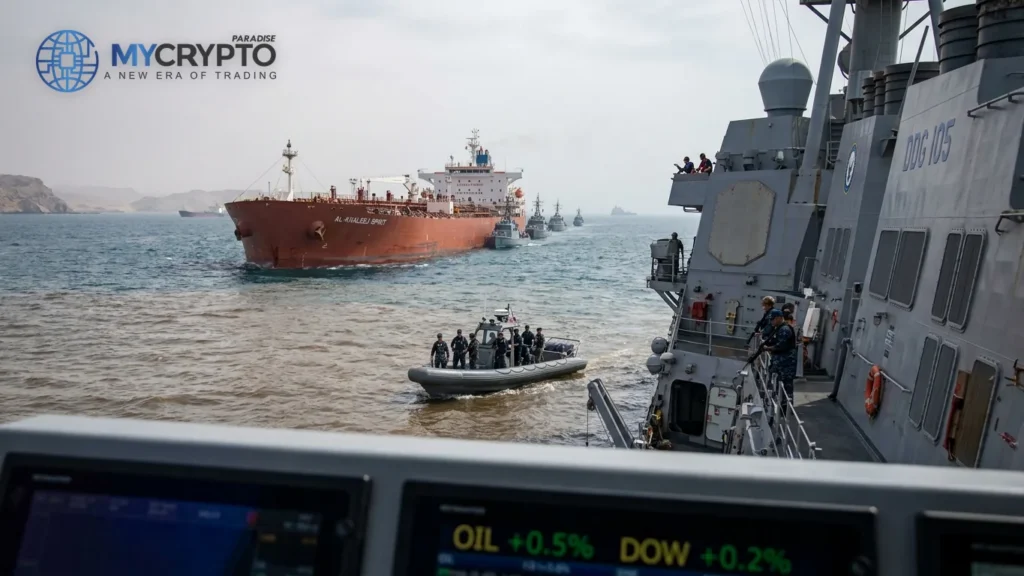
President Donald Trump stated that agreement 'perimeters' had been reached to reopen the Strait of Hormuz, canceling planned military action against Iran. This optimistic claim was quickly contradicted, with Iran directly rejecting any reports of a deal. This diplomatic dissonance unfolds against a backdrop of intensified enforcement. The U.S. Navy declared a 'blockade of Hormuz' on April 13, stating it would stop ships paying tolls to Iran, with specific enforcement for vessels traveling to or from Iranian ports.
U.S. CENTCOM has reported redirecting 35 commercial vessels since the blockade began. These actions included disabling two ships and boarding two others to ensure full compliance with the naval operations.
The region has seen recent aggression, including the QatarEnergy oil tanker Aqua 1 being struck by two projectiles north of Doha, causing a fire on April 1. Days later, on April 4, the IRGC claimed it attacked the MSC Ishyka with a drone in the Strait of Hormuz, alleging links to Israel.
Mohammad Bagher Zolghadr, Secretary of Iran's Supreme National Security Council, warned that continued U.S. naval blockade operations would prompt Iran to intensify its own control over the Strait. This ongoing, tangible military and economic pressure contradicts the surface-level diplomatic rhetoric, sustaining significant global risk.
Persistent Hormuz Blockade Fuels Global Risk
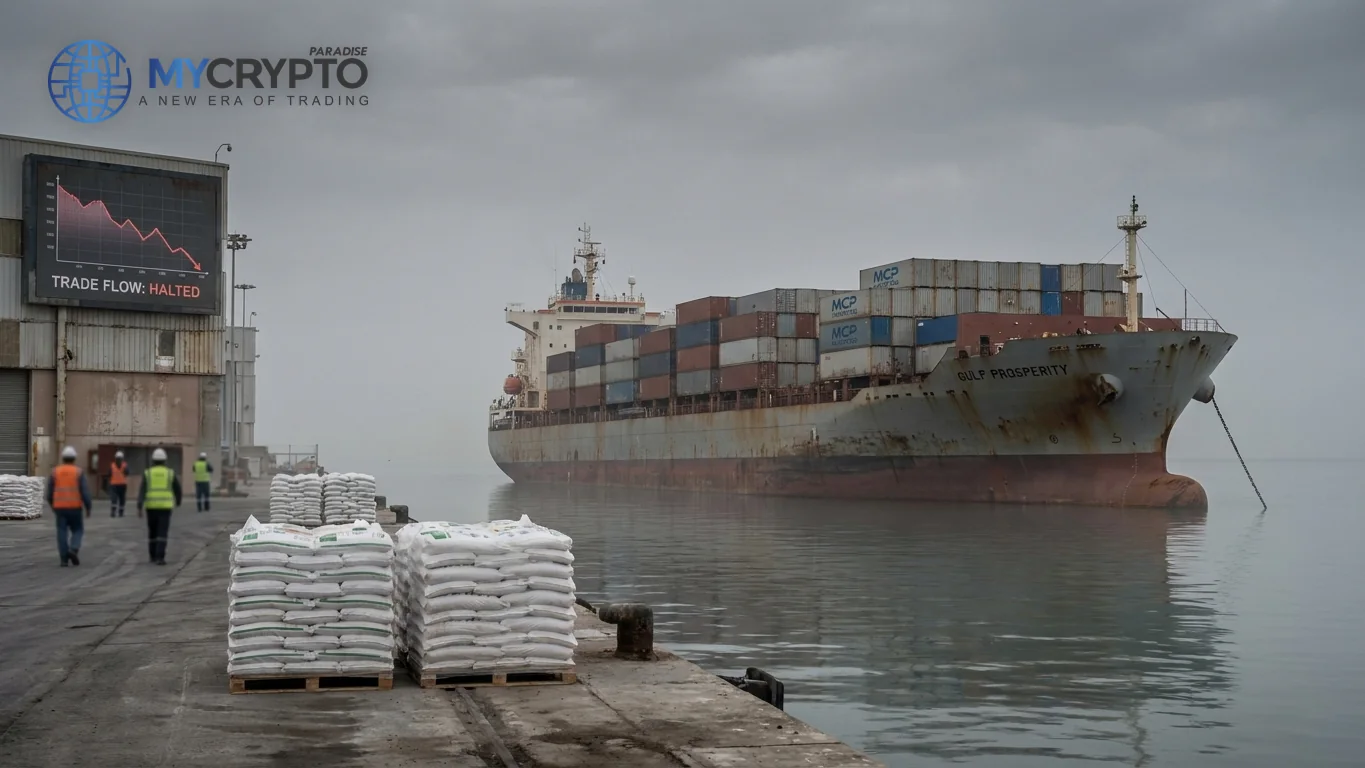
The Strait of Hormuz is a critical choke point for global oil supplies and maritime trade. Disruptions in this region force shipping reroutes, increase transit times, and drive up operational costs, contributing to inflationary pressures worldwide. These rising costs and supply chain vulnerabilities create a significant risk-off sentiment across traditional financial markets. Investors often reduce exposure to perceived risk assets during periods of heightened geopolitical instability.
For crypto markets, this macro environment typically translates into reduced liquidity and dampened speculative activity. The ongoing conflict and the active U.S. blockade represent a tangible, rather than theoretical, threat to global economic stability.
Despite the mixed signals from diplomatic channels, the physical enforcement of the blockade and the threats of escalation are real. This situation fundamentally changes the calculus for global trade and energy security, impacting broader market confidence and investor appetite for risk.

Liquidity Outlook Amid Strait Tensions
The persistent geopolitical risk from the Strait of Hormuz blockade contributes to a cautious global market sentiment. This can lead to a withdrawal of liquidity from risk assets, including cryptocurrencies.
Bitcoin's minor positive movement, trading near $63,252 as of this report, suggests the market might be somewhat desensitized to ongoing geopolitical noise or is awaiting a clearer catalyst. This stability could also reflect retail indecision, caught between conflicting diplomatic reports and persistent threats.
Ethereum, trading near $1868.42, mirrored Bitcoin's flat performance, indicating a similar lack of immediate directional conviction. Both major assets are holding relatively steady, suggesting that the market is not yet pricing in a significant shift based solely on these developments.
Altcoins generally bear the brunt of any broader market risk aversion. Reduced liquidity and increased uncertainty often lead to larger drawdowns in smaller, less liquid crypto assets as capital flows towards perceived safe havens or out of the market entirely. This ongoing tension acts as a ceiling on bullish momentum across the altcoin sector.
Monitoring Key Levels for Confirmation
The immediate watch point is how the market interprets the clear contradiction between President Trump's claim and Iran's rejection. This indicates that diplomatic channels remain volatile and untrustworthy for sustained de-escalation.
Traders should monitor for any further U.S. enforcement actions or retaliatory moves by Iran that could escalate the physical conflict. A definitive change in the blockade status, either an easing or a significant tightening, would provide a strong directional signal for global markets.
For crypto, confirmation of a risk-off shift would involve a sustained break below established Bitcoin support levels, driven by broad macro concerns. This would signal that the market is finally reacting decisively to the persistent geopolitical backdrop.
Conversely, an invalidation of the current uncertainty would require a rapid and undeniable de-escalation in the Strait of Hormuz. Such a development could inject renewed risk-on sentiment, potentially pushing Bitcoin above its current resistance zones.
Until then, expect choppy price action and continued market uncertainty as investors weigh diplomatic rhetoric against the tangible realities of the ongoing blockade.
Reading Market Structure Through Persistent Risk
The ParadiseTeam views this persistent geopolitical risk in the Strait of Hormuz as a crucial backdrop for Bitcoin's near-term price action. This sustained uncertainty aligns perfectly with our strategist Simon's bearish bias, anticipating a dip for accumulation.
Conflicting diplomatic signals, such as the Trump-Iran contradiction, tend to keep retail traders indecisive. This creates an environment where smart money can patiently position for high risk-to-reward (R:R) setups.
Bitcoin was trading near $63,252 at the time of this report. The $63,000 level acts as current resistance, with $62,500 representing potential resistance if it is not reclaimed. Simon has highlighted the $61,000 to $59,000 zone as a key accumulation area. This ongoing geopolitical tension provides a fundamental rationale for a move towards that $61,000-$59,000 zone. A dip there would likely represent smart money accumulating from retail capitulation, aligning with the market's current lower lows on price action and momentum indicators.
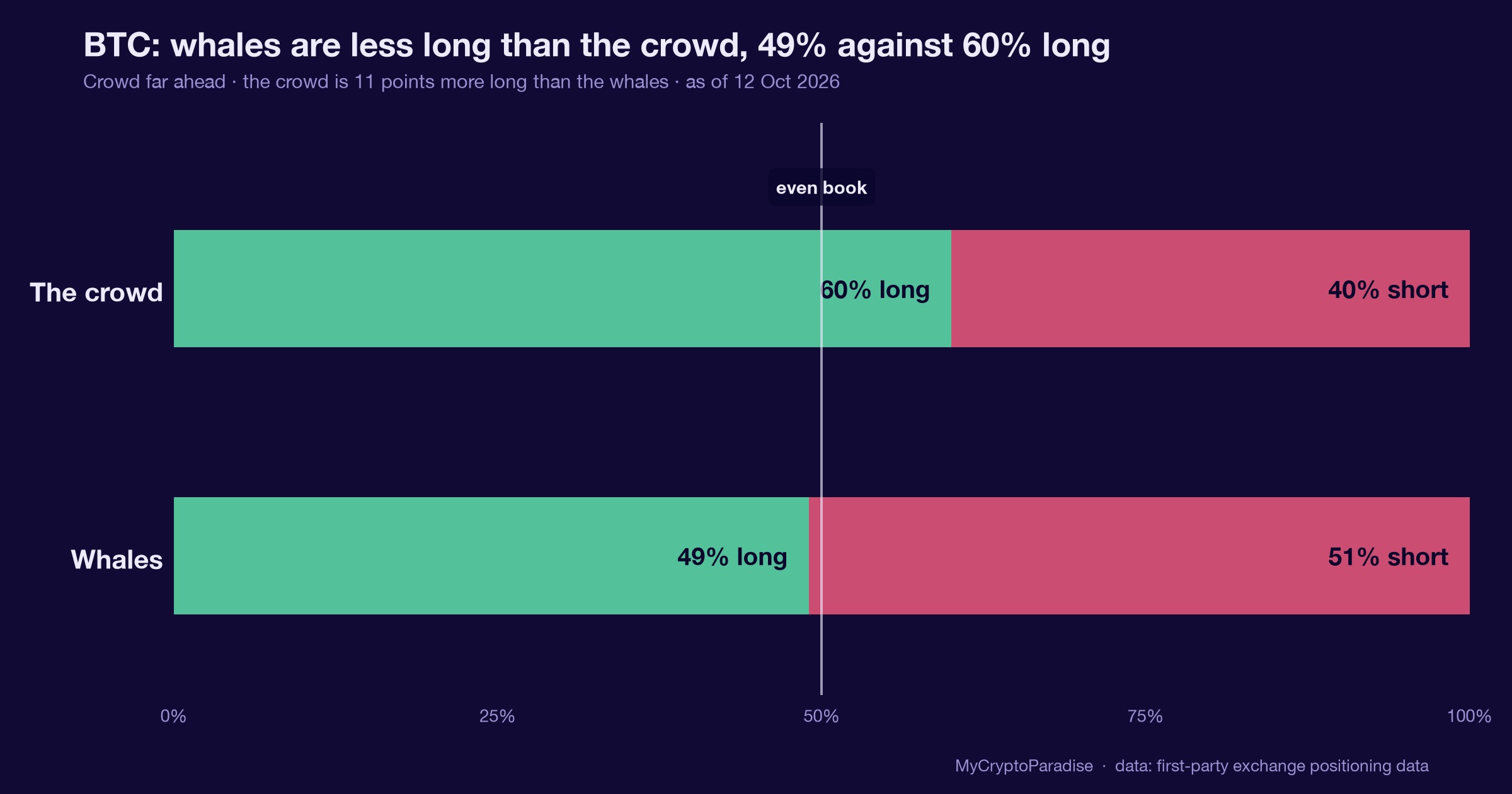
Traders should closely monitor volume activity. Declining bullish volume on any reclaim attempts above $63,000 would further confirm the bearish pressure and the likelihood of a dip. While a whale liquidation short at $65,500 exists, the current market structure suggests downside before any significant upside.
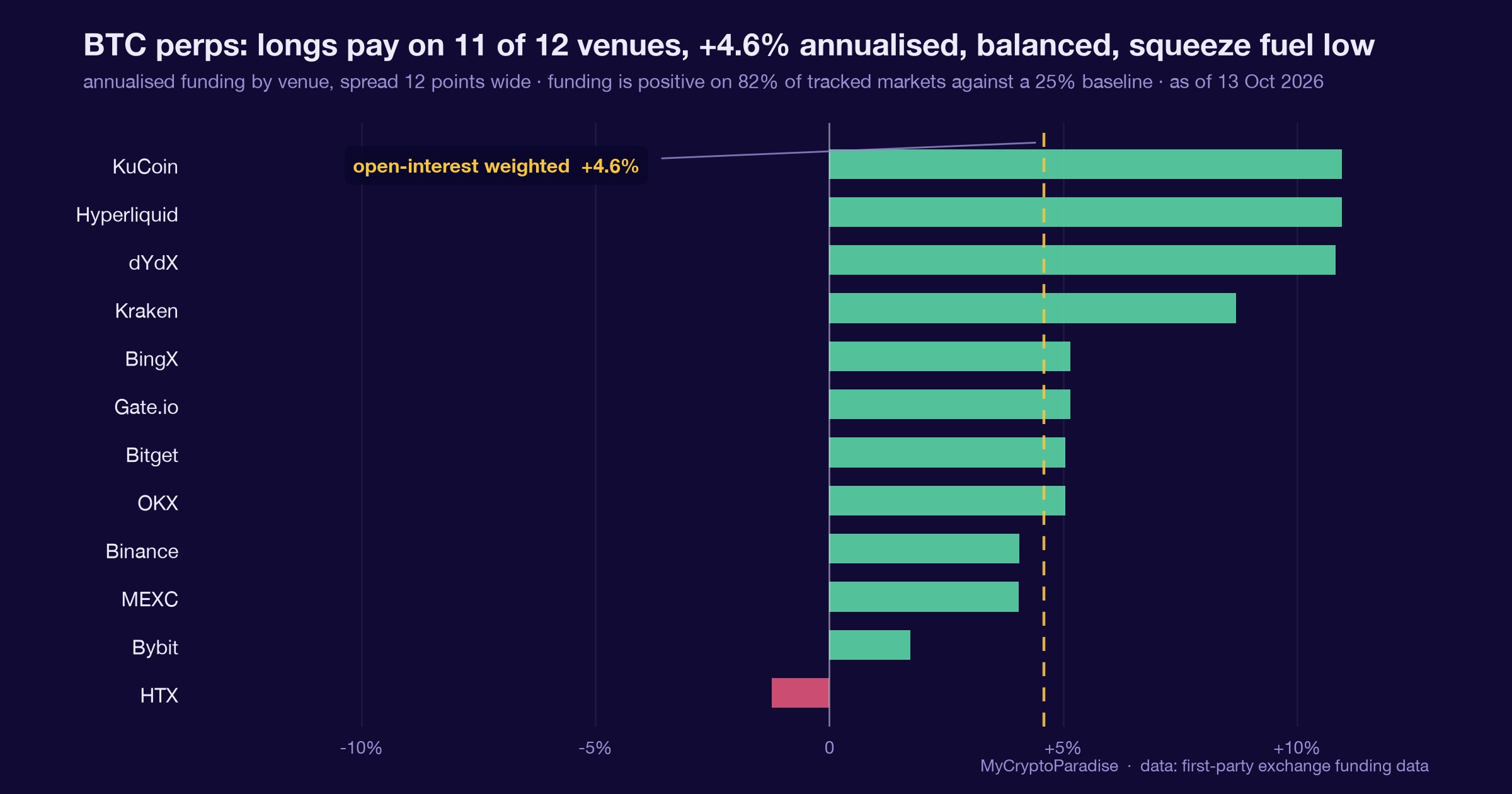
Track it live: our Crypto Fear and Greed Index and the live crypto funding rates both update in real time, so you can watch this shift for yourself.
Related coverage
For exact entries, targets, and stop losses with full risk management, that is what ParadiseFamilyVIP is for. New to reading these moves? Start with our crypto trading strategies guide.
ParadiseTeam is monitoring the market situation closely, and we are taking these developments into consideration while building our trading tactics inside ParadiseFamilyVIP.
Crypto trading involves substantial risk. Prices are volatile and you can lose money. This article is educational and is not financial advice. Past performance does not guarantee future results.
Will Hormuz tensions push Bitcoin to the $61k-$59k accumulation zone?
This is how the Paradisers are calling it. Tap your call.
No calls on this one yet. Tap yours to be the first.
Free account, no password. Members just sign in.



Join the discussion
No comments yet. Members, share how you are reading this.