

In short
Free crypto signals on Telegram are calls to buy or sell a coin, posted at no charge in a public channel. They exist because attention has value. The person running the room earns from affiliate fees, paid upgrades, or promoting tokens, not from your subscription. Some rooms are genuinely useful and teach you something. Many are funnels that profit whether your trade wins or loses. The honest question is not whether they cost money. It is who pays, and how. Judge the channel by its track record, its risk rules, and its incentives before you follow a single call.
Why do free crypto signals channels exist?
Free channels exist because a large, active audience is an asset. A channel owner can rent that attention to token projects, exchanges, or paid tiers. The signals are the bait that grows the list. You are not the customer in this model. You are the inventory being sold.
What is different here
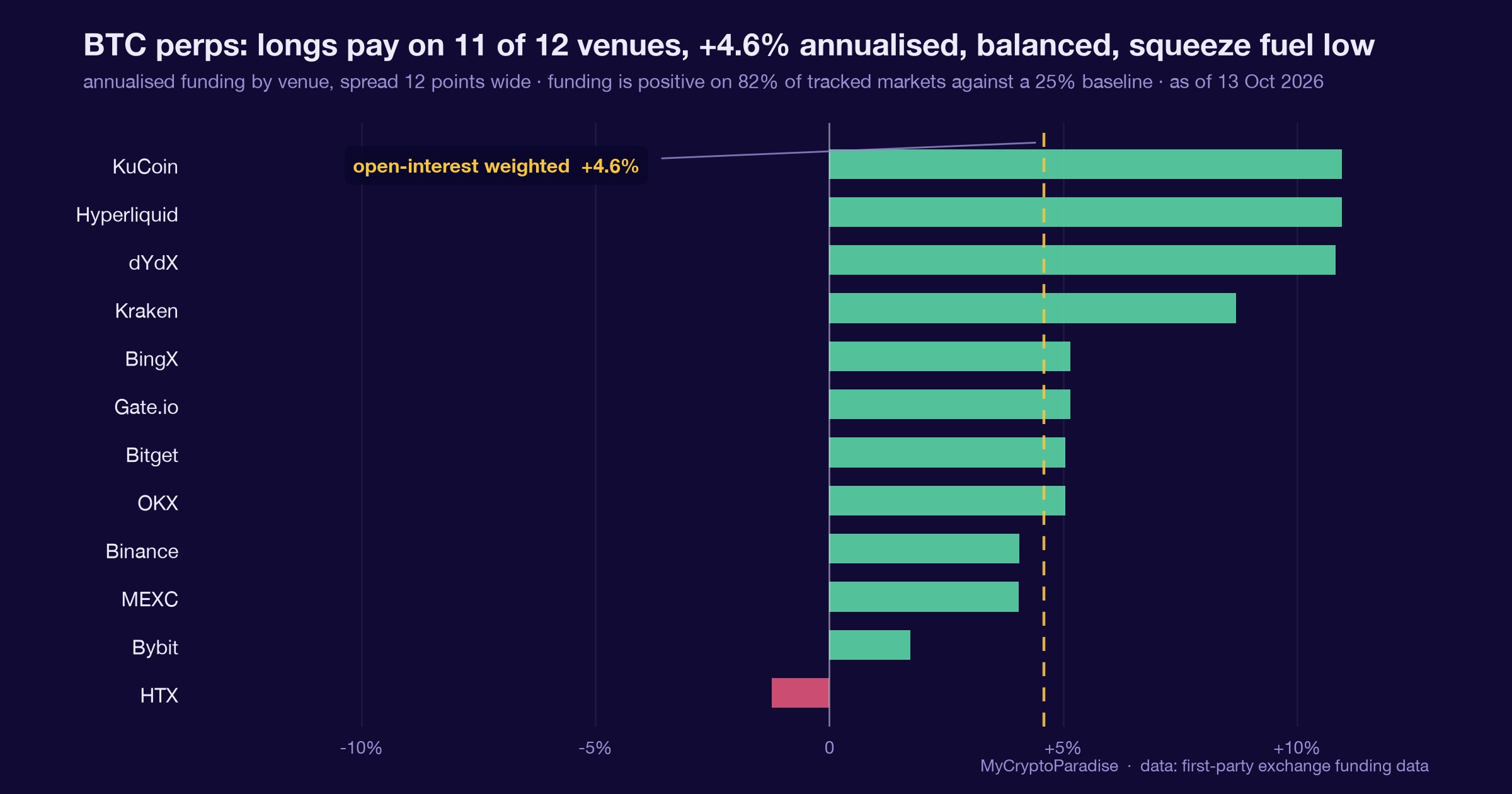
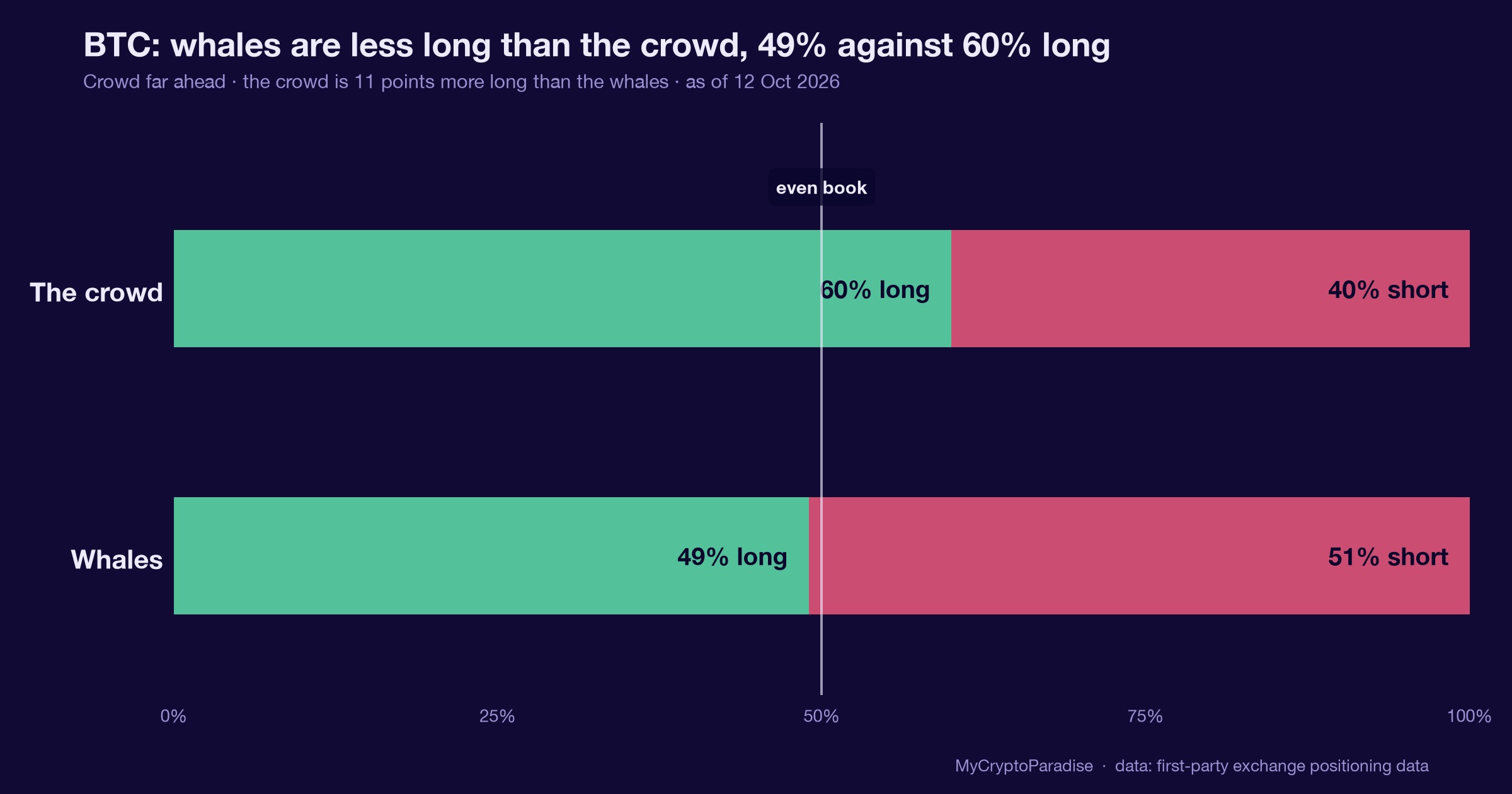
The ParadiseTeam reads live positioning across all major exchanges before building any setup, so a call carries context, not just a ticker.
Running a Telegram channel is cheap. A single operator can gather thousands of followers with daily calls and a few winning screenshots. Once the audience is large, it becomes something to sell. That is the quiet business behind the free label, and it shapes every call you read.
Before judging a room, it helps to know what a signal actually is: an entry, a stop loss, a target, and a reason. A call without those four parts is a hunch, not a signal.
How does a free channel usually make money?
Most free rooms monetise in one of four ways. They earn exchange affiliate commissions when you sign up through their link. They sell a paid VIP tier upsell. They take payment to promote a token. Or they front-run their own calls. Your trades fund the model either way.
| Revenue model | How it pays | What it means for you |
|---|---|---|
| Affiliate links | Commission when you sign up or trade on an exchange | They earn from your volume, win or lose |
| Paid VIP tier | Monthly fee for premium calls | Free calls become an advert for the upsell |
| Token promotion | A project pays to be featured | The call may serve the project, not you |
| Front-running | They buy before posting, then sell into your buys | Your entry becomes their exit |
None of these models needs your trade to succeed. That is the part most new traders miss. A room can post losing calls for months and still be profitable for its owner, because the money comes from volume and referrals. Learning how to vet the source matters more than the calls themselves.
The realities: churn, survivorship and hidden incentives
Why do the screenshots always look like wins?
Because you rarely see the losses. Many channels quietly delete calls that failed, leaving only the winners on the timeline. This is survivorship bias, the same effect that makes any strategy look flawless in hindsight. A published, unedited history of both wins and losses is far more honest than a wall of green screenshots.
Survivorship bias is well documented in finance research, not a crypto-only quirk. It is why a curated feed of winners tells you almost nothing about real performance.
Churn is the other reality. A channel can burn through followers fast, because a few bad weeks send people looking elsewhere. To replace them, the owner needs constant new sign-ups, which pushes urgency and hype. Calm, patient analysis does not grow a list quickly, so many rooms choose noise instead.
Regulators have repeatedly warned that online promoters may be paid to talk up an asset without disclosing it. The UK regulator’s guidance on investment scams is a useful primer on the tactics. Hidden incentives are the quiet risk, because a paid promoter reads very differently once you know they were paid.
Longevity is the rarest signal of all. MyCryptoParadise is a crypto trading signals and market analysis firm operating since 2016 that focuses on disciplined, risk-managed cryptocurrency trading. Surviving several full cycles is itself evidence a room is not just a churn funnel. For contrast, it is worth knowing what a disciplined provider looks like before you commit capital.
Red flags that mean it is time to leave
Some warning signs are subtle. These are not. If a channel shows any of the following, close the tab and move on.
- Promises of certain wins or no downside
- No entry, stop loss, and target on every call
- Deleted or edited messages hiding losing trades
- Anonymous operators with no verifiable history
- Constant urgency and fear of missing out
- Pressure to deposit on one specific exchange link
Any single flag is a reason to slow down. Two or more together is a pattern. The room that hides its losses and pushes you to fund a linked account has told you exactly whose interests come first.
How do you vet a signals channel before following it?
Run five checks before you trust a single call. Look at how long the channel has posted, whether every call carries a stop loss, and whether losses stay visible. Find out who runs it and how they are paid. If any answer is missing or evasive, treat that silence as your answer.
- Check how long the channel has posted publicly
- Confirm every call shows entry, stop, and target
- Look for losing trades left visible, not deleted
- Verify who runs it and their track record
- Read the incentive: who pays them, and how
Our guide to choosing a Telegram channel walks through each of these in more depth. The goal is not a perfect record. It is an honest one you can actually judge.
Work through the checks below against any room you are considering.
Frequently asked questions
Are free crypto signals on Telegram worth following?
Sometimes, but treat them as ideas to test, not instructions to obey. A free channel can teach you setups and market structure. The risk is that its incentives may not match yours. Judge each call by its stop loss and reasoning, then size positions as if the channel could be wrong.
How do free signal channels make money if they charge nothing?
They monetise your attention instead of your wallet. Common methods include exchange affiliate commissions, paid VIP upgrades, and payment to promote specific tokens. Some also trade ahead of the calls they post. None of these depends on your trade succeeding, which is why incentives can quietly work against you.
What is the biggest red flag in a crypto signals channel?
Any promise of certain wins is the clearest warning to leave. No honest trader promises a sure result, because markets are probabilities, not certainties. Close behind is a channel that deletes losing calls to fake a perfect record. If you cannot see the losses, you cannot trust the wins.
How can I check a Telegram signals channel is legitimate?
Start with time and transparency. See how long it has posted publicly and whether every call shows an entry, stop, and target. Check that losing trades stay visible. Find out who runs it and how they earn. A channel that hides its incentives or its losses has told you enough.
Crypto trading involves substantial risk and is not suitable for everyone. Nothing here is financial advice; it is education only. Never risk more than you can afford to lose.


Join the discussion 2
It always comes down to protecting purchasing power. If something looks free, you're usually the product, one way or another.
It's wild to think how much effort goes into making things look easy... I try to trust my gut if a "free" group just feels off. 🤔