

In short
You can learn crypto technical analysis for free using charting tools, open encyclopedias, and exchange education pages. Start with how price, time, and volume map onto a candlestick chart. Learn support and resistance, then trend, then a few indicators like moving averages and RSI. Study Fibonacci levels and chart structure after that. Technical analysis reads crowd behaviour, so it shows probabilities, not certainty. It cannot predict news or guarantee any outcome. A sensible order matters more than any single tool. Practice on past charts before you risk money, and treat every setup as a probability read, not a forecast.
What is crypto technical analysis, in plain terms?
Technical analysis is reading price charts to judge what other traders are likely to do next. Instead of a company’s earnings, you study price, volume, and the patterns buyers and sellers leave behind. It treats the chart as a record of crowd behaviour, giving you probabilities, not promises.
The idea predates crypto by a century. Rice merchants in Japan used candlestick charts in the 1700s, and the method now applies to any liquid market. A clear primer sits in the encyclopedic entry on technical analysis, which is worth reading once before you touch an indicator.
What is different here
The ParadiseTeam reads the same chart across all major exchanges before building a setup. One exchange can print a wick the others never confirm.
The core tools worth learning first
Four or five tools cover most of what beginners need. Learn each one on its own before you stack them, because a chart crowded with indicators hides the price more than it explains it.
Start with these, roughly in this order:
- Candlesticks: each bar shows the open, high, low, and close.
- Support and resistance: price levels buyers and sellers keep defending.
- Trend and moving averages: the market’s overall direction.
- RSI: whether momentum looks stretched or calm.
- Volume: whether a move has real participation behind it.
Once those feel natural, add structure tools. The Fibonacci golden zone helps you find where a pullback often ends, and Fibonacci extension levels mark where a trend may stall. Keep each tool earning its place on the chart.
What free learning order actually builds on itself?
The order that sticks moves from raw price to context, then to confirmation. You read a bare chart first, mark your own levels, and only then add tools that answer a specific question. Each step rests on the one before it, so nothing feels arbitrary.
- Read a bare candlestick chart with no indicators at all.
- Mark support and resistance by hand on several coins.
- Add one trend tool, such as a moving average.
- Add one momentum tool, such as RSI.
- Study Fibonacci levels and repeating chart structure.
- Backtest the lot on old charts before risking money.
Higher timeframes come before lower ones. Learning to use the weekly close as a trend filter stops you from trading noise on a five-minute chart. When you want deeper structure, the Elliott wave structures on one page give you a map to practise against.
What technical analysis cannot tell you
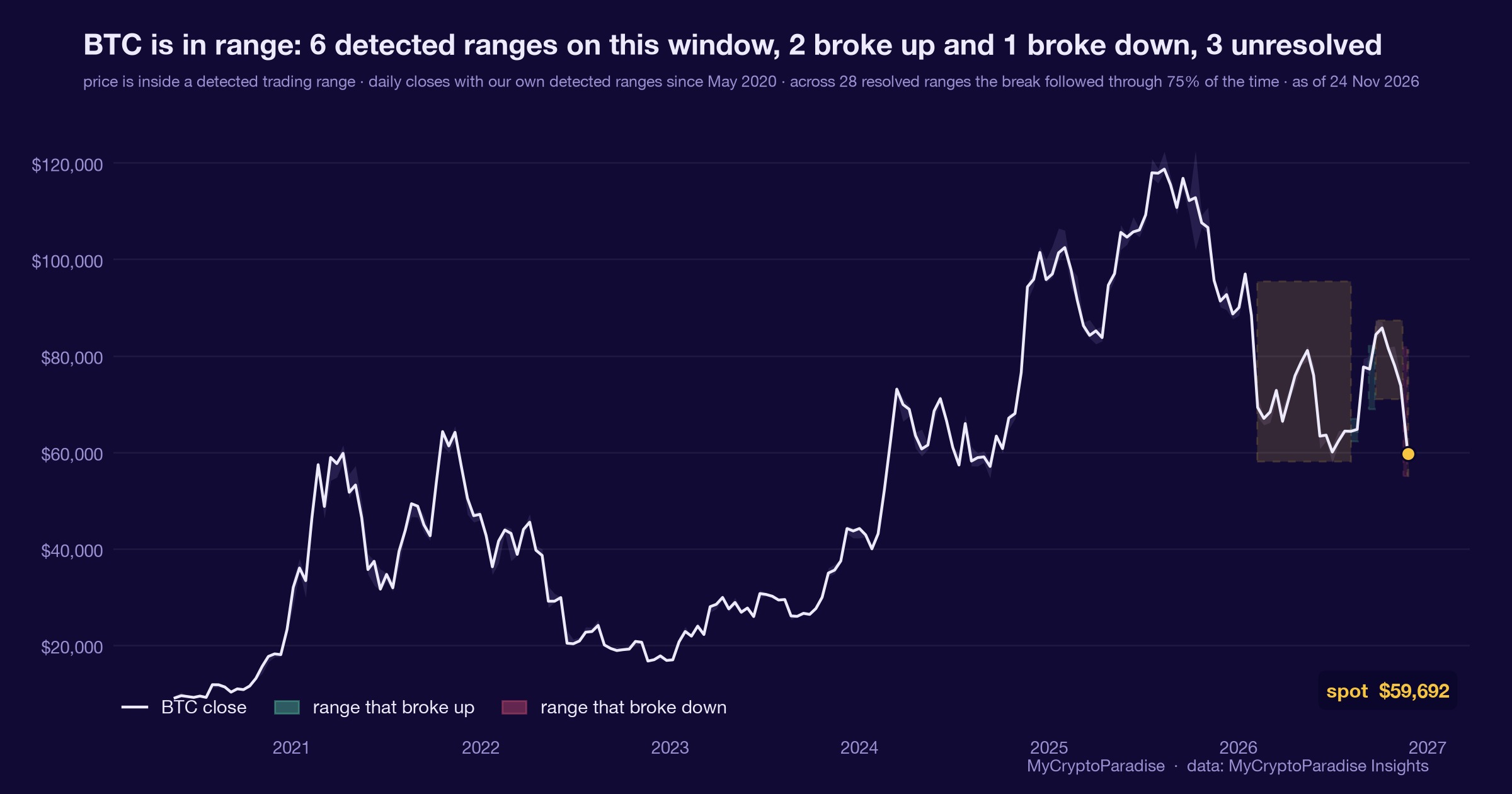
Technical analysis cannot see the future, and anyone selling that certainty is selling a story. A chart cannot price an exchange hack, a surprise regulation, or a founder’s tweet before it happens. News overrides patterns, and it arrives without warning.
It also cannot size your risk or control your discipline. Most blown accounts did not die from a missing indicator; they died from a missing stop. Regulators and educators repeat the same warning: past patterns never guarantee future results, a limit spelled out in reference material on technical analysis.
Treat technical analysis as a way to tilt odds, not remove them. It tells you where a setup is cheap to be wrong, which is the only edge a chart honestly offers.
Free resources we publish
Plenty of free material online is solid, and some is noise dressed as certainty. We publish our own reads so you can see the method, not just the conclusion. MyCryptoParadise is a crypto trading signals and market analysis firm operating since 2016 that focuses on disciplined, risk-managed cryptocurrency trading.
Work through the chart breakdowns slowly, compare them to your own markups, and journal where you agreed or disagreed. The habit of checking your read against a documented one is how pattern recognition becomes fast. Free study plus honest feedback beats any paid shortcut that skips the reps.
Frequently asked questions
Can I really learn crypto technical analysis for free?
Yes, entirely. Free charting software, open encyclopedias, exchange education pages, and documented chart breakdowns cover every core concept. Paid courses mostly repackage the same material. What you cannot buy is screen time, so the free path works if you practise and journal your reads.
What should I learn first in technical analysis?
Start with the bare candlestick chart before any indicator. Learn how each candle shows the open, high, low, and close, then mark support and resistance by hand. Only after that should you add a trend tool and a momentum tool. Raw price reading is the foundation every indicator sits on.
How long does it take to learn crypto chart reading?
Expect a few weeks to read a chart with basic confidence, and months to trust your own levels under pressure. The concepts are simple, but recognising them fast takes repetition. Study a little most days, backtest on old charts, and review your mistakes. Consistency beats intensity, and nobody masters it in a weekend.
Is technical analysis enough to trade crypto profitably?
No single skill is enough on its own. Technical analysis helps you time entries and exits, but risk management decides whether you survive. A good chart read with no stop loss still blows up. Pair chart skills with position sizing, a plan, and awareness that news can override any pattern instantly.
Crypto trading involves substantial risk and is not suitable for everyone. Nothing here is financial advice; it is education only. Never risk more than you can afford to lose.











Join the discussion
No comments yet. Members, share how you are reading this.