

Listen: the breakdown
Market briefing: New research tallies crypto hack losses near $26.9 billion since 2017, about 57 cents stolen per dollar earned on-chain. The market shrugged, with BTC near $74,020 and BNB flat.
- Cumulative crypto hack losses sit near $26.9 billion since 2017
- On-chain revenue over that period was roughly $47 billion, a 57-cent leak per dollar
- No price reaction attributable to the stat: BNB flat, BTC near $74,020
Crypto hack losses now equal 57 cents for every dollar the industry earned on-chain since 2017. So why did the market barely blink at a number this ugly?
The number is blunt. Since 2017, crypto has handed back roughly 57 cents to hackers for every dollar it earned on-chain. New research puts cumulative hack losses near $26.9 billion against about $47 billion in on-chain revenue. That ratio is the story's spine.
And the market barely blinked.
This lands while security is already a sore subject. A separate, much larger recent Binance breach, reported around $6.3 billion stolen, is still fresh in everyone's memory. Blockchain intelligence data tallies over $22.3 billion in major hack losses since 2021 alone, a newer and different window than the since-2017 figure. The industry's trust problem is not exactly a secret.
So the headline is not really the stat. A multi-year leakage ratio is a structural framing of a risk the market has lived with for years. It reframes an old wound rather than opening a fresh one.
The real story is the silence that followed. BNB barely moved, up a fraction on the day. BTC traded near $74,020 and showed no attributable reaction. A loss ratio this grim once would have rattled sentiment for a week.
Now it reads as background commentary. That tells you more about where the market's attention sits than any single number could. Security headlines have become weather, not news, and traders have learned to carry an umbrella and move on.
Why a grim loss ratio stopped moving sentiment
The transmission from a stat like this runs through trust, not flows. A 57-cent-per-dollar leak since 2017 is a structural tax on the whole industry's credibility. In theory, worsening trust raises the risk premium investors demand and tightens the capital willing to sit on-chain.
In practice, the chain broke before it reached price. The research surfaced, the security narrative got louder, and liquidity did not flinch. There was no measurable funding or flow response in the available evidence.
That matters because it marks a desensitised market. When cumulative hack losses this large register as commentary rather than catalyst, the fear is already priced into how people hold crypto. The overhang exists, but it is ambient, not acute.
The recent Binance breach is the sharper edge of the same theme. A single large exchange event can still jolt a specific token and its order books. A historical ratio across the whole industry simply confirms what the breach already reminded everyone.
So the macro read is honest and modest. This is narrative fuel for a crypto-is-unsafe framing, not a driver of new positioning. It reinforces a backdrop rather than changing the near-term liquidity picture, and that is exactly why the tape ignored it.
How a non-reaction rippled through BTC and alts
Start with the asset closest to the story. BNB sits at the centre of the recent exchange-security theme, yet it barely moved, up a fraction over 24 hours. If any token should have carried a fresh security discount, it was this one, and it did not.
From there the chain is short. With no stress in the most exposed name, there was nothing to transmit up to BTC. Bitcoin held near $74,020 and showed no attributable move tied to the research.
ETH and the broader alt complex followed the same pattern of indifference. A structural stat with no immediate counterparty risk gives traders nothing to hedge or liquidate against. So order books stayed where the prior session left them.
This is the texture of a market absorbing information as background. No wave of liquidations, no funding spike, no visible rotation out of exchange tokens. The data simply does not show accumulation or distribution attached to this headline.
That leaves the loss ratio as context rather than cause. It colours the risk backdrop that every position already sits inside. For now, the practical market impact is close to zero, which is itself the most interesting thing about it.
When the security overhang could actually bite
The invalidation of a non-event is a real event. A historical ratio stays background until a fresh, concrete breach attaches a counterparty and a number to it. Watch for a new exchange or protocol exploit, because that is what turns an overhang into a sell trigger.
Confirmation of the current calm looks like more of the same. If security headlines keep landing without funding spikes or exchange-token weakness, the desensitisation thesis holds. The market has quietly repriced hacks as a cost of doing business.
The tell to watch is exchange-token behaviour and reserve data. Sustained outflows from a named exchange, or a widening gap between a token and the majors, would signal trust actually leaking into price. Flat behaviour, like BNB's, says the opposite.
Keep an eye on whether this stat gets weaponised. A grim ratio is convenient ammunition for every crypto-is-unsafe argument, and narrative pressure can build even when prices do not move. That is slow erosion, not a shock.
For near-term structure, the security theme is not the driver. Price is still being set by positioning and liquidity, not by a multi-year loss tally. So treat any attempt to pin a BTC move on this research with suspicion. The evidence for a reaction simply is not there.
Why this stat is narrative fuel, not positioning
The ParadiseTeam reads this as narrative, not a trade input. A retrospective loss ratio changes none of the levels that actually matter right now. It is ammunition for the crypto-is-unsafe story, which is background to the real driver: crowded, over-leveraged positioning.
That driver still points down on the daily. BTC was trading near $74,020 as of 01:01 UTC, sitting under $76,000, the level we treat as reclaimed-from-below resistance. The breakdown there came on heavier volume than the weak, near-zero-volume retest that followed.
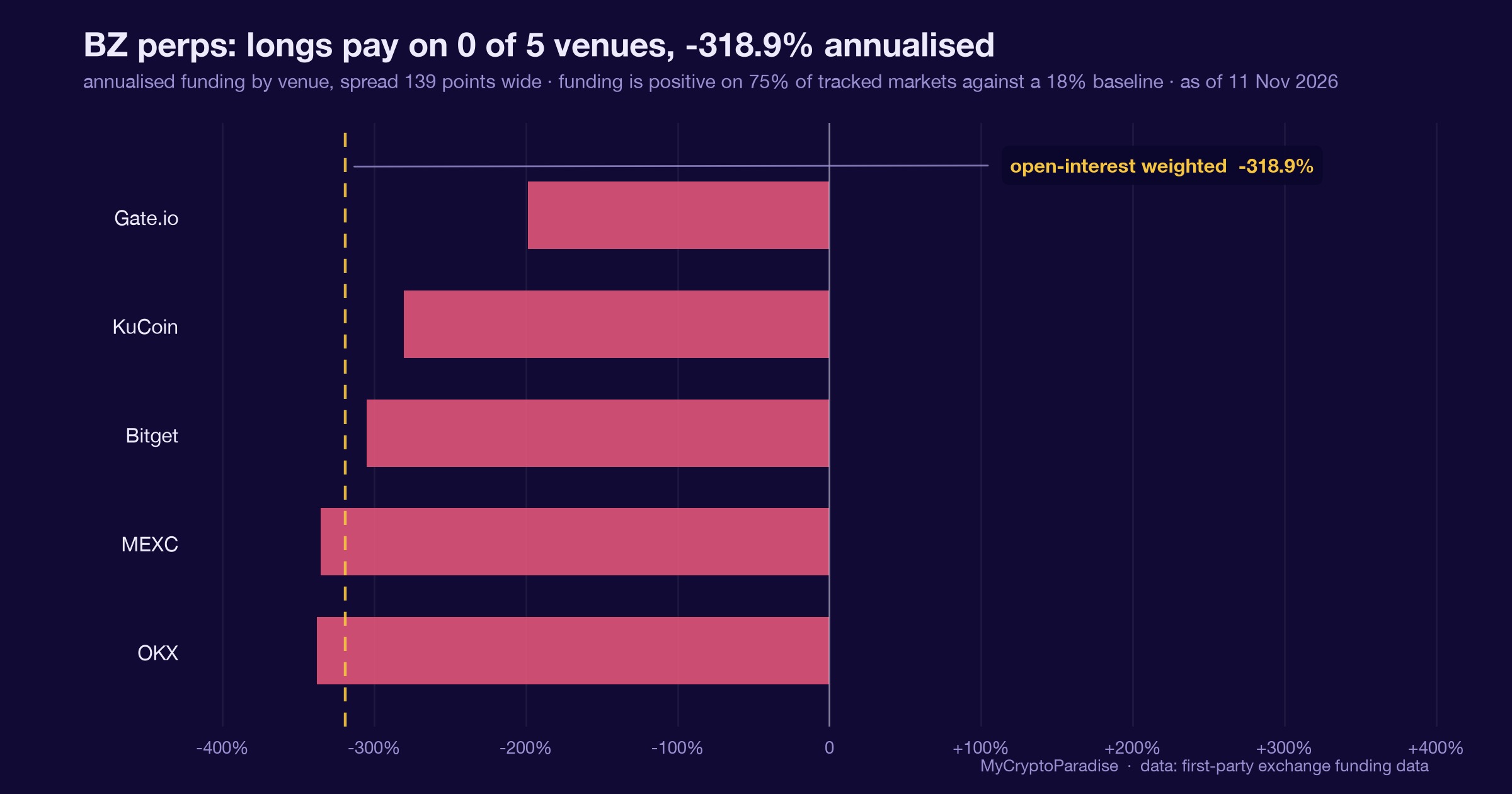
That weak retest is the point. It was, in our phrasing, made out of retail. Market makers placed spoofed buy walls below price, let retail crowd into longs, then pulled the bids. Funding sitting near +10% says those longs are still packed in.
So a security stat that scares retail changes nothing structurally. It just thickens the sentiment backdrop while the real risk is a long squeeze from over-leveraged positioning, not a hack headline.
Our bias stays bearish until momentum confirms otherwise. We want a bullish cross with both legs turning up from oversold on the Stochastic RSI before trusting any bounce. Absent that, the $69,000 to $64,000 zone remains the magnet, with $69,000 the first line that must prove it can hold. We treat bullish-sounding noise skeptically without volume and divergence behind it.
The read behind this: we framed this story through our own market analysis, Bitcoin to $69K or Back Above $76K?
Track it live: our live crypto funding rates and the Crypto Fear and Greed Index both update in real time, so you can watch this shift for yourself.
Related coverage
For exact entries, targets, and stop losses with full risk management, that is what ParadiseFamilyVIP is for. New to reading these moves? Start with our crypto trading strategies guide.
ParadiseTeam is monitoring the market situation closely, and we are taking these developments into consideration while building our trading tactics inside ParadiseFamilyVIP.
Crypto trading involves substantial risk. Prices are volatile and you can lose money. This article is educational and is not financial advice. Past performance does not guarantee future results.
Will crypto hack losses actually start denting prices from here?
How 1 Paradiser is calling it
The first call is still open
Free account, no password. Members just sign in.









Join the discussion
No comments yet. Members, share how you are reading this.