


Listen: the breakdown
Developing story update (August 31, 2026, 09:43 UTC):
Crypto.com's Cronos Halts Entire Blockchain After $75M Tectonic Exploit
Market briefing: The Crypto.com-linked Cronos network has halted after a Tectonic exploit estimated near 75 million dollars. BTC was near 77,928 dollars, down slightly on the day, while ETH slipped harder near 2,431.
- The Crypto.com-linked Cronos network halted following the Tectonic exploit.
- The exploit is estimated at roughly 75 million dollars.
- BTC held near 77,928 while ETH fell 1.2 percent to 2,431.
The Cronos network halt after a 75 million dollar Tectonic exploit barely moved BTC, so is this fragility contained or a warning shot retail keeps ignoring?
The Crypto.com-linked Cronos network has halted. The trigger was an exploit on Tectonic, estimated at roughly 75 million dollars. Validators stopped block production while the damage was assessed, freezing activity across that ecosystem.
A network halt is a blunt instrument. It stops the bleeding, but it also freezes every honest user alongside the attacker. That trade-off tells you how serious the operators judged the breach to be.
The broader market shrugged. Bitcoin traded near 77,928 dollars, down about 0.3 percent over 24 hours and off 1 percent in the last hour. Ethereum was softer, near 2,431 dollars, down 1.2 percent on the day and 2.2 percent in the hour.
Those are small numbers for a headline this loud. That gap between the drama of the event and the calm of the majors is the whole story. A 75 million dollar loss inside one altcoin ecosystem did not shake BTC or ETH, which tells us the market is treating this as local, not systemic.
Still, the timing matters. This lands while the broader structure already leans cautious and retail keeps calling for the bottom. Another exploit in the altcoin space does not comfort anyone already nervous. It quietly confirms the fear rather than sparking a fresh panic.
Why a local exploit still shapes sentiment
The transmission here is about confidence, not liquidity. No large flows moved from Cronos into BTC or ETH when the network stopped. What moved was perception of risk in the altcoin space, and perception is the cheapest thing to damage.
An exploit followed by a full network halt reads as a smart contract layer that could not absorb the hit any other way. For traders, that reinforces a simple hierarchy. Base layers and majors sit at the top of the trust stack. Younger ecosystems and their lending markets sit lower, and they carry the tail risk first.
This is why the majors barely flinched. Capital did not need to flee, because it was never concentrated there in size. The loss stayed contained inside the affected protocol and its users.
But contained is not the same as harmless. Each incident like this raises the risk premium the whole altcoin complex has to pay. Buyers demand a bigger discount, liquidity thins, and the next shock lands on a weaker floor.
That matters most in a cautious market. When sentiment is already defensive, fresh proof of fragility does not need to be systemic to bite. It simply removes another reason for hesitant capital to rotate down the risk curve, which keeps pressure on alts even when BTC looks calm.
How the shock ripples from alts to majors
Start with the epicentre. Cronos and its Tectonic market absorbed the direct blow, and the halt froze that ecosystem entirely. For holders there, the immediate concern is recovery of funds and how the chain resumes, not price ticks.
Move out one ring to BTC. Bitcoin near 77,928 dollars barely registered the news. The 24-hour move stayed inside normal noise, which confirms the market read this as an isolated altcoin failure rather than a threat to the base layer.
Ethereum tells a slightly heavier story. ETH fell 1.2 percent on the day and 2.2 percent in the hour, underperforming BTC. As the anchor of the broader smart contract economy, ETH tends to carry more of the sympathy pressure when a contract exploit dominates the tape. That spread, ETH softer than BTC, is the honest tell of this event. Risk aversion crept up a notch inside the altcoin and DeFi complex, and ETH sits closest to that complex among the majors.
There was no dramatic liquidity cascade. No forced deleveraging swept across the majors. What we saw instead was a mild, orderly step back from risk, concentrated where the fragility actually lives. In a genuinely fragile tape, that same headline could have triggered a much sharper flush, which is worth remembering the next time one arrives on thinner ground.
What signals confirm or ease the risk
The first thing to watch is the restart. A clean, transparent resumption of the Cronos network, with a clear account of the exploit and any remediation, would cap the story. A slow, murky recovery would keep the risk premium elevated across similar ecosystems.
Watch ETH relative to BTC next. If ETH keeps underperforming into the session, the market is still pricing extra caution into the smart contract complex. If that gap closes, the exploit is being fully digested as a one-off.
On Bitcoin, the level that matters is nearby. The 77,700 area sits just below a previous low on the medium timeframe, and BTC is hovering right above it near 77,928. Losing that zone with conviction would say the broader caution is winning, independent of any single exploit.
A reclaim back toward 79,000 would be the bullish counter, though that region has already rejected price once. So we treat strength into it as suspect until proven otherwise.
Finally, watch contagion that is not there yet. If other lending markets or bridges show stress in the coming sessions, this stops being local. If the tape stays quiet and no second name appears, the halt was exactly what it looked like: a painful but isolated failure, absorbed by one ecosystem and its users.
What this exploit signals for altcoin risk
The ParadiseTeam reads this as confirmation, not catalyst. It does not change our cautious medium-term bias, it fits inside it. Bitcoin near 77,928 dollars is holding just above the 77,700 area, a level that already broke a prior low on the medium timeframe, and that is a fragile place to absorb bad news.
We see 79,000 as the line where sellers regained control after an earlier rejection. So a bounce that stalls under there, on the back of an exploit headline, looks more like relief being sold than strength being built.
The smart money picture stays the same. Professionals are waiting for real institutional and miner capitulation before they absorb size, and a 75 million dollar altcoin exploit is not that event. It is another data point that keeps retail nervous and keeps the fragile alt complex on the back foot.
Retail, meanwhile, is still leaning optimistic at exactly the wrong levels. News like this tends to deepen that fear rather than flip the whole market, which suits a slow grind lower more than a violent flush.
Our invalidation is honest and specific. A decisive weekly reclaim above 79,000 that holds as support would force us to soften the bearish read. Until then, we treat rallies as suspect and downside toward the 72,000 region as the path of least resistance. Probabilities, not promises.
The read behind this: we framed this story through our own market analysis, Bitcoin Looks Like 2022: Another Crash Coming?
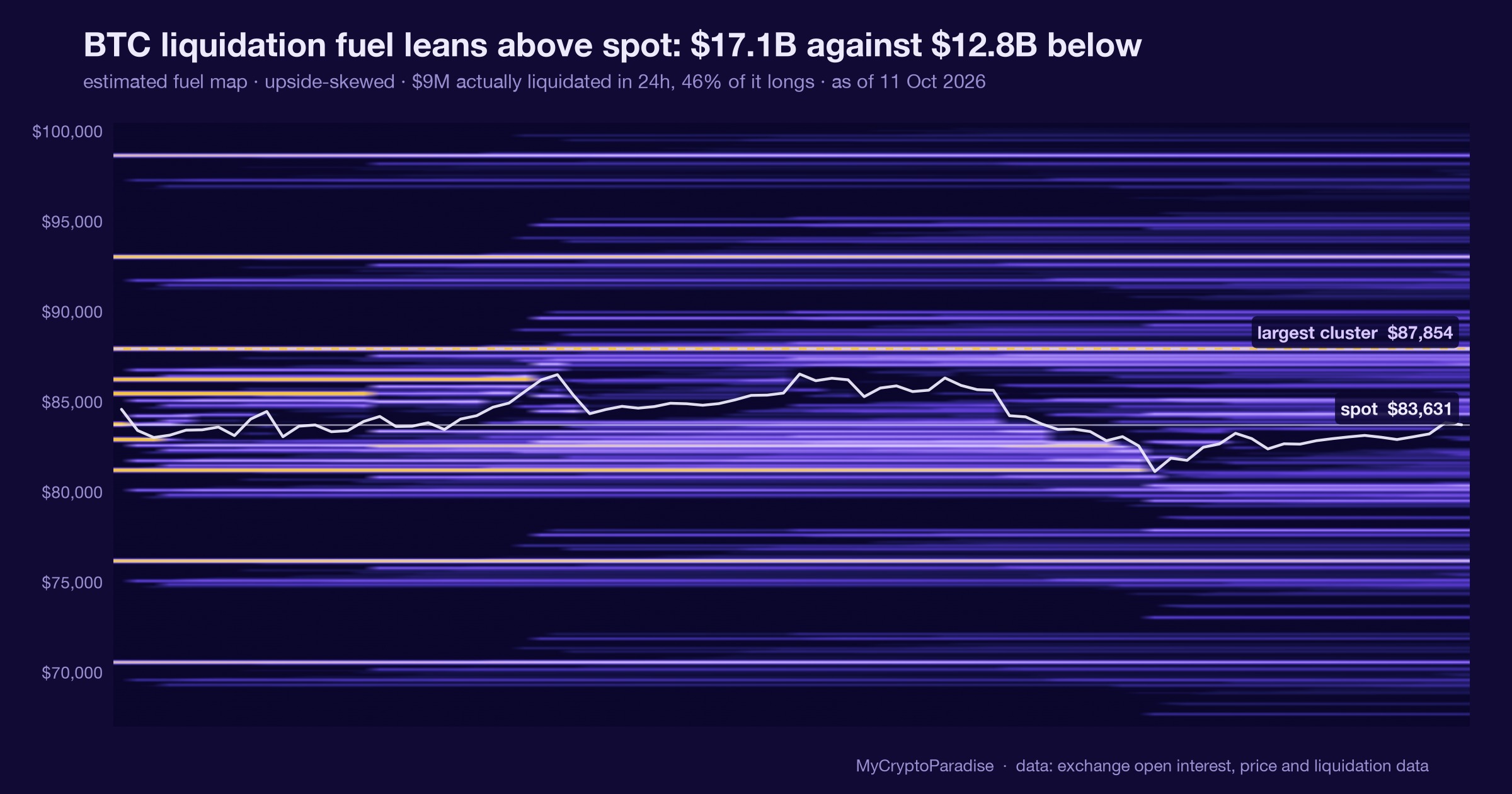
Track it live: our Crypto Fear and Greed Index and the crypto liquidation heatmap both update in real time, so you can watch this shift for yourself.
Related coverage
For exact entries, targets, and stop losses with full risk management, that is what ParadiseFamilyVIP is for. New to reading these moves? Start with our crypto trading strategies guide.
ParadiseTeam is monitoring the market situation closely, and we are taking these developments into consideration while building our trading tactics inside ParadiseFamilyVIP.
Crypto trading involves substantial risk. Prices are volatile and you can lose money. This article is educational and is not financial advice. Past performance does not guarantee future results.
After the Cronos halt, where does BTC go next from the 77,700 area?
This is how 21 Paradisers are calling it. Tap your call.
No calls on this one yet. Tap yours to be the first.
Free account, no password. Members just sign in.











Join the discussion 12
i think this is why i try to be so careful with new chains, even the big ones. it's hard to know where to draw the line sometimes, sorry if that sounds silly.
It's these kinds of headlines that make me so careful... like a little hedgehog with my savings. 😅 I always look at these risk ratings.
haha a hedgehog 🦔 thats deadly! 😂 yeah the risk ratings are a big one for sure, always gotta factor in the chains history too 📈.
75 million looks low after a full network halt, sometimes these initial figures are small estimates.
Yeah, it's why I always check the TVL and audits first on anything new. What good is a hot new project if it can just get rugpulled like this?! 😒
I remember looking at Tectonic a few months ago... this kind of thing always makes me wonder what red flags I missed in my own analysis.
i remember back in 2017 when i first started dipping my toes outside of bitcoin, almost got caught in a similar rug pull. it always comes back to securing your sats.
The cost of that exploit, in terms of lost purchasing power for those caught in it, is the real hit. Secure those sats, yes, and avoid the pumps.
man that sounds lucky 🍀, but securing sats is easy with a good exchange. for the *rest* of us 😩, the scam is usually with the shiny new thing itself!! and thats what needs to change 🔥.
its not about an exchange carlos, its about self-custody. the exploit happened on the network, not an exchange, so keeping your coins there wouldnt protect them anyway. securing your sats means holding your own keys.
new chains are just more rope to hang yourself... always was. wife just shakes her head.
Oh no 😱 this reminds me how I almost lost my stablecoins to a bad bridge on Polygon last year 😅 so scary! Gotta be extra careful out there! 🛡️↗️