


Listen: the breakdown
Developing story: This story is still unfolding. We are tracking it and will update this article as more details are confirmed.
Market briefing: A firmware flaw from 2021 has drained roughly 1,816 BTC, near 114 million dollars, from Coldcard wallets across four waves. BTC sits near 62,647 dollars, down 0.6 percent, as the fear does more damage than the exploit.
- Roughly 1,816 BTC, near $114 million, drained from 5,200-plus addresses since July 30
- The flaw traces to a March 2021 firmware release that generated keys with weak randomness
- BTC trades near $62,647, down 0.6% on the day, as the story feeds existing dip fear
The Coldcard firmware flaw has drained roughly 1,816 BTC from supposedly offline cold storage. So who actually pays for a bug shipped four years ago?
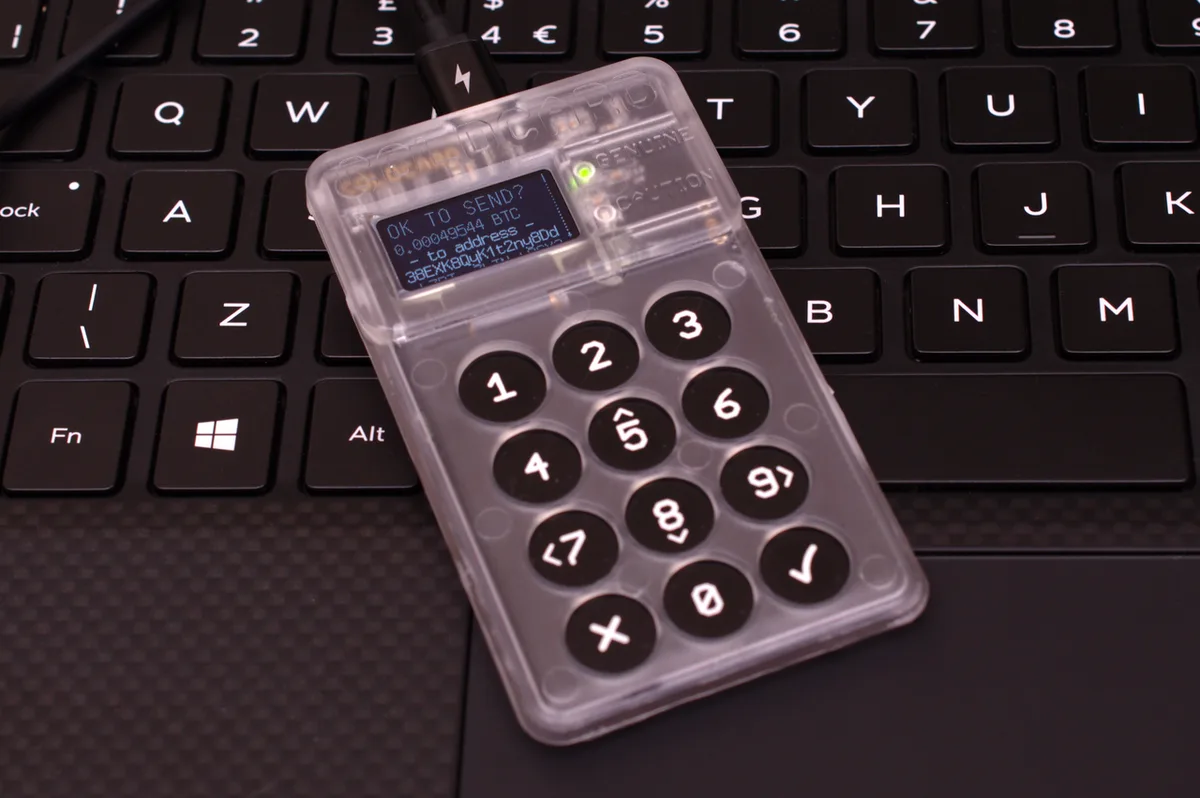
A firmware flaw shipped in March 2021 has now drained roughly 1,816 BTC from Coldcard hardware wallets. That is near 114 million dollars, taken across four waves of attacks since July 30.
The mechanism is quiet and brutal. The 2021 firmware generated keys using weak software-based randomness. Attackers reproduced those keys and swept the coins. No phishing link, no fake app, no user mistake. The vulnerability was baked into the device years ago and sat dormant.
The first wave set the tone. On July 30, attackers drained 1,082.65 BTC, worth about 70.2 million dollars at the time, from 1,196 addresses in 41 minutes. Forty-one minutes to empty wallets people believed were the safest option they had.
Since then the total has climbed. More than 5,200 addresses are now affected, and a possible fourth organized wave appears to be underway. The running loss near 114 million dollars keeps growing as older devices remain exposed.
This matters structurally because cold storage is the trust anchor of self-custody. Traders move coins offline precisely to escape exchange risk and hot-wallet risk. When the offline device itself carries a silent flaw, the whole mental model of "not your keys, not your coins" gets a harder edge: your keys are only as safe as the randomness that made them. That is the real story here, and it is bigger than the dollar figure.
Why a randomness flaw shakes self-custody
The Coldcard exploit does not attack Bitcoin the network. It attacks the assumption underneath self-custody, and that distinction drives the macro read.
Hardware wallets exist to remove counterparty risk. You hold the keys, so no exchange failure can touch you. That promise is why billions in BTC sit in cold storage rather than on trading venues. A firmware flaw that reproduces keys quietly undercuts the promise without breaking a single line of Bitcoin's code.
The transmission mechanism is confidence, not mechanics. When holders question whether their storage is safe, some move coins to exchanges to "check" or re-secure them. Coins that reach exchanges become sellable coins. That is how a security scare becomes selling pressure, even when nothing about supply or demand fundamentally changed.
There is a colder read too. A flaw from 2021 that only surfaces now tells you how long risk can hide inside a product that markets itself as secure. The gap between a confident security claim and the underlying code is where losses live.
The FUD, fear uncertainty and doubt, is the active ingredient here. Most affected holders used older firmware, so the exposed population is finite. But headlines rarely carry that nuance. Retail reads "cold storage hacked" and feels the whole category is unsafe, which spreads fear far wider than the actual 5,200 addresses touched.
How the fear moves BTC then alts
BTC is the first mover in any confidence shock, and here it is barely flinching. Price sits near 62,647 dollars, down 0.6 percent over 24 hours and up 0.2 percent on the hour. For a headline about 114 million dollars gone, that is a muted tape.
That muted reaction is itself the signal. If cold-storage fear were truly systemic, BTC would be dropping hard. Instead it drifts, which tells us the market is treating this as a wallet-vendor problem, not a Bitcoin problem. The distinction keeps the damage contained.
Still, the fear feeds an existing setup. Bitcoin was already leaning toward a pullback, and this story hands nervous holders another reason to sell into weakness. That is where the liquidity cascade could start: FUD-driven selling nudges BTC lower toward support.
If BTC slides, altcoins amplify the move. Alts carry higher beta, so a modest BTC dip usually lands harder on the rest of the board. Thin weekend liquidity would sharpen any air pocket, turning a soft BTC bleed into a steeper alt flush.
Here is the part retail misses. Panic selling on a contained, vendor-specific issue tends to hand cheaper coins to patient buyers. The exploit removes some BTC from a set of old wallets. It does not remove demand from the buyers waiting lower down. That mismatch is exactly what smart money watches for.
Signals that confirm or kill the dip
The cleanest tell is exchange inflow behavior. If frightened holders keep moving coins onto venues, sell pressure builds and the dip extends. If those flows stay quiet, the FUD is loud but shallow, and the selling burns out fast.
Watch BTC's reaction around resistance first. Price has struggled near the 63,000 dollar zone, and failed reclaim attempts there on fading volume would confirm sellers still hold the upper hand. A clean push back above that zone with real volume would instead invalidate the near-term bearish lean.
The 62,500 dollar area is the pivot to track. Holding above it keeps the structure soft but stable. Losing it and flipping it into resistance opens the path toward the lower support band, and that is the move the current setup favors.
Volume tells the truth better than price on days like this. Declining bullish volume on any bounce says the rally lacks conviction and is likely a fade. Rising volume on a defense of support would say buyers are actually stepping in, not just hoping.
Finally, watch whether a genuine fourth attack wave materializes and whether losses climb well past 114 million dollars. A sharply larger figure could deepen the fear and drag price further. A total that stabilizes would let the market move on, and stories like this fade faster than the headlines suggest.
What this FUD means at support
The ParadiseTeam reads this as noise layered on an already-forming dip, not a fresh reason to turn structurally bearish. BTC near 62,647 dollars sits inside a market that was leaning lower before Coldcard ever hit the feed.
Our near-term bias favors a retrace toward the 61,000 to 59,000 dollar band. This exploit does not change that map; it simply gives the move a headline to travel on. FUD like this often accelerates the last leg of a dip that structure already wanted.
That is where the smart-money-versus-retail split gets sharp. Retail reads "cold storage hacked," panics, and sells into weakness near support, exactly the wrong spot. The stops sitting below 61,000 dollars become the liquidity that patient buyers target.
We are watching the 63,000 dollar zone as resistance and 62,500 dollars as the pivot. Declining bullish volume on any bounce keeps our read tilted down toward the accumulation band. A reclaim of 63,000 dollars on strong volume would tell us the dip thesis is wrong and force a rethink.
Into the 61,000 to 59,000 dollar zone, the ParadiseTeam favors patience over prediction. The plan is not to catch a falling knife on the first FUD candle. It is to let panic sellers do their work, then look for high risk-to-reward (reward relative to risk) entries where the crowd is most fearful.
Track it live: our Crypto Fear and Greed Index and the crypto liquidation heatmap both update in real time, so you can watch this shift for yourself.
Related coverage
For exact entries, targets, and stop losses with full risk management, that is what ParadiseFamilyVIP is for. New to reading these moves? Start with our crypto trading strategies guide.
ParadiseTeam is monitoring the market situation closely, and we are taking these developments into consideration while building our trading tactics inside ParadiseFamilyVIP.
Crypto trading involves substantial risk. Prices are volatile and you can lose money. This article is educational and is not financial advice. Past performance does not guarantee future results.
Where does BTC go next as Coldcard fear spreads?
This is how the Paradisers are calling it. Tap your call.
No calls on this one yet. Tap yours to be the first.
Free account, no password. Members just sign in.










Join the discussion
No comments yet. Members, share how you are reading this.