


Listen: the breakdown
Developing story update (October 26, 2026, 00:37 UTC):
CoinDCX confirms $16M loss from retired wallets. CEO had called breach reports a 'false alarm' days prior. based on our sources ·
Developing story update (October 25, 2026, 19:09 UTC):
CoinDCX Admits $16M Loss Just Days After CEO Denied Fresh Wallet Breach. The exchange said the loss was absorbed by the company and customer funds remained unaffected.
Market briefing: CoinDCX admits it lost $16M from old wallets compromised in a July 2025 hack, days after its CEO called breach reports a false alarm. BTC sat near $80,578 and barely moved.
- CoinDCX confirms a $16M loss from old wallets tied to its July 2025 hack
- A failed sweeping service let user deposits pile up in compromised addresses
- The exchange says it absorbed the loss, yet the admission follows a public denial
CoinDCX now admits a $16M loss from old wallets hit in its July 2025 hack, just after its CEO waved it away as a false alarm. So what changed, and why did crypto barely blink?
CoinDCX has admitted it lost $16M. The funds sat in old wallets compromised during the exchange's July 2025 hack. A sweeping service that should have moved user deposits to safe addresses failed quietly, so deposits kept landing in wallets an attacker already controlled.
The timing is the part worth sitting with. On Wednesday, the exchange's CEO called the fresh breach reports a false alarm. By the admission, that false alarm had a number attached to it, and the number was $16M. We have watched enough cycles to notice how often a denial arrives before the disclosure, not instead of it.
CoinDCX says it absorbed the loss itself. User balances, on its telling, stay whole. That matters for the people who deposited there, and it is the right call for a company that wants to keep its customers.
But absorbing a loss is not the same as closing a wound. The hole came from plumbing, a sweeping process that stopped doing its one job while funds flowed into addresses that were no longer safe. That is an operational failure, and operational failures rarely travel alone.
So this is a trust story, not a market story. The wider tape says as much. BTC traded near $80,578, up a rounding error on the day, while ETH held around $2,352.77. A single exchange absorbing $16M is painful for CoinDCX and almost invisible to the aggregate order book.
Trust erosion when the sweep quietly fails
The mechanism here is confidence, not capital. $16M is not a figure that moves global crypto liquidity. It is a figure that moves how users feel about leaving coins on one specific exchange, and feelings about custody are how exchanges live or die.
Start with the sequence. A hack in July, a sweeping service that failed, deposits piling into compromised wallets, then a public denial, then an admission. Each step is survivable alone. Stacked together, they tell depositors that the safeguards and the messaging both slipped at the same time.
That is the real transmission channel. When trust in one crypto exchange cracks, the first instinct is to withdraw, and withdrawals from one name rarely stay contained if the story grows. For now there is no sign of that spread. The brief shows no broader contagion, no liquidity drain across the system.
There is a wider point for traders who hold balances anywhere. Self-custody debates tend to spike after episodes exactly like this, where the loss came not from a dramatic exploit but from routine machinery failing in the background.
Markets price systemic risk loudly and idiosyncratic risk quietly. This reads as idiosyncratic. The admission dents CoinDCX and reminds everyone that an exchange balance is a claim on that exchange's competence, which is precisely why the macro tape shrugged while the headline stung.
Why BTC barely flinched on the admission
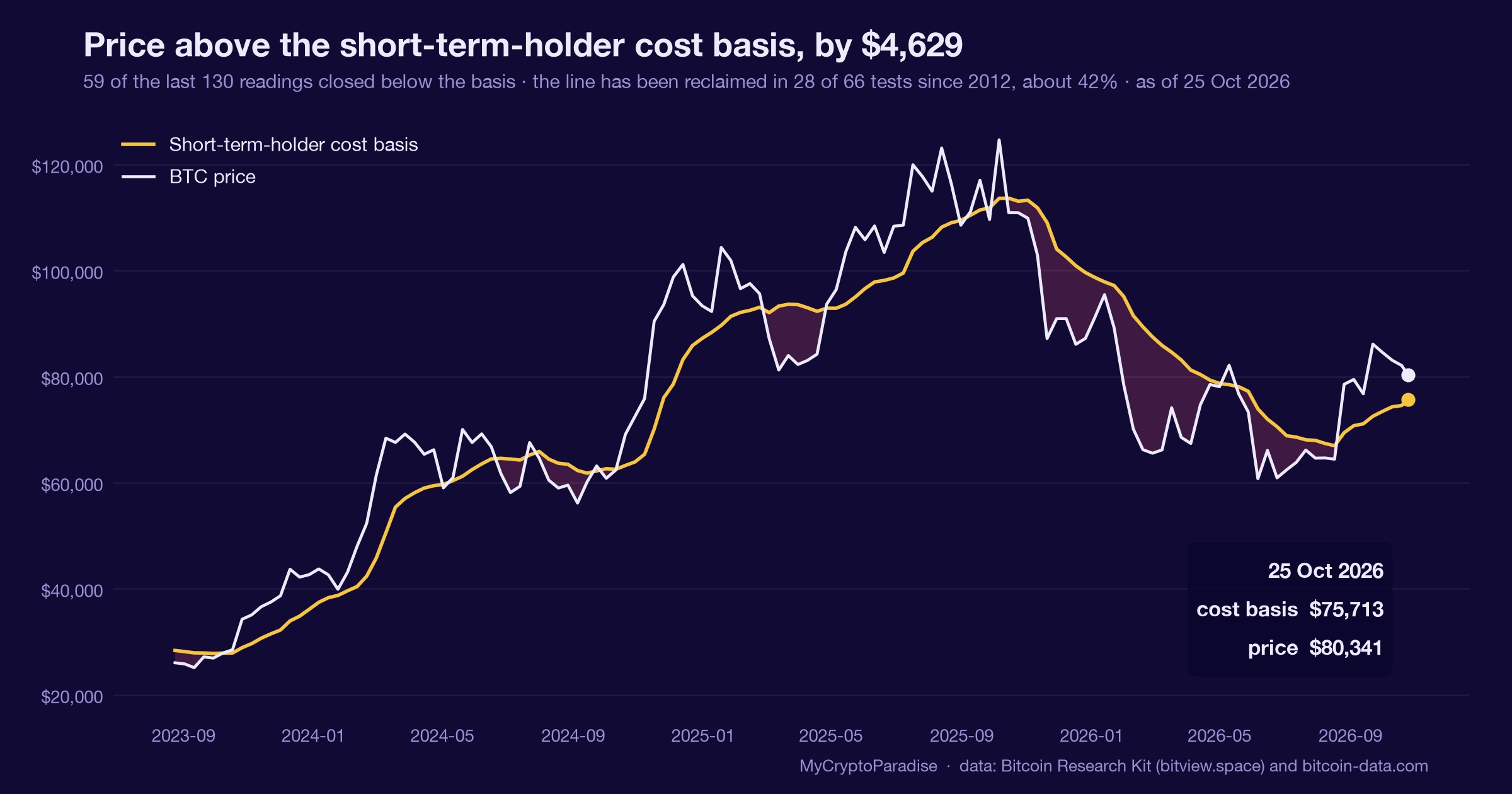
BTC did almost nothing, and that is the honest read. Price sat near $80,578, up a tenth of a percent on the day, while the $16M admission made its rounds. ETH matched the calm, near $2,352.77 and modestly green.
That non-reaction is itself the signal. A loss confined to one exchange's old wallets does not force sellers across the market. There is no cross-exchange cascade, no visible rush to the exits in the aggregate book, no liquidity hole opening under majors.
Run the chain anyway. Driver: one exchange absorbs a $16M loss. Macro effect: none worth measuring. Liquidity effect: no discernible drain on system depth. BTC, then ETH, then alts: minimal to no reaction at each step.
Where it does bite is narrower and real. Trust in CoinDCX takes the hit, and that lands on its own users and its own order book, not on BTC's.
We would separate this from the day's heavier stories, the China seizure of 61,800 BTC and the three-day drawdown that dragged price under $80,000. Those touch supply and sentiment at scale. This one touches a single balance sheet. So the market-impact verdict stays bearish by first-order logic, because any admitted exchange loss chips at ecosystem trust. But the magnitude is small, localized, and already shrugged off by the broad tape rather than priced as contagion.
Signals that turn one loss into many
Watch the withdrawals first. A $16M admission is only localized while CoinDCX users stay put. A visible outflow surge, thinning order books on that exchange, or a pause on withdrawals would turn a contained loss into a confidence run, and that is the line between idiosyncratic and systemic.
Watch the follow-up disclosures too. The CEO called it a false alarm on Wednesday, then the number appeared. If more wallets, more deposits, or a larger figure surface, the market will stop treating this as closed. The absorbed $16M is the floor of what we know, not a ceiling anyone has verified.
Invalidation of the calm read is simple. Any sign the compromise reaches beyond old wallets into live custody, or any hint other exchanges share the same sweeping weakness, would widen this fast.
Confirmation that it stays contained is just as simple. Balances honored, withdrawals normal, no new numbers, and the broad tape unmoved. That is the path the facts currently support.
On the majors, the thing to watch is not this story at all. It is whether BTC holds the lower $80,000s or loses them to the week's bigger drivers. A single-exchange loss will not set that direction. So track CoinDCX's own flows for the narrow risk, and track the macro calendar for the real one. Do not confuse the two.
Reading an isolated hack against BTC at support
The ParadiseTeam treats this as a trust event with a small blast radius, not a market driver. CoinDCX absorbing $16M hurts its own users and does nothing measurable to BTC near $80,578. Position sizing on majors should not move one basis point on this headline.
Set it against the backdrop, though, because the backdrop is tense. BTC is pressing the lower end of the structure we have been tracking. $81,000 was important support and did not hold, and $79,000 is the critical line whose loss flips the medium-term read bearish toward a deeper move.
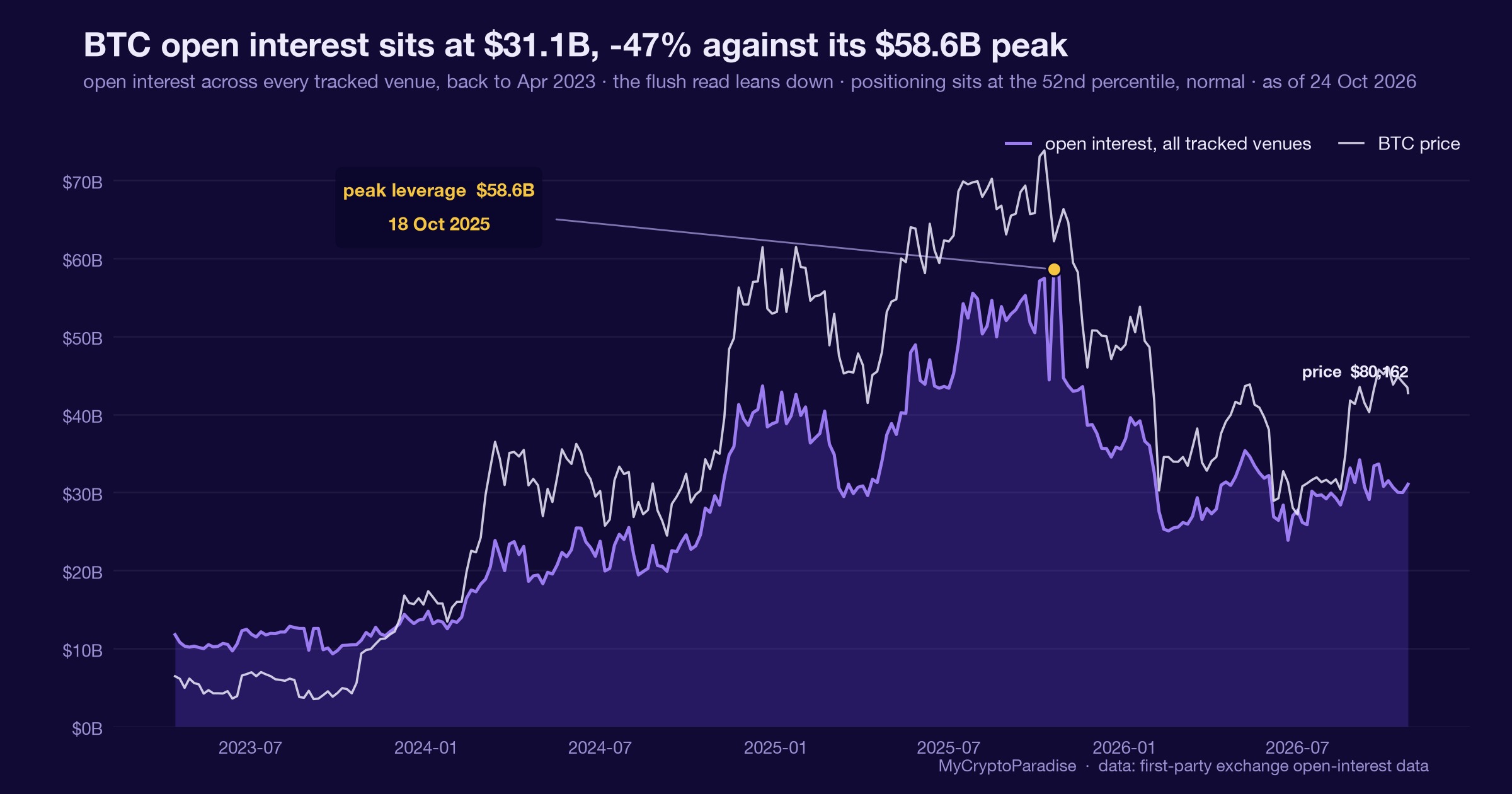
Here is where the two stories almost rhyme. Funding has flipped positive without price following, which tells us longs are crowded while conviction is thin. A trust wobble at an exchange, even a small one, is the kind of jitter that nudges nervous retail toward the exit while the tape is already heavy.
Smart money is showing only an early, unconfirmed sign of stepping into longs, not a full commitment. No capitulation has printed. So we are not calling a bottom off anyone's bad news.
The practical read: ignore CoinDCX for your BTC thesis, and let the $79,000 line do the talking. Hold above it and the push toward $90,000 stays alive. Lose it and the structure invalidates, regardless of any single exchange's plumbing.
The read behind this: we framed this story through our own market analysis, Bitcoin at Support: Can Bulls Fight Back?
Track it live: our live crypto funding rates and the Crypto Fear and Greed Index both update in real time, so you can watch this shift for yourself.
Related coverage
For exact entries, targets, and stop losses with full risk management, that is what ParadiseFamilyVIP is for. New to reading these moves? Start with our crypto trading strategies guide.
ParadiseTeam is monitoring the market situation closely, and we are taking these developments into consideration while building our trading tactics inside ParadiseFamilyVIP.
Crypto trading involves substantial risk. Prices are volatile and you can lose money. This article is educational and is not financial advice. Past performance does not guarantee future results.
Does the CoinDCX $16M admission stay a one exchange problem?
This is how 4 Paradisers are calling it. Tap your call.
No calls on this one yet. Tap yours to be the first.
Free account, no password. Members just sign in.







Join the discussion 4
i always keep an eye on how these things get reported vs. the actual market reaction 📊🤔, it's usually less drama than the headlines suggest. Ingrid's right though, that's a big whack 😬.
For me, it's always about the capital preservation. A loss like this makes me double check my own cold storage practices.. you know?
crypto barely moved"?! 🤨 That's the real magic trick here 🪄. For us rotating around, $16M still feels like a lot of paper hands shaking, no?! 😬📉
honestly, them saying crypto barely moved after a $16M loss feels a bit off to me 🤔. a hack of that size should shake things up more.