


Developing story update (August 01, 2026, 16:40 UTC):
The regulatory picture has hardened since we first covered this. Our sources indicate the SEC has now frozen Nasdaq’s approval of the QBTC bitcoin options product while it reconsiders the decision, not merely opened a review. That is a firmer procedural step, and it puts the product on hold rather than simply under examination.
For traders the immediate spot impact stays negligible, with bitcoin near $62,950 and a roughly flat hourly move. The jurisdictional fight between the SEC and CME over whether bitcoin options belong under commodity oversight is now the variable to track, since it shapes how quickly listed crypto derivatives can expand.
What to watch now: Whether the freeze on QBTC options is lifted, extended, or reshaped by the SEC-CFTC jurisdictional question.
Listen: the breakdown
Market briefing: The SEC has reopened its review of Nasdaq bitcoin options after CME argued the contracts belong under the CFTC. Bitcoin barely flinched, trading near $62,979, down 0.2% on the day.
- The SEC is reviewing Nasdaq's bitcoin options approval after a formal challenge from CME.
- CME argues bitcoin is a commodity, placing the options under CFTC authority, not the SEC.
- BTC held near $62,979, down 0.2%, showing the market treats this as procedural noise.
The Nasdaq bitcoin options approval is back under SEC review after a CME challenge. Bitcoin held near $62,979 and barely moved. So is this a real threat, or background noise?
The SEC has reopened its review of Nasdaq's bitcoin options approval. The trigger was a formal challenge from CME. The argument is old, but the stakes are not.
CME says bitcoin is a commodity. That would place options tied to its value under the CFTC, the commodities regulator, rather than the SEC. So Washington is once again arguing over who holds the rulebook for crypto products.
This is a turf war dressed as a technicality. Traders who have watched a few cycles know the pattern well. The press release is confident, the jurisdiction is contested, and the paperwork moves slowly.
What matters for us is the mechanism, not the theatre. A contested approval can delay new product launches. Institutions dislike ambiguity, and a regulator dispute supplies exactly that.
Yet price barely reacted. BTC was trading near $62,979 as of the print, down 0.2% on the day. A market genuinely frightened by this headline does not shrug like this.
The wider backdrop frames the calm. United States spot ETFs recorded significant net inflows on Thursday, ending a four-day outflow streak. New SEC rules are also clearing a path for yield-bearing funds.
Meanwhile MicroStrategy reported an $8.22 billion net loss in the second quarter, blamed on bitcoin's retreat. So the regulator tightens in one hand and loosens in the other, while a flagship corporate holder counts a paper wound.
Why the jurisdiction fight reaches real liquidity
The importance here is not the ruling. It is the uncertainty the process creates.
When the SEC and CFTC dispute authority, product timelines stretch. New bitcoin options, structured funds, and institutional access all wait on clarity. Capital that wants regulated exposure sits in cash until the path is clear.
That delay is the real transmission channel. Regulatory friction slows the pipeline of fresh institutional money. Slower inflows mean thinner order books at the margin, which makes existing levels easier to defend or break.
There is a second-order effect too. A jurisdictional fight signals that the framework is still unsettled, and unsettled frameworks keep the largest allocators cautious. They size smaller, hedge more, and demand a wider margin of safety.
But the same week cuts the other way. Spot ETF inflows returned after a four-day drought. New rules are opening yield-bearing funds. That is the regulator building rails even as it argues over who owns them.
So the net macro read is mixed, not bearish. One review does not reverse a broader move toward regulated access. This is why the ParadiseTeam treats the story as friction, not a catalyst. Friction changes the speed of capital, not its direction. The direction is still set by liquidity, positioning, and where the largest players choose to accumulate or unload.
How a flat tape hides quiet positioning
The cleanest tell is the muted reaction. A headline this loud, met with a 0.2% move, tells you the news was already discounted.
Bitcoin leads the read. Near $62,979, BTC is holding just above the zone that matters most to us. Open interest, the total value of live derivatives contracts, has not spiked in panic. That absence of a violent unwind is itself information.
Watch the sequence from here. If BTC stays firm on this news, it drains sellers who expected a regulatory shock. Trapped shorts then become fuel, because their stop-losses sit above price and feed any squeeze higher.
Ethereum tends to follow that lead with a lag. A calm BTC lets ETH grind, while a sharp BTC flush drags it down faster than the majors. So ETH is the amplifier, not the driver, in a story like this.
Alts sit at the end of the chain. They need BTC stability plus real spot volume before they run. On a two-sided regulatory headline, that confirmation rarely arrives first.
The honest read is that no single catalyst is moving this tape today. This review adds to the noise rather than setting a new trend. Liquidity, not the CME filing, decides whether the next leg resolves up toward redistribution or down into the buy zone.
The $62,500 line and the volume tell
One level frames everything now: $62,500. It is the invalidation for the current bullish structure, and price sits just above it.
Confirmation looks specific. We want a 4-hour candle that closes above the ascending trend line, not just a wick that pokes through. A clean reclaim of prior resistance as support, backed by rising spot volume, would signal buyers are in control.
Volume is the referee. Higher highs in price should carry higher highs in volume on spot exchanges. If price climbs while volume fades, that is a warning, not a green light.
Invalidation is equally clear. A decisive 4-hour close below $62,500 breaks the near-term bullish case. That would open the door toward the $61,000 to $59,000 secondary zone, where fresh long setups tend to form.
There are honest caveats. A bearish cross and a fading MACD histogram, a momentum gauge, are flashing amber. They are not an immediate sell trigger, but they argue for patience over chasing.
On the regulatory side, watch for any procedural update on the review itself. A fast resolution would remove an excuse for caution. A drawn-out fight keeps institutional buyers in wait-and-see mode.
So the checklist is simple. Trend line reclaim with volume equals strength. A close below $62,500 equals a rethink. Everything else is noise around those two lines.
What the SEC review means near support
The ParadiseTeam reads this review as friction, not a turning point. It changes sentiment at the edges, not the structure underneath.
Apply it to the map. BTC near $62,979 sits directly above the $62,500 invalidation and above the $61,000 reaccumulation zone. That is a spot where a scary headline is most useful to whoever is buying.
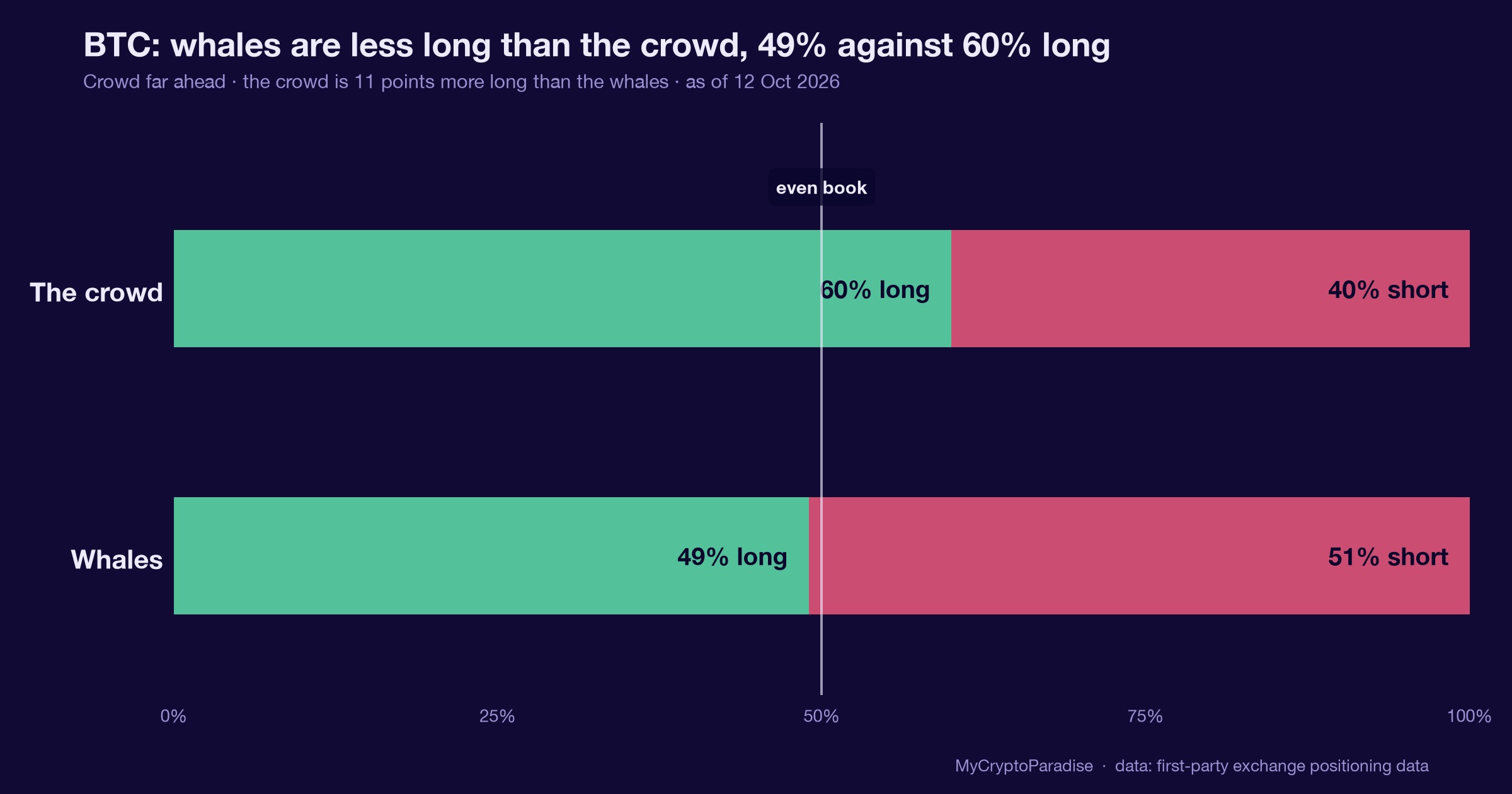
Here is the mechanism. Retail often reads SEC versus CFTC friction as a clear bearish headwind. If that fear pushes price toward $62,500, panic sellers hand size to larger players who are quietly reaccumulating near $61,000. So the news, if anything, helps the accumulation case rather than hurting it. The muted price reaction suggests the crowd is not yet capitulating, which keeps the structure intact for now.
The upside path stays framed by the levels we already track. Reclaim the trend line with volume, and $69,000 comes into view as the first area of shorting interest, with $79,000 the maximum target for this leg.
The discipline is risk-first. A 4-hour close below $62,500 flips the read and points toward the $61,000 to $59,000 buy zone instead.
The ParadiseTeam is watching the volume tell, not the regulatory noise. This filing does not decide the direction. It simply gives fearful hands a reason to sell to patient ones near support.
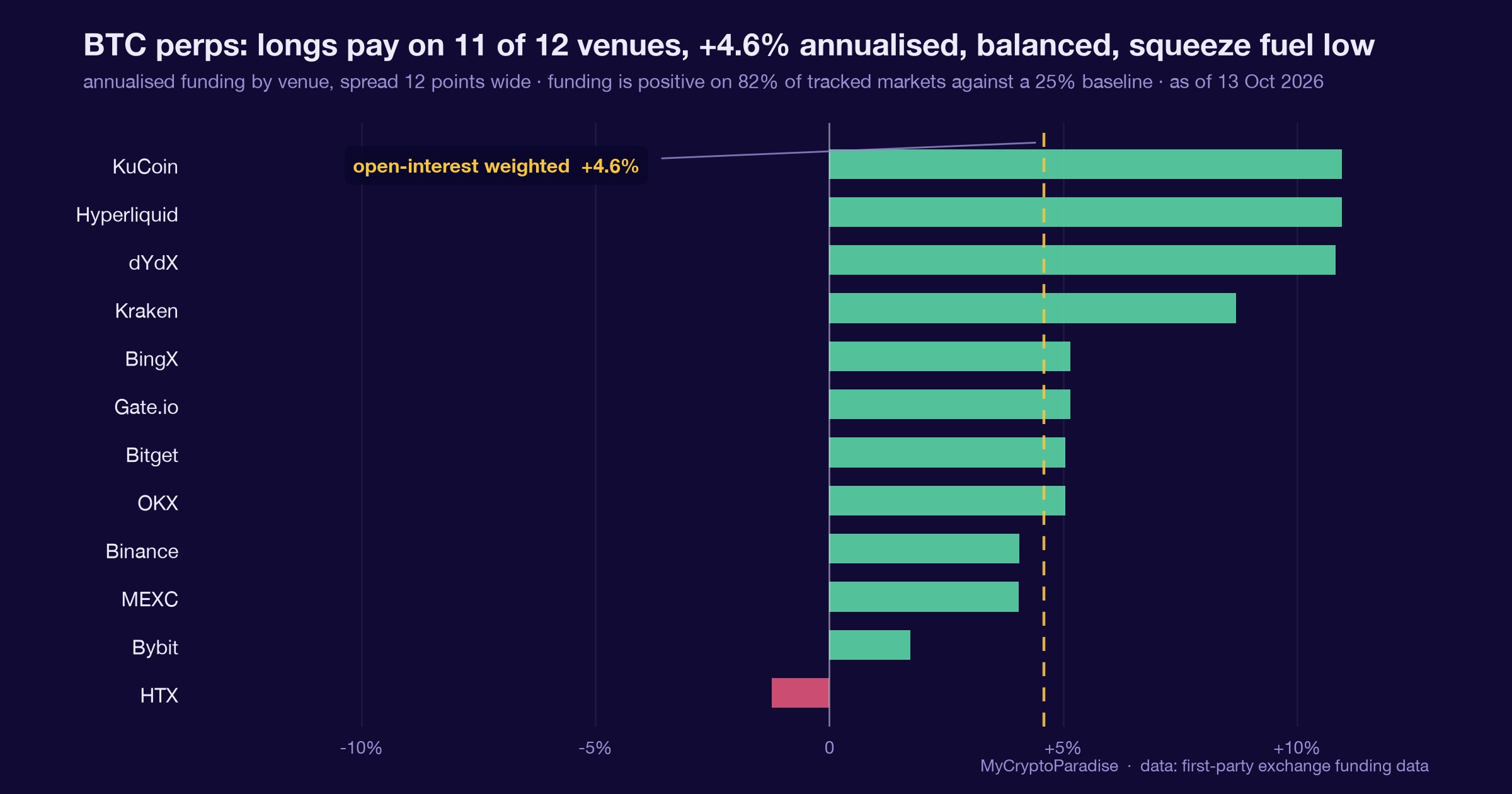
Track it live: our Crypto Fear and Greed Index and the live crypto funding rates both update in real time, so you can watch this shift for yourself.
Related coverage
For exact entries, targets, and stop losses with full risk management, that is what ParadiseFamilyVIP is for. New to reading these moves? Start with our crypto trading strategies guide.
ParadiseTeam is monitoring the market situation closely, and we are taking these developments into consideration while building our trading tactics inside ParadiseFamilyVIP.
Crypto trading involves substantial risk. Prices are volatile and you can lose money. This article is educational and is not financial advice. Past performance does not guarantee future results.
Does BTC hold $62,500 and push toward $79k, or lose the line first?
This is how the Paradisers are calling it. Tap your call.
No calls on this one yet. Tap yours to be the first.
Free account, no password. Members just sign in.
Follow this topic: Crypto regulation news







Join the discussion
No comments yet. Members, share how you are reading this.