

Listen: the breakdown
Developing story update (September 24, 2026, 13:09 UTC):
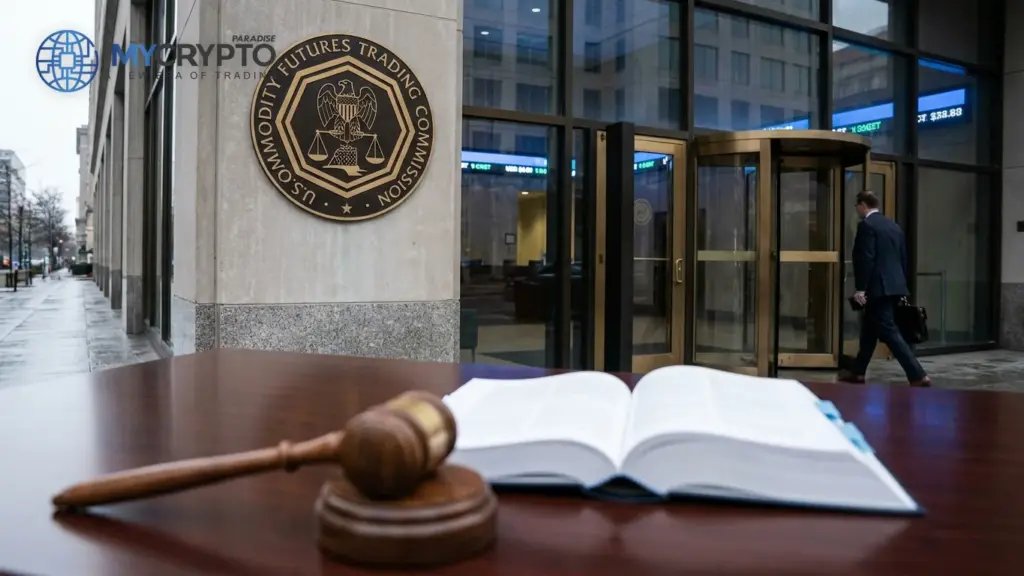
Update: The CFTC has moved past commentary and taken a concrete procedural step, filing two prerules toward its crypto market-structure framework. This turns Selig’s stated intent to act without new legislation into a documented action rather than a talking point.
For traders this is a small but real signal that the agency is building the regulatory scaffolding independently. It does not change the immediate tape, where BTC and ETH remain modestly negative on the day, which keeps the near-term read tied to the ongoing distribution backdrop rather than to a fresh regulatory catalyst.
What to watch now: Watch the content and comment windows of the two filed prerules for the actual scope of the market-structure rules.
Market briefing: The CFTC says it will build crypto market rules without new legislation, yet Bitcoin slid near $83,477 as the news ran green. A bullish headline that fails to lift price is the tell.
- CFTC Chair Selig said 'it's go time' and will write crypto market-structure rules without new legislation.
- The move lands eight days after the Senate blocked the Clarity Act, with stablecoin support flagged as the near-term priority.
- BTC fell to $83,477 and ETH to $2,645.9 despite the green regulatory headline, a divergence we read as distribution.
Source: U.S. CFTC
The CFTC crypto rules push arrived with three words: it's go time. Yet Bitcoin slid instead of rallying. When good regulatory news cannot lift price, who is really selling?
The CFTC has decided it will not wait for Congress. Chair Michael Selig used three words on September 24 to set the tone: it's go time. Eight days earlier, the Senate blocked the Clarity Act, the bill meant to hand crypto its rulebook. Selig's answer was to build that rulebook anyway.
His plan is ambitious on paper. The agency will reevaluate all of its rules for a shift to 24/7 onchain markets driven by algorithms and agentic finance. It will also keep looking for ways to support stablecoin use among the participants it regulates. This is a regulator promising to meet crypto where it already lives.
Markets shrugged.
Bitcoin was trading near $83,477 as of the print, down 2.3% on the day. Ether sat near $2,645.9, off 2.8%. A green regulatory headline met red candles, which is the sort of divergence that pays attention to itself. Clarity was promised, yet buyers did not arrive.
That gap between message and price is the story. Regulatory intent is not a filled order. And in a market already leaning heavy, good news that fails to lift price often tells you more than the news itself.
Regulation by agency, not by statute
Rulemaking without legislation changes the shape of the risk, not just the mood. When an agency writes rules alone, those rules can be challenged, revised, or reversed far more easily than a statute passed by Congress. So the clarity on offer here is real but provisional. Traders pricing a permanent regime shift are pricing something that does not yet exist.
The macro timeline matters too. A promise to rebuild rules for 24/7 onchain markets is a multi-year project, not a next-quarter catalyst. Liquidity does not flood in on a speech. It flows on settled law, custody certainty, and institutions that can act without headline risk. None of that arrived today.
Stablecoin support is the one line with near-term teeth. Regulated stablecoin use is the plumbing that lets larger players move size onchain. If that path widens, dollar liquidity reaches crypto rails faster. That is structurally constructive, but it is a slow build, not a switch.
Intent is cheap. Execution is what repricing waits for.
Green news, red candles across majors
Price did the opposite of what a bullish headline suggests. BTC slid to $83,477 while the news ran green, and that reaction is the signal. When a market cannot rally on good news, the marginal buyer is already committed and the marginal seller still has room to work.
BTC sets the tone, and BTC is heavy. It trades below the $88,000 resistance that has capped every attempt to reclaim momentum. Beneath it sits a liquidation pocket under $67,000, where leveraged longs would be forced out. That structure frames everything below.
ETH followed BTC lower, off 2.8% near $2,645.9, showing no independent bid from the regulatory story. When the second-largest asset cannot decouple on news that theoretically helps it most, alts inherit the weakness with a multiplier.
Alts are the tell. They fall faster and bounce weaker whenever Bitcoin dominance holds firm. Retail crowds them in extreme greed, which is precisely the fuel a distribution phase burns. The liquidity cascade runs top down, and today it ran the wrong way for bulls.
$88,000 remains the line that matters
The cleanest confirmation of the bearish read is simple. If BTC keeps rejecting $88,000 and rolls back toward the $67,000 liquidation zone, the distribution thesis holds. Failed rallies into resistance, on news that should have helped, are how smart money hands bags to a greedy crowd.
Invalidation is equally clear. A decisive weekly reclaim of $88,000, with volume and a hold above it, would force a rethink and open probability toward $99,000. Until that happens, upside is a hope, not a level.
Watch the stablecoin thread specifically. Any concrete regulated stablecoin expansion would be the first real liquidity input from this announcement. That is the piece worth tracking, more than the headline itself.
Also watch how retail positions from here. If greed stays extreme while price grinds sideways under resistance, the case for a capitulation flush toward the $44,000 to $55,000 exchange-of-hands zone strengthens. Capitulation is not the end of crypto. It is usually where the next accumulation begins.
News moves headlines. Structure moves price.
Regulatory clarity as exit liquidity
The ParadiseTeam reads this announcement as another data point inside an ongoing distribution phase, not a trend-changer. BTC near $83,477 sits below the $88,000 weekly resistance we have flagged as the line that decides everything. A bullish regulatory headline that could not lift price into that level tells us who is selling into whom.
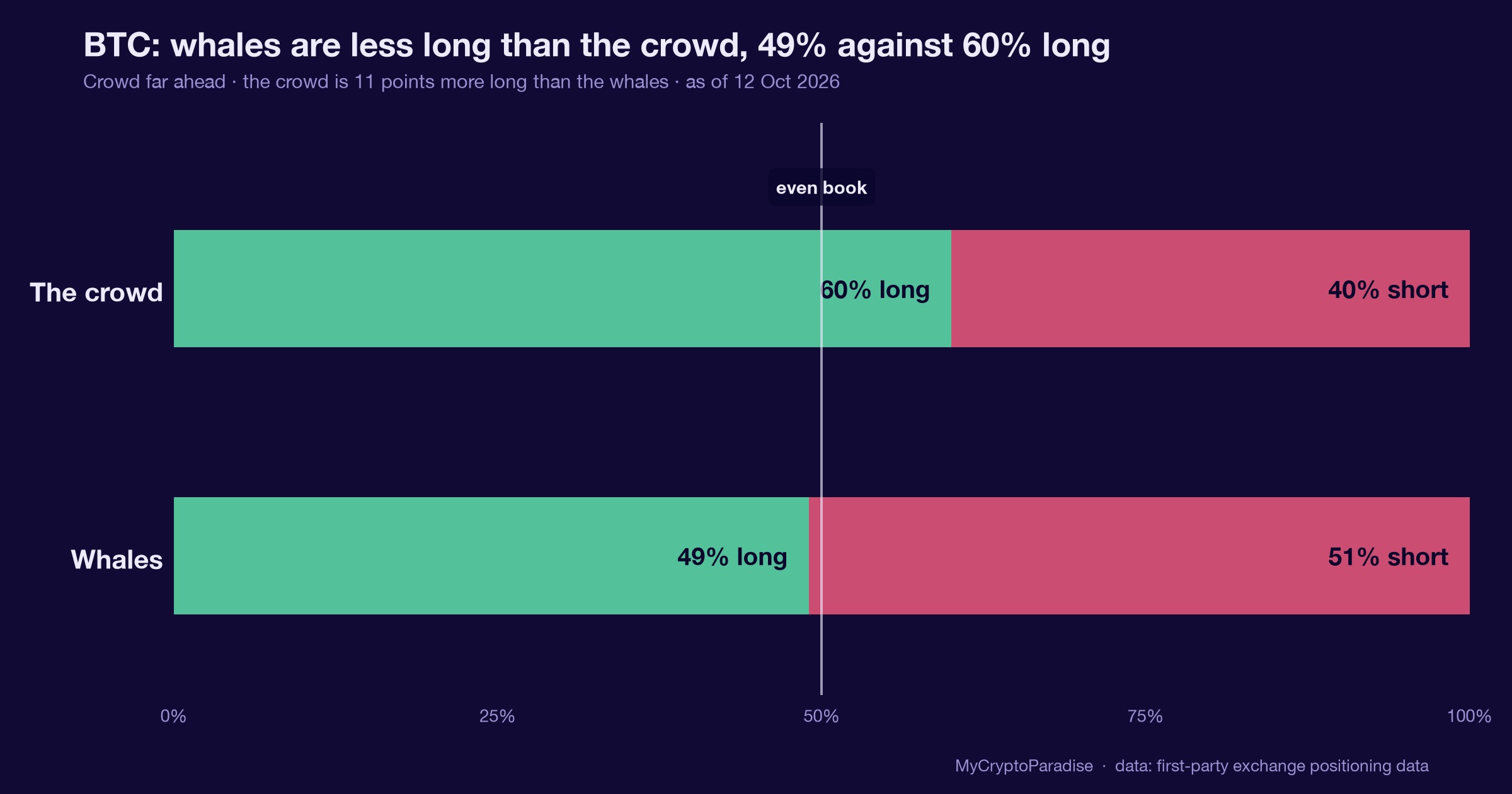
The mechanism is straightforward. Retail, in extreme greed, reads regulatory clarity as a long-term green light and keeps buying. Smart money, still heavy from higher prices, uses that demand as exit liquidity. That is distribution, and today's non-reaction fits it cleanly.
On positioning, the ParadiseTeam favors protecting existing longs over adding new ones. Moving a stop-loss (SL) toward breakeven and trimming into strength makes sense while $88,000 caps the tape. New aggressive longs into this structure fight the dominant flow.
A high-probability short only earns attention on confirmed rejection at resistance, never on a guess. The deeper opportunity is patience: the $44,000 to $55,000 zone is where the ParadiseTeam expects smart money to reaccumulate aggressively. Probabilities, not certainty, guide every line of this.
The read behind this: we framed this story through our own market analysis, Can Bitcoin Reach a New High at $169K?
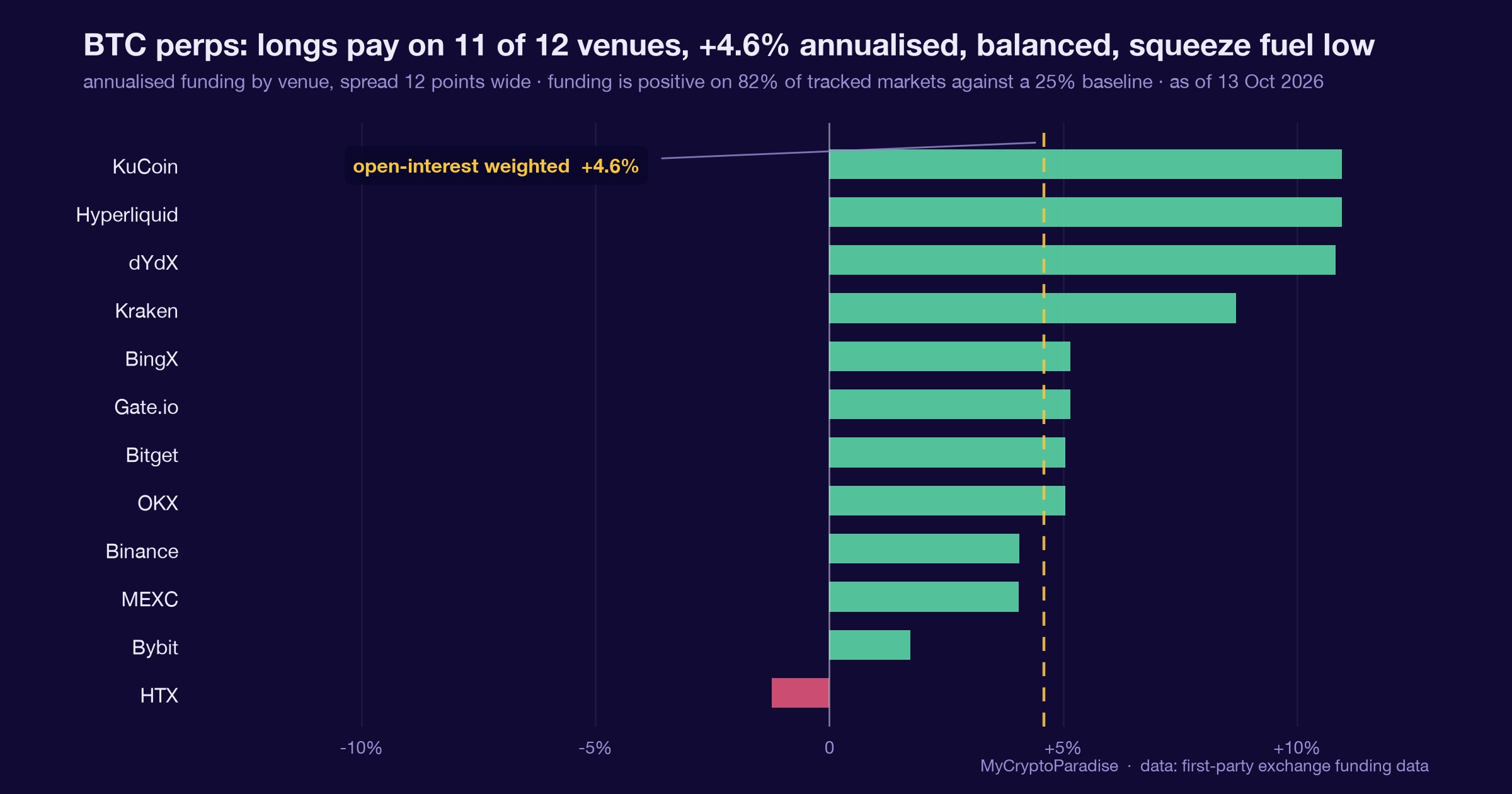
Track it live: our live crypto funding rates and the Crypto Fear and Greed Index both update in real time, so you can watch this shift for yourself.
Related coverage
For exact entries, targets, and stop losses with full risk management, that is what ParadiseFamilyVIP is for. New to reading these moves? Start with our crypto trading strategies guide.
ParadiseTeam is monitoring the market situation closely, and we are taking these developments into consideration while building our trading tactics inside ParadiseFamilyVIP.
Crypto trading involves substantial risk. Prices are volatile and you can lose money. This article is educational and is not financial advice. Past performance does not guarantee future results.
Does BTC reclaim $88,000 before it revisits the $67,000 zone?
This is how 26 Paradisers are calling it. Tap your call.
No calls on this one yet. Tap yours to be the first.
Free account, no password. Members just sign in.
Follow this topic: Crypto regulation news











Join the discussion 4
so if Selig is just going ahead with new rules, does that mean they dont need a written mandate? seems like a deviation from protocol to me
Oh wow! 😲 I was just about to screenchot a chart I saw and this article popped up. It makes you wonder how quick the market moves based on these kinds of news, right? 📈🤔
Always useful to see how these things actually play out on the ground rather than just reading whitepapers. Important for options traders. 🤔
It's interesting how this kind of regulatory news always makes me check the charts right away. Wonder what the impact will be longer-term.