


Listen: the breakdown
Market briefing: Bybit has sued North Korea and the Lazarus Group over the $1.5 billion hack and won an asset freeze. Bitcoin barely blinked, trading near $64,843, up 0.9 percent, as the market keeps absorbing buying pressure at resistance.
- Bybit sued North Korea and the Lazarus Group over the $1.5 billion hack.
- An asset freeze tied to the Bybit lawsuit has already been secured.
- BTC near $64,843 and ETH near $1,913 barely moved on the news.
Bybit is suing North Korea and Lazarus over a $1.5 billion hack, yet Bitcoin barely twitched. So is this a real driver, or just noise at resistance?
Bybit has taken the Lazarus Group to court. The exchange filed a lawsuit against North Korea and the state-linked hacking crew over the $1.5 billion theft, and it has already secured an asset freeze tied to the case. That is a serious escalation. Exchanges usually chase stolen funds quietly, through tracing firms and back-channel pressure. A public lawsuit against a sovereign state and a named hacking group is a different tone entirely, and the freeze suggests some assets were actually located.
Yet the market shrugged. Bitcoin was trading near $64,843, up 0.9 percent on the day, while Ethereum sat near $1,913. Over the last hour, both moved a fraction of a percent. If this were a genuine price driver, you would expect a flinch. There was none.
That gap between headline weight and price reaction is the real story here. The hack itself is old news, already digested weeks ago. The lawsuit is the legal aftermath, not a fresh shock to supply or sentiment. So we treat it honestly: this is an important enforcement development, but it is not what is moving BTC today. Price is being decided by something quieter and more structural, the ongoing tug-of-war between retail buying into resistance and smart money waiting patiently below.
Why the Bybit lawsuit barely moved price
The transmission chain from a lawsuit to spot price is thin, and that matters. A recovery action changes who eventually holds the stolen funds. It does not change today's liquidity, today's leverage, or today's order flow.
Contrast that with an actual driver. Fresh outflows, a new exploit, an ETF decision, or a supply unlock all hit the market immediately, because they change how much coin sits ready to buy or sell right now. The Bybit case does none of that. The theft already happened, the market already priced the loss, and a courtroom timeline runs in months, not minutes.
There is a slow, second-order angle worth naming. If enforcement against Lazarus tightens over time, the industry's security narrative improves, which is mildly supportive for institutional confidence. But that is a story for quarters ahead, not for this session's candles.
So the honest read is this: the lawsuit is real and confirmed, but its market impact is muted. We separate the fact from the effect. The fact is a $1.5 billion legal fight and a freeze. The effect on near-term BTC pricing is close to zero, which is exactly why the tape ignored it.
That leaves the actual driver elsewhere. Current price action is being set by structure, not by this headline, and traders who anchor to the news risk watching the wrong screen entirely.
How liquidity is really moving across BTC and ETH
Follow the liquidity, not the headline. Bitcoin held near $64,843 with a modest 0.9 percent daily gain and almost no hourly change. That flatness is information: it tells you buyers and sellers are roughly balanced right at a level that matters.
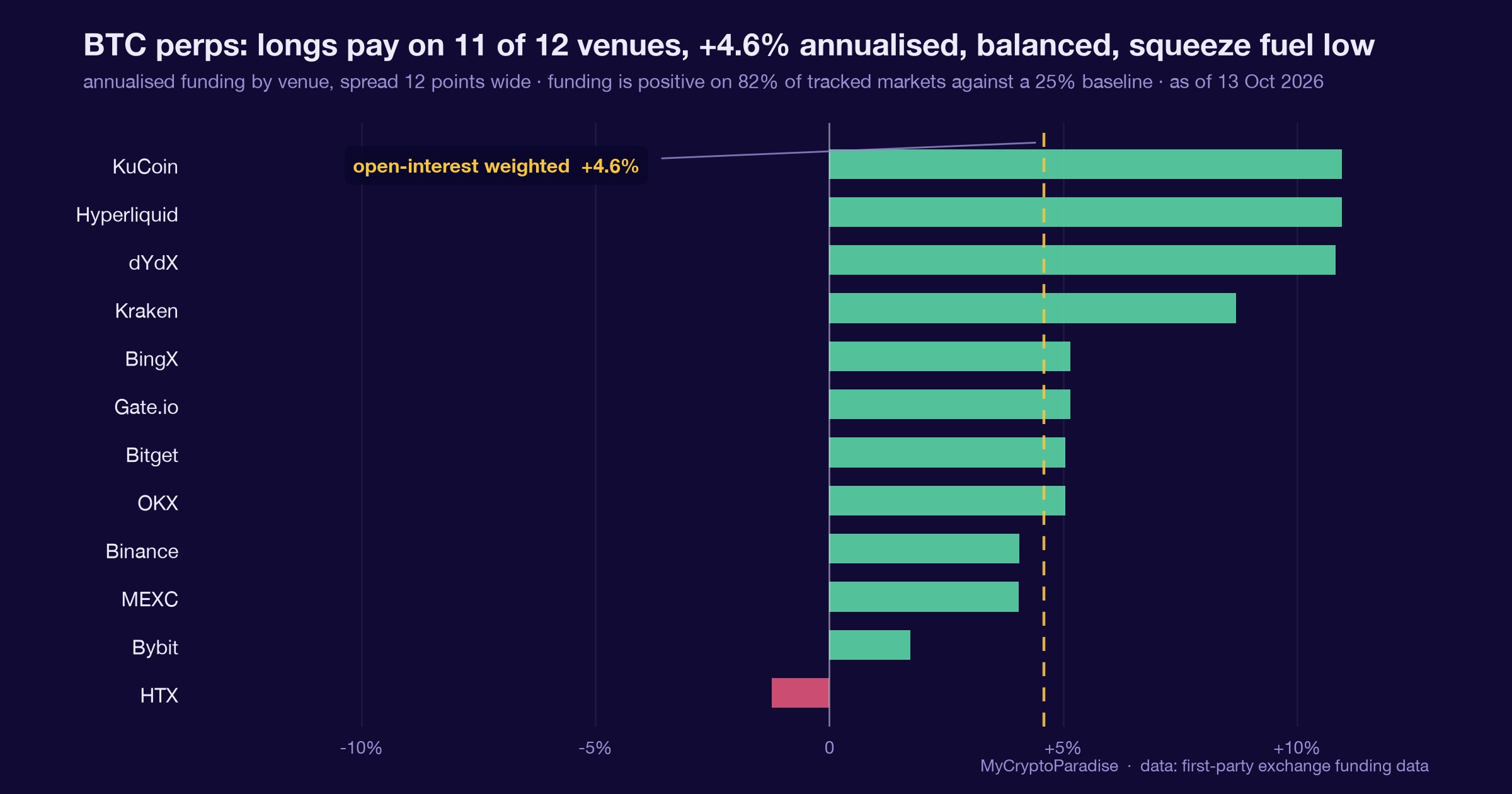
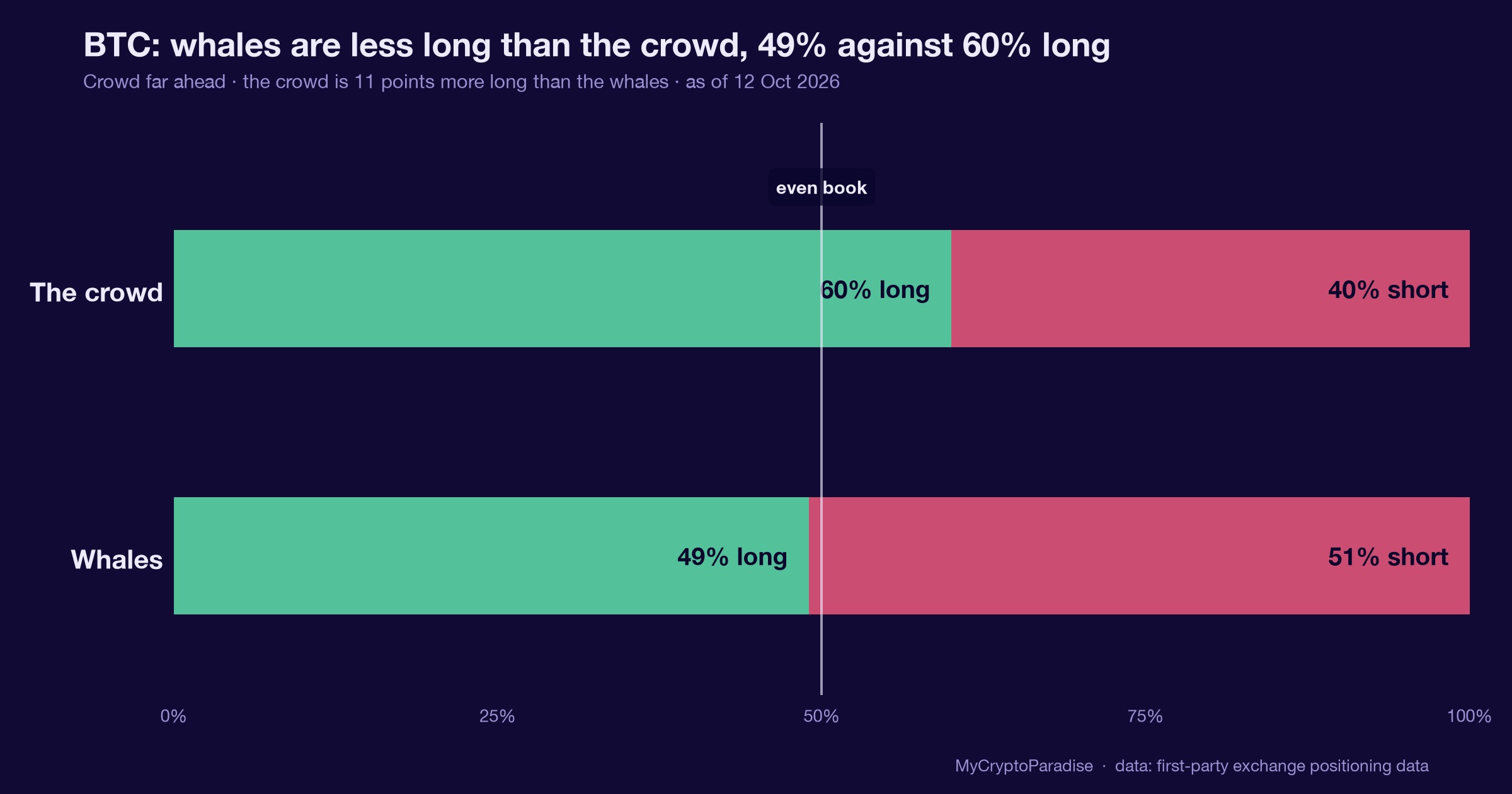
Under the surface, the fight is about absorption. Retail has been aggressively hitting the buy button into resistance, opening a stack of futures positions and adding leverage. Smart money, meanwhile, is not chasing. It is sitting lower, letting that buying pressure exhaust itself against a wall.
When aggressive spot and futures buying meets a price that refuses to break higher, one of two things is happening. Either the level gets accepted and price pushes through, or the buying gets absorbed and the crowd is left long into a stall. So far, the tape looks like absorption, not acceptance.
Ethereum tells the same story from behind. Near $1,913 and up only 0.5 percent, it is following Bitcoin's lead with no independent strength. Altcoins have even less reason to move on a lawsuit, so they wait on BTC. This is the classic setup where retail supplies the demand and smart money supplies the patience. The lawsuit gave the crowd a headline to point at, but the real cascade, from BTC to ETH to alts, is being driven by who is trapped at resistance, not by who is suing whom.
What confirms absorption versus a real breakout
The level to watch is $62,500. It is the pivot that decides the near-term picture, and it sits below current price for a reason. Hold it, and the reaccumulation case stays intact. Lose it, and the aggressive longs above start to hurt.
Watch how price behaves at resistance first. If buying pressure keeps getting absorbed and BTC drifts back toward the $61,000 to $59,000 zone, that is the pullback smart money has been waiting for, not a breakdown to fear. That zone is where we expect market makers to step in.
Confirmation of strength would look different. A clean reclaim and acceptance above current resistance, with buying that is accepted rather than swallowed, would flip the short-term read toward continuation up toward the daily $79,000 target.
Invalidation is just as clear. A decisive break below $62,500 that holds would trap the leveraged crowd who bought the highs, and it would open the door back toward the $58,000 previous low.
On the news itself, watch for anything that turns the lawsuit into a real driver: recovered funds actually returning, or a broader enforcement wave against exchange hackers. Absent that, treat the Bybit case as context, not as a signal. The daily MACD divergence and the fight at $62,500 will tell you far more about the next move than any courtroom headline.
What this muted reaction tells us about positioning
The ParadiseTeam reads this one as a non-event for price, and that itself is the signal. When a $1.5 billion legal headline lands and BTC near $64,843 barely moves, the market is telling you its attention is elsewhere.
Our structural bias stays constructive on the daily, with room toward $79,000, but only after the pullback we have been flagging. We are not chasing here. Retail is buying aggressively into resistance around $63,800 and stacking futures from $62,800, and that is usually where the crowd gets absorbed rather than rewarded.
The zone we care about is $61,000 to $59,000. That is where we expect smart money to accumulate, and where risk-to-reward (R:R, the ratio of potential gain to potential loss) actually favors a long. A push into $69,000 without acceptance would instead interest us as a short.
The hinge is $62,500. Hold above it and the absorption-then-continuation path stays alive. A confirmed break below it shifts the odds toward $58,000 and traps the late longs.
So the lesson from the Bybit lawsuit is a discipline point, not a trade thesis. Headlines feel urgent; positioning is quiet. Anchor to the levels, watch whether buying is absorbed or accepted, and let the crowd fight the news while you read the structure.
Track it live: our live crypto funding rates and the Crypto Fear and Greed Index both update in real time, so you can watch this shift for yourself.
Related coverage
For exact entries, targets, and stop losses with full risk management, that is what ParadiseFamilyVIP is for. New to reading these moves? Start with our crypto trading strategies guide.
ParadiseTeam is monitoring the market situation closely, and we are taking these developments into consideration while building our trading tactics inside ParadiseFamilyVIP.
Crypto trading involves substantial risk. Prices are volatile and you can lose money. This article is educational and is not financial advice. Past performance does not guarantee future results.
After the Bybit lawsuit, what does BTC do next from here?
This is how the Paradisers are calling it. Tap your call.
No calls on this one yet. Tap yours to be the first.
Free account, no password. Members just sign in.









Join the discussion
No comments yet. Members, share how you are reading this.