


Listen: the breakdown
Market briefing: Boltz, a non-custodial bitcoin swap service, is offline indefinitely after a surge of AI-assisted attacks on its infrastructure. It says no user funds were at risk and refunds remain open. BTC barely blinked, trading near 63,626 dollars, down 0.3 percent on the day.
- Boltz went offline indefinitely after AI-assisted attacks on its infrastructure
- Boltz says no user funds were at risk and refunds remain available
- BTC shrugged it off near 63,626 dollars, down 0.3 percent on the day
Boltz went dark indefinitely after AI attacks, yet BTC barely moved near 63,626 dollars. So who really feels a small outage like this?
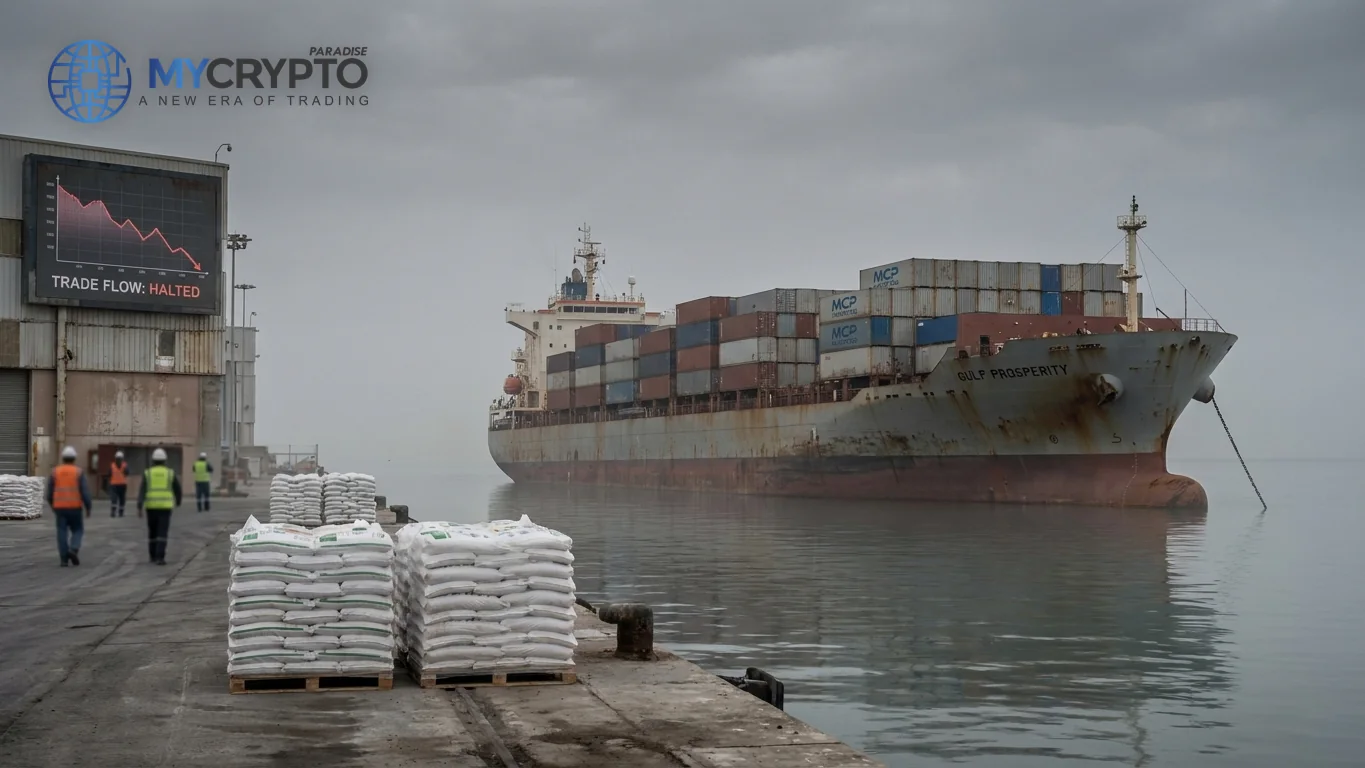
Boltz, a non-custodial bitcoin swap service, has gone offline indefinitely. The trigger was a surge in AI-assisted attacks on its infrastructure. That phrase alone tells you the threat model is shifting under everyone's feet.
The important part for users is what did not happen. Boltz says no user funds were at risk. Refunds remain available. So this is an availability problem, not a solvency one, which matters far more than the scary headline suggests.
Non-custodial means Boltz never held your coins in the first place. You keep the keys, the service just routes the swap. An attacker overwhelming that infrastructure can knock the service offline without ever touching a wallet.
What is genuinely new here is the attacker. "AI-assisted" points to automated probing and load at a scale small teams were never built to absorb. Every operator in the space is now quietly re-reading their own defenses.
For the broader market, the read is smaller than the drama. One swap service pausing is a footnote, not a systemic crack. BTC agrees, sitting near 63,626 dollars and down just 0.3 percent on the day. The tape treated this as noise, and on the facts, it was right to.
Why an AI attack outage matters
The macro signal in the Boltz outage is not the outage itself. It is the word "AI-assisted." Attack tooling is getting cheaper and faster, while defense budgets at small non-custodial services are not. That gap is the real story, and it will keep producing quiet outages like this one.
Here is the transmission chain. A single AI-driven attack does not move BTC. But a steady drip of infrastructure incidents raises the perceived operational risk of holding assets in swap services, bridges, and thinner protocols. That perception nudges capital toward custody people trust and toward the deepest, most liquid asset, which is BTC.
That is a slow rotation, not a shock. It rarely shows up in a daily candle.
There is also a confidence effect worth naming plainly. Retail hears "attack" and "offline" and feels fear. Professionals hear "no user funds at risk" and "refunds available" and file it as a contained availability event. Those two reactions almost never agree, and the gap between them is where opportunities usually sit.
Structurally, none of this changes bitcoin's supply, its settlement, or its liquidity. So we treat this as sentiment texture, not a driver. It colors the mood at the margin without altering the macro backdrop that already leans cautious in the near term.
How the outage ripples across BTC and alts
Start with the obvious. BTC did almost nothing. Near 63,626 dollars and down 0.3 percent, the market priced the Boltz outage as a non-event, and we agree with that first read.
The liquidity picture is where it gets more interesting. When an infrastructure scare lands during an already cautious tape, it does not spark selling on its own. It simply removes a reason to chase. Bids get lazy, and price drifts toward where resting liquidity actually sits, which right now is lower.
BTC leads, and everything else waits. If bitcoin slips toward its lower zone, alts do not decouple. They amplify the same move with thinner books and wider spreads. That is the mechanical reality of a small-cap in a nervous market. Less depth, more slippage, sharper wicks.
The smart money framing is straightforward here. This is minor fear, not a capitulation trigger. There is no forced-seller cascade, no solvency domino, just a mood that discourages fresh longs at resistance. That environment favors patient accumulators over momentum buyers.
So the practical impact is not a crash. It is a market that quietly loses its excuse to rally, giving larger players a calmer backdrop to build positions into weakness while retail waits for a clearer, and usually later, signal.
What confirms or invalidates the dip read
The first thing to watch is not Boltz. It is whether more services report the same class of AI-assisted attacks. One outage is an incident. A cluster is a theme, and a theme would justify a real risk-off tilt across smaller protocols.
On price, the near-term battleground is clear. Resistance sits at 63,000 dollars, and BTC is pressing just above it near 63,626. A clean daily hold and reclaim of that zone would flip 62,500 into support and weaken the dip case. That is the invalidation of our cautious read. Strength through resistance, not weakness.
Confirmation looks like the opposite. A rejection here, with price sliding back under 63,000 and losing 62,500, opens the path toward the 61,000 to 59,000 region we have been watching as an accumulation zone.
Watch how any dip behaves when it arrives. A slow, orderly grind lower with shrinking selling pressure reads as controlled repositioning, not panic. A violent flush on heavy volume would say something more urgent is in play, and we would respect that shift immediately.
Finally, keep an eye on the boring confirmation: Boltz processing refunds smoothly. If users are made whole without drama, this story fades from the tape entirely within days, and the market goes back to trading macro. That quiet ending is, frankly, the most likely one.
Reading the outage through smart money positioning
The ParadiseTeam reads the Boltz outage as texture, not a trigger. It fits the current picture rather than changing it. Our near-term bias stays cautious, with a daily structure trying to hold up against a heavier weekly structure.
Applied to this event, the levels do the talking. BTC near 63,626 dollars is leaning on resistance at 63,000, not breaking away from it. A minor fear story arriving right at resistance is exactly the backdrop where rallies struggle and patient buyers wait lower. That is our accumulation lens, not a promise of direction.
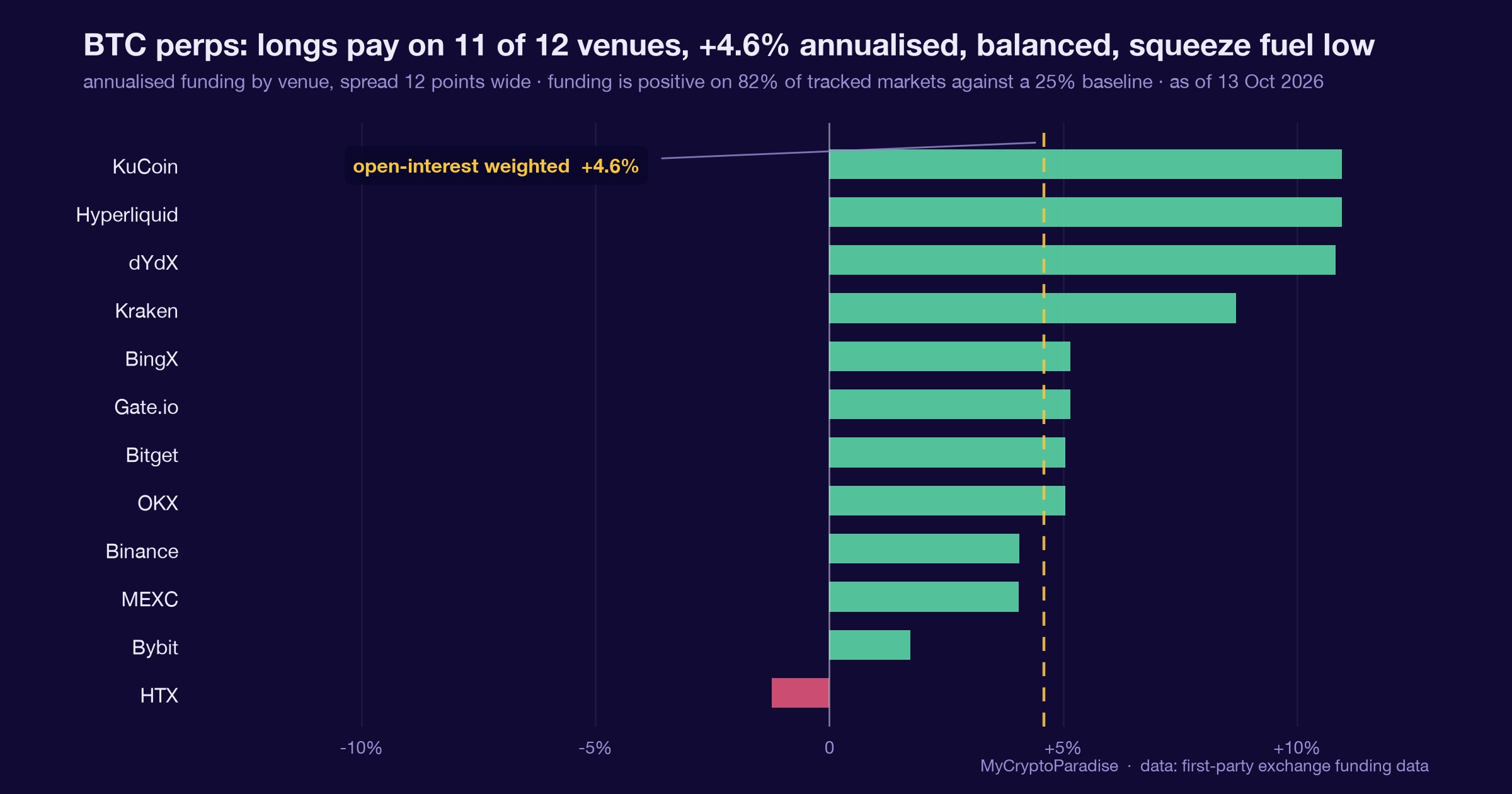
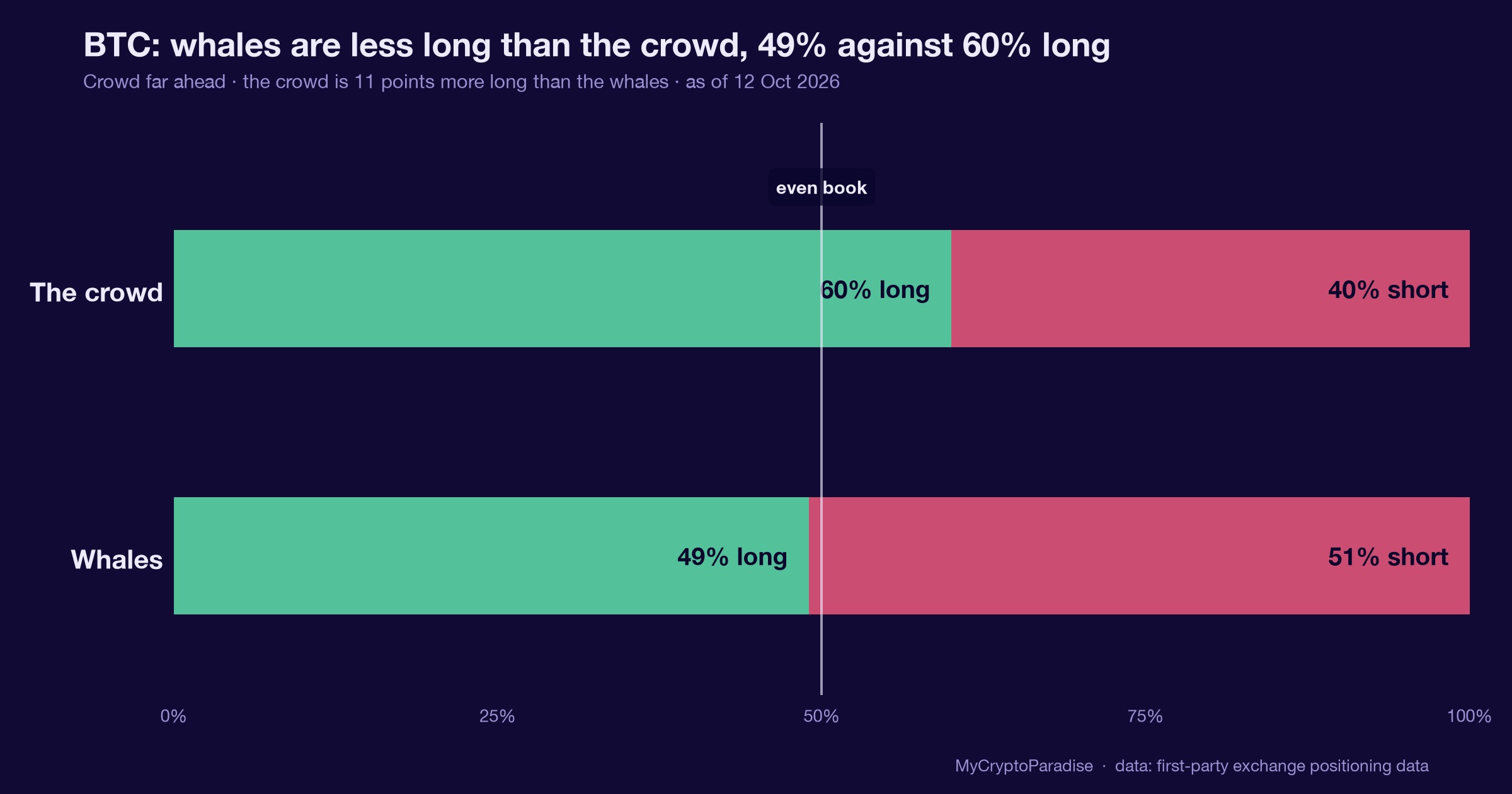
The zone that matters is 61,000 to 59,000. If price rotates down into it in an orderly way, we view that as where larger participants prefer to build, while retail, still holding longs without a strong squeeze setup, tends to give up near the bottom of the move.
The reclaim scenario keeps us honest. A confirmed hold back above 63,000, turning 62,500 into support, would tell us the cautious read is wrong and momentum is returning. We would adjust rather than argue with the tape.
None of this is a signal to act on. It is context. The Boltz incident does not move our levels; it simply reinforces the same message the chart was already sending, which is patience over chasing at resistance.
Track it live: our Crypto Fear and Greed Index and the crypto liquidation heatmap both update in real time, so you can watch this shift for yourself.
Related coverage
For exact entries, targets, and stop losses with full risk management, that is what ParadiseFamilyVIP is for. New to reading these moves? Start with our crypto trading strategies guide.
ParadiseTeam is monitoring the market situation closely, and we are taking these developments into consideration while building our trading tactics inside ParadiseFamilyVIP.
Crypto trading involves substantial risk. Prices are volatile and you can lose money. This article is educational and is not financial advice. Past performance does not guarantee future results.
Where does BTC go next from here after shrugging off the Boltz outage?
This is how the Paradisers are calling it. Tap your call.
No calls on this one yet. Tap yours to be the first.
Free account, no password. Members just sign in.







Join the discussion
No comments yet. Members, share how you are reading this.