


Listen: the breakdown
Developing story update (October 27, 2026, 01:39 UTC):
Sota Watanabe: BlackRock, SBI Holdings and Startale Sign Landmark MOU to Bridge Tokenized Money Market Funds and Yen Stablecoin (JPYSC)
https://www.sbigroup.co.jp/english/news/pdf/2026/1027_a_en.pdf
Market briefing: BlackRock, SBI Holdings and Startale signed an MOU to connect tokenized money market funds with Japan's yen stablecoin JPYSC. BTC sat near $80,138 as the market read it as structural, not a trade.
- BlackRock, SBI and Startale signed an MOU to link tokenized money market funds with JPYSC, Japan's trust-backed yen stablecoin.
- The agreement is exploratory, so this is foundational infrastructure, not an immediate product launch.
- BTC barely moved near $80,138, suggesting smart money treats it as a long-term build, not a catalyst.
BlackRock, SBI and Startale just signed an MOU to wire tokenized money market funds into Japan's yen stablecoin. So why did crypto barely blink?
BlackRock Financial Management, BlackRock Japan, SBI Holdings and Startale Group have signed a Memorandum of Understanding. The news landed on October 27. Their stated goal is to explore connecting tokenized money market funds (MMFs) with JPYSC, Japan's trust-backed yen stablecoin.
Strip away the names and the plan is simple. A tokenized MMF is a short-term cash-like fund rebuilt as a blockchain token. JPYSC is a yen stablecoin, its value anchored by assets held in trust. Link the two and institutions can settle fund positions on-chain, in yen, without the usual plumbing.
The cast matters here. BlackRock is the largest asset manager on earth. SBI Holdings is a Japanese financial heavyweight with deep distribution. Startale builds the on-chain rails that make the pieces talk to each other. When those three put their names on the same page, the tokenized real-world asset (RWA) story gains serious weight.
But read the verb carefully. They agreed to explore. An MOU is a handshake with lawyers attached, not a shipped product.
That gap between a glossy announcement and a working system is where crypto has spent most of its adult life. The structural intent is real and the direction of travel is clear. What is not yet here is a live, regulated instrument moving real yen across a chain. For traders, that distinction is the whole story, and it explains why the tape stayed so calm.
Why tokenized money funds reshape settlement
The macro trend driving this is the tokenization of real-world assets, and it is accelerating. Institutions want a common ledger for cash, funds and collateral. Tokenizing a money market fund makes ownership verifiable, transferable and visible in near real time, which cuts settlement friction and frees up idle capital.
JPYSC is the piece that makes it usable. A yen stablecoin lets a Japanese institution hold and move value on-chain without touching dollars. Connect it to a tokenized MMF and you get a fund that pays yield, settles instantly and parks into a stable asset between trades. That is quietly powerful for a market as cash-rich as Japan.
The transmission to crypto runs through credibility and liquidity, not through price today. Every regulated rail that major institutions build lowers the perceived risk of operating on public and permissioned chains. Over time, that pulls more capital toward the infrastructure digital assets already sit on.
There is a wealth-unlock angle too. Assets that are hard to see and hard to move tend to carry a discount. Make them legible and liquid on a shared ledger and borrowing costs can fall while visibility rises.
None of this reprices BTC this week. It reprices the long-run assumption about who uses these networks and why. That is the honest frame: this MOU strengthens the foundation under crypto, it does not light the fuse under it.
How the MOU filters into crypto liquidity
On its own facts, this news is mildly bullish for crypto. It adds institutional validation to RWAs and stablecoins, two of the strongest adoption themes in the market. But the chain from MOU to on-chain liquidity is long, and prices told that story plainly.
BTC was trading near $80,138 as of the report, up about 0.3 percent on the day and barely 0.1 percent on the hour. ETH mirrored it near $2,325.87, also up roughly 0.3 percent. When a BlackRock headline moves price by a rounding error, the market is telling you it has already filed this under long-term, not immediate.
That calm is itself the read. An exploratory agreement gives retail a famous name to get excited about and gives smart money almost nothing to trade right now. So the usual cascade, where a catalyst drives BTC, then ETH, then alts, simply did not fire. There was no single confirmed same-day driver, and the muted tape confirms it.
For alts, the second-order case is clearer than the first-order one. Infrastructure and RWA-linked tokens benefit most as this theme matures, because they sit closest to the rails being built. ETH gains indirectly as the settlement layer story deepens.
The practical takeaway is discipline. This is a structural tailwind that compounds over quarters. Treating a foundational MOU as a short-term price catalyst is how traders end up buying a narrative the chart has not confirmed.
What turns this MOU into real product
The real signal is the move from exploration to execution. Watch for a named, live tokenized MMF actually connecting to JPYSC, with real yen settling on-chain. Until that ships, the thesis stays an intention.
Regulatory clarity in Japan is the gatekeeper. A trust-backed yen stablecoin lives or dies by its legal and custody framework. Confirmation that the structure clears supervisory expectations would move this from promising to credible. Any friction there would stall the timeline quietly, which is how most of these projects slow down.
Follow-through from the parties is the next tell. An MOU can expand into a formal joint venture, a pilot, or a public launch date. It can also fade into a line in an annual report. Specific milestones, measured issuance and named counterparties are what separate the two outcomes.
For crypto broadly, the confirmation is adoption breadth. If other asset managers and banks announce similar tokenized-fund-plus-stablecoin links, the RWA trend gains momentum and the infrastructure case strengthens. A single isolated MOU is interesting. A pattern of them is a structural shift.
Invalidation is simpler. If months pass with no product, no issuance and no regulatory progress, the market was right to shrug. The headline would then read as ambition rather than delivery. So the near-term job for traders is patience, not positioning. This is a story to track across quarters, where each concrete step either validates the build or exposes it as premature.
What the JPYSC link signals for positioning
The ParadiseTeam reads this as a structural positive layered onto a fragile tape, and the two should not be confused. The news strengthens the long-run adoption case. It changes nothing about where BTC sits in its current range.
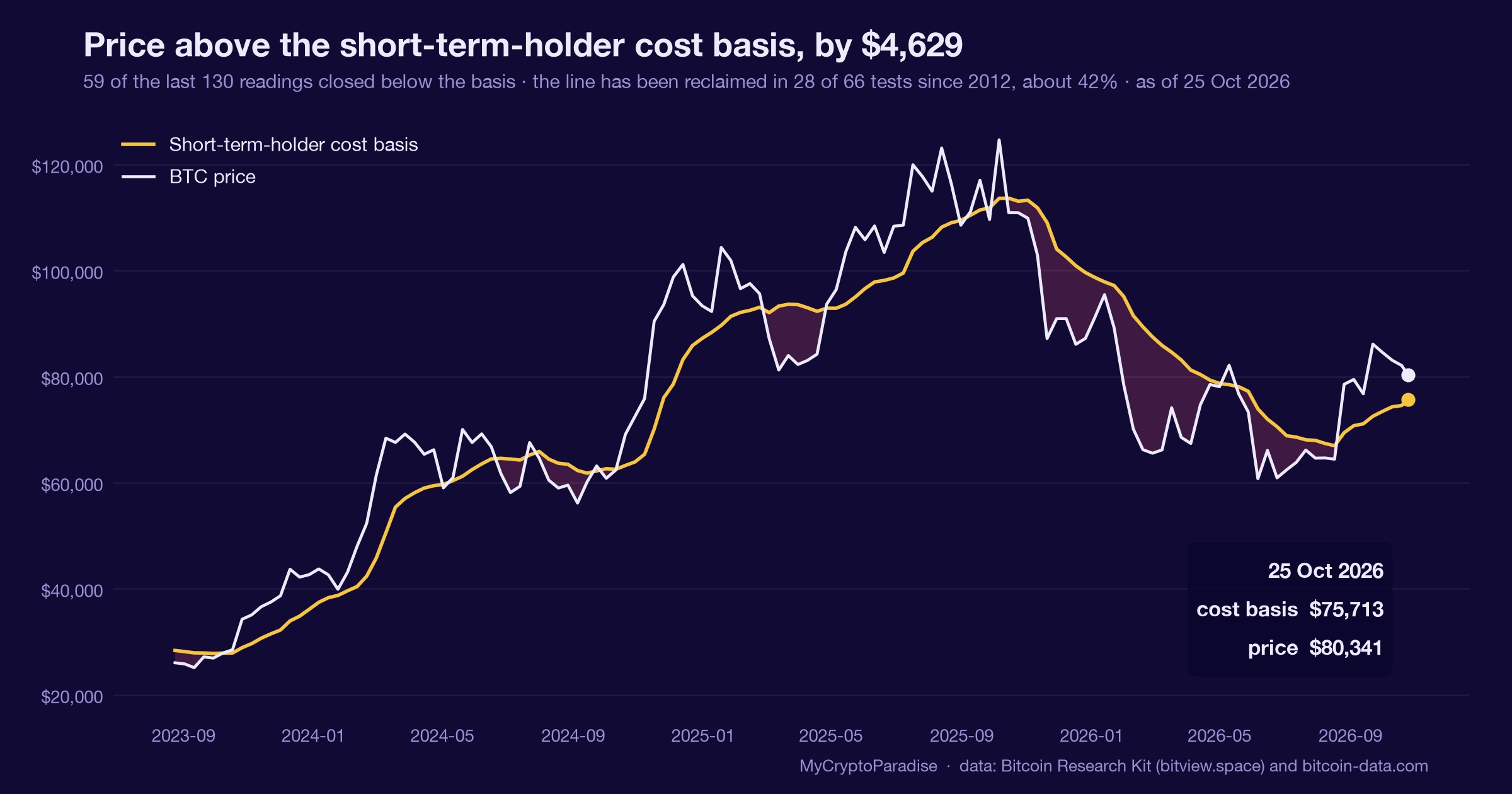
With BTC near $80,138, the structure is still delicate. Our standing view has $81,000 as important support that buyers failed to defend, with $81,350 the level that would re-arm the upside. Below price, $79,500 and then the critical $79,000 are the lines that matter, because losing $79,000 invalidates the medium-term bullish structure.
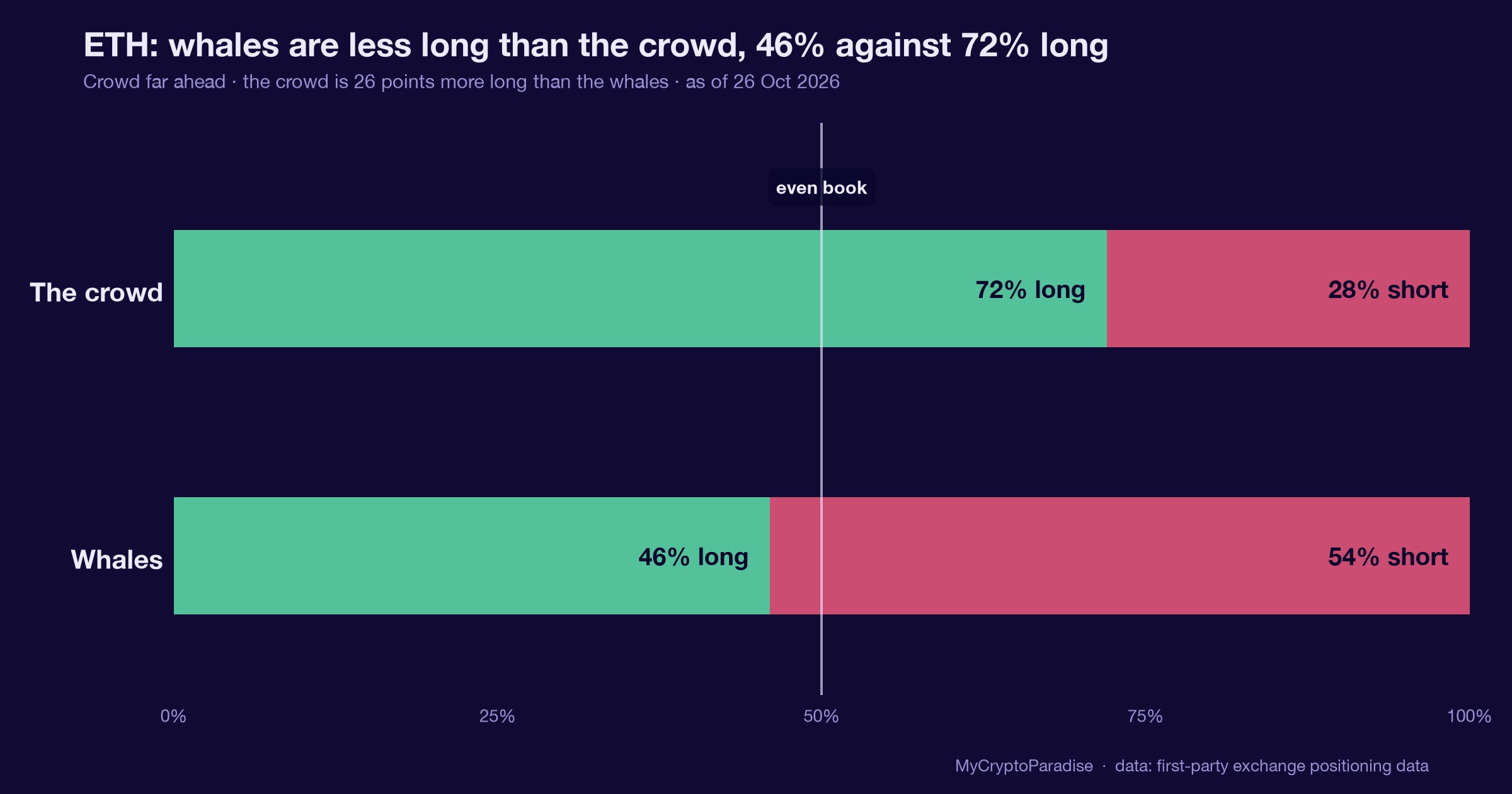
Here is where the smart-money lens bites. Funding rates have flipped positive without price following, which means longs are crowding in while sentiment chases the tape. A famous name on an MOU is exactly the kind of headline that feeds that crowd. Retail sees BlackRock and leans long. Smart money sees an exploration phase and stays patient.
That gap is the risk. The read favours a final push toward $90,000 while the structure holds, but only while $79,000 survives. An institutional headline does not defend support. Order flow does.
So we treat this as confirmation of the destination, not a signal for the next candle. We want to see follow-through on-chain and genuine accumulation before trusting a continuation. A clean break below $79,000, especially if it flips to resistance, would open the deeper bearish path we have flagged toward $44,000. Structure leads, narrative follows.
The read behind this: we framed this story through our own market analysis, Bitcoin at Support: Can Bulls Fight Back?
Track it live: our live crypto funding rates and the Crypto Fear and Greed Index both update in real time, so you can watch this shift for yourself.
Related coverage
For exact entries, targets, and stop losses with full risk management, that is what ParadiseFamilyVIP is for. New to reading these moves? Start with our crypto trading strategies guide.
ParadiseTeam is monitoring the market situation closely, and we are taking these developments into consideration while building our trading tactics inside ParadiseFamilyVIP.
Crypto trading involves substantial risk. Prices are volatile and you can lose money. This article is educational and is not financial advice. Past performance does not guarantee future results.
Does this MOU move crypto prices, or is it just the long game?
How 1 Paradiser is calling it
The first call is still open
Free account, no password. Members just sign in.
Follow this topic: Stablecoin news





Join the discussion
No comments yet. Members, share how you are reading this.