

Listen: the breakdown
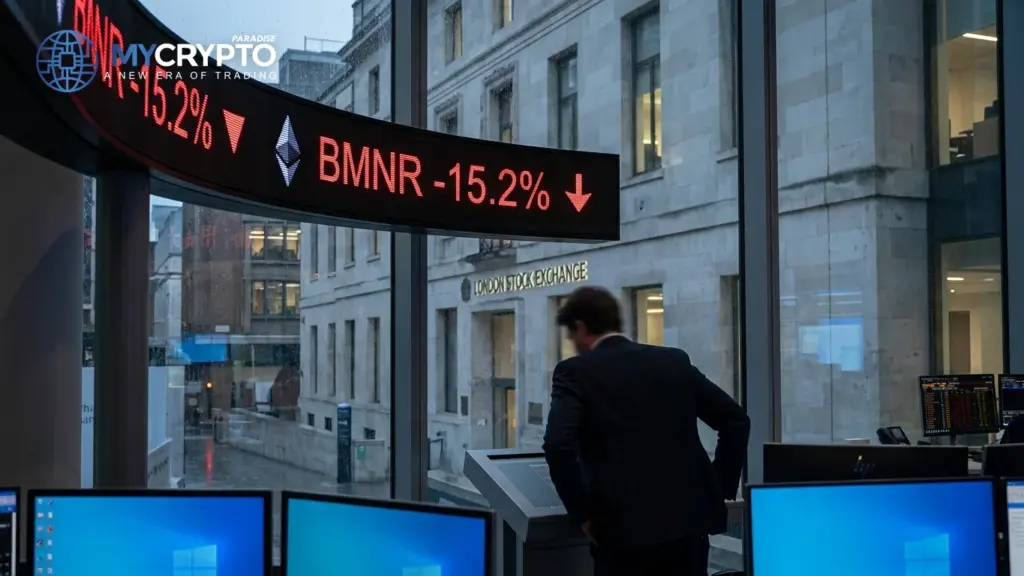
Market briefing: Bitmine will stop buying Ethereum once it holds 5% of supply, chairman Tom Lee says. BMNR fell about 4.58% pre-market as crypto sold off, with BTC near $83,625 and ETH near $2,574.
- Bitmine will stop buying ETH once its holdings reach 5% of total supply, per chairman Tom Lee
- BMNR shares slipped about 4.58% in pre-market trading as the broad crypto market fell
- ETH traded near $2,574, down over 5% on the day, with BTC near $83,625, off about 3%
Bitmine just named the exact point where its Ethereum buying stops: 5% of total supply. The cap landed on a red day for crypto. Does a capped whale change the ETH story now?
Bitmine just told the market where its Ethereum bid runs out. Tom Lee, the company's executive chairman, said the firm will stop buying ETH once its holdings reach 5% of the total supply. For one of the largest disclosed corporate accumulators of Ethereum, that is a clear line in the sand.
The timing did the damage. The disclosure landed on a red day across crypto. ETH was trading near $2,574, down more than 5% over 24 hours, while BTC sat near $83,625, off about 3%. BMNR shares slipped about 4.58% in pre-market trading.
To be fair about cause, the stock move looks driven mainly by the broad market dip weighing on shares, not by the disclosure alone. The 5% cap is a secondary overhang, not the day's trigger. We separate the two because the market rarely bothers to.
A ceiling is not a sale. Bitmine is not selling a single coin here.
What changes is the forward picture. A self-imposed cap removes a future source of structural demand from Ethereum, at a moment when liquidity is already thinning. That matters more for how traders position over the coming weeks than for the candle printing today. The company is still a large holder. It has simply told everyone where its buying ends.
A demand backstop steps away from ETH
Corporate treasuries that buy crypto act as a slow, price-insensitive bid. They quietly absorb supply and dampen downside. When one of the biggest disclosed buyers names the point where that bid stops, it reprices expectations of future demand.
Think of it as a demand backstop. For months, large accumulators have been a reason to expect dips to get bought. A 5% ceiling tells the market that reason has a known end. The bid does not vanish today, but its runway is now visible, and visibility changes behaviour.
This lands inside a wider risk-off move, which amplifies the read. When liquidity thins, every removed source of demand carries more weight. Thin books exaggerate moves in both directions, and a known ceiling gives sellers one less wall to fear above them. That is the macro transmission: a capped buyer, a nervous tape, and less forward demand priced into Ethereum than there was yesterday.
Capped bid meets a thinning market
Start with Ethereum, the direct subject. A disclosed demand ceiling pressures ETH's forward bid first. With the token already down over 5% on the day, the news adds a structural worry on top of an existing technical slide.
Bitcoin sets the tone. BTC near $83,625 was already soft, down about 3%. When the majors leak together, treasury-demand stories like this one feed the fear rather than fight it. A capped buyer does not help a market actively looking for reasons to de-risk.
Alts sit downstream. They need ETH strength and healthy liquidity to hold their bids. Remove a large forward buyer and thin the books, and the smaller names feel it hardest. Leverage tends to cluster there, so flushes travel fast.
The honest caveat is that the evidence is thin. This is a single disclosure with no corroboration and little hard sentiment data behind it. We read it as a forward demand-ceiling signal, not a confirmed distribution event. It tilts the near-term balance lower without guaranteeing the next leg down.
Signals that separate dip from flush
Confirmation of the bearish read would show up in Ethereum first. A failure to reclaim lost ground on rising volume, with BMNR staying heavy, would suggest the demand-ceiling worry is sticking rather than fading with the dip.
Watch how fast the panic clears. If the broad market bounces and ETH recovers while the 5% headline is forgotten within a session, that tells you the dip, not the cap, was driving everything. The disclosure then becomes background noise.
Open interest and liquidations matter here. OI (open interest) rising into falling price signals fresh shorts pressing the move. A long-liquidation cascade that then stalls often marks the point where forced selling exhausts itself.
Invalidation is simple. Reclaimed levels on real volume, cooling funding, and BMNR stabilising would say the market has absorbed the news and moved on. Until then, treat strength as something to be proven, not assumed. One disclosure does not set a trend, but it does remove a comfort traders had been leaning on.
Positioning as one buyer names its limit
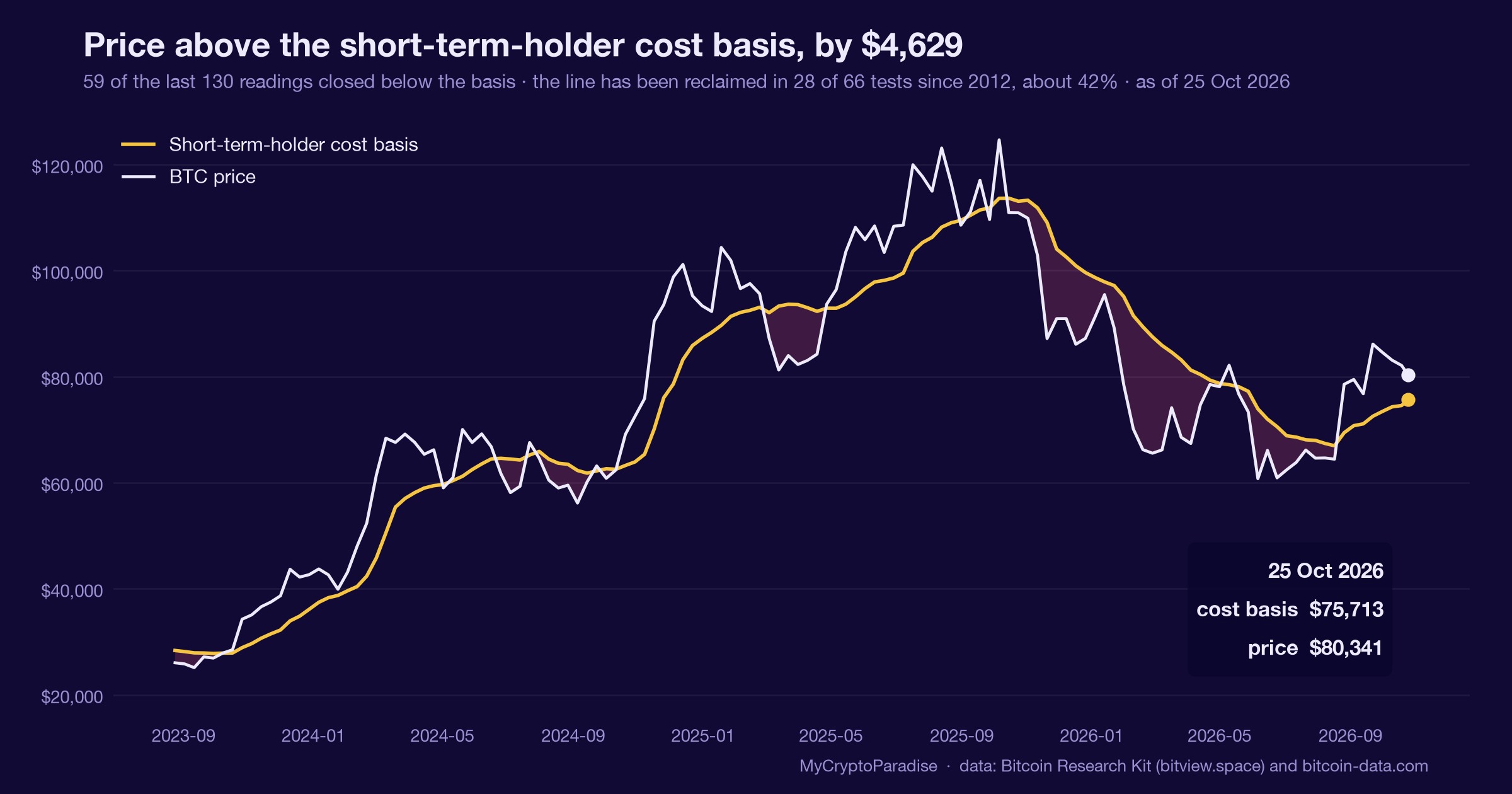
The ParadiseTeam frames this against Bitcoin near $83,625, just above the $82,000 support zone our latest read flags as moving-average, Fibonacci and price-action confluence. A capped ETH buyer does not move that level, but it thins the forward demand that would defend it.
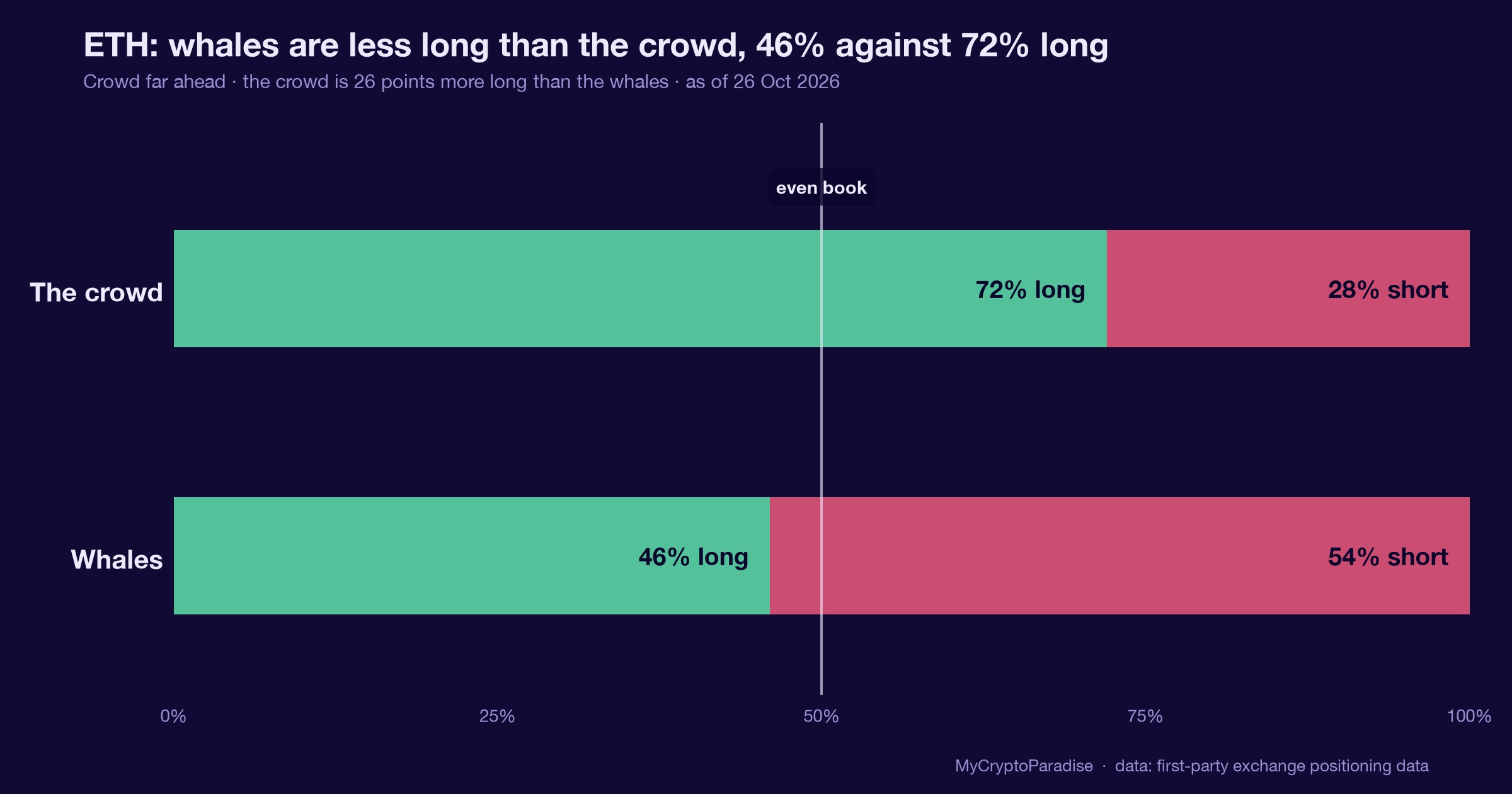
Our standing read sees whales net selling, roughly 65% against 35% buying, with that pressure being absorbed at support so far. A disclosed demand ceiling on a major ETH holder fits the selling side of that picture. It hands the distribution camp one more reason, even though this specific move is not itself a sale.
Retail is already fearful, which keeps a short-squeeze bounce on the table toward the $88,000 to $90,000 resistance. The ParadiseTeam treats that zone as where strength tends to meet selling. A capped whale reinforces caution into any rally there, not conviction.
Stops now sit below $82,000 for longs and above $90,000 for the squeeze crowd. Lose support on real volume and the lens points toward the $55,000 to $44,000 exchange-of-hand zone.
The read behind this: we framed this story through our own market analysis, Can Bitcoin Bounce From Support?
Track it live: our live crypto funding rates and the Crypto Fear and Greed Index both update in real time, so you can watch this shift for yourself.
Related coverage
For exact entries, targets, and stop losses with full risk management, that is what ParadiseFamilyVIP is for. New to reading these moves? Start with our crypto trading strategies guide.
ParadiseTeam is monitoring the market situation closely, and we are taking these developments into consideration while building our trading tactics inside ParadiseFamilyVIP.
Crypto trading involves substantial risk. Prices are volatile and you can lose money. This article is educational and is not financial advice. Past performance does not guarantee future results.
Where does ETH head next after Bitmine caps its buying at 5% of supply?
How 23 Paradisers are calling it
The first call is still open
Free account, no password. Members just sign in.











Join the discussion 6
Ah, more reasons to ignore the four-hour charts! 🙄 This just reaffirms sticking to weekly closes for actual signals. Good luck out there, everyone. ✨
so whats the actual throughput impact on the demand side now? feels like my wife is going to be even less impressed with my screen time this week.
Oh wow, this is kinda what I was thinking about my "rotating bag" too 😅. Gotta be careful with those sudden shifts, eh? My charts are wild today... 📈
cara, this is why i try to keep my ETH in cold storage 🥶 and away from my rotating bag 💸 - too easy to ape in with it! 😅
what's the incentive here for Bitmine to cap themselves at 5%? feels like there's another layer.
This is exactly why I don't get excited about big players... 😅 Just means more volatility for my brother's transfer if I'm not careful. 📉💸 🤦♀️