



In short
Bitcoin trading strategies for beginners work best when risk control comes first. Learn a small set of methods, and size every position so one loss cannot end your account. Four approaches suit beginners: dollar-cost averaging, trend following, range trading, and breakout trading. Each has a clear downside, so treat every trade as a probability, not a certainty. Set a stop-loss before you enter. Risk a tiny share of your capital per trade, often one to two percent. Practice on paper first. Master defence, and the rest of trading becomes far easier to survive.
What is a Bitcoin trading strategy, really?
A Bitcoin trading strategy is a fixed set of rules for when you buy, when you sell, and how much you risk. It is not a price prediction. A good strategy removes guesswork, so you follow the same repeatable process on every trade, whether the market rises or falls.
Notice what the definition leaves out. It says nothing about being right. Even strong traders are wrong on many trades, and they still make money because their rules control the damage. The edge lives in the process, not in any single call.
What is different here
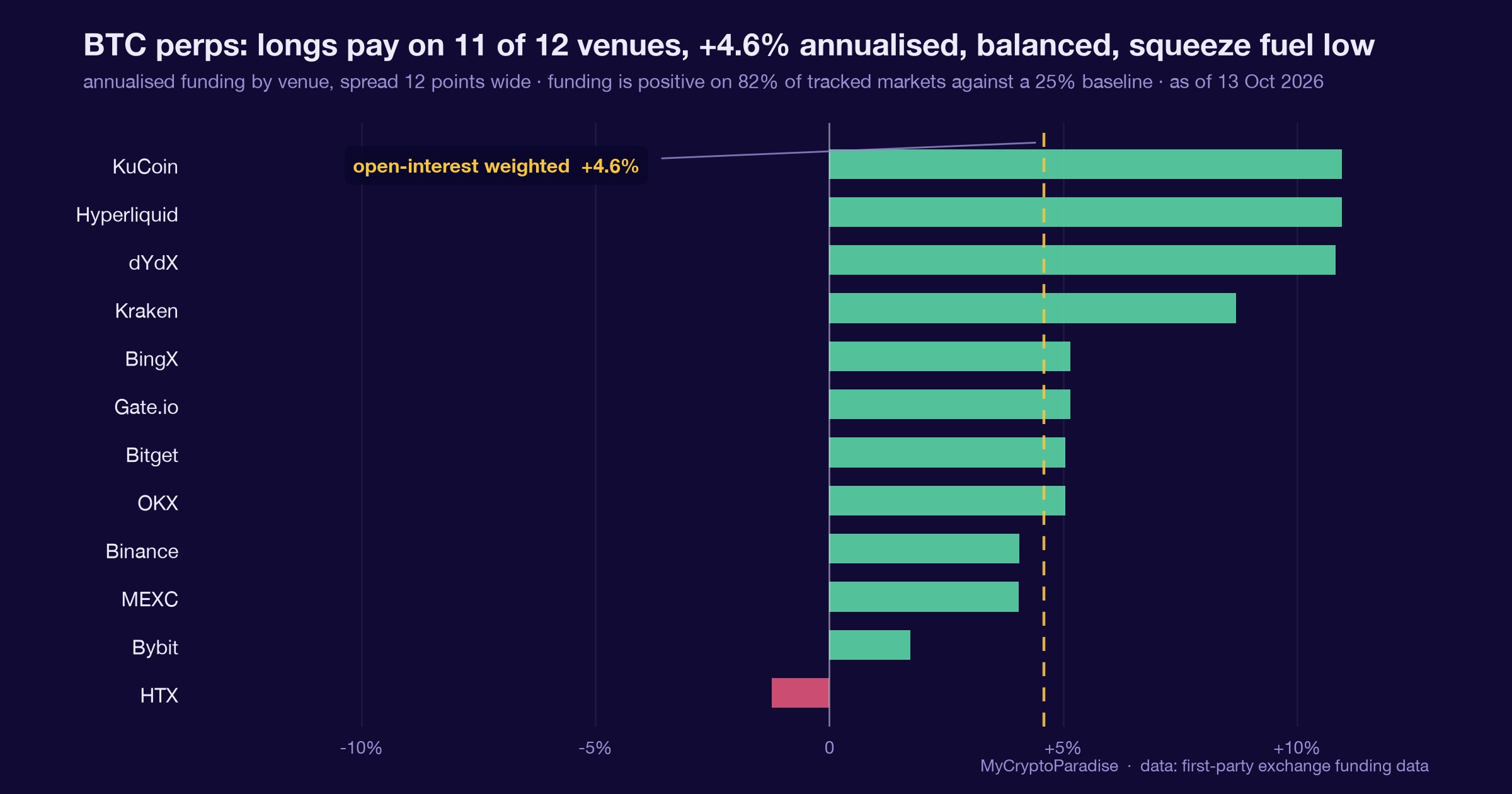
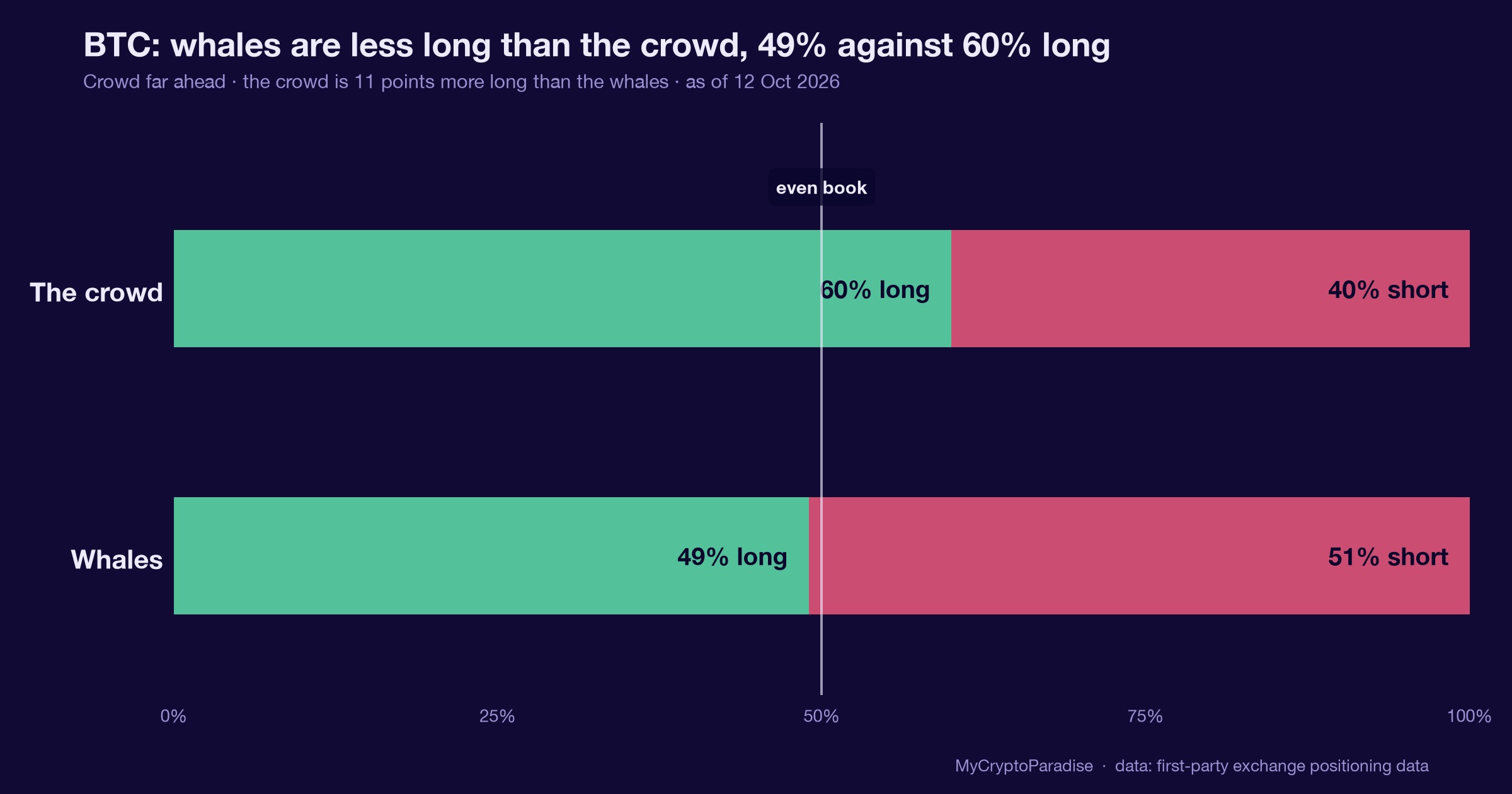
Before we build any setup, the ParadiseTeam reads positioning across all major exchanges and asks where the risk sits first. The rules below are simplified versions of that same defence-first habit.
Why should risk come before strategy?
Because a strategy only helps if you survive long enough to repeat it. Beginners obsess over the entry and ignore the exit, then one oversized trade erases months of progress. Risk control decides how much you lose when you are wrong, and you will be wrong often.
Bitcoin is volatile, and regulators repeatedly warn that crypto prices can fall fast and far. The US SEC investor education is blunt about the risk of total loss. So your first job is not picking winners. It is setting a drawdown budget you can accept before you ever click buy.
Four beginner-friendly Bitcoin strategies explained
These four strategies suit beginners because the rules are simple and the downside is easy to see. None is best; each fits a different market. Learn one well before adding another, and always attach a stop-loss. The table shows how each works and where each tends to fail.
| Strategy | How it works | Main downside |
|---|---|---|
| Dollar-cost averaging | Buy a fixed amount on a schedule | Keeps buying through a long downtrend |
| Trend following | Trade with the main direction | Whipsaws in sideways markets |
| Range trading | Buy support, sell resistance | Fails hard on a breakout |
| Breakout trading | Enter as price leaves a range | False breakouts trap you |
Dollar-cost averaging: buy on a schedule
Dollar-cost averaging means buying a fixed dollar amount on a regular schedule, whatever the price. It smooths your average entry and removes the stress of timing the bottom. Investopedia explains the method in detail. The downside is real: in a long, grinding downtrend, you keep buying an asset that keeps falling.
Trend following: trade with the main move
Trend following means buying when the wider trend is up and standing aside, or selling, when it turns down. The logic is simple: do not fight the dominant direction. It works well in strong, sustained moves. It fails in choppy, sideways markets, where the trend flips repeatedly and stops you out again and again.
Range trading: buy support, sell resistance
Range trading suits a market stuck between a floor and a ceiling. You buy near support, the lower edge, and sell near resistance, the upper edge. Reading those levels gets easier with practice at reading chart patterns. The danger is a breakout: when price finally leaves the range, an unstopped range trade can lose quickly.
Breakout trading: enter as price leaves a range
Breakout trading is the mirror image: you enter as price pushes out of a range with force. The aim is to catch the start of a new move. Its weakness is the false breakout, where price pokes out, traps buyers, then snaps back. A stop just inside the range keeps that failure small.
How much should you put on one Bitcoin trade?
Risk a small, fixed share of your account per trade, commonly one to two percent. Size the position from your stop distance, not from how confident you feel. If your stop is far away, buy less; if it is close, you can buy a little more. The account, not the coin, sets the limit.
This is where beginners get lazy and eyeball the amount. Do the arithmetic instead. Decide your risk in dollars, measure your stop distance in percent, and the position size falls out of the two. Learning a few order types worth using makes placing that exact size far easier.
Here is the shape of it. Say you risk 100 dollars and your stop sits 5 percent below entry. You buy about 2,000 dollars of Bitcoin, so a 5 percent drop costs the 100 you budgeted. Change the stop, and the size changes with it.
Rather than guess, plug your numbers into the sizer below and see the position it produces.
How do stops and losing streaks affect your capital?
A stop-loss caps the loss on any single trade, and losing streaks decide whether many small losses compound into a deep hole. Plan for both. Assume several losers in a row will happen, because they will, and size so that streak stings without ending your account.
Set the stop at a level that proves your idea wrong, not at a round number that feels safe. Placing it too tight is why stops keep getting hit by normal noise. Give the trade room to breathe, then accept the loss cleanly when the level breaks.
Common beginner mistakes and how to avoid them
Most beginners lose money to a handful of repeatable mistakes, not to bad luck. Fix these first and you remove the biggest leaks. Each one traces back to skipping risk control or letting emotion override the rules you set when you were calm.
- Risking too much on one trade
- Trading without a stop-loss
- Moving a stop to avoid the loss
- Averaging down into a falling position
- Overtrading many coins at once
That last habit, spreading yourself thin, is why many traders do better trading fewer pairs and watching them closely.
How can you practice before risking real money?
Practise with a paper-trading account or an exchange testnet before funding a live one. Write your rules down, take fake trades, and record why you entered and exited each. When real money starts, begin with tiny size. The goal is a proven, boring routine, not a big first win.
Treat your first year as tuition, not income. Keep a simple journal, review it weekly, and let the numbers tell you which strategy suits your temperament. Discipline compounds quietly, and it is the one edge a beginner can build on purpose. A probability read, not a promise, keeps you honest.
Frequently asked questions
What is the safest Bitcoin trading strategy for a beginner?
Dollar-cost averaging is usually the gentlest start. You buy a fixed amount on a set schedule, ignoring short-term price swings. This spreads your entry price and removes timing pressure. It will not deliver fast profits, but it lowers the chance of a large, badly timed loss while you learn.
How much of my money should I risk on one Bitcoin trade?
Most disciplined traders risk only one to two percent of their account on a single trade. That means if the trade hits your stop-loss, you lose one to two percent, not the whole account. Small risk per trade lets you survive a losing streak and keep trading with a clear head.
Can I make a living trading Bitcoin as a beginner?
Almost certainly not at first, and treating it that way is dangerous. Trading is a skill that takes years and repeated mistakes to build. Beginners should aim to learn and protect their capital, not to replace an income. Keep your day job, trade small, and judge yourself on process, not profit.
Do I need chart patterns and indicators to start?
Not many, and not straight away. A beginner can start with price trend, a support level, a resistance level, and a stop-loss. Add indicators slowly, only once you understand what each one measures. Piling on tools early creates false confidence and clutter, which usually leads to worse decisions, not better ones.
Crypto trading involves substantial risk and is not suitable for everyone. Nothing here is financial advice; it is education only. Never risk more than you can afford to lose.








Join the discussion 5
I love how you show how to size your entry for small accounts! 🤏 My friends just don't get why I trade such tiny positions but it means I don't get wrecked. 😅📉
so its all about the stop then. but what about the one level that matters
The risk-first focus here is so important for beginners... I wish I knew all this when I first started learning from my classmate, you know? 🤔 Really appreciate the breakdown... stops are key. 💯
Not just beginners, Noah! 🤷♀️ Risk-first is the only way to trade, or you're just gambling. 🎲 Thats it.
for sure Aisha, totally agree its vital for everyone, but for beginners even more so! 🙏 like knowing about trailing stops from the jump helps avoid those big gut-wrenching drops. 📉